Floating Exchange Rates (Cambridge International A-Level Economics)
What is an exchange rates?
-
An exchange rate is the price of one currency in terms of another e.g. £1 = $1.18
- International currencies are just like products that can be bought and sold on the global foreign exchange market (FOREX)
-
Increased demand for a currency in the FOREX market will increase its price or exchange rate, whereas increased supply of a currency to FOREX will decrease its price
-
A bilateral exchange rate measures the value of one currency against one other currency
-
The central bank of a country will choose the exchange rate system used in determining the value of that nation's currency
-
Floating exchange rate systems allow the forces of demand and supply to determine the rate of exchange (price) of a currency
Determination of a floating exchange rate
Spec point —
6.4.2
- In a floating exchange rate system, the exchange rate is determined by the interaction of demand and supply on the FOREX market - currency markets work on the same principles as product markets
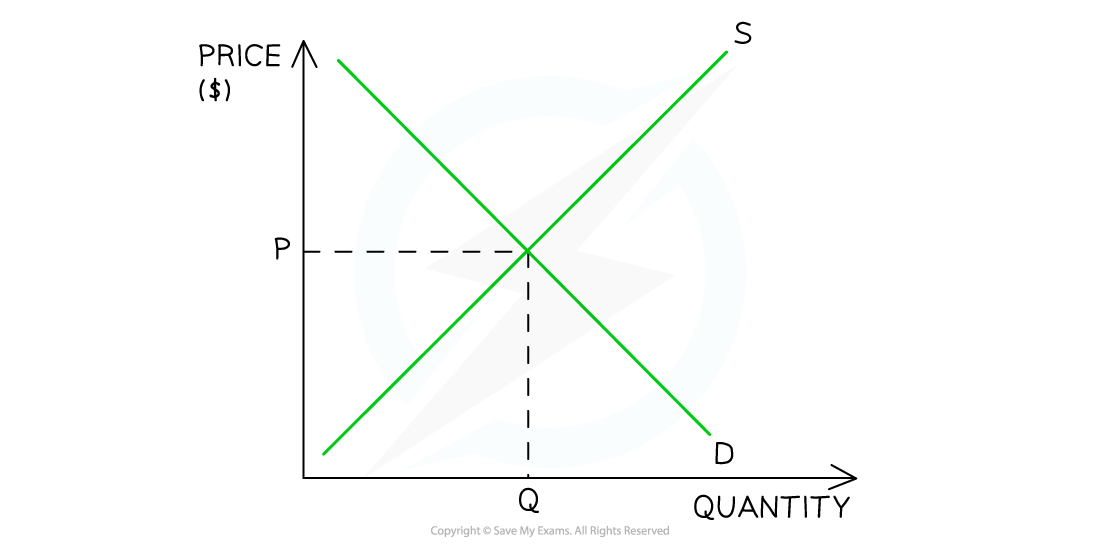
Determination of a floating exchange rate
Diagram analysis
-
The graph shows the market for UK£ in terms of US$
-
The market for UK pounds is in equilibrium where D£ = S£
-
Q UK pounds are received for a price of P dollars
-
The equilibrium exchange rate is found at P1Q1
- There is no excess supply of pounds
- There is no excess demand for pounds
Distinction between depreciation and appreciation
1. Currency appreciation
- Appreciation occurs when the value of a currency rises, making its exports relatively more expensive and its imports less expensive
- Appreciation occurs in a floating exchange rate system and is also known as a strengthening of the exchange rate
- If there is excess demand for the currency on the FOREX market, the price rises and the currency appreciates
- If the supply of the currency decreases, this can also result in an appreciation
The market for US
Diagram analysis
-
The initial exchange rate equilibrium for Euro/US$ is found at P1Q1
-
When Europeans visit the USA, they demand US$
- The increased demand for the US$ shifts the demand curve to the right
- This results in the value of the $ appreciating from P1 → P2
- A new market equilibrium forms at P2Q2
2. Currency depreciation
-
Depreciation occurs when the value of a currency falls against another currency
-
Depreciation occurs in a floating exchange rate system
- If there is excess supply of the currency on FOREX, the price falls - the currency is worth less and is cheaper to buy
-
An increase in supply of the currency can cause a depreciation
-
A decrease in demand for the currency can cause a depreciation
The market for Euros in Dollars shows an increase in supply of Euros
Diagram analysis
-
The initial exchange rate equilibrium for Euro/US$ is found at P1Q1
-
When Europeans visit the USA, they demand US$ and supply Euros
- The increased supply of the Euro shifts the supply curve to the right
- This results in the value of the Euro depreciating from P1 → P2
- A new market equilibrium forms at P2Q2
Worked Example Two industries in a country are fishing and tourism. The foreign exchange rate of the country's currency fell in 2010. How was the country affected in the absence of any other changes?
A. - local people bought more imported goods because they were cheaper
B. - the price of fish sold in foreign markets became cheaper
C. - the volume of exports decreased
D. - tourists to the country were discouraged by higher prices
Final answer: Answer: B
A fall in the exchange rate is a depreciation - the domestic currency is worth less in terms of foreign currency
When the currency depreciates, exports priced in the domestic currency become cheaper for foreign buyers - fish sold abroad costs less in foreign currency terms, so foreign demand rises
Worked solution
- Option A is the trap - students who confuse depreciation with appreciation will select this; depreciation makes imports more expensive, not cheaper, so local people would buy fewer imported goods
- Option C is incorrect - depreciation makes exports cheaper so export volumes rise, not fall
- Option D is incorrect - depreciation makes the country cheaper for foreign tourists since their currency buys more; tourist numbers rise, not fall
Exam Hint A common error is to confuse the effect of exchange rate changes on domestic and foreign buyers. An appreciation makes exports more expensive for foreign buyers but imports cheaper for domestic buyers - students frequently reverse this.
A simple check: if the pound appreciates, a British car costs more dollars abroad (exports dearer) but a foreign car costs fewer pounds at home (imports cheaper). Always apply this logic explicitly in your answer.
Was this revision note helpful?
Build on this topic