Social Costs & Social Benefits (Cambridge International A-Level Economics)
Understanding social costs
-
In many markets, the costs of producing or consuming a good are not limited to the buyer and seller
-
Some costs are imposed on third parties, meaning people who are not directly involved in the transaction
-
These are known as 'external costs'.
- When external costs exist, the true cost to society is higher than the private cost faced by firms and consumers
Key definitions
-
Marginal private cost (MPC)
- The additional cost incurred to the consumer and producer through the consumption or production (output) of one additional unit of output
-
Marginal external cost (MPE)
- The additional cost incurred to a third party through the consumption or production (output) of one additional unit of output
-
Marginal social cost (MSC)
- The additional cost incurred to society incurred through the consumption or production of one additional unit of output
- It is the sum of the private costs plus the external costs
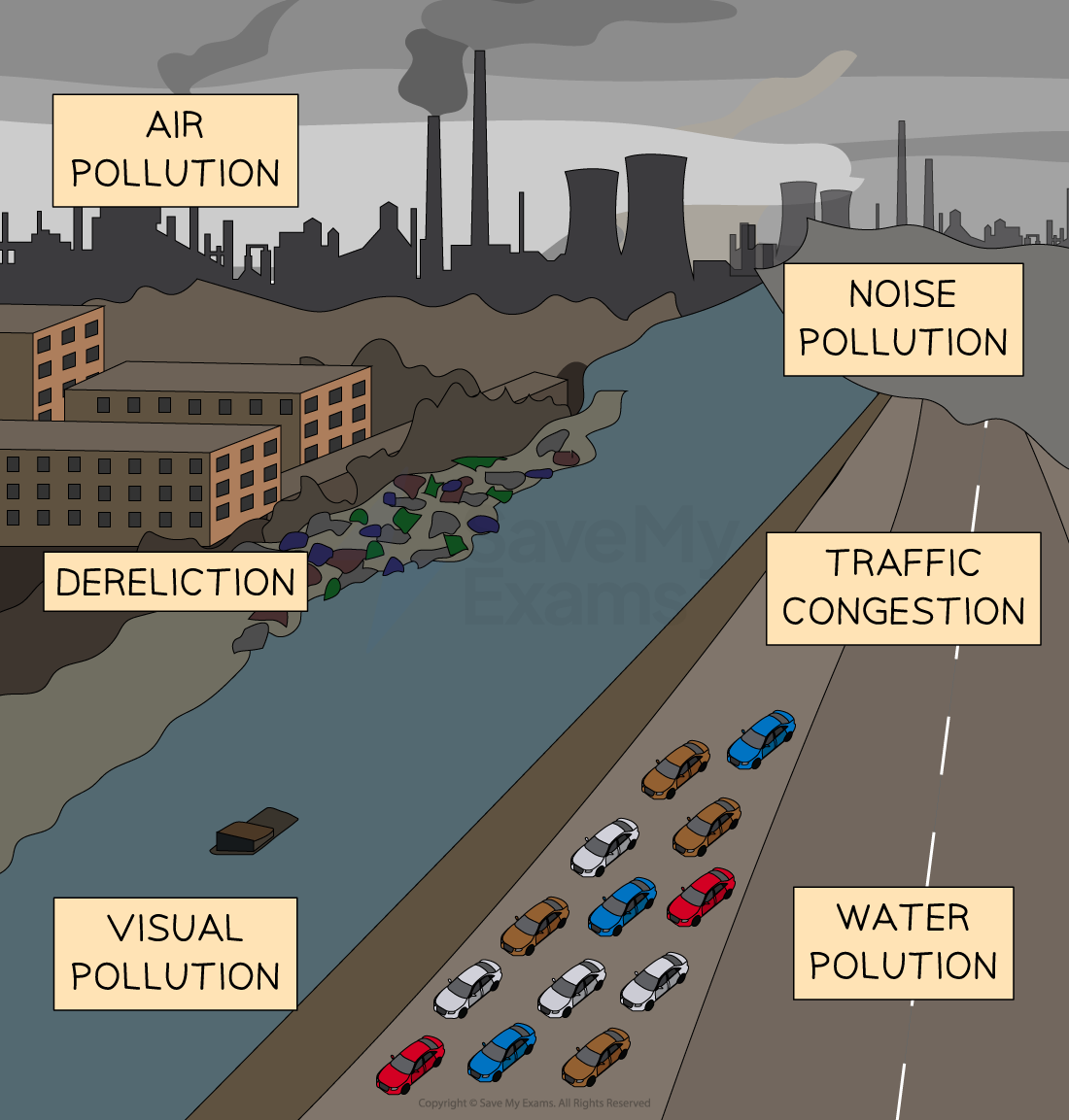
Case Study Air Pollution From Coal Power
Context
- Coal-fired power stations are widely used in countries such as China, India, and South Africa to generate electricity
- Electricity producers sell power to households and firms at a price that mainly reflects their private production costs
External Cost
Burning coal releases air pollutants and greenhouse gases
These cause:
- Respiratory illnesses
- Environmental damage
- Increased healthcare costs
These costs are borne by society rather than the electricity producers
Implication for efficiency
- The marginal social cost (MSC) of producing electricity is higher than the marginal private cost (MPC)
- Firms only consider their private costs when deciding output
- As a result, the market produces more electricity from coal than is socially optimal
- This creates allocative inefficiency and welfare loss
Exam Hint You must not confuse social costs with external costs
Social Costs = Private Costs + External Costs
Understanding social benefits
- Some goods create benefits that extend beyond the individual consumer
- These benefits affect third parties who are not directly involved in the transaction These are known as external benefits
- When external benefits exist, the true benefit to society is greater than the private benefit received by consumers
- This means the market may produce too little output, leading to allocative inefficiency
Key definitions
-
Marginal private benefit (MPB)
- The additional benefit received by the consumer and producer from the consumption or production (output) of one additional unit of output
-
Marginal external benefit (MEB)
- The additional benefit incurred by a third party through the consumption or production (output) of one additional unit of output
-
Marginal social benefit (MSB)
- The benefit to society received from the consumption or production (output) of one additional unit of output
- It is the sum of the private benefits plus the external benefits
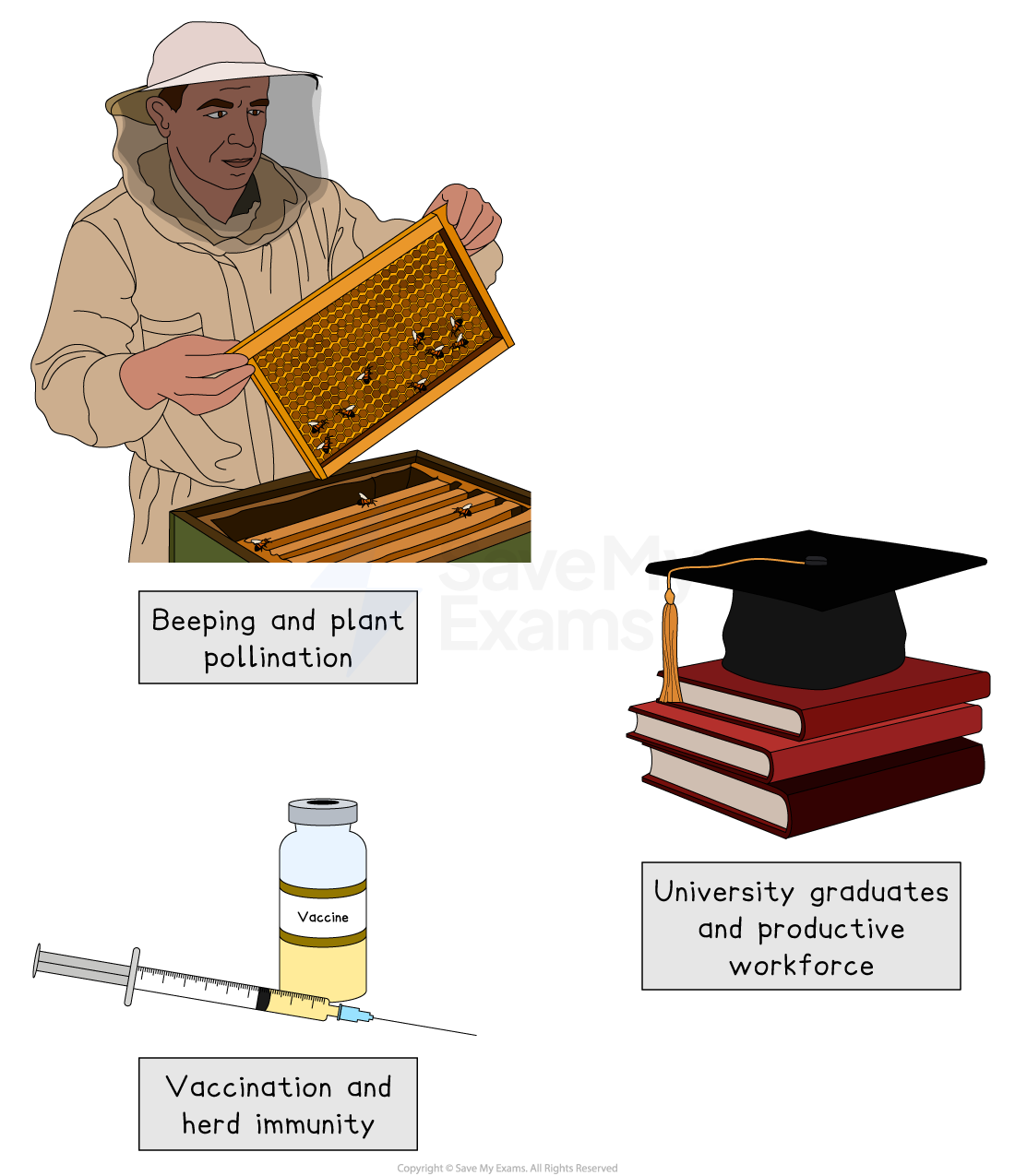
Case Study Markets and external benefits
The image below shows markets which offer external benefits
- Governments and international organisations such as the World Health Organization (WHO) promote vaccination programmes worldwide
- Individuals receive vaccines to protect themselves from diseases such as measles or COVID-19
External Benefit
Vaccinated individuals are less likely to spread infectious diseases
This protects:
- vulnerable groups
- unvaccinated individuals
- the wider community
Society therefore gains additional health benefits beyond the individual consumer
Implication for efficiency
- The marginal social benefit (MSB) of vaccination is greater than the marginal private benefit (MPB)
- Individuals may underestimate the wider benefits to society
- As a result, the free market may lead to under-consumption of vaccines
- This creates allocative inefficiency, as society would benefit from higher vaccination rates
Exam Hint You must not confuse social benefits with external benefits
Social Benefits = Private Benefits + External Benefits
Was this revision note helpful?
Build on this topic