Iodoform Reaction (Cambridge International A-Level Chemistry)
Exam board Cambridge International · A-LevelUpdated 2026-07-02
Iodoform Reaction
-
Tri-iodomethane (also called iodoform) is a yellow precipitate
-
It is formed from the reaction of iodine in an alkaline solution with methyl ketones
- Methyl ketones are compounds that have a CH3CO-group
- Ethanal also contains a CH3CO- group and therefore also forms a yellow precipitate with iodoform
-
The reagent is heated with an alkaline solution of iodine
-
This reaction involves a halogenation and hydrolysis step
- In the halogenation step, all three H-atoms in the -CH3 (methyl) group are replaced with iodine atoms, forming a -CI3 group
- The intermediate compound is hydrolysed by an alkaline solution to form a sodium salt (RCO2- Na+) and a yellow precipitate of CHI3
The iodoform reaction
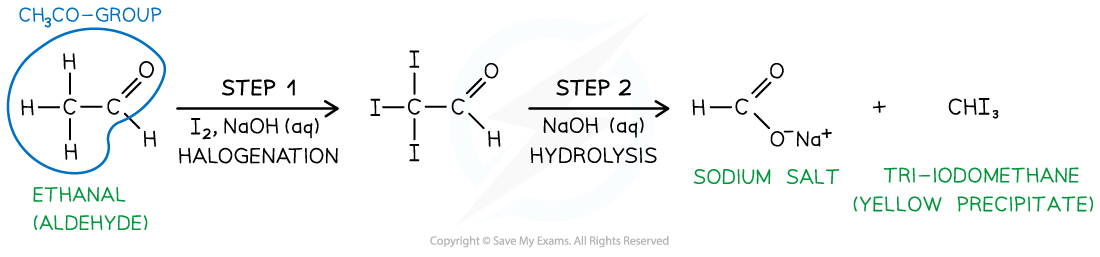
The reaction of ethanal with iodoform results in the formation of a yellow precipitate
Was this revision note helpful?
Build on this topic