Reactions of Amides (Cambridge International A-Level Chemistry)
Spec point —
34.3.2
Reactions of Amides
-
Amides are formed from the condensation reaction of carboxylic acids or acyl chlorides with ammonia or amines
-
The amide group (CONR2) in these compounds can undergo reactions including
- Hydrolysis with **aqueous alkali **or aqueous acid
- Reduction with LiAlH4****
Hydrolysis of amides
-
The -CON- group in substituted amides links two hydrocarbon sections of their molecules together
-
This amide link can be broken down by hydrolysis by refluxing it with an acid or alkali
-
The products of a non-substituted amide are:
- Carboxylic acid
- Ammonia
-
The products of a substituted amide are:
- Carboxylic acid
- Primary amine
Hydrolysis of substituted and non-substituted amides
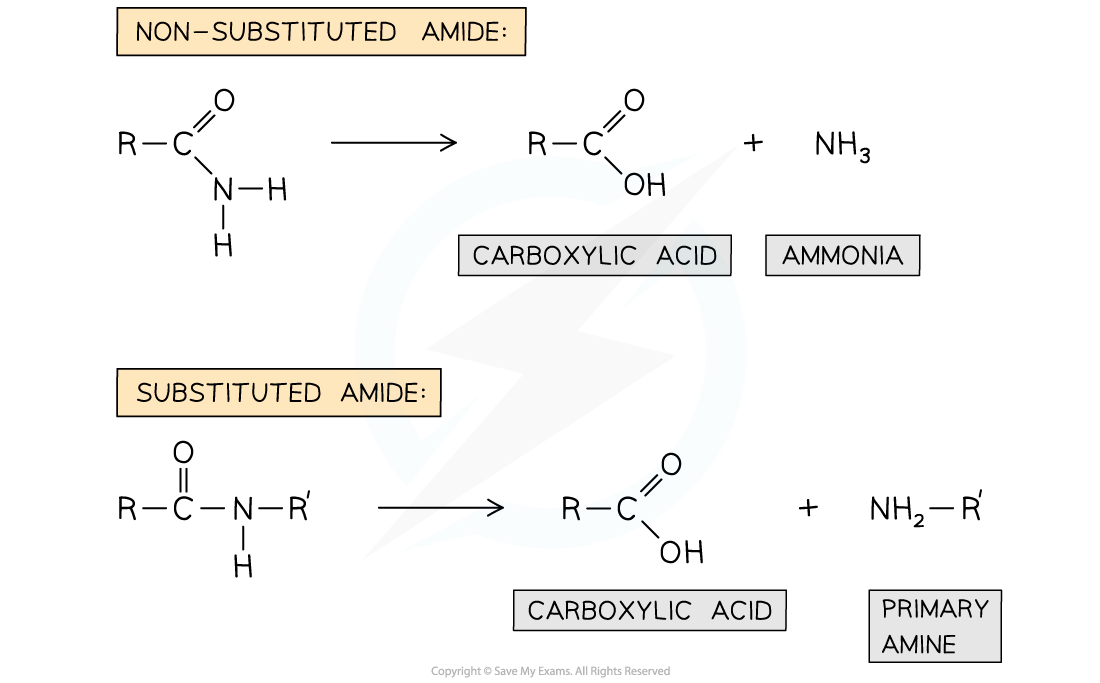
The hydrolysis products include a carboxylic acid along with ammonia for a non-substituted amide and an amine for a substituted amide
- When hydrolysed by refluxing in excess acid, the ammonia or amine produced will form an ammonium salt
- When hydrolysed by refluxing in excess base, the carboxylic acid produced will be deprotonated to form a carboxylate ion
Comparing amide hydrolysis in acidic and alkaline conditions
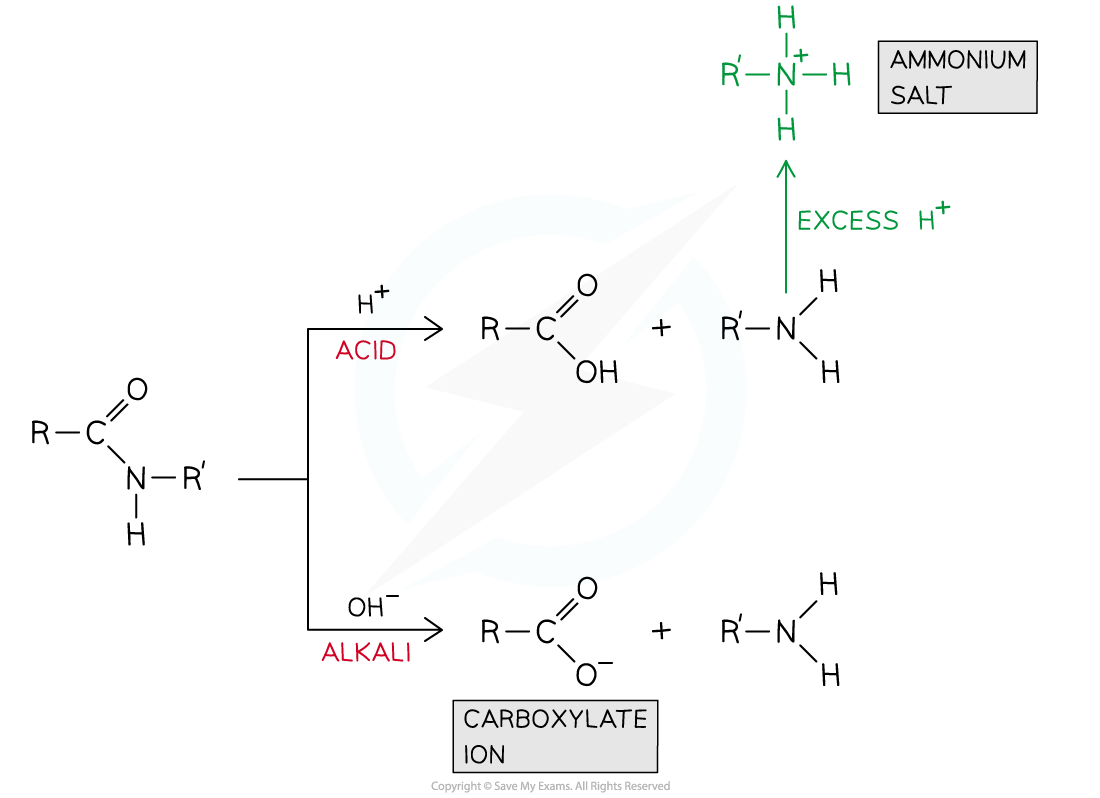
Amides are hydrolysed to carboxylic acids and ammonia or primary amines when refluxed with acid or alkali
Reduction of amides
-
The C=O group in amides can be reduced by the strong reducing agent LiAlH4 to form an amine
-
The products of a non-substituted amide are:
- A primary amine and water
-
The products of a substituted amide are:
- A secondary amine and water
Reduction of amides
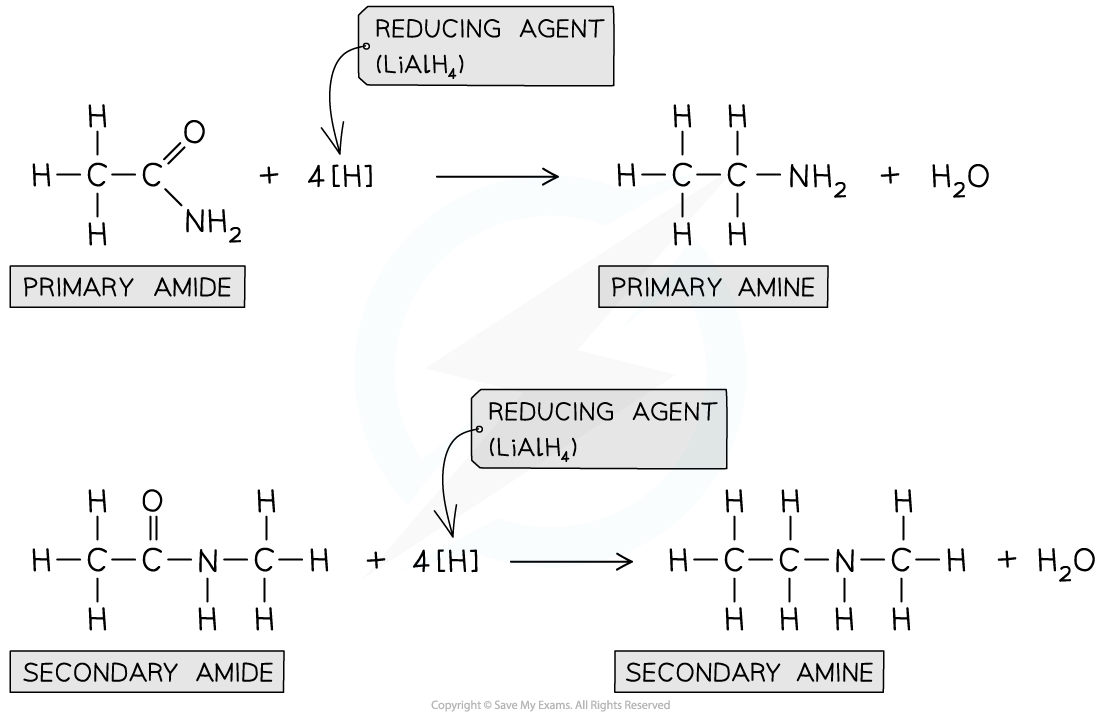
Amides can be reduced to amines using LiAlH4
Was this revision note helpful?
Build on this topic