The Shape of Aromatic Molecules (Cambridge International A-Level Chemistry)
Exam board Cambridge International · A-LevelUpdated 2026-07-02
Shape of Benzene & Aromatic Molecules
- Aromatic molecules consist of one or more rings with conjugated π systems
- Conjugated π systems arise from alternating double and single bonds in which the electrons are delocalised
- Aromatic compounds are called ‘aromatic’ as they often have pleasant odours
Examples of aromatic compounds table
| Functional group | Example | Name |
|---|---|---|
| Arene | 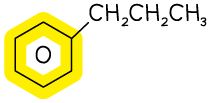 | Propyl benzene |
| Chlorobenzene | 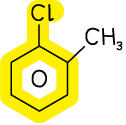 | 2-methylchlorobenzene |
| Phenol | 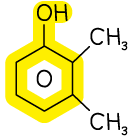 | 2,3-dimethyl phenol |
Shape of benzene & aromatic compounds
- Benzene and other aromatic compounds contain sp2 hybridised carbons as two of their p orbitals have mixed with an s orbital
- This means that each carbon atom in benzene and other aromatic compounds has one p orbital
sp2 hybridisation
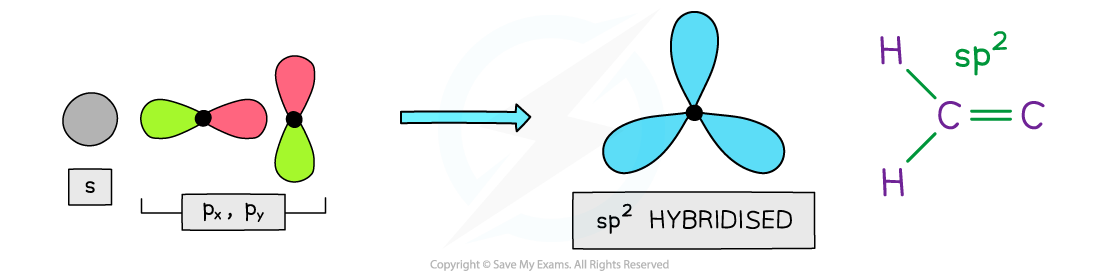
The carbon atoms in aromatic compounds are sp2hybridised as two of their p orbitals mix with an s orbital
- Each carbon atom in the ring forms three σ bonds using the sp2 orbitals
- The remaining p orbital overlaps laterally with p orbitals of neighbouring carbon atoms to form a π bond
- This extensive sideways overlap of p orbitals results in the electrons being delocalised and able to freely spread over the entire ring
- Benzene and other aromatic compounds are regular and planar compounds with bond angles of 120o
- The delocalisation of electrons means that all of the carbon-carbon bonds in these compounds are identical and have both single and double bond character
- The bonds all being the same length is evidence for the delocalised ring structure of benzene
The planar structure of benzene
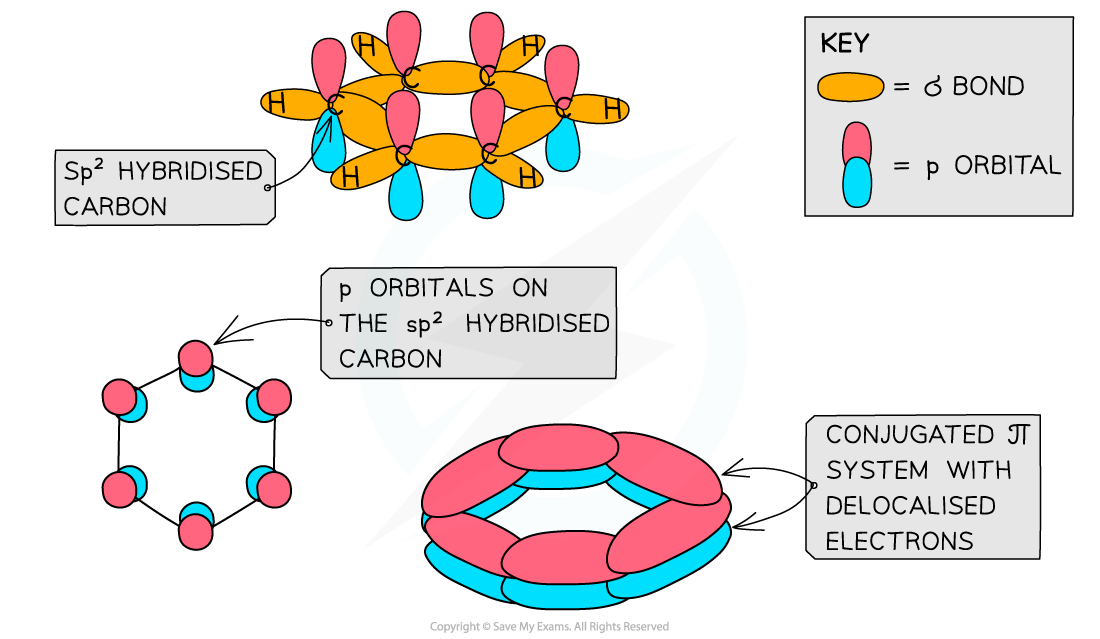
Like other aromatic compounds, benzene has a planar structure due to the sp2hybridisation of carbon atoms and the conjugated π system in the ring
Was this revision note helpful?