Structural Isomerism (Cambridge International A-Level Chemistry)
Structural Isomerism: Chain, Position & Functional Group
-
Structural isomers are compounds that have the same molecular formula but different structural formulae
- E.g. propene and cyclopropane
C3H6 structural isomers
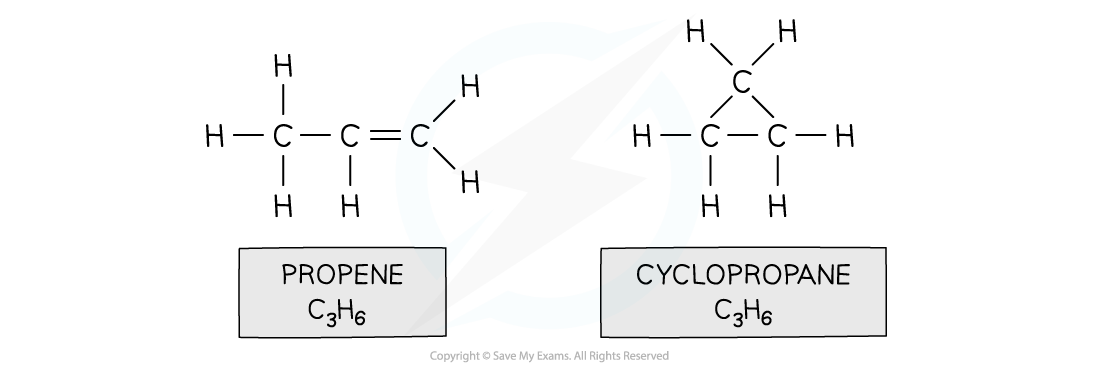
Both propene and cyclopropane are made up of 3 carbon and 6 hydrogen atoms but the structure of the two molecules differs
-
There are three different types of structural isomerism:
- Chain isomerism
- Positional isomerism
- Functional group isomerism
Chain isomerism
-
Chain isomerism is when compounds have the same molecular formula, but their longest hydrocarbon chain is not the same
-
This is caused by branching
- E.g. pentane and 2,2-dimethylpropane
C5H12 branch / chain isomers
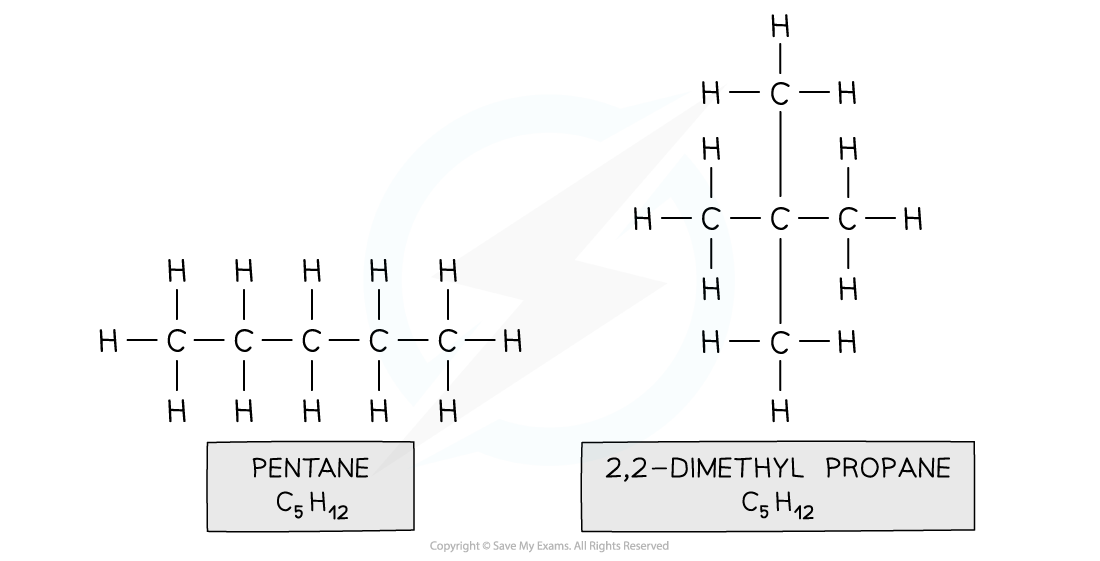
Both compounds are made up of the same atoms however the longest carbon chain in pentane is 5 and in 2,2-dimethylpropane 3 (with two methyl branches)
Positional isomerism
-
Positional isomers arise from differences in the position of a functional group in each isomer
- The functional group can be located on different carbons
- E.g. butan-1-ol and butan-2-ol / 2-butanol
C4H10O positional isomers
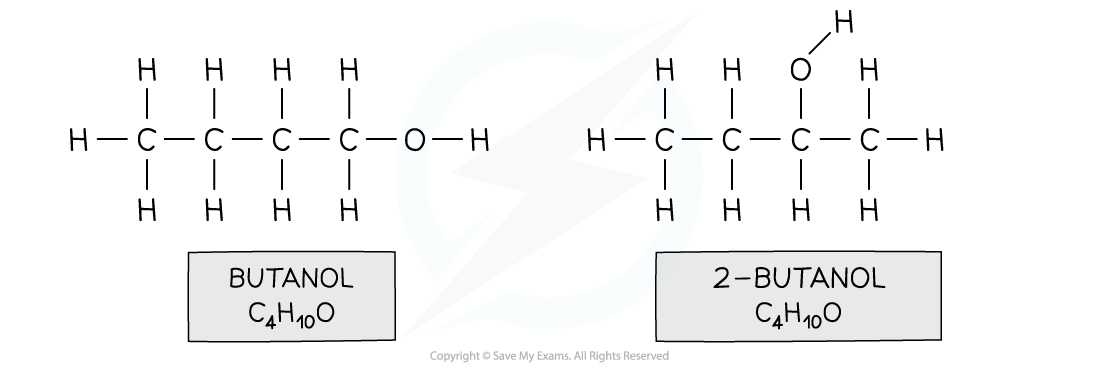
Both compounds have an alcohol group and are made up of 4 carbon, 10 hydrogen and one oxygen atom however in butan-1-ol the functional group is located on the first carbon and in butan-2-ol on the second carbon
Functional group isomerism
-
When different functional groups result in the same molecular formula, functional group isomers arise
-
The isomers have very different chemical properties as they have different functional groups
- E.g. butan-1-ol and ethoxyethane
C4H10O functional group isomers
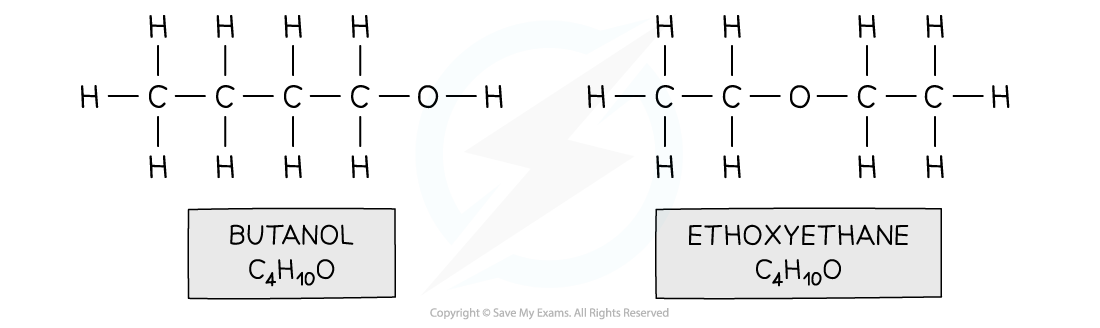
Both compounds have the same molecular formula however butanol contains an alcohol functional group and ethoxyethane an ether functional group
Was this revision note helpful?
Build on this topic