Methods of communication (Cambridge International A-Level Business)
Exam board Cambridge International · A-LevelUpdated 2025-07-14
Spoken communication
- Spoken communication is the process of sharing information using the voice
- It includes both formal and informal conversations and can happen face-to-face or through devices such as phones or video calls
- It is often supported by body language, tone, and gestures, which help convey meaning
Examples of spoken communication in a business
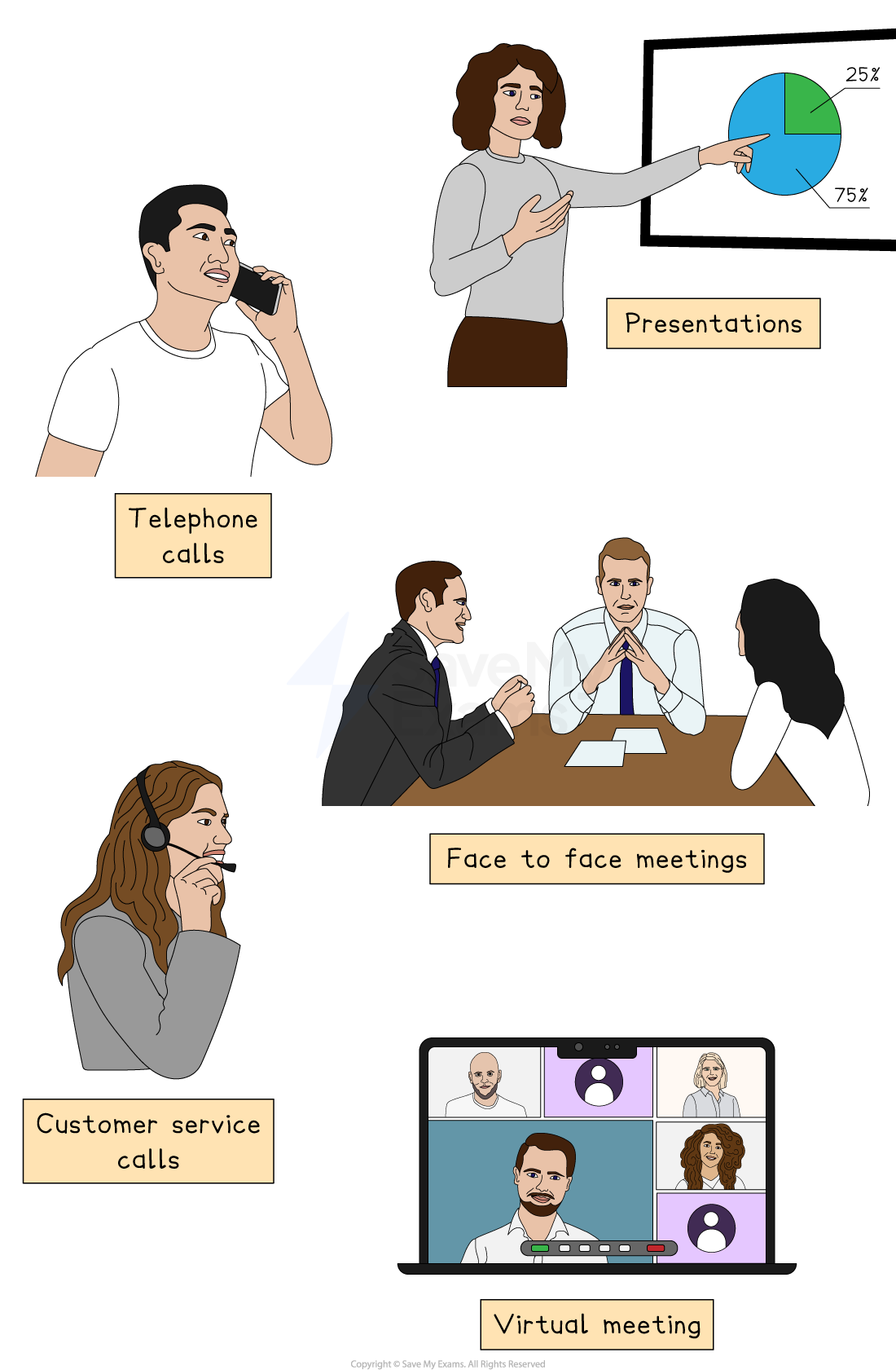
Spoken communication includes meetings, telephone calls and presentations
-
Team meetings
- Employees and managers discuss progress or upcoming projects
-
Telephone calls
- Used to speak with customers, suppliers or colleagues
-
Presentations
- A manager explains a new strategy to staff, often using software to share images, graphs and illustrations
-
Video conferences
- Staff from different locations join a virtual meeting
-
Informal chats
- Quick updates or feedback shared between co-workers during the working day
-
Customer service calls
- Staff answering customer questions or solving problems
Strengths and weaknesses of spoken communication
| Strengths | Weaknesses |
|---|---|
| - Quick and immediate, as it allows instant feedback | - Can be easily misunderstood, especially if instructions are complex |
| - Builds relationships through tone and emotion | - Not always recorded, which can lead to confusion or memory issues |
| - Flexible, as it allows questions and clarification | - Background noise or other distractions can reduce effectiveness |
| - Suitable for sensitive or personal topics | - Hard to share with many people at once without a formal structure |
| - Encourages teamwork and motivation as it creates a human connection between people | - Relies on good listening skills to ensure information is not missed |
Written communication
- Written communication is the sharing of information through written words, either on paper or digitally
- It includes anything that can be read, such as emails, reports, letters, notices, or messages sent through digital apps
- Written communication is often used when the message needs to be clear, permanent, or shared with several people
Examples of written communication
-
Emails
- May be used for daily updates, requests or instructions between employees and managers
-
Business reports
- These are usually formal documents outlining results, plans or research
-
Notices and memos
- These can be used for internal announcements about meetings, policy changes or deadlines
-
Agendas and minutes of meetings
- These record what will be or has been discussed in face-to-face or virtual meetings
-
Letters
- These may be used for formal communication with external stakeholders such as customers, suppliers or job applicants
-
Contracts and agreements
- These are legal documents confirming terms and conditions
Strengths and weaknesses of written communication
| Strengths | Weaknesses |
|---|---|
| - Creates a permanent record that can be referred to later | - Can be time-consuming to write and read |
| - Helps ensure accuracy and clarity, especially for complex topics | - No immediate feedback, as delays in clarification may cause problems |
| - Can be easily shared with multiple people | - The tone can be misunderstood or seem too formal |
| - Suitable for formal communication and legal documents | - People may ignore or overlook written messages |
| - Useful across different time zones or when people are unavailable | - Lacks the personal touch of face-to-face or spoken communication |
Electronic communication
- Electronic communication is the use of digital technology to send and receive messages
- It includes written, spoken, or visual communication shared using electronic devices such as computers, smartphones or tablets
- It allows quick and efficient contact within and outside the business, across any location or time zone
Examples of electronic communication
-
Emails:
- Fast written messages that can be sent to individuals or groups
-
Video calls(e.g. Zoom, Microsoft Teams)
- Real-time spoken and visual meetings
-
Instant messaging apps(e.g. Slack, WhatsApp)
- Quick, informal messages between staff
-
Company websites
- These are used to provide information to customers, investors and the general public
-
Social media(e.g. LinkedIn, Instagram)
- This can be used to promote the business and interact with external audiences
-
Internal platforms
- These include intranets that can be used to share updates, documents and announcements with employees
Strengths and weaknesses of electronic communication
| Strengths | Weaknesses |
|---|---|
| - Fast and efficient, as messages can be sent instantly anywhere | - May lead to information overload as a result of too many messages or emails |
| - Can combine text, images, audio and video | - Can be impersonal, reducing human connection |
| - Supports remote working and international communication | - Technical problems, such as system crashes or poor internet connection, can cause delays |
| - Easy to store and retrieve as messages can be saved and reviewed | - Security risks due to data breaches or hacking of sensitive information |
| - Helps with collaboration through shared documents or group chats | - Employees may ignore or misunderstand messages if they are poorly written |
Visual communication
- Visual communication is the use of images, symbols, charts or other visual elements to convey information
- It helps to simplify complex ideas and make messages easier to understand and remember
- Visuals are often used alongside spoken or written communication to strengthen the message
Examples of visual communication
-
Graphs, charts and infographics
- These are often used in reports or presentations to show trends, sales data or performance
-
Logos and branding
- These provide a visual identity of the business that creates instant recognition
-
Training videos or animations
- These can help employees understand how to use equipment or follow procedures
-
Presentations (e.g. PowerPoint)
- Software used in meetings or pitches to illustrate key points
-
Signs and symbols
- These can include health and safety signs, arrows or labels around the workplace, providing instructions or information
Strengths and weaknesses of visual communication
| Strengths | Weaknesses |
|---|---|
| - It can make complex information easier to understand | - It can be misinterpreted if visuals aren’t clear or well-designed |
| - It helps people remember information better than text alone | - Some messages need explanation, which visuals alone can’t provide |
| - It can be engaging and eye-catching, especially for presentations or marketing | - It can be costly and time-consuming to produce high-quality visuals |
| - It is useful for people with low literacy or language barriers | - Not all employees may have access to or skills with design tools |
Was this revision note helpful?
Build on this topic