Enzyme Activity: Immobilised v Free (Cambridge International A-Level Biology)
Enzyme Activity: Immobilised Vs. Free
Spec point —
3.2.4· investigate the difference in activity between an enzyme immobilised in alginate and the same enzyme free in solution, and state the advantages of using immobilised enzymes
Enzyme activity: immobilised v free
-
Enzymes can be added to solutions and are thereby considered ‘free’ or they can be immobilised
- Investigations with free enzymes are carried out with an enzyme added to a solution
- Depending on the needs of an investigation, substrate can be added directly to the solution or the enzyme solution can be added in a more controlled way to a substrate
-
Immobilised enzymes are enzymes that have been bound to an inert, stationary and insoluble material such as alginate
-
The substrate is then passed over the immobilised enzyme and the product is collected
-
Advantages to this method:
- There is no enzyme in the product (the product is uncontaminated) and therefore there is no need to further process or filter the end product
- The immobilised enzyme can be reused multiple times which is both efficient and cost-effective (enzymes are expensive)
- Immobilised enzymes have a greater tolerance of temperature and pH changes (immobilisation often makes enzymes more stable)
-
A practical application of immobilised enzymes used in the food industry is in the production of lactose-free milk:
- Milk is a valuable source of nutrients containing protein, fat and the carbohydrate lactose
- Lactose is a disaccharide that is broken down into glucose and galactose
- 5-10% of the UK population are lactose intolerant
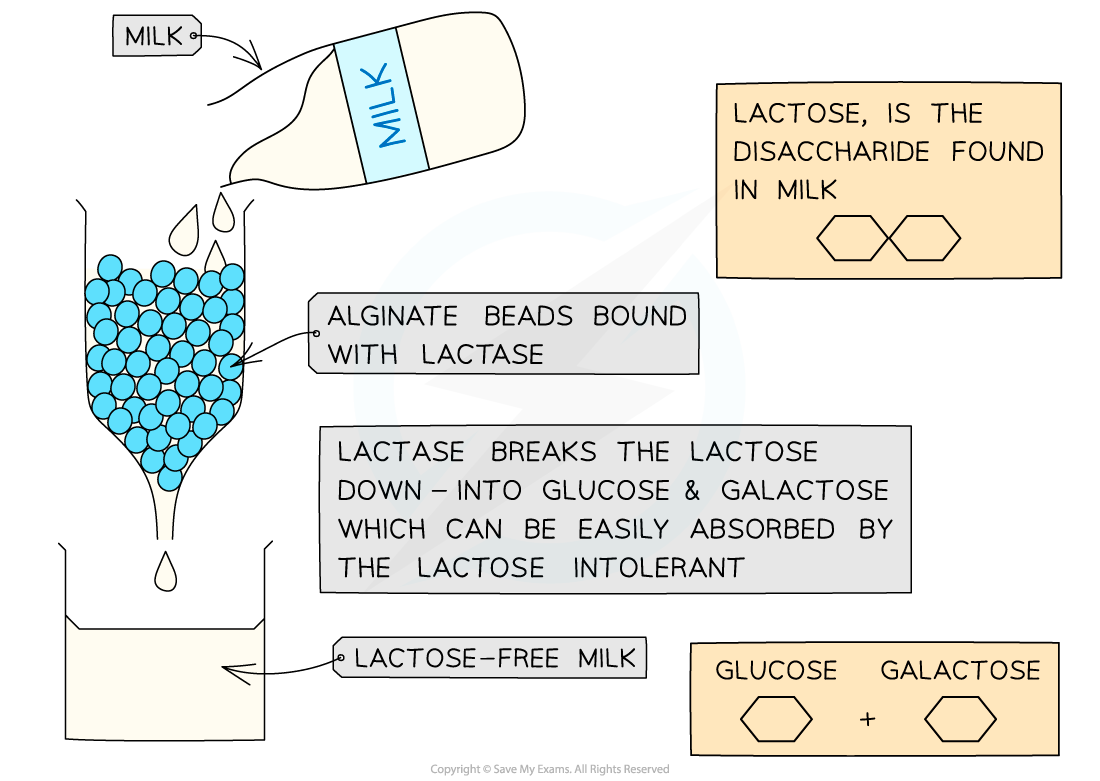
Using immobilised enzyme to modify milk
-
Using the enzyme lactase, as shown above, is an efficient way to remove lactose from milk and to provide lactose intolerant individuals with a way of consuming milk without suffering intolerance symptoms:
- The enzyme lactase can be immobilised using alginate beads
- Milk is run through the column of lactase-containing beads
- The lactase hydrolyses the lactose in the milk to glucose and galactose
- This ensures the milk is lactose-free
- It can also then be used to make other lactose-free dairy products
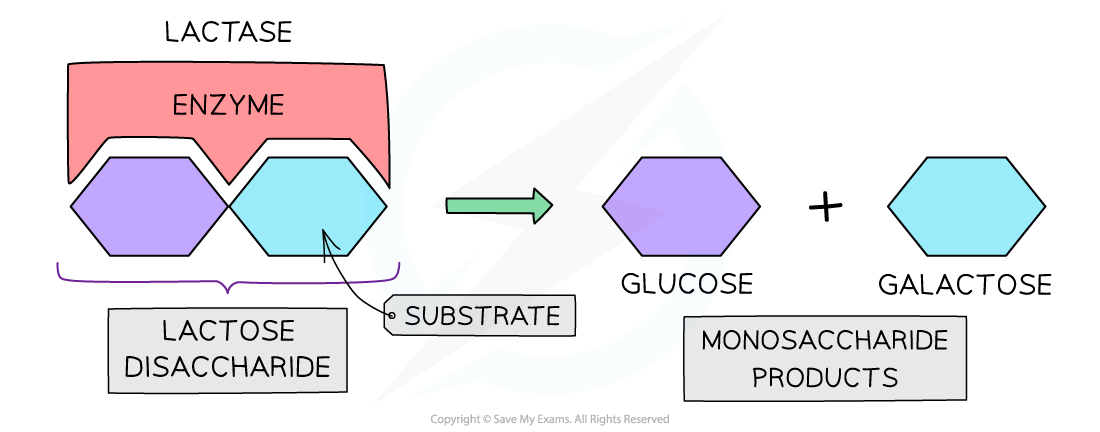
Lactose is a disaccharide that is broken down by lactase into the monosaccharides glucose and galactose
Was this revision note helpful?
Build on this topic