Simple Reflex Arc (Edexcel IGCSE Science)
Spec point —
3.40· "describe the structure and functioning of a simple reflex arc illustrated by the withdrawal of a finger from a hot object"
Simple Reflex Arc
-
A reflex response (also known as an involuntary response) does not involve the conscious part of the brain as the coordinator of the reaction
-
Awareness of a response having happened occurs after the response has been carried out
-
Responses are therefore automatic and rapid – this helps to minimise damage to the body and aids survival
- Pain-withdrawal, blinking, and coughing are all examples of reflex responses that help us to avoid serious injury, such as damage to the eye or choking
The reflex arc
-
A reflex arc is the pathway taken by electrical impulses during a reflex action
-
An example is the withdrawal reflex that occurs when someone steps on a pin
-
The pathway of this reflex arc is as follows:
- The stimulus(the pin) is detected by a (pain/pressure/touch) receptor in the skin on the person's foot
- A sensory neurone sends electrical impulses to the spinal cord (which acts as the coordinator)
- An electrical impulse is passed to a relay neurone in the spinal cord (part of the CNS)
- A relay neurone synapses with a motor neurone
- A motor neurone carries an impulse to a muscle in the leg (the effector)
- When stimulated by the motor neurone, the muscle will contract and pull the foot up and away from the sharp object (the response)
-
This all happens very quickly and without conscious thought
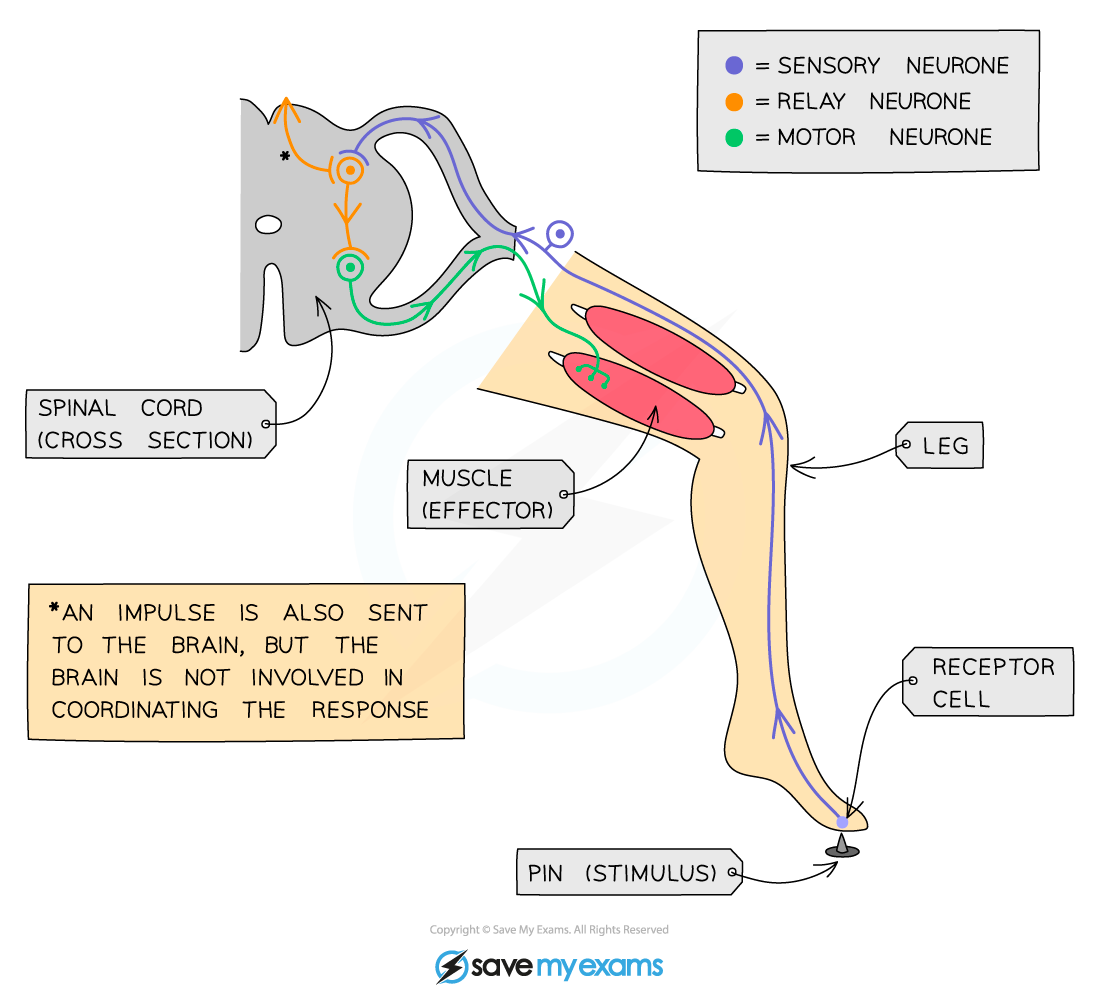
The reflex arc pathway (in this case for a pain-withdrawal reflex). Reflex actions are automatic and rapid; they do not involve the conscious part of the brain.
Was this revision note helpful?
Build on this topic