Contamination & Irradiation (Edexcel IGCSE Science)
Spec point —
7.15· describe the difference between contamination and irradiation
Contamination & irradiation
Contamination
-
Contamination is defined as: The accidental transfer of a radioactive substance onto or into a material
-
A substance is only radioactive if it contains a source of ionising radiation
-
Contamination occurs when a radioactive isotope gets onto a material where it should not be
- It is almost always a mistake or an accident e.g. a radiation leak
-
As a result of this, the small amounts of the isotope in the contaminated areas will emit radiation and the material becomes radioactive
Irradiation
-
Irradiation is defined as: The process of exposing a material to ionising radiation
-
Irradiating a substance does not make it radioactive
- However, it can kill living cells
-
Irradiation is usually a deliberate process, such as in the sterilisation of food or medical equipment
- Surgical equipment is irradiated before being used in order to kill any micro-organisms on it before surgery
- Food can be irradiated to kill any micro-organisms within it to make it last longer
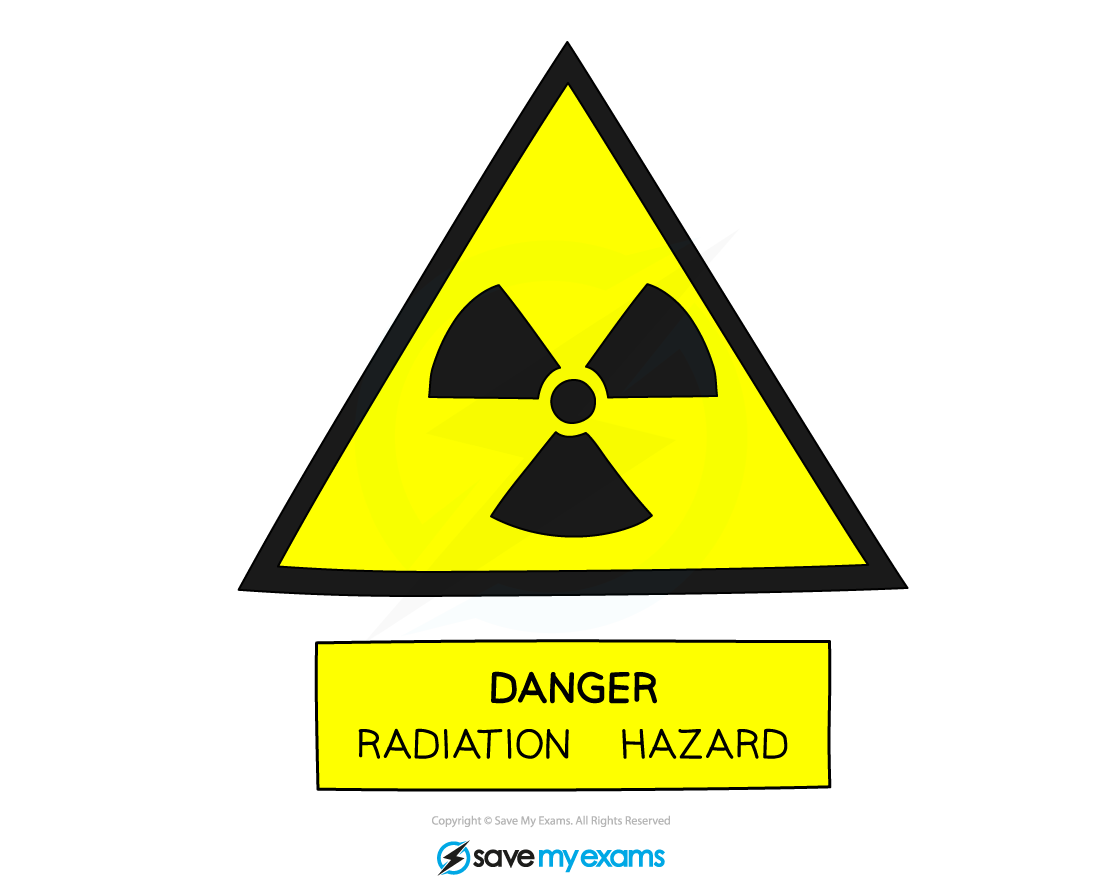
This sign is the international symbol indicating the presence of a radioactive material
Protection from irradiation and contamination
-
Radiation can mutate DNA in cells and cause cancer through both irradiation and contamination
- Therefore, it is important to reduce the risk of exposure to radiation
-
Contamination is particularly dangerous if a radioactive source gets inside the human body
- For example, through the inhalation of radioactive gas particles, or ingesting contaminated food
- The internal organs will be irradiated as the source emits radiation as it moves through the body
-
To reduce the effects of irradiation, minimise the exposure time near a source and maximise the distance to the radioactive source
-
To prevent contamination, an airtight suit is worn by people working in an area where a radioactive source may be present
- This prevents radioactive atoms from getting on or into the person
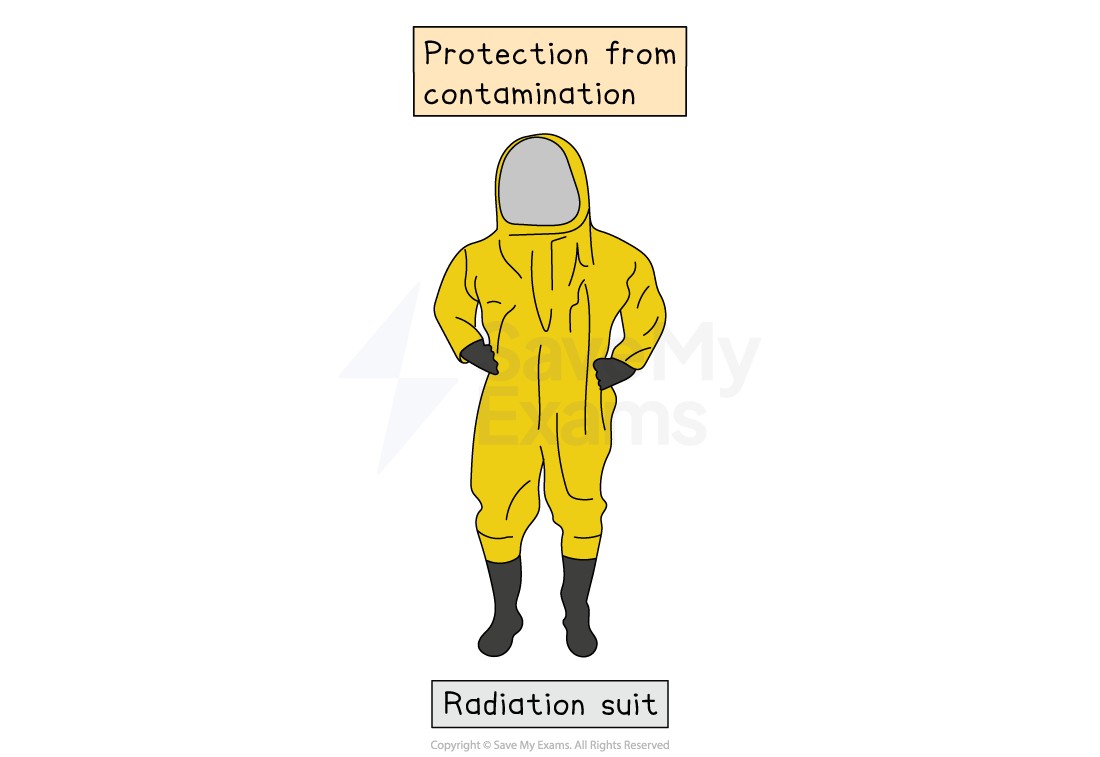
Contamination carries much greater risks than irradiation
Differences between irradiation and contamination
- The differences between irradiation and contamination are summarised in the table below:
Comparison of irradiation and contamination table
| Irradiation | Contamination | |
|---|---|---|
| description | when an object is exposed to a source of radiation but does not become radioactive | when an object becomes radioactive due to the presence of a source of radiation |
| source | exposure to source of radiation outside the object | exposure to source on or within the object |
| prevention | reduced by minimising the exposure time and maximising the distance to the radioactive source | radiation cannot be blocked once an object is contaminated, but can be prevented by handling the source safely |
| causes | caused by the deliberate exposure to radiation | caused by the accidental transfer of radioactive material |
Worked Example Summarise the difference in the risk posed by radioactive sources with very short and very long half-lives in regard to
(a) irradiation
(b) contamination.
Answer:
(a) Irradiation poses a greater risk in sources with...
- Shorter half-lives
- A short half-life means a source has a high activity
- This means there is a high rate of radioactive emissions, compared to a source with a long half-life
(b) Contamination poses a greater risk in sources with...
- Longer half-lives
- Sources with long half-lives will remain radioactive for longer
- They need to be controlled for longer, to prevent them spreading
- Shielding and storage may be required
Exam Hint Irradiation and contamination are very commonly confused.
Remember that something is radioactive only if it contains radioactive atoms. This can only occur from contamination, not from irradiation!
Was this revision note helpful?
Build on this topic