Light & Sound Waves (Edexcel IGCSE Science)
Exam board Pearson Edexcel · IGCSEUpdated 2026-07-02
Light
-
Visible light is a part of the Electromagnetic spectrum which means it is a transverse wave
- This is explained in Transverse & longitudinal waves
Representing a transverse wave
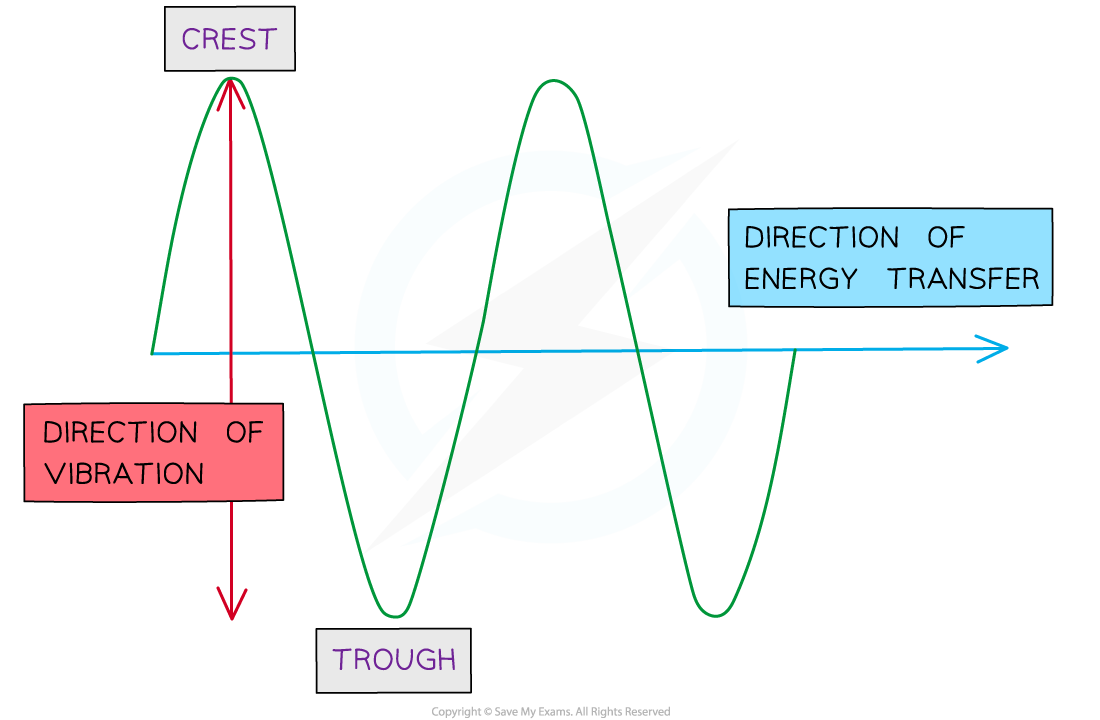
Light waves are transverse: the particles vibrate in a perpendicular direction to the energy transfer
-
Light can undergo:
- Reflection
- Refraction
Sound
-
Sound waves are longitudinal waves
- This is explained in Transverse & longitudinal waves
-
Longitudinal waves are usually drawn as several lines to show that the wave is moving parallel to the direction of energy transfer
- Drawing the lines closer together represents the compressions
- Drawing the lines further apart represents the rarefactions
Representing a longitudinal wave
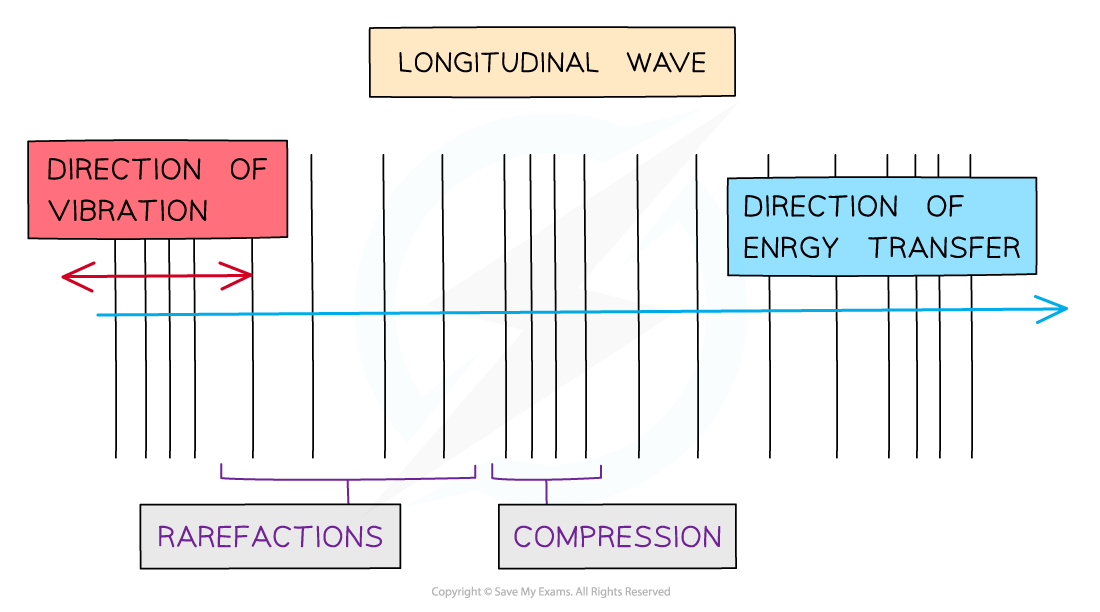
Longitudinal waves are represented as sets of lines with rarefactions and compressions
-
Sound can also undergo:
- Reflection
- Refraction
-
The reflection of a sound wave is called an echo
Was this revision note helpful?
Build on this topic