Energy Resources (Edexcel IGCSE Physics)
Guided lessons are live for this note
Work through it step by step — key points, depth layers, a worked example and self-checks.
Spec point —
4.18P· describe the energy transfers involved in generating electricity using: • wind • water • geothermal resources • solar heating systems • solar cells • fossil fuels • nuclear power (physics only)
Energy resources
-
Energy resources in physics are large stores of energy that can be used to generate electricity and heat homes and businesses
- These are also sometimes called energy sources
Renewable and non-renewable energy resources
-
Some electricity drawn from the National Grid is generated from non-renewable resources, and some is generated from renewable resources
-
A renewable energy resource is defined as
An energy source that is replenished at a faster rate than the rate at which it is being used
-
As a result of this, a renewable energy resource is one that will not run out
-
Renewable energy resources include:
- solar heating panels
- solar cells
- wind
- hydroelectricity
- geothermal
- wave
- tidal
-
Non-renewable energy resources include:
- fossil fuels (coal, oil and natural gas)
- nuclear fuel
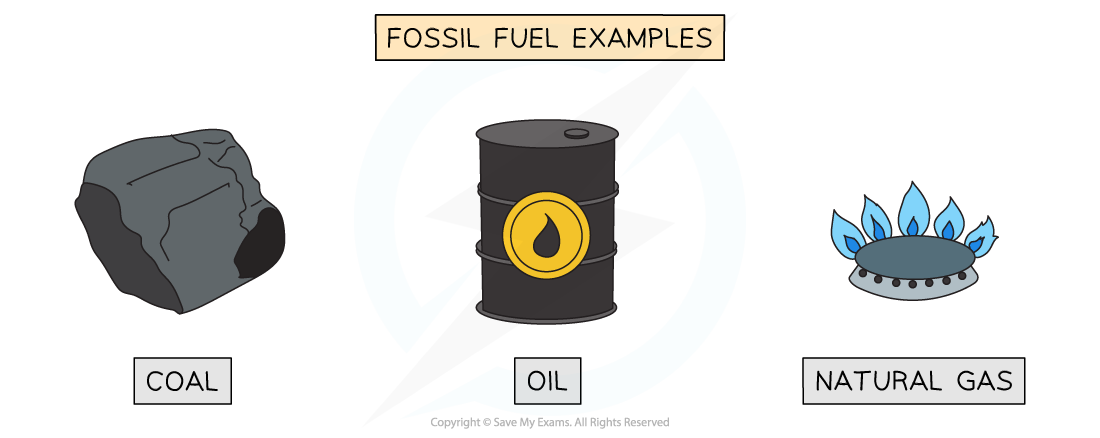
Coal, oil, and natural gas are examples of fossil fuels. These are energy resources in limited supply, meaning they will eventually run out
Generating electricity from energy resources
-
Electricity is generated in very similar ways, no matter what energy resource is used
-
A turbine is turned, which turns a generator, which generates electricity
-
The element that differs is how the turbine is made to turn
- Solar cells are the exception to this as they do not use a turbine
-
Generating energy reliably on a national or global level requires the use of a range of different energy resources
Energy resources and energy transfers
Wind
- Wind is used to turn turbines directly which turns a generator which generates electricity
- Energy is transferred from the kinetic store of the wind, to the kinetic store of the turbine, to the kinetic store of the generator
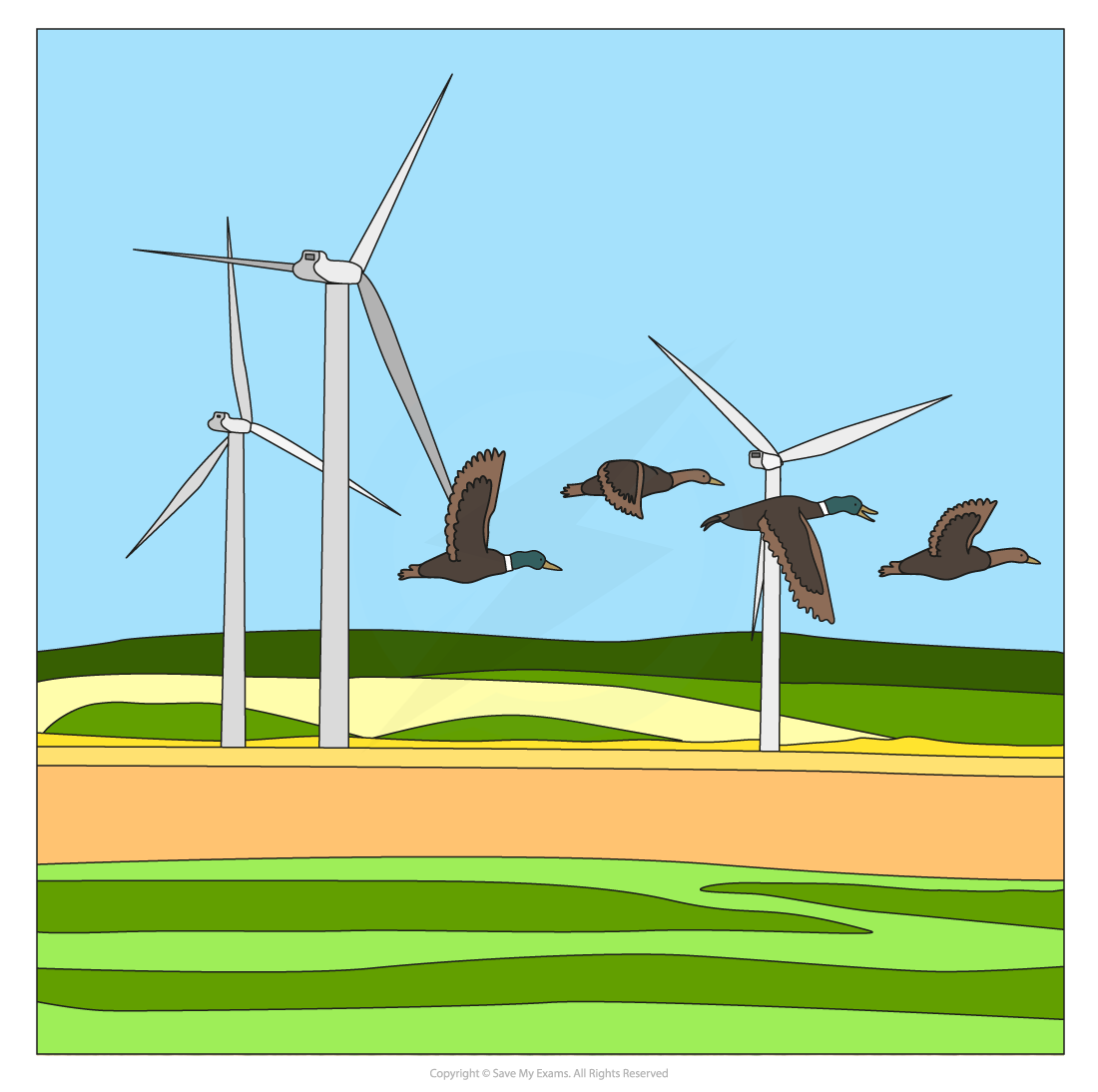
Wind turns the turbines directly, which turn generators, which generate electricity
Water: hydroelectric
- Water is stored at a height (usually in a dam), and when released, the moving water is used to turn turbines directly which turns a generator, which generates electricity
- Energy is transferred from the gravitational potential store of the water, to the kinetic store of the water, to the kinetic store of the turbine, to the kinetic store of the generator
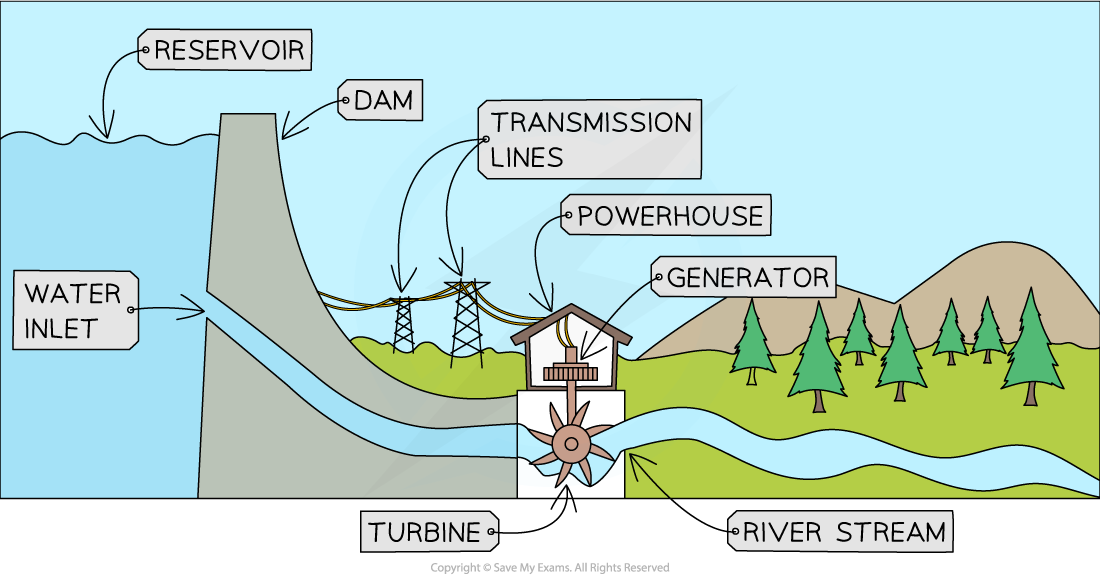
A hydroelectric dam transfers energy from the gravitational potential energy store of the water to its kinetic energy store mechanically to turn a turbine
Water: tidal
- Water is stored at a height (usually by a tidal barrage) at high and low tide, when released the moving water is used to turn turbines directly, which turn a generator, which generates electricity
- Energy is transferred from the gravitational potential store of the water, to the kinetic store of the water, to the kinetic store of the turbine, to the kinetic store of the generator
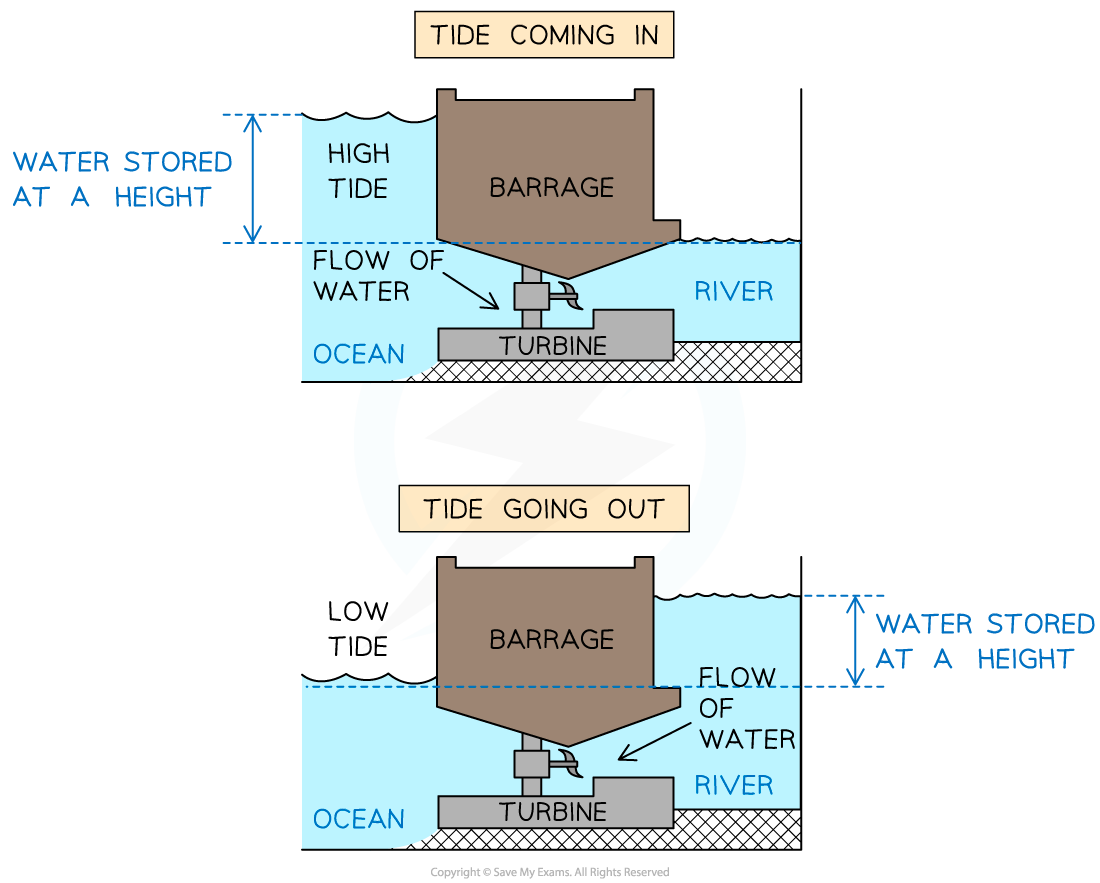
Tidal power uses water stored at a height, which when released, flows over a turbine causing it to turn
Water: wave
- The motion of the water due to waves is used to turn turbines directly, which turn a generator, which generates electricity
- Energy is transferred from the kinetic store of the water to the kinetic store of the turbine, to the kinetic store of the generator
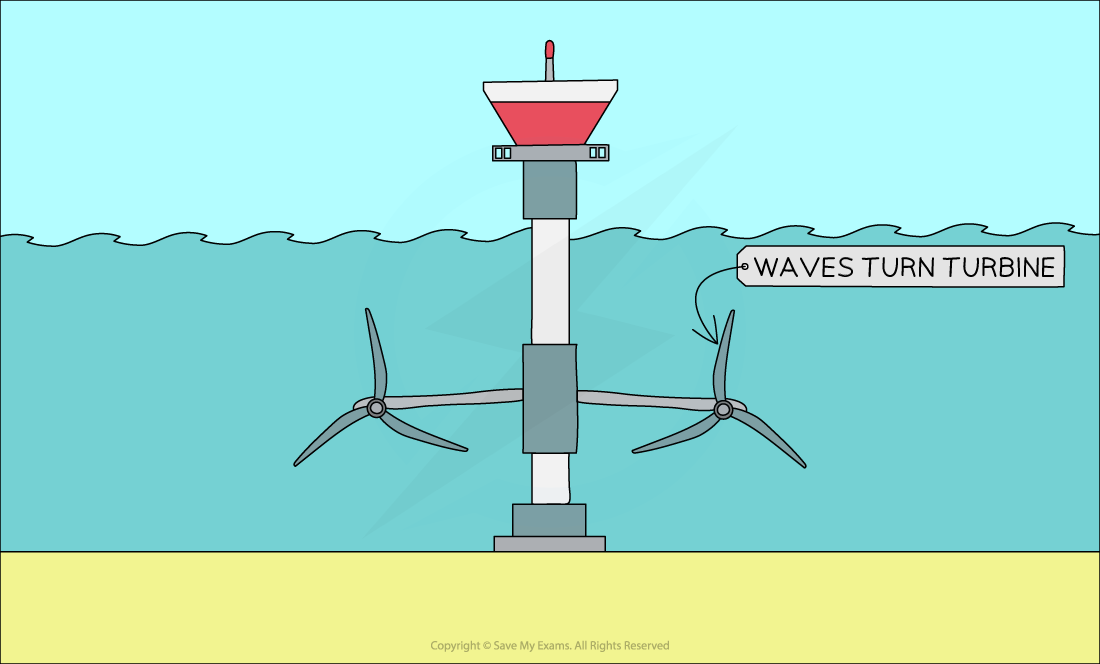
Wave power uses the motion of the waves to turn turbines directly, the turbines turn generators which generate electricity
Geothermal resources
- Hot rocks underground are used to heat water to produce steam that turns turbines, which turn a generator, which generates electricity
- Energy is transferred from the thermal store of the rocks, to the thermal store of the water, to the kinetic store of the turbine, to the kinetic store of the generator
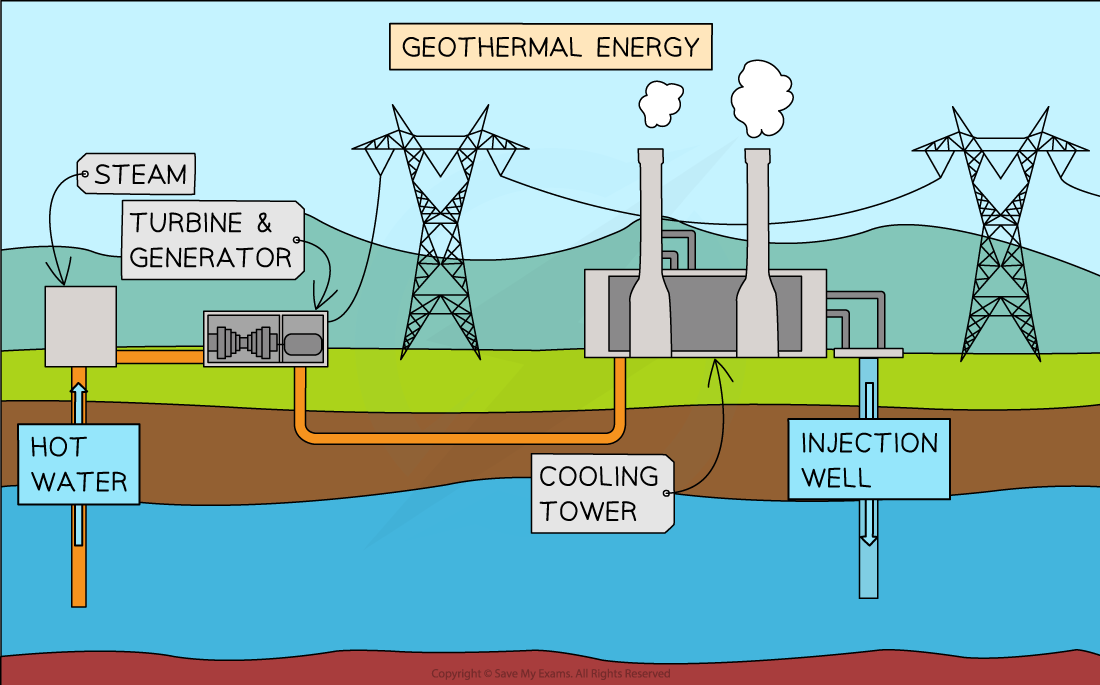
Cold water is heated by the rocks and returned as hot water or steam which can be used to turn turbines to generate electricity
Solar heating systems
- Solar heating panels use sunlight to heat water in small pipes within the panel to produce warm water for households
- Energy is transferred from the nuclear store of the Sun, to the thermal store of the panel, to the thermal store of the water
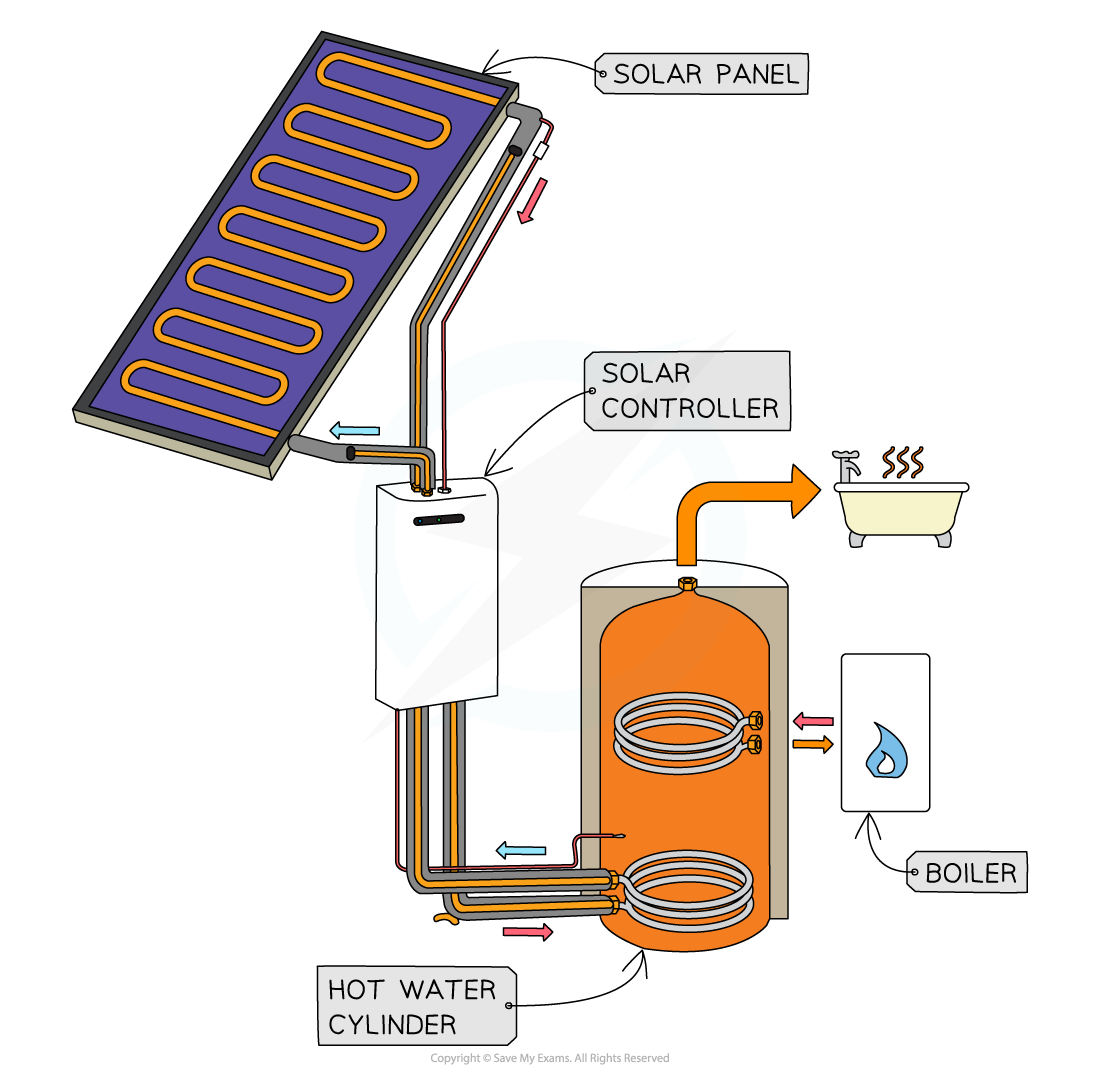
Solar heating panels use energy from the sun to heat water for use in homes and businesses
Solar cells
- Solar cells use sunlight (EM radiation) to directly produce a current
- When sunlight falls on solar cells, electrons are released from the metal in the solar cell, which can be directed into a circuit, producing a current
- Energy is transferred by radiation from the nuclear store of the Sun, to the thermal store of the solar cell
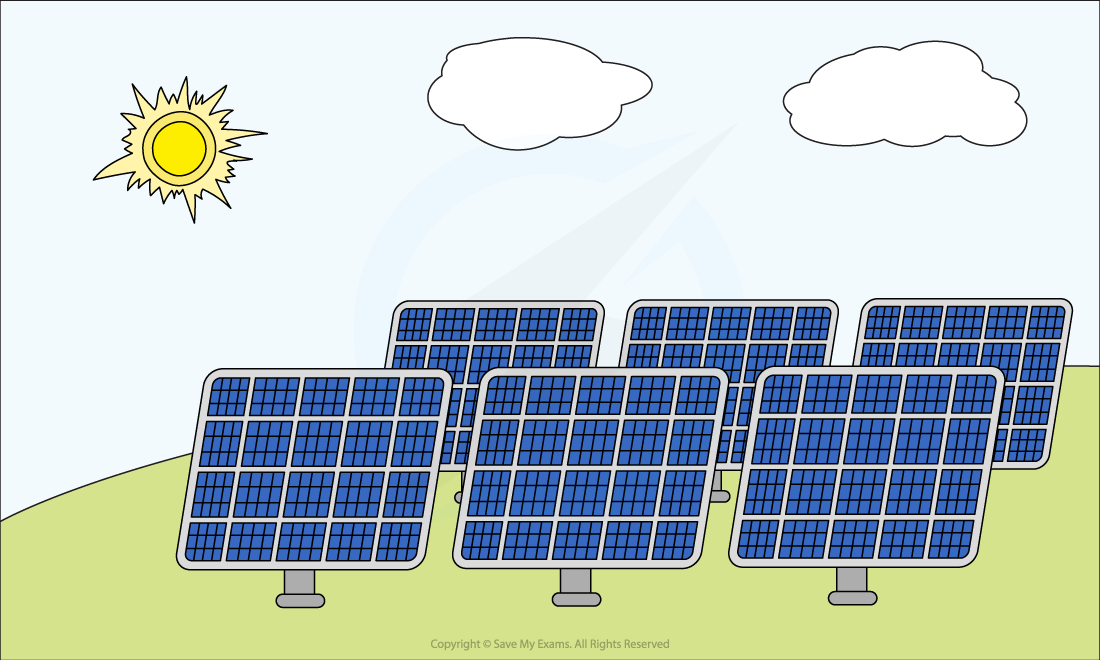
Solar cells use energy from the sun to generate electricity directly
Fossil fuels
- Fossil fuels are combusted to heat water to produce steam that turns turbines to generate electricity
- Energy is transferred from the chemical store of the fuel, to the thermal store of the water, to the kinetic store of the turbine, to the kinetic store of the generator
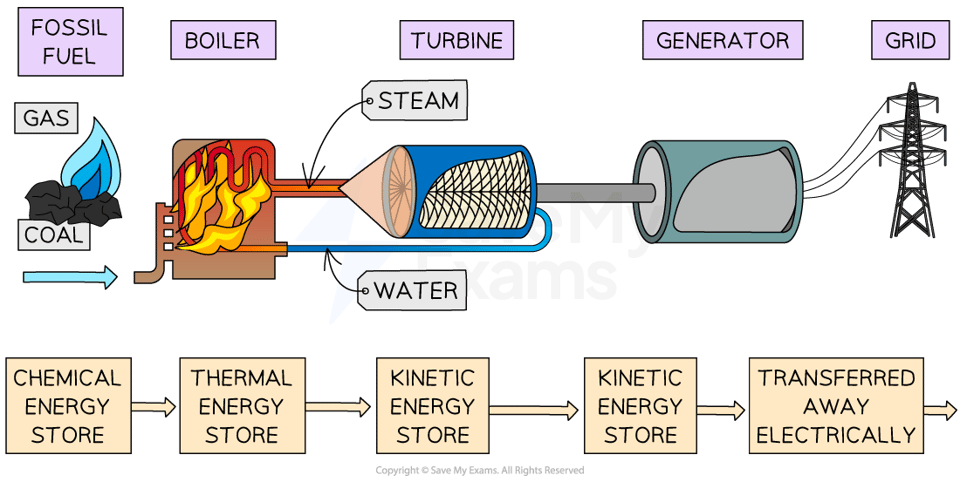
The energy transfers involved in the production of electricity from fossil fuels
Nuclear power
- Nuclear fuels are reacted to heat water to produce steam that turns turbines to generate electricity
- Energy is transferred from the nuclear store of the fuel, to the thermal store of the water, to the kinetic store of the turbine, to the kinetic store of the generator
Worked Example Electricity can be generated by wind power.
Describe the energy transfers which occur when a wind turbine is used to generate electricity for the National Grid.
Answer:
Step 1: Determine where the energy is transferred from
- Energy is transferred from the kinetic store of the moving wind...
Step 2: Determine the energy transfer involved as energy is transferred from the wind to the turbine
- ...to the kinetic store of the turbine as the wind makes it turn.
Step 3: Name the other energy transfers that occur in the process of generating electricity
- Energy is transferred from the kinetic store of the turbine to the kinetic store of the generator and is transferred electrically to the National Grid.
Was this revision note helpful?