Conservation of Energy (Edexcel IGCSE Physics)
Guided lessons are live for this note
Work through it step by step — key points, depth layers, a worked example and self-checks.
Spec point —
4.3· use the principle of conservation of energy
Conservation of energy
What is the principle of conservation of energy?
-
The principle of conservation of energy states that: Energy cannot be created or destroyed, it can only be transferred from one store to another
-
This means the total amount of energy in a closed system remains constant
-
Energy can be transferred into or out of a system, but the total energy in the universe must remain constant
- For a system to gain energy, another system must lose the same amount of energy
-
Therefore, energy is never 'lost' but it can be transferred to the surroundings
- Energy can be dissipated(spread out) to the surroundings by heating and radiation
- Dissipated energy transfers are often not useful, and can then be described as wasted energy
Examples of the principle of conservation of energy
Example 1: a bat hitting a ball
-
The moving bat has energy in its kinetic store
-
Some of that energy is transferred usefully to the kinetic store of the ball
-
Some of that energy is transferred from the kinetic store of the bat to the thermal store of the ball mechanically due to the impact of the bat on the ball
- This energy transfer is not useful; the energy is wasted
-
Some of that energy is dissipated by heating to the thermal store of the bat, the ball, and the surroundings
- This energy transfer is not useful; the energy is wasted
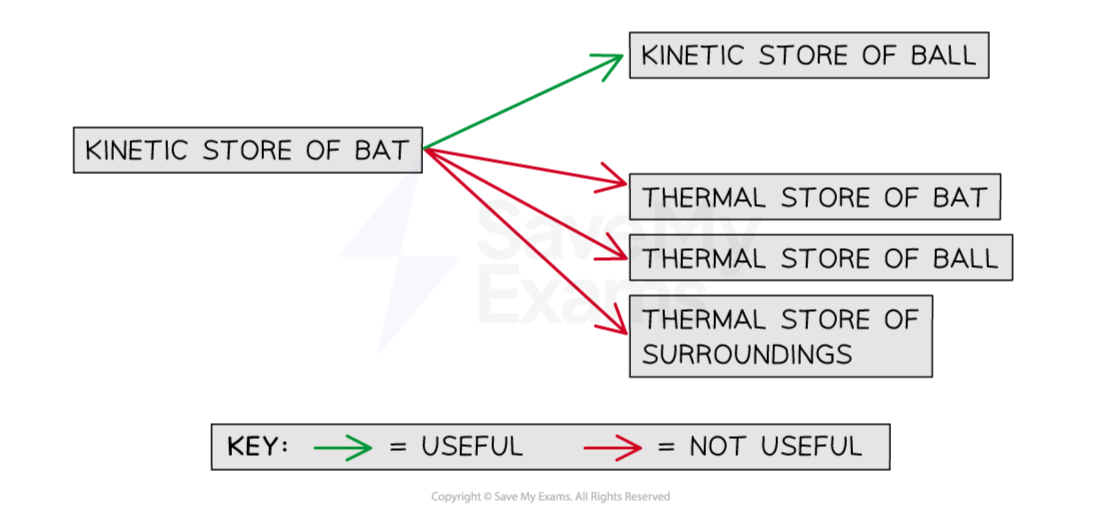
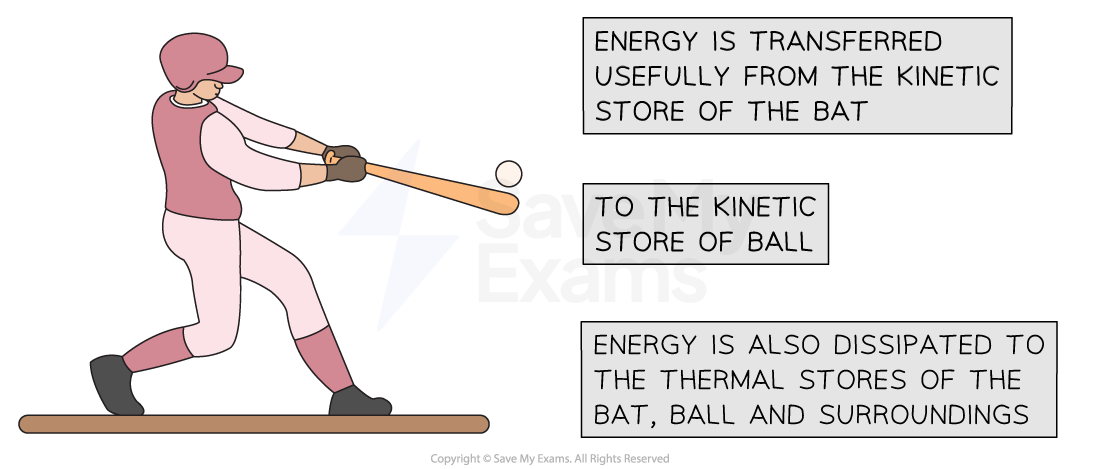
The principle of conservation of energy applied to a bat hitting a ball
Example 2: Boiling Water in a Kettle
-
When an electric kettle boils water, energy is transferred electrically from the mains supply to the thermal store of the heating element inside the kettle
-
As the heating element gets hotter, energy is transferred by heating to the thermal store of the water
-
Some of the energy is transferred to the thermal store of the plastic kettle
- This energy transfer is not useful; the energy is wasted
-
And some energy is dissipated to the thermal store of the surroundings due to the air around the kettle being heated
- This energy transfer is not useful; the energy is wasted
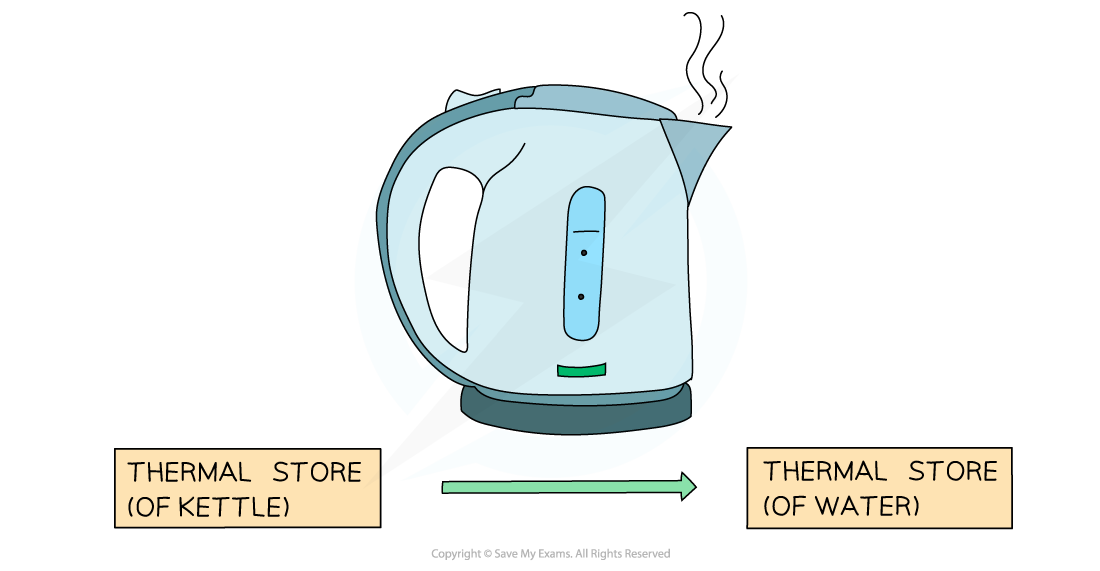
The principle of conservation of energy applied to a kettle boiling water
Example 3: Trampoline
-
Whilst jumping, the person has energy in their kinetic store
-
When the person lands on the trampoline, most of that energy is transferred to the **elastic potential **store of the trampoline
-
That energy is transferred usefully back to the** kinetic** store of the person as they bounce upwards
-
Energy is transferred from the kinetic store of the person to the gravitational potential store of the person as they gain height
-
Some of the energy is dissipated by heating to the thermal store of the surroundings (the person, the trampoline and the air)
-
The useful energy transfers taking place are:
elastic potential energy ➝ kinetic energy ➝ gravitational potential energy
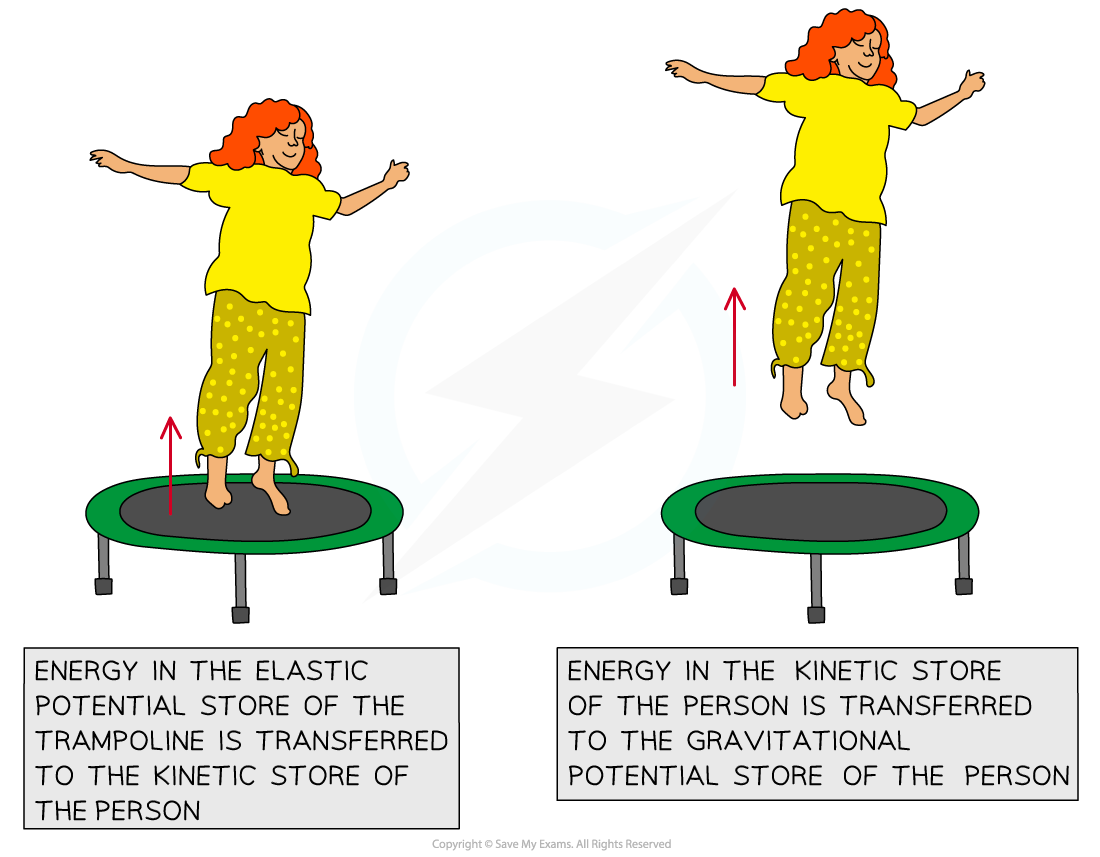
The principle of conservation of energy applied to a person jumping on a trampoline
Was this revision note helpful?
Build on this topic