Dangers of EM Waves (Edexcel IGCSE Physics)
Guided lessons are live for this note
Work through it step by step — key points, depth layers, a worked example and self-checks.
Spec point —
3.13· explain the detrimental effects of excessive exposure of the human body to electromagnetic waves, including: • microwaves: internal heating of body tissue • infrared: skin burns • ultraviolet: damage to surface cells and blindness • gamma rays: cancer, mutation and describe simple protective measures against the risks
Dangers of EM waves
Risks of excessive exposure to EM radiation
-
Excessive exposure of the human body to electromagnetic waves can have detrimental effects
-
Risks from overexposure to certain wavelengths include:
- microwaves can cause heat damage to internal organs due to the internal heating of body tissue
- infrared can burn the skin
- ultraviolet can damage skin cells causing sunburn and blindness
- gamma and X-rays can kill cells causing cancer and cell mutations
Dangers and uses of each part of the EM spectrum
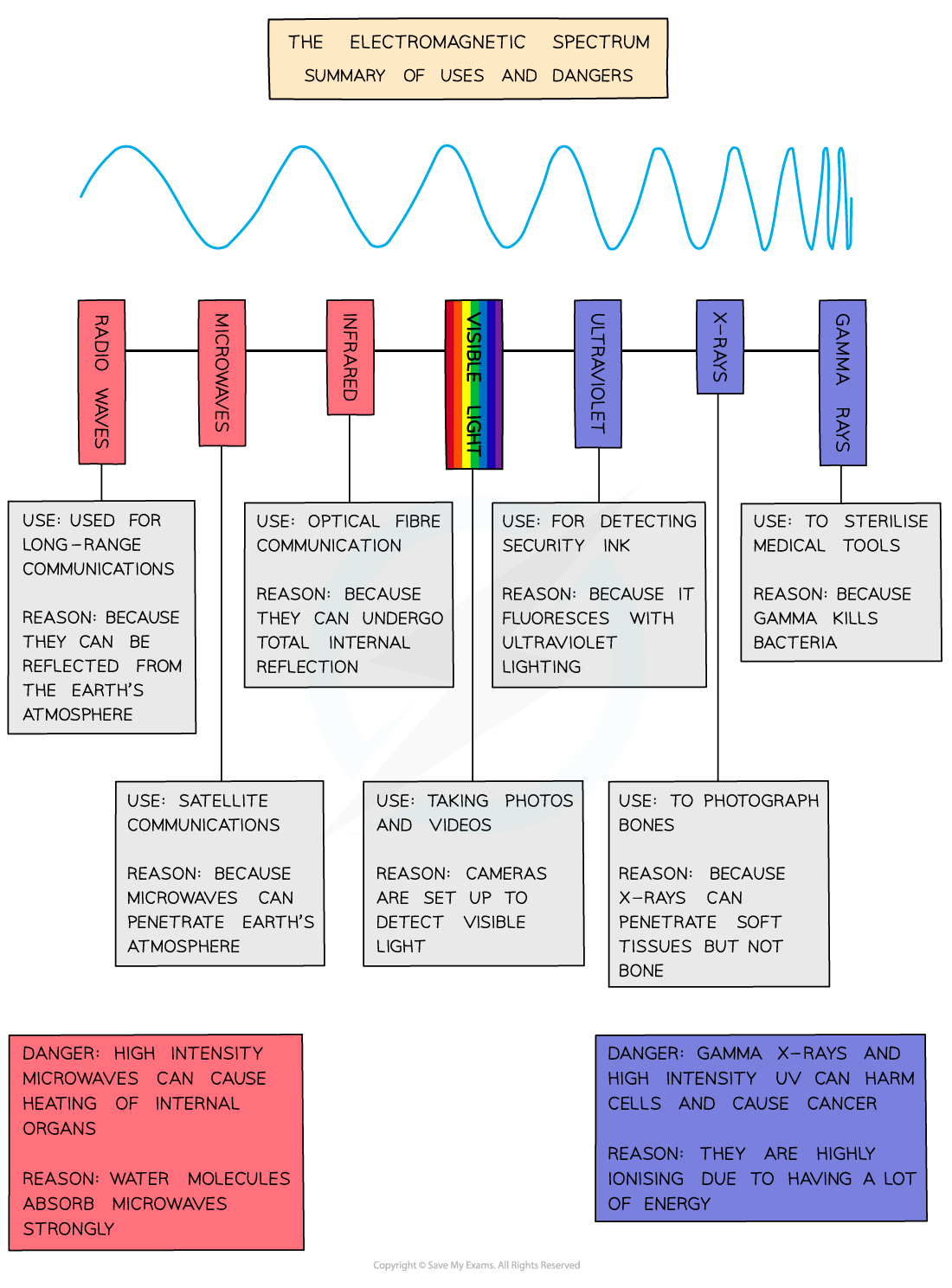
Uses and dangers of the electromagnetic spectrum
-
As discussed in Describing wave motion as the frequency of electromagnetic (EM) waves increases, so does the energy
-
**Beyond the visible part **of the EM spectrum, the energy becomes large enough to ionise atoms
-
As a result of this, the danger associated with EM waves** increases** along with the frequency
- The shorter the wavelength, the more ionising the radiation
Protective measures against the risks of over-exposure
-
Devices using hazardous EM radiation contain safety features that reduce human exposure:
- microwaves from microwave ovens are prevented from escaping the oven by the metal walls and metal grid in the glass door
- infrared wearing protective clothing such as gloves can prevent the skin from feeling the heat
- ultraviolet ray damage to the eyes is reduced by wearing sunglasses that absorb ultraviolet and prevent it from reaching the eyes. Sunscreen also absorbs ultraviolet light preventing it from damaging the skin.
- gamma and X-rays damage is reduced through using minimal levels in medicine. Doctors leave the room during x-rays to avoid unnecessary exposure. Radiographers wear radiation badges to measure their level of radiation exposure. People working with gamma rays routinely have their dose levels tested.
Radiation badges
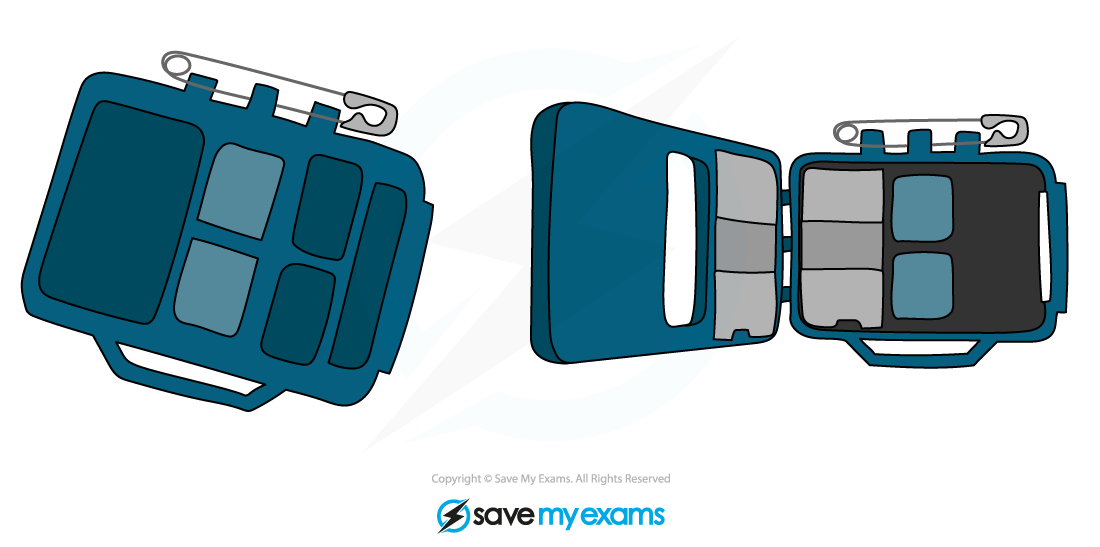
Radiation badges are used by people working closely with radiation to monitor exposure
Exam Hint In your exam, you may be asked to explain the hazards of each type of radiation and the safety precautions used to reduce these hazards.
Was this revision note helpful?