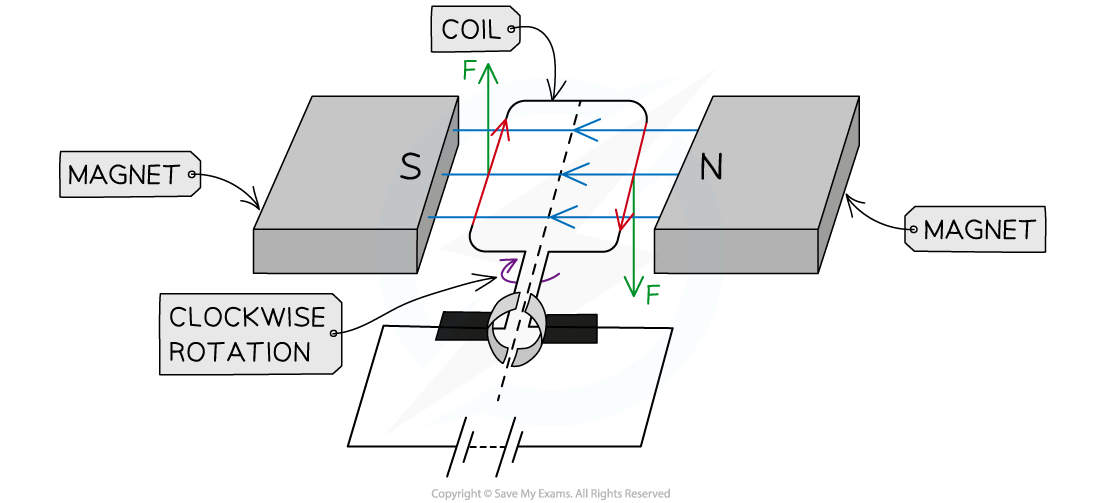
The Motor Effect
4 guided lessons · 36 checks · 6. Magnetism and Electromagnetism → Magnetism and Electromagnetism
Guided lessons for this note
Which concept don't you understand yet?
We'll explain it simply and check your understanding. Pick any lesson — any order works.
0 of 36 checks correct so far
Lesson 1 of 4
The motor effect on a current-carrying wire
Put a current-carrying wire inside a magnet's field and the two fields fight: the wire's own circular field adds to the field on one side and cancels on the other, leaving a sideways force on the wire. That push is the motor effect, and it is the engine behind d.c. motors and loudspeakers.
What you know already
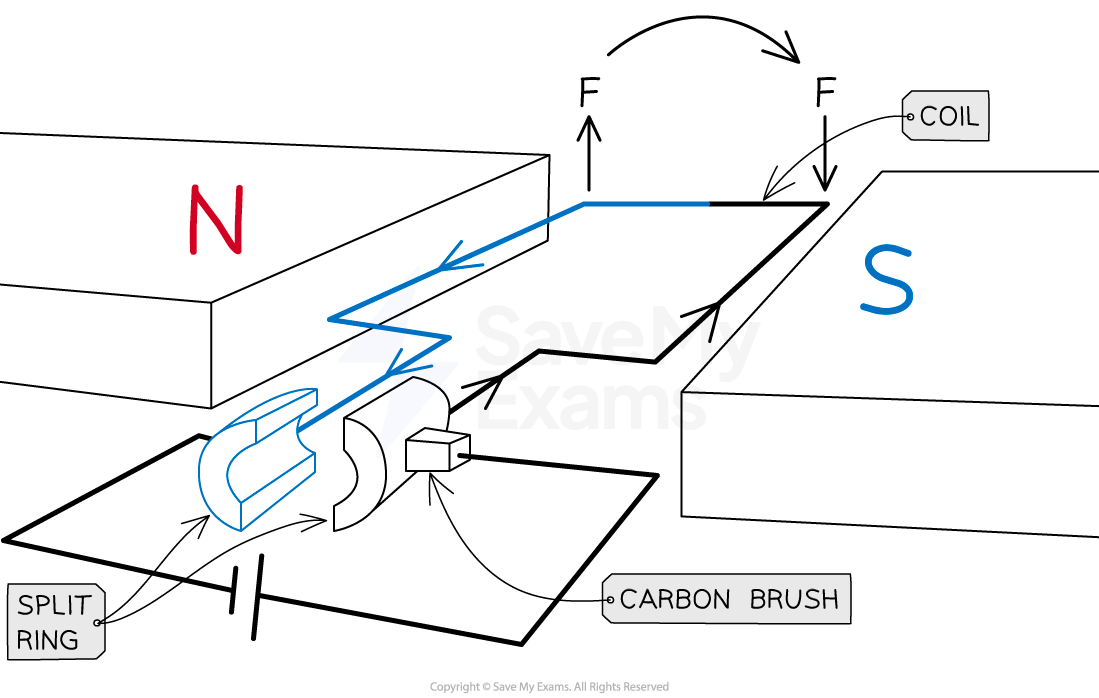
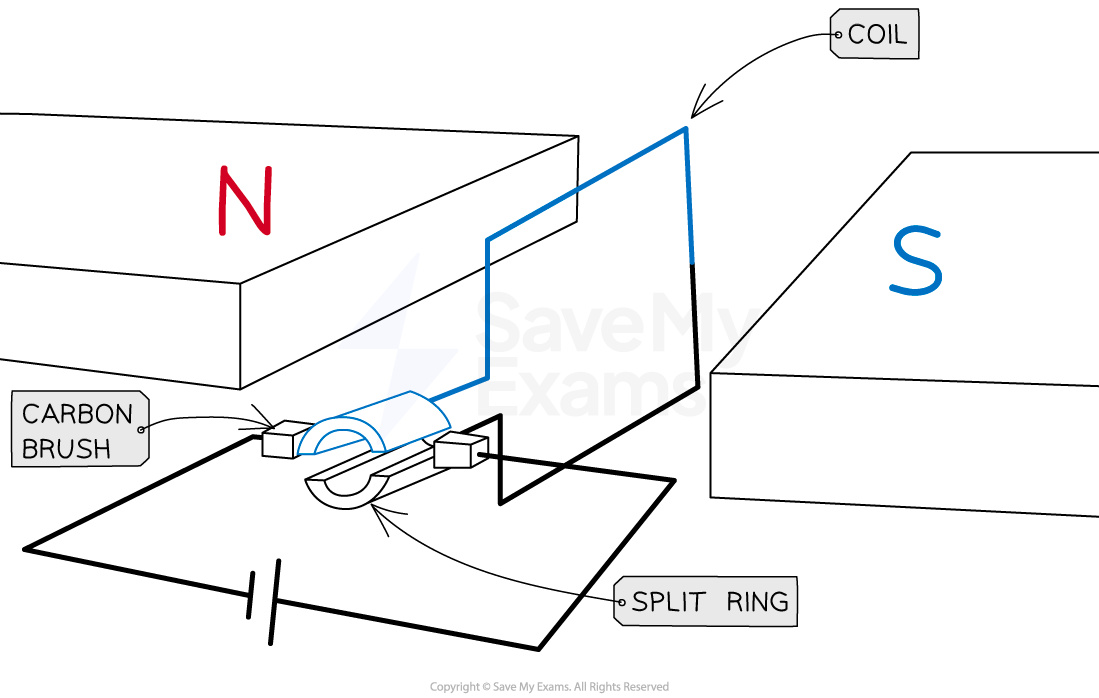
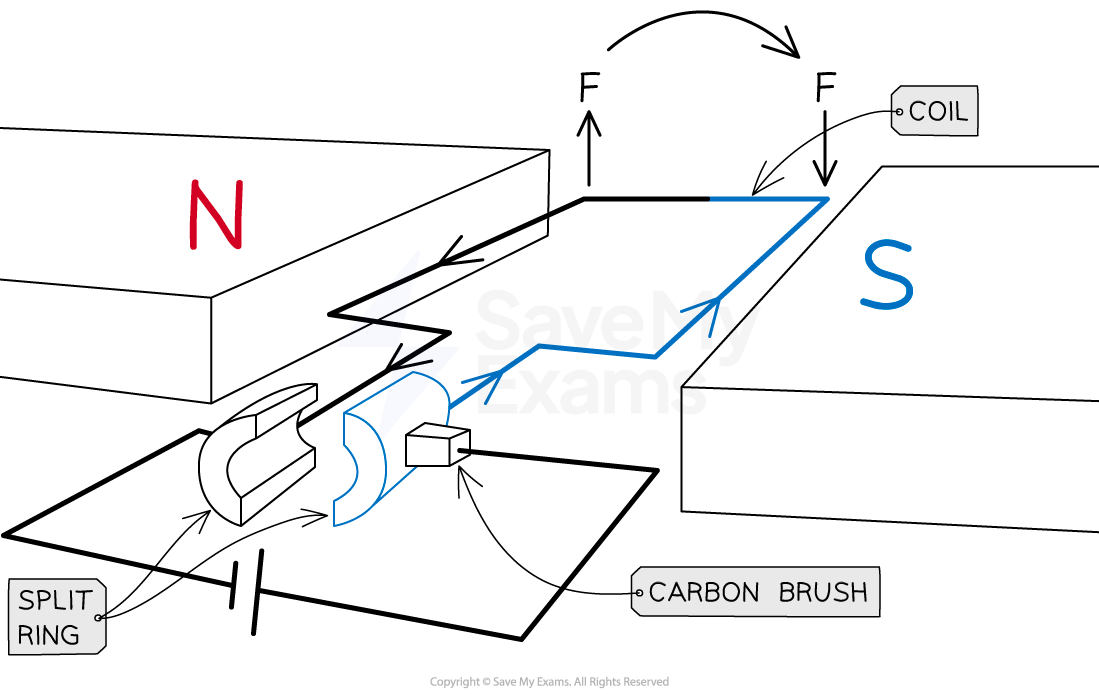
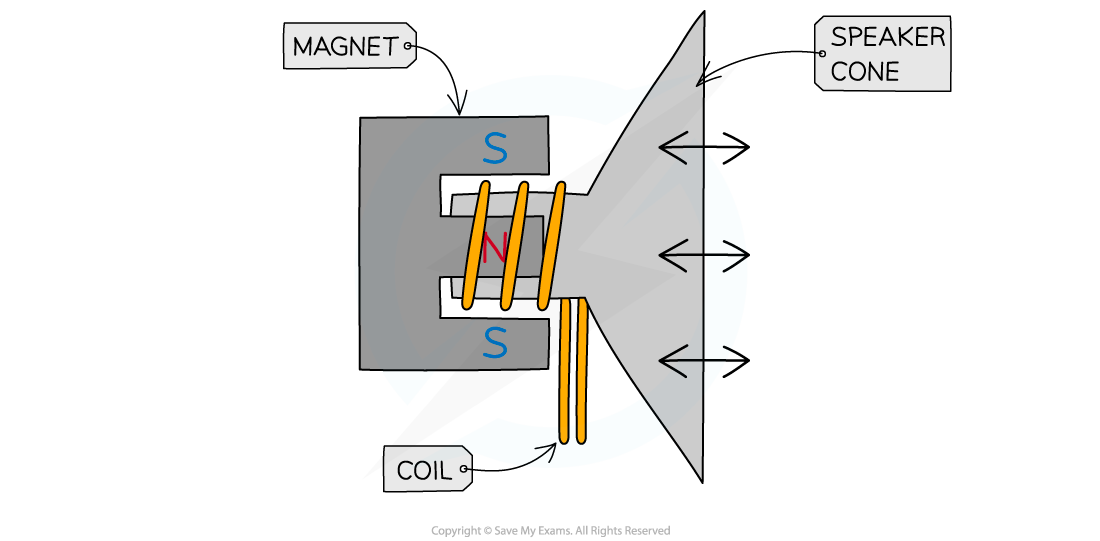
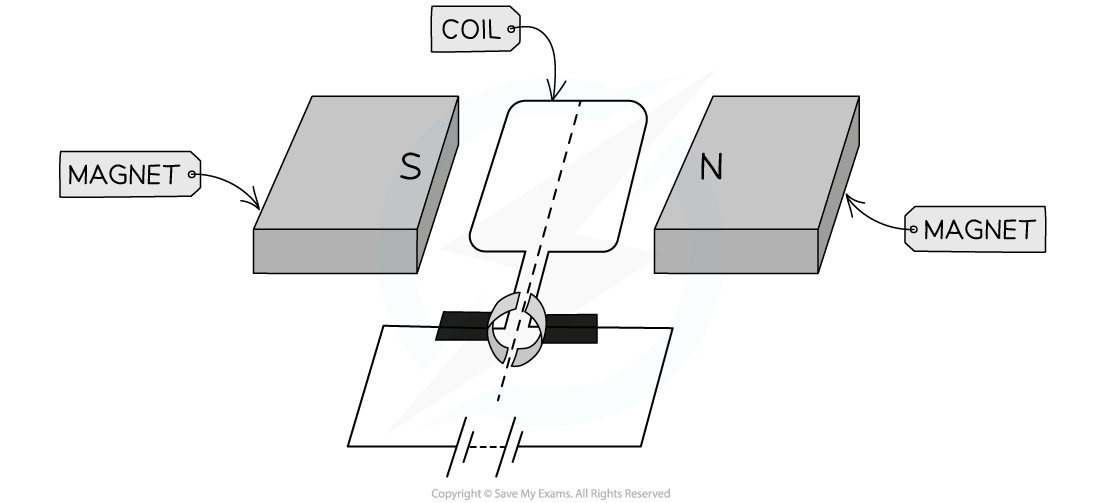
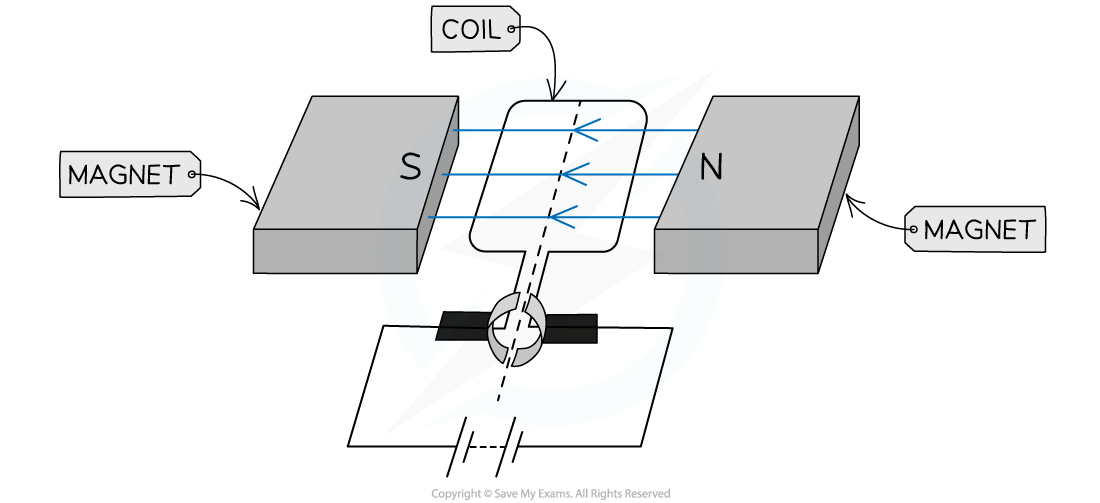
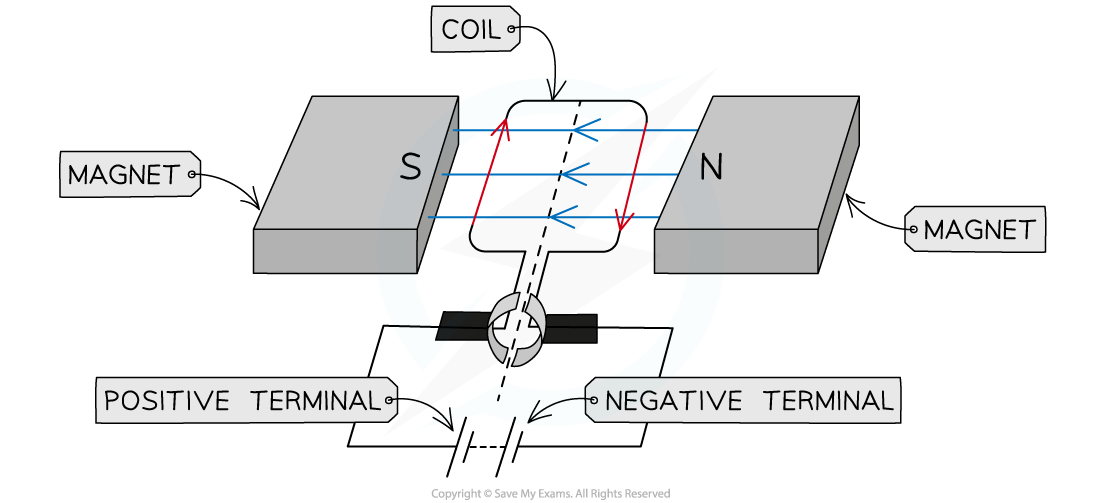
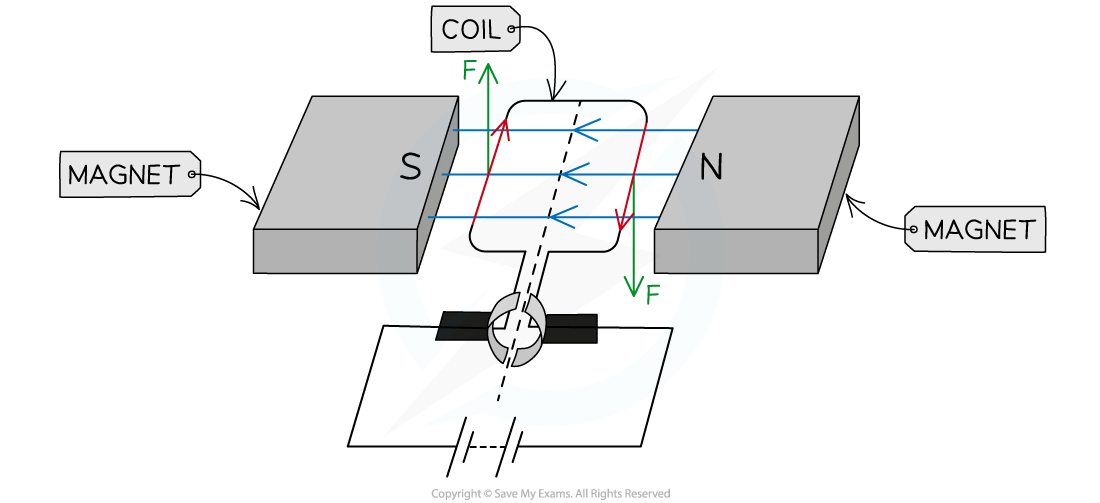
Current plus field equals force: the motor effect pushes a current-carrying wire sideways across a magnetic field, and that push, bent into a coil with a split-ring commutator, becomes the d.c. motor. This note follows the force from a single wire to the spinning coil — including the vertical dead centre — and into the loudspeaker cone.
Key points of understanding
- A force acts on a current-carrying wire when it sits in a magnetic field.
- The effect arises because the wire's field and the magnet's field combine — stronger on one side, weaker on the other.
- The force is perpendicular to both the current and the field.
- Reversing the current or the field reverses the force direction.
- The motor effect is the working principle of d.c. motors and loudspeakers.
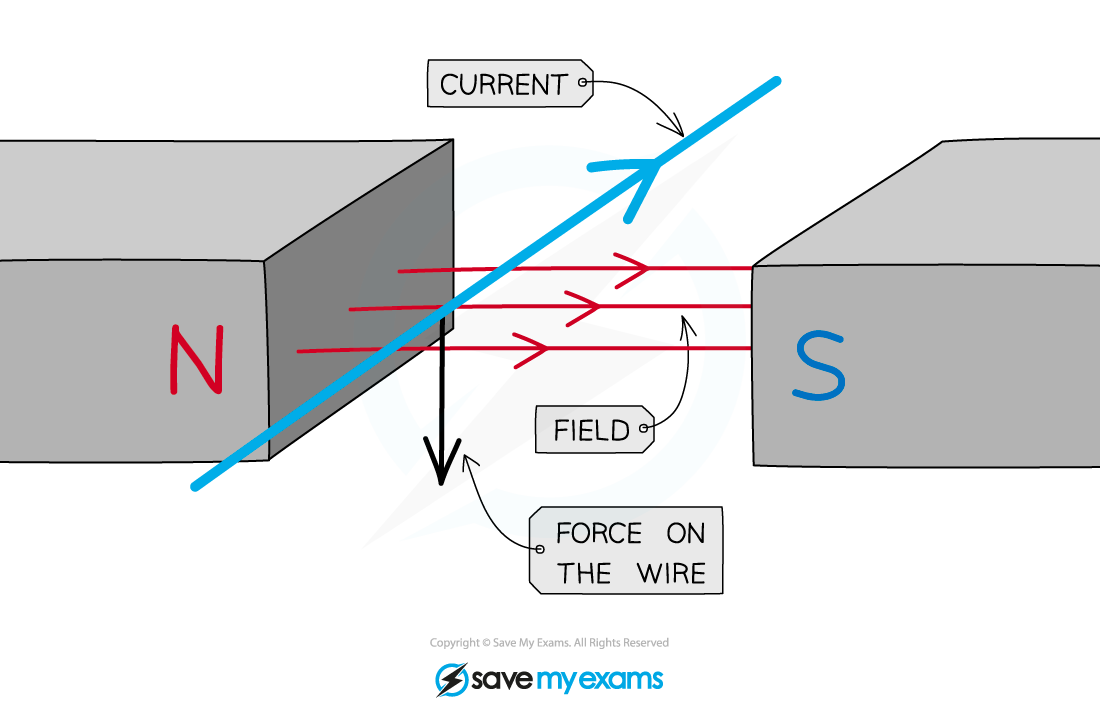
The motor effect is a result of two magnetic fields interacting to produce a force on the wire
Choose a confidence level to continue.
Prefer to read it all at once? Show the full lesson as a page
1.The motor effect on a current-carrying wire
Put a current-carrying wire inside a magnet's field and the two fields fight: the wire's own circular field adds to the field on one side and cancels on the other, leaving a sideways force on the wire. That push is the motor effect, and it is the engine behind d.c. motors and loudspeakers.
The motor effect is a result of two magnetic fields interacting to produce a force on the wire
Key points
- A force acts on a current-carrying wire when it sits in a magnetic field.
- The effect arises because the wire's field and the magnet's field combine — stronger on one side, weaker on the other.
- The force is perpendicular to both the current and the field.
Guided content from the SME authoring corpus — note rn_tmY2Kb5JP5h5Vjcf, pinned at 6312d659ec0d · promoted SyllabAI/syllabai-resources b3caaaa90c5e