Reducing Energy Loss
1 guided lesson · 9 checks · 4. Energy Resources and Energy Transfers → Energy Stores & Transfers
Guided lessons for this note
Which concept don't you understand yet?
We'll explain it simply and check your understanding. Pick any lesson — any order works.
0 of 9 checks correct so far
Lesson 1 of 1
Reducing unwanted energy transfers
Wasted energy mostly leaves by heating, so the fight against waste is a fight against conduction and convection. Low-conductivity materials block the first, preventing fluid movement blocks the second, and insulation — loft fibreglass, cavity wall fill — applies both ideas where a house loses most.
What you know already
Most wasted energy escapes by heating, so cutting waste means cutting conduction and convection. This note assembles the toolkit — low-conductivity insulators, immobilised fluids, thickness — and applies it where houses need it: fibreglass in the loft and insulation in the cavity walls.
Key points of understanding
- Energy dissipated to the surroundings is the main source of wasted energy transfers.
- Conduction is reduced by using materials with low thermal conductivity — insulators.
- Convection is reduced by preventing the fluid that forms the currents from moving.
- An insulator’s effectiveness depends on its thermal conductivity (lower is better), its density (more dense conducts more) and its thickness (thicker insulates better).
- Loft insulation (fibreglass) and cavity wall insulation lower a house’s rate of cooling.
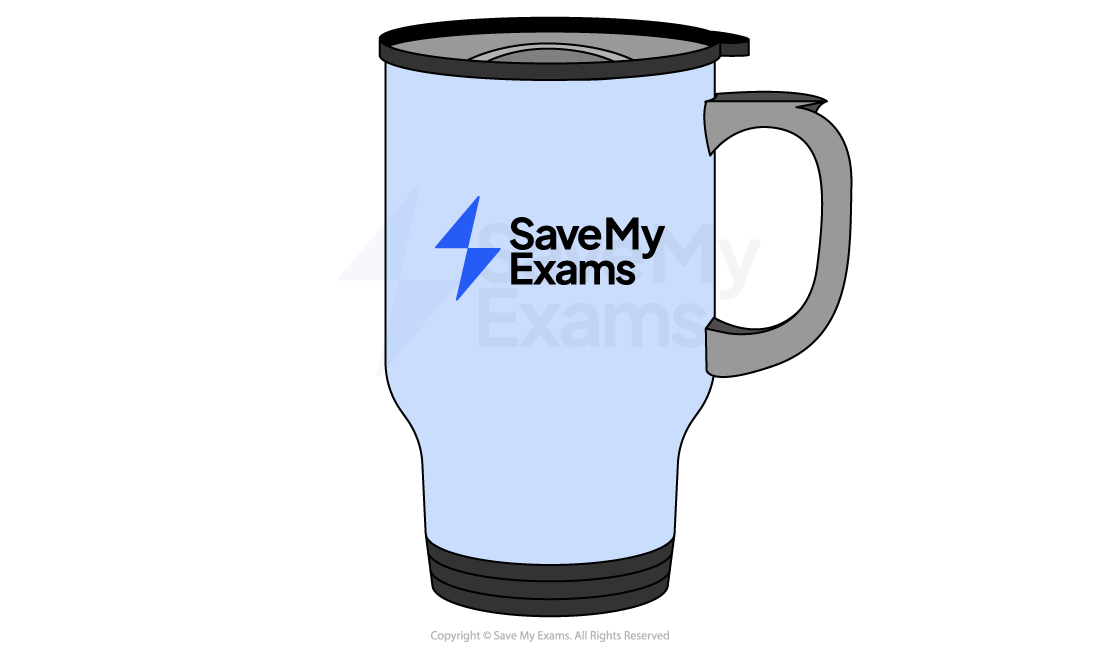
Insulated mugs are used to maintain the temperature of hot or cold drinks
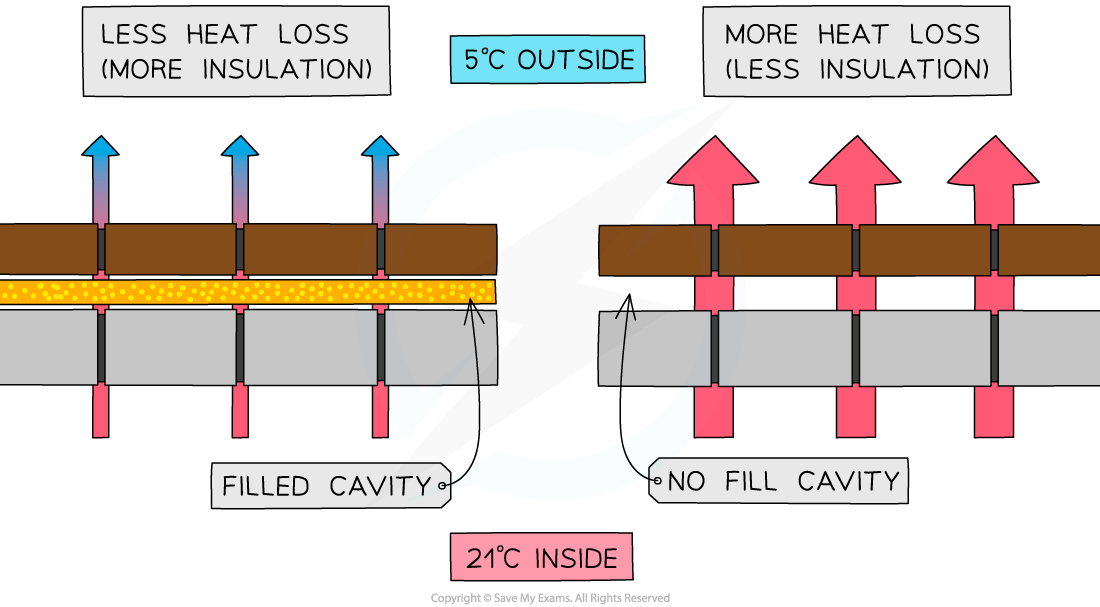
Less energy is transferred by conduction and convection if the cavity is insulated
Choose a confidence level to continue.
Prefer to read it all at once? Show the full lesson as a page
1.Reducing unwanted energy transfers
Wasted energy mostly leaves by heating, so the fight against waste is a fight against conduction and convection. Low-conductivity materials block the first, preventing fluid movement blocks the second, and insulation — loft fibreglass, cavity wall fill — applies both ideas where a house loses most.
Insulated mugs are used to maintain the temperature of hot or cold drinks
Less energy is transferred by conduction and convection if the cavity is insulated
Key points
- Energy dissipated to the surroundings is the main source of wasted energy transfers.
- Conduction is reduced by using materials with low thermal conductivity — insulators.
- Convection is reduced by preventing the fluid that forms the currents from moving.
- An insulator’s effectiveness depends on its thermal conductivity (lower is better), its density (more dense conducts more) and its thickness (thicker insulates better).
- Loft insulation (fibreglass) and cavity wall insulation lower a house’s rate of cooling.
First pass
Stop conduction with poor conductors, stop convection by immobilising the fluid, and buy thickness: insulation is those three rules applied to lofts and wall cavities.
Analogy — Dressing for snow: a thick coat of low-conductivity fabric with still air trapped inside is a wearable insulation panel.
Exam pointer — The three effectiveness factors — conductivity, density, thickness — with their directions (lower, lower, higher) are the examinable list.
Going deeper
Houses lose energy fastest where large warm surfaces meet moving cold air; fibreglass lofts trap still air above, and cavity wall fill turns the gap between two wall layers into a low-conductivity barrier.
Analogy — Two doors against the draught: the loft lid closes the top exit, the cavity fill plugs the wall’s hollow middle.
Exam pointer — Link insulation to money and emissions when asked why: less wasted energy means lower bills and fewer greenhouse gases from the saved heating.
Checks
0 of 9 attempted · 0 correct
Guided content from the SME authoring corpus — note rn_mf22KJj8JXw3DRHn, pinned at 8f834fff738f · promoted SyllabAI/syllabai-resources b3caaaa90c5e