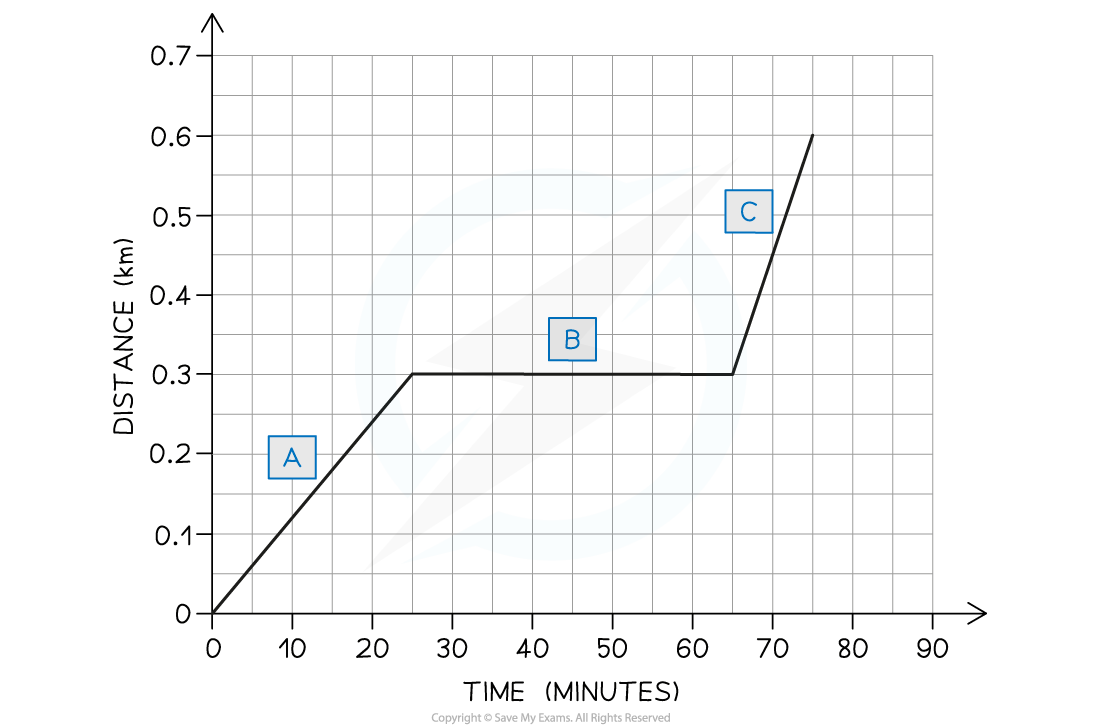
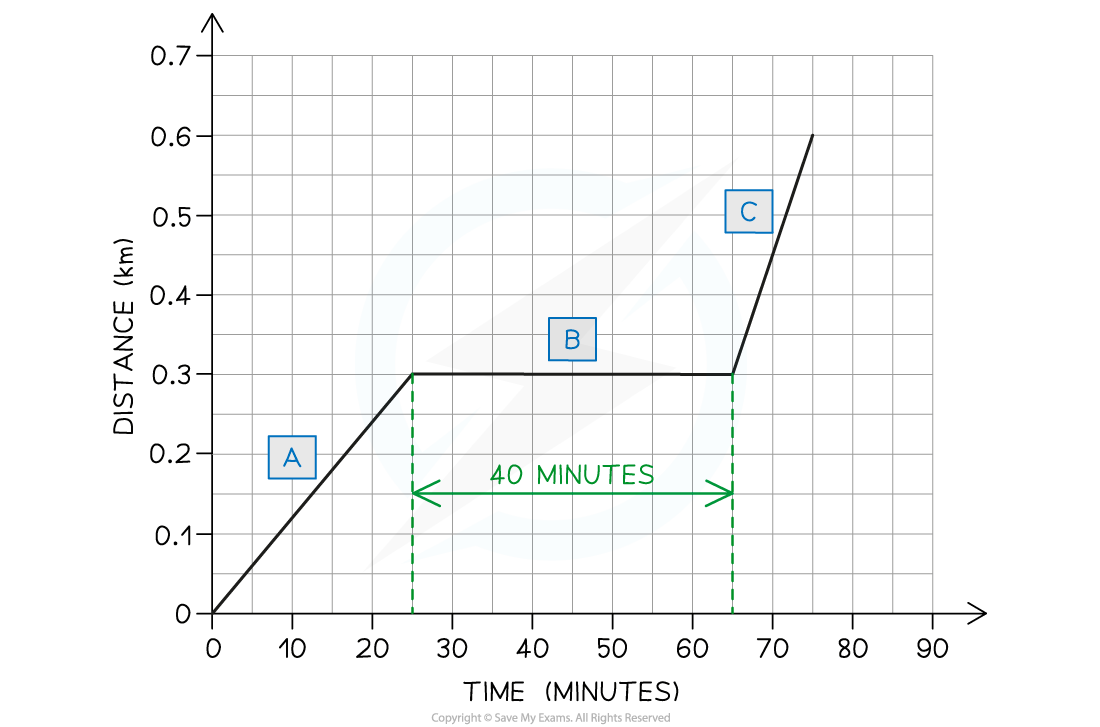
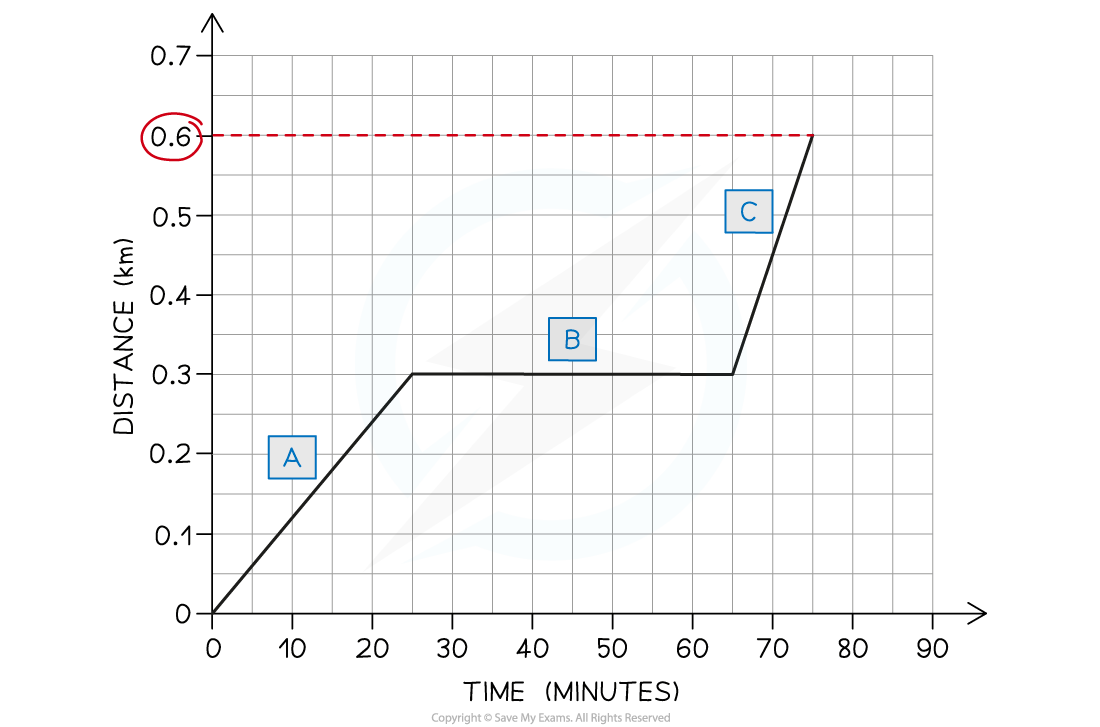
Distance-Time Graphs
2 guided lessons · 18 checks · 1. Forces & Motion → Movement & Position
Guided lessons for this note
Which concept don't you understand yet?
We'll explain it simply and check your understanding. Pick any lesson — any order works.
0 of 18 checks correct so far
Lesson 1 of 2
What a distance-time graph shows
A distance-time graph is a picture of a journey: how far the object sits from its starting point at every moment of the trip. This lesson trains the two readings that unlock every such graph — what the steepness tells you, and what a flat line tells you.
What you know already
From Speed you already know how to average distance over time for steady motion. This lesson turns that arithmetic into a picture: the distance-time graph, where the steepness of every straight line is a speed and every flat stretch is a rest. It is the first graph-reading skill the motion topic builds on.
Key points of understanding
- A distance-time graph plots how far an object is from its starting point against time.
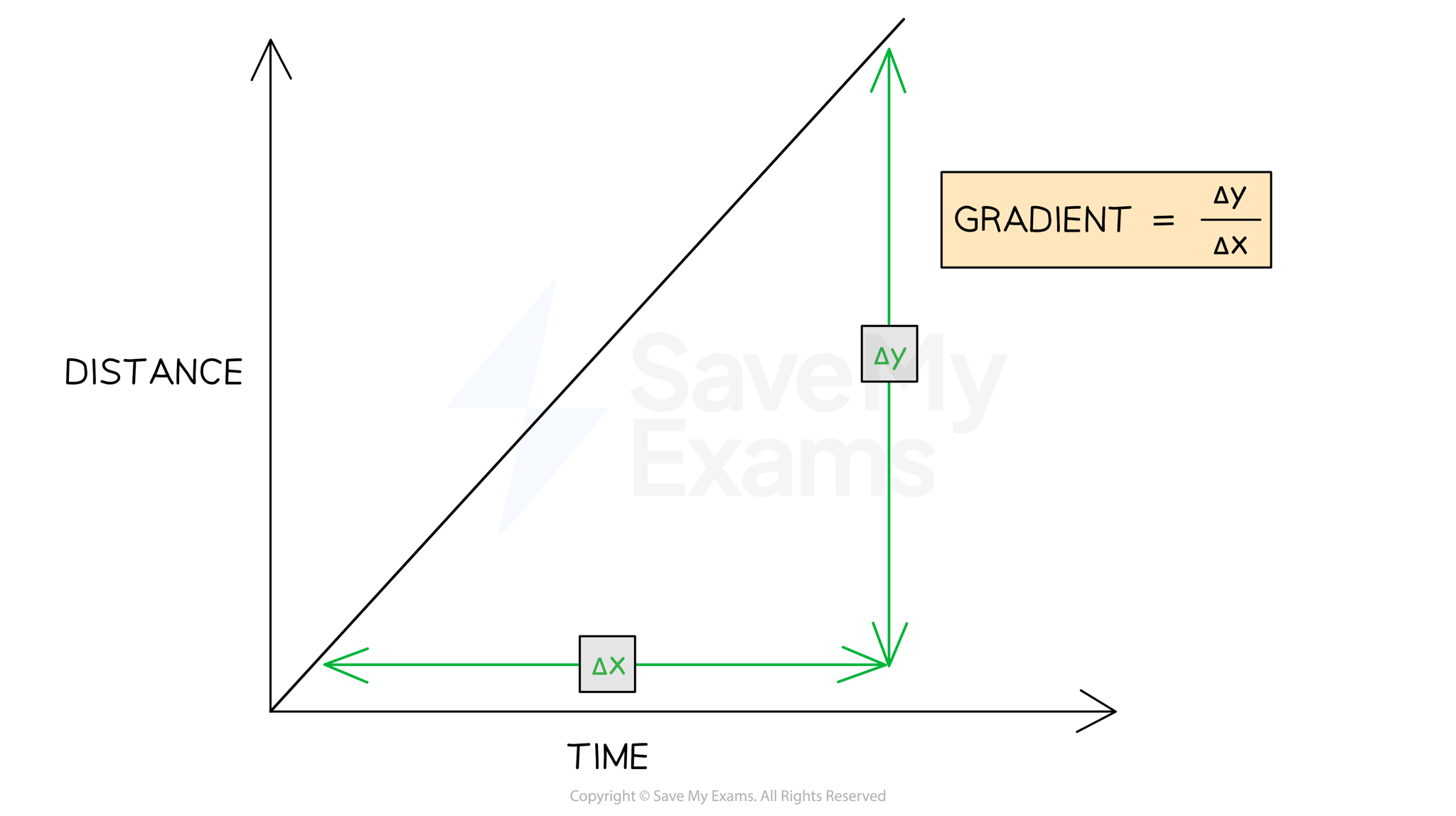
- A straight line means constant speed; the steeper the line, the larger the speed.
- A flat horizontal line means the object is stationary.
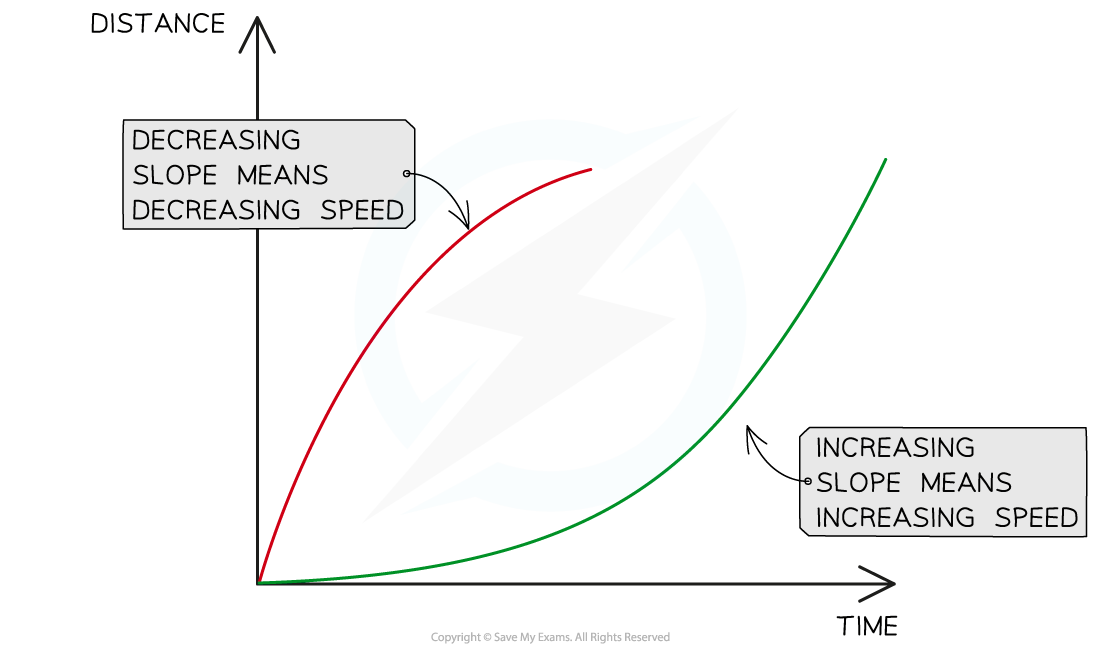
- A curve means the speed is changing — steepening is speeding up, flattening is slowing down.
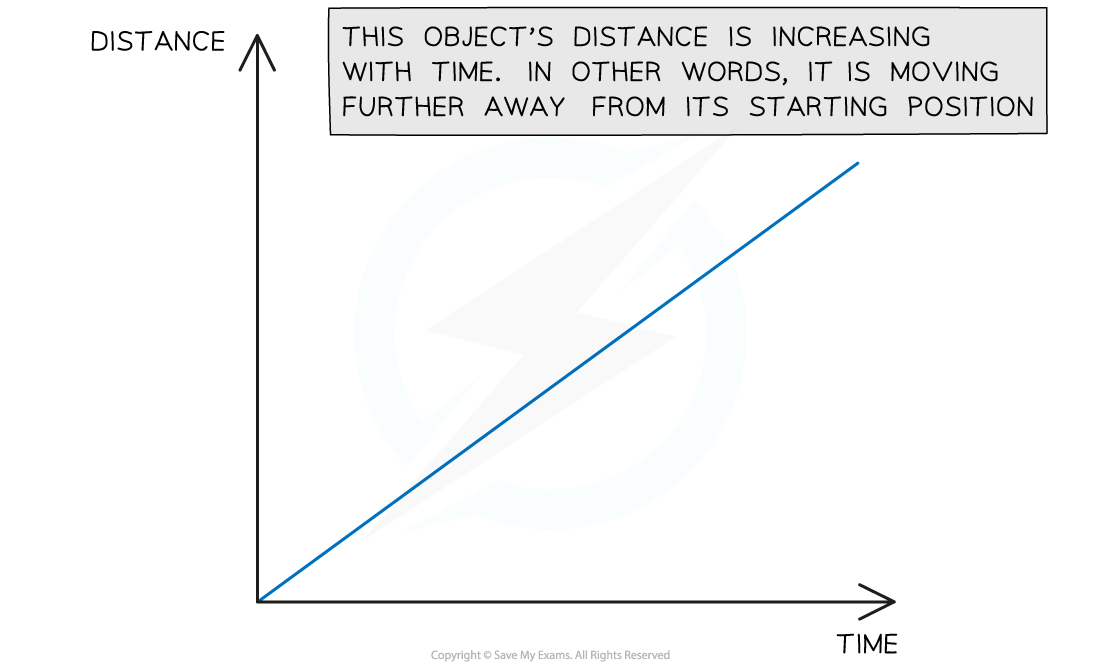
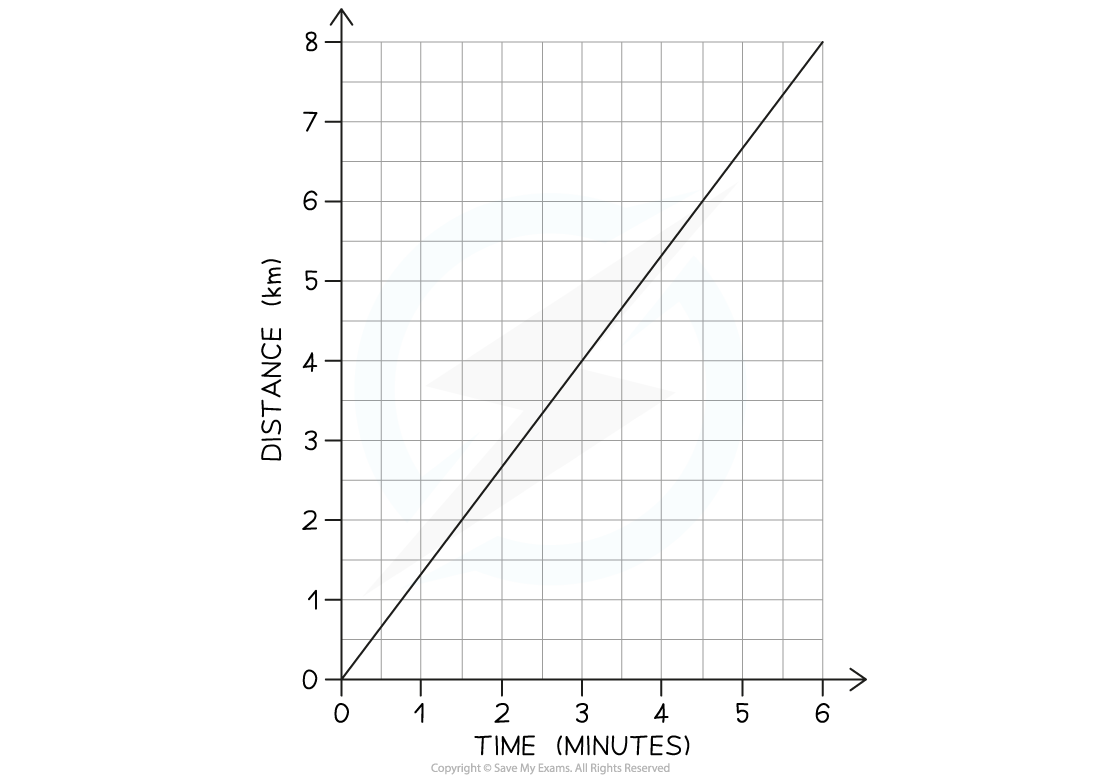
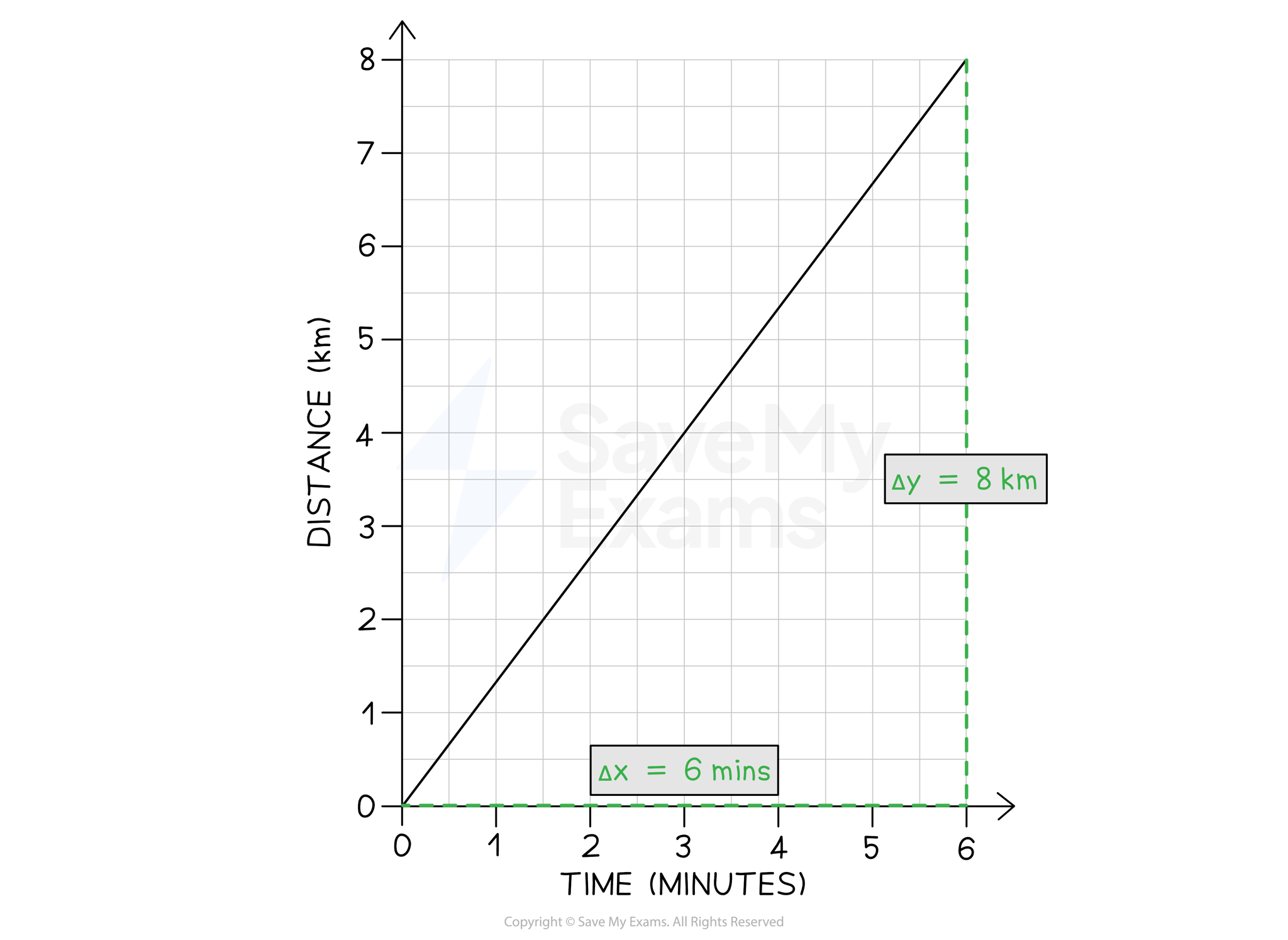
This graph shows a moving object moving further away from its origin
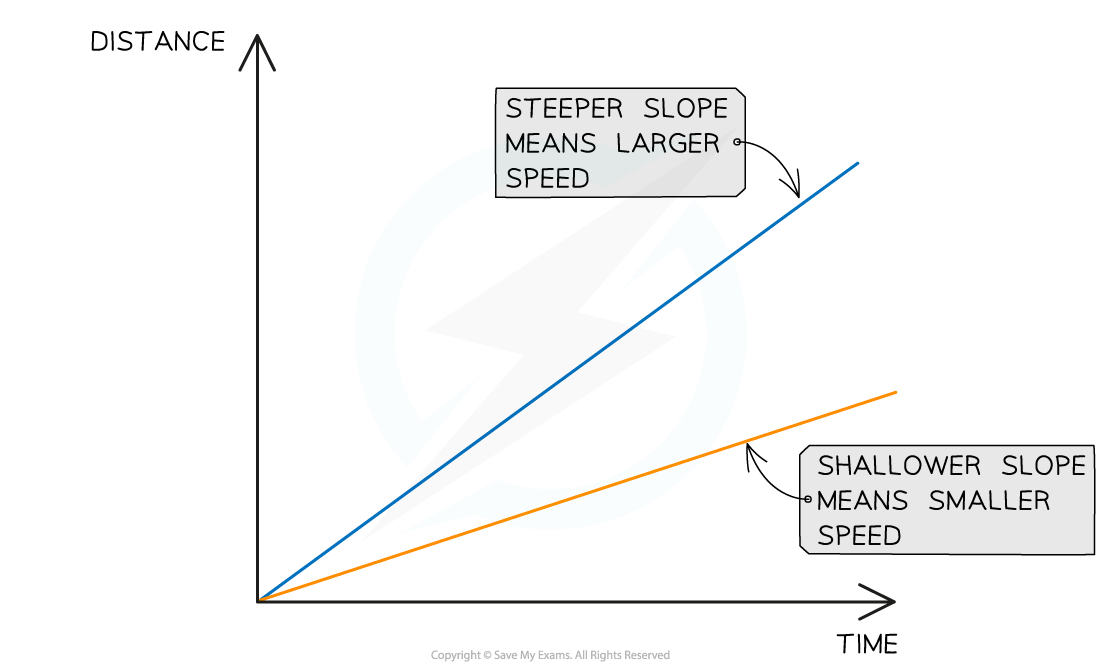
This graph shows how the slope of a line is used to interpret the speed of moving objects. Both of these objects are moving with a constant speed, because the lines are straight.
Choose a confidence level to continue.
Prefer to read it all at once? Show the full lesson as a page
1.What a distance-time graph shows
A distance-time graph is a picture of a journey: how far the object sits from its starting point at every moment of the trip. This lesson trains the two readings that unlock every such graph — what the steepness tells you, and what a flat line tells you.
This graph shows a moving object moving further away from its origin
This graph shows how the slope of a line is used to interpret the speed of moving objects. Both of these objects are moving with a constant speed, because the lines are straight.
Key points
Guided content from the SME authoring corpus — note rn_RpyMnS5nqWSRWXXG, pinned at 7d493985c772 · promoted SyllabAI/syllabai-resources b3caaaa90c5e