Charge & Current
2 guided lessons · 18 checks · 2. Electricity → Current, Potential Difference & Resistance
Guided lessons for this note
Which concept don't you understand yet?
We'll explain it simply and check your understanding. Pick any lesson — any order works.
0 of 18 checks correct so far
Lesson 1 of 2
Current
Picture a garden hose: the water company does not care how fast one drop goes, only how much water passes the tap each second. Electric current is the same idea for charge. This lesson defines the ampere, follows the conventional direction around the loop, and meets the meter that reads it.
What you know already
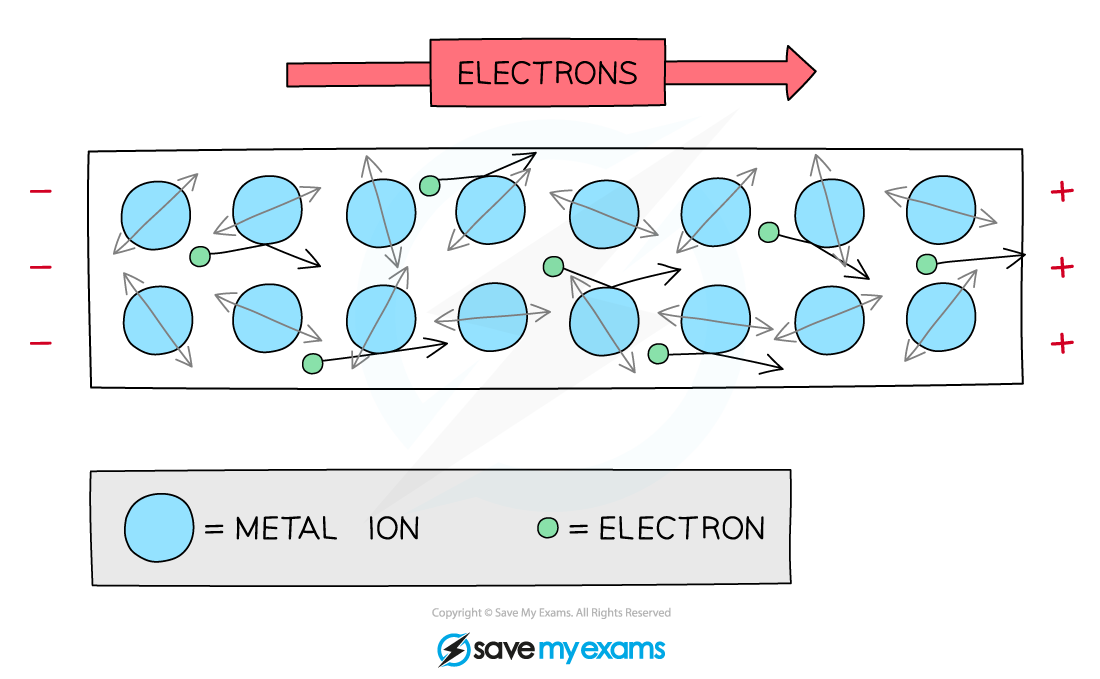
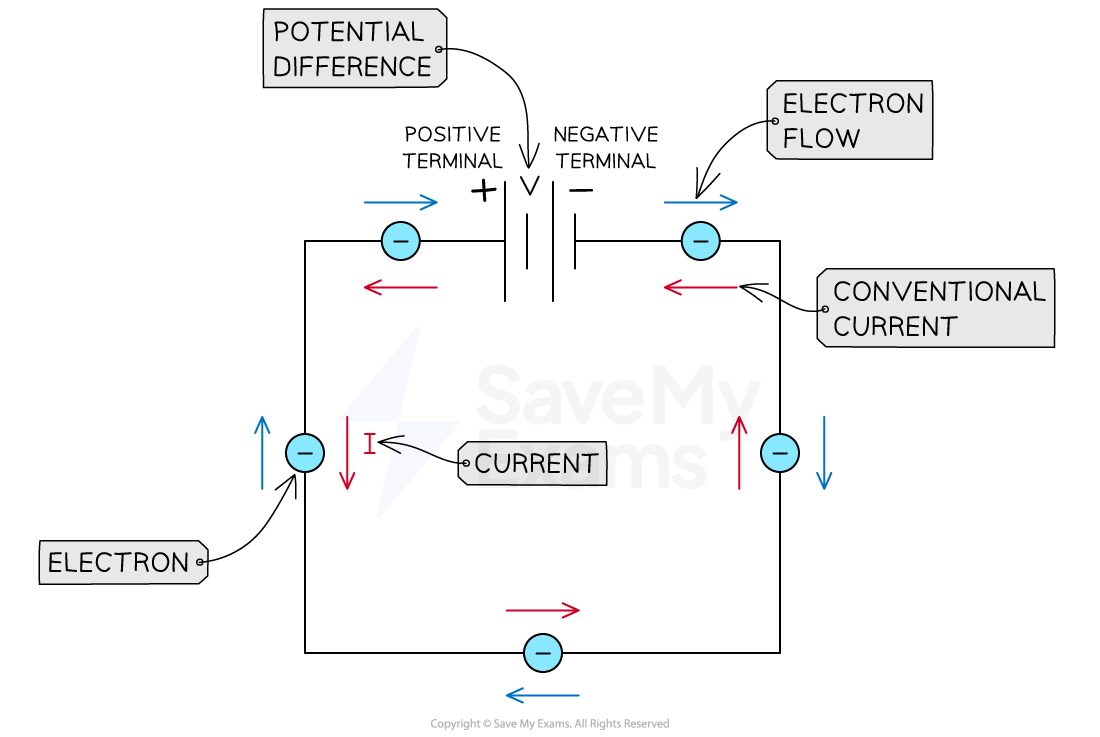
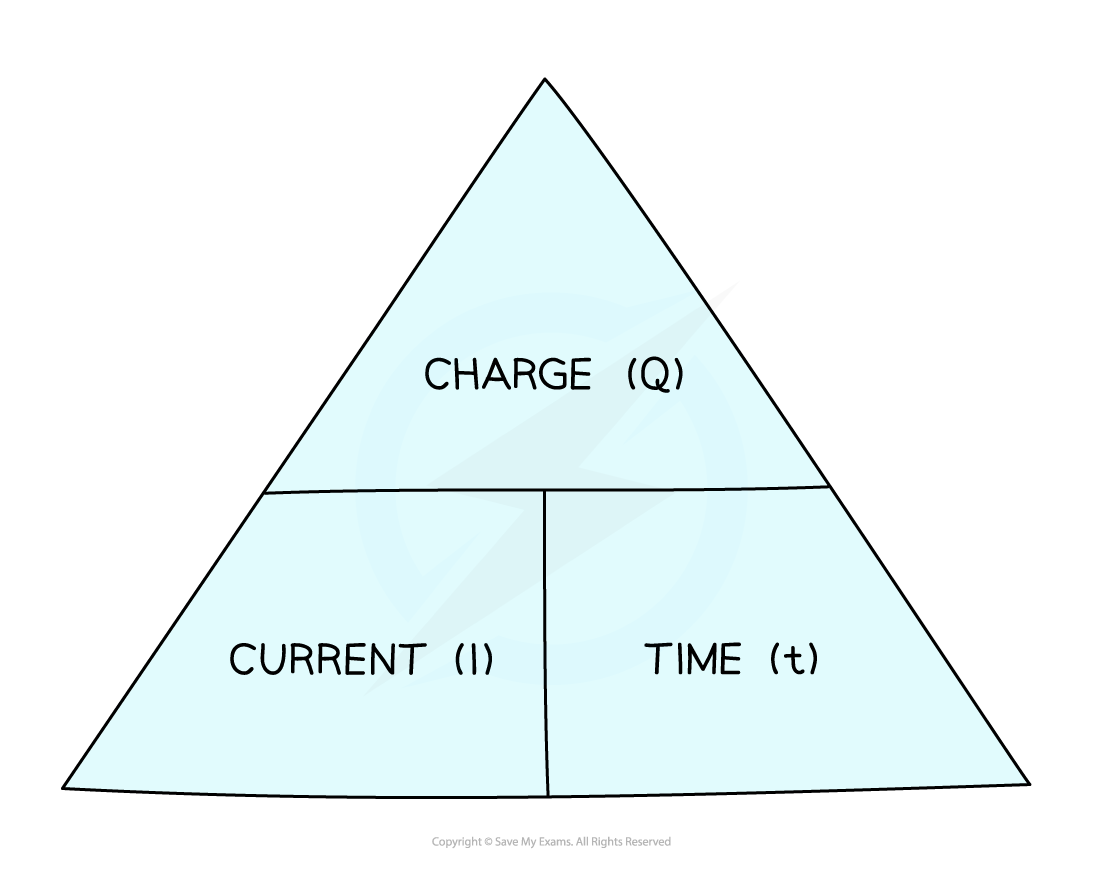
Switch on a lamp and billions of tiny charges begin drifting through the copper — that drift is what we call electric current. This note defines current, counts it in amperes and coulombs, and then links the charge delivered to the current and the time with a compact equation. It also separates the conventional direction engineers use from the electron drift that actually carries the charge.
Key points of understanding
- Current is the rate at which electric charge flows through a component.
- Current is measured in amperes (A): one ampere is one coulomb of charge per second.
- Current flows around a complete circuit from the positive terminal of a cell to the negative one.
- An ammeter reads the current and must sit in series with the component being measured.
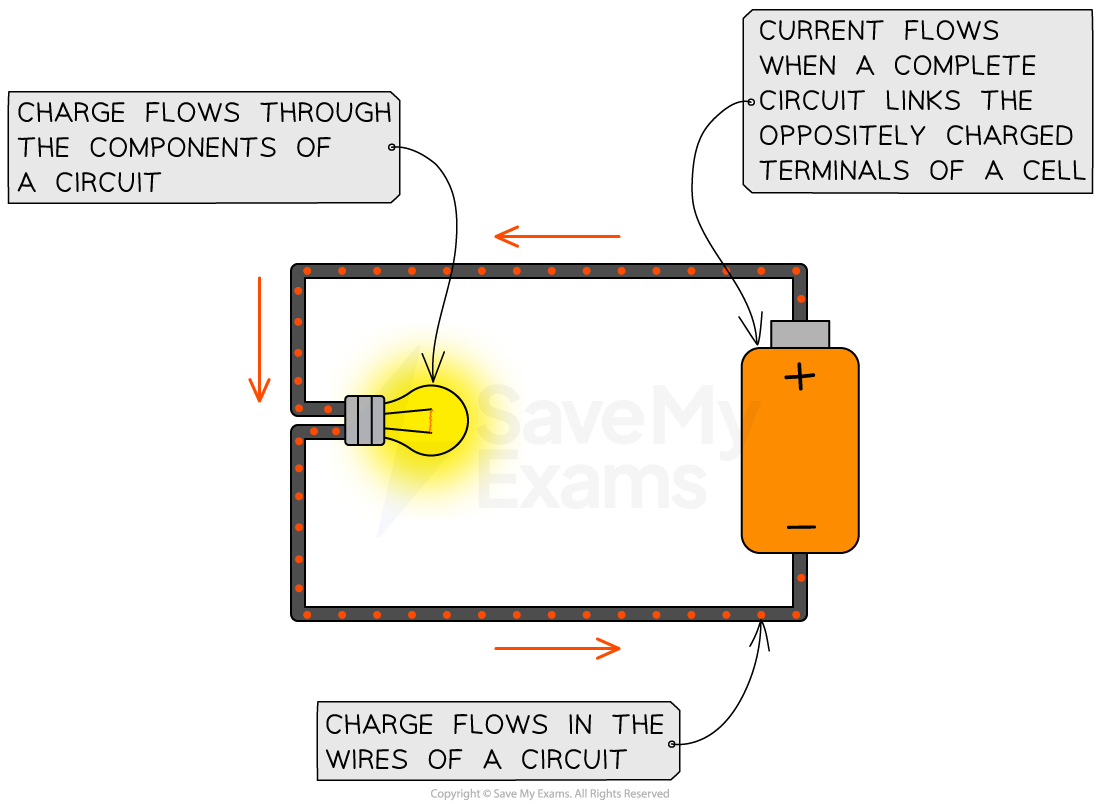
Charge flows from the positive terminal to the negative terminal
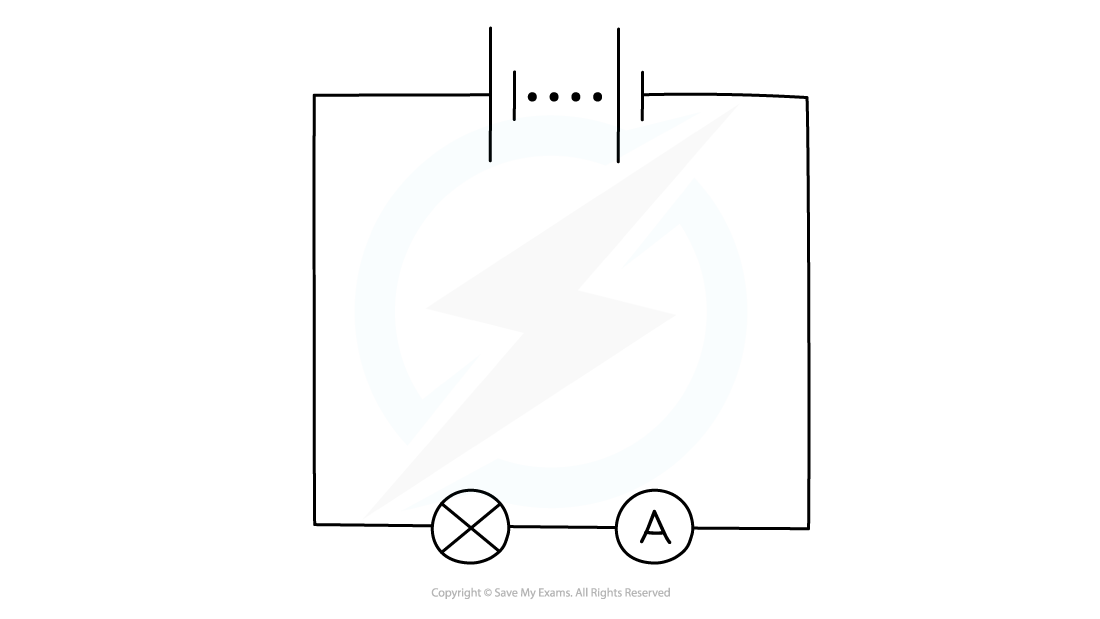
An ammeter can be used to measure the current around a circuit
Choose a confidence level to continue.
Prefer to read it all at once? Show the full lesson as a page
1.Current
Picture a garden hose: the water company does not care how fast one drop goes, only how much water passes the tap each second. Electric current is the same idea for charge. This lesson defines the ampere, follows the conventional direction around the loop, and meets the meter that reads it.
Charge flows from the positive terminal to the negative terminal
An ammeter can be used to measure the current around a circuit
Key points
- Current is the rate at which electric charge flows through a component.
Guided content from the SME authoring corpus — note rn_NZ5D2Mx9SXQY98wy, pinned at 275f3b535d78 · promoted SyllabAI/syllabai-resources b3caaaa90c5e