Area under a Velocity-Time Graph
2 guided lessons · 18 checks · 1. Forces & Motion → Movement & Position
Guided lessons for this note
Which concept don't you understand yet?
We'll explain it simply and check your understanding. Pick any lesson — any order works.
0 of 18 checks correct so far
Lesson 1 of 2
What the area under the line counts
Gradient reads one answer off this graph; area reads the other. Between the line and the time axis sits a region whose size is measured in metres, because it multiplies a velocity by a time. This lesson establishes the counting rule and the two area formulas that carry it.
What you know already
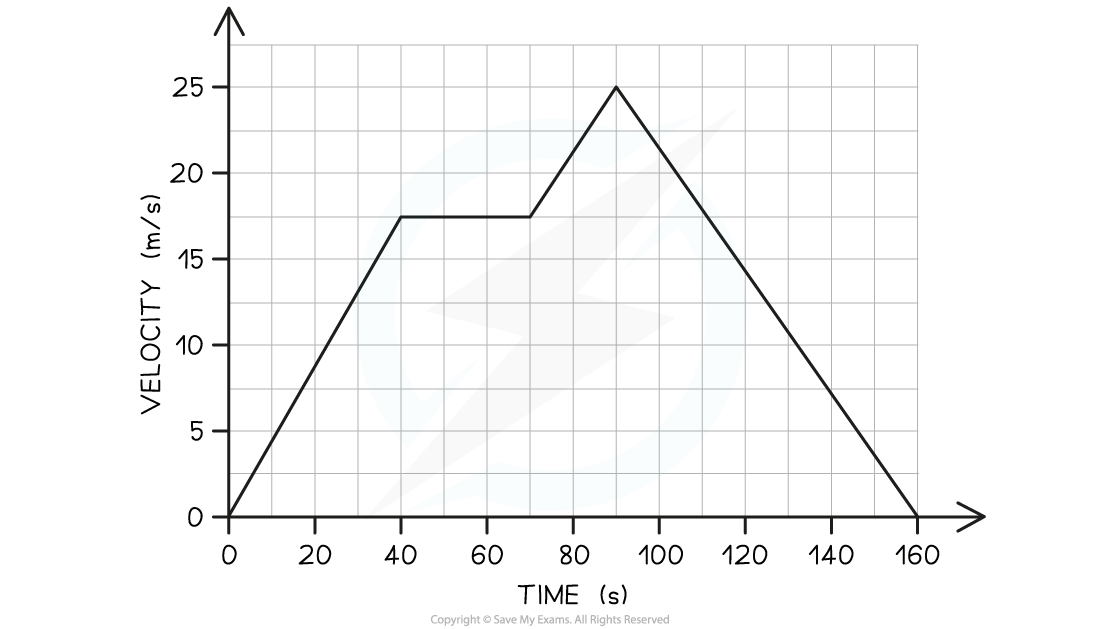
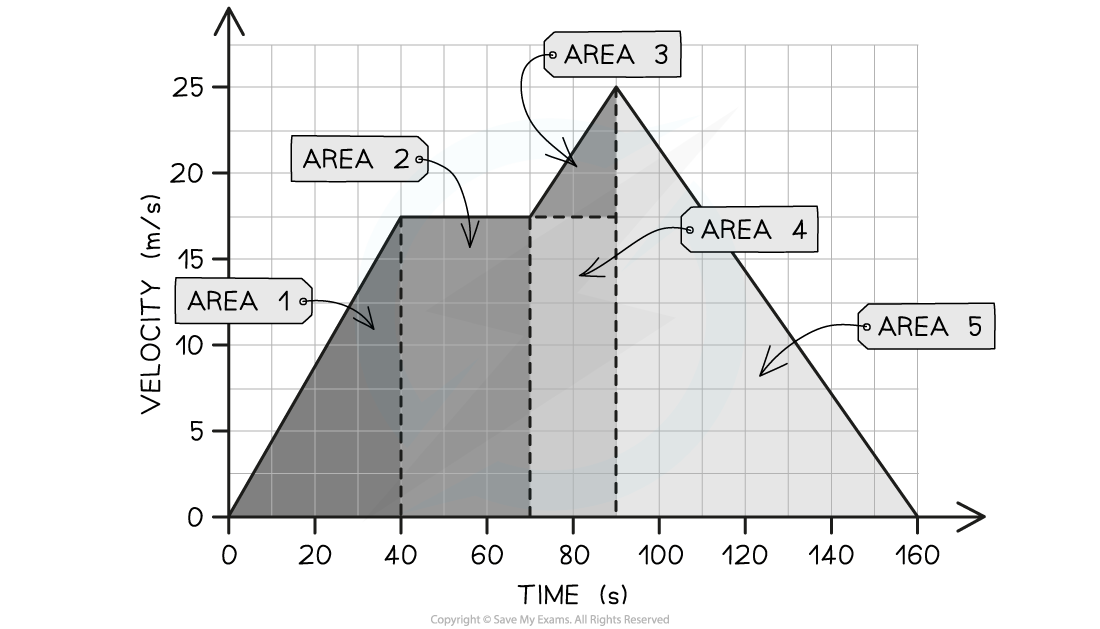
A velocity-time graph hides a second answer beneath its line: the distance covered. This lesson shows why the enclosed area counts metres, gives the two area formulas you need, and then assembles a whole 160-second car journey out of five separate shapes.
Key points of understanding
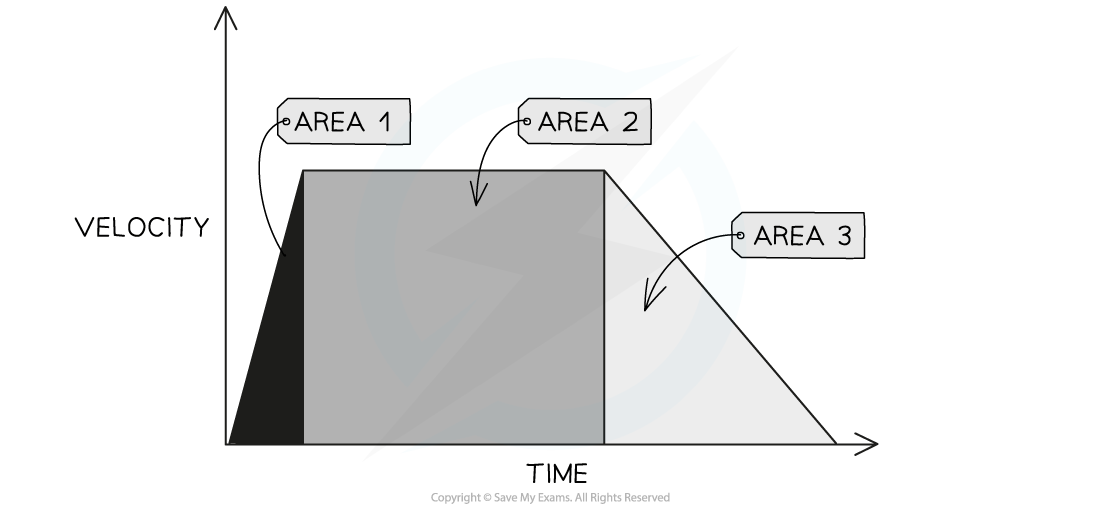
- The area between a velocity-time line and the time axis represents the displacement, that is the distance travelled.
- A triangular region appears when the object accelerates or decelerates, and its area is one half times the base times the height.
- A rectangular region appears when the object moves at constant velocity, and its area is base times height.
- The base of each shape is a time interval and the height is a velocity, so the unit of every area is metres.
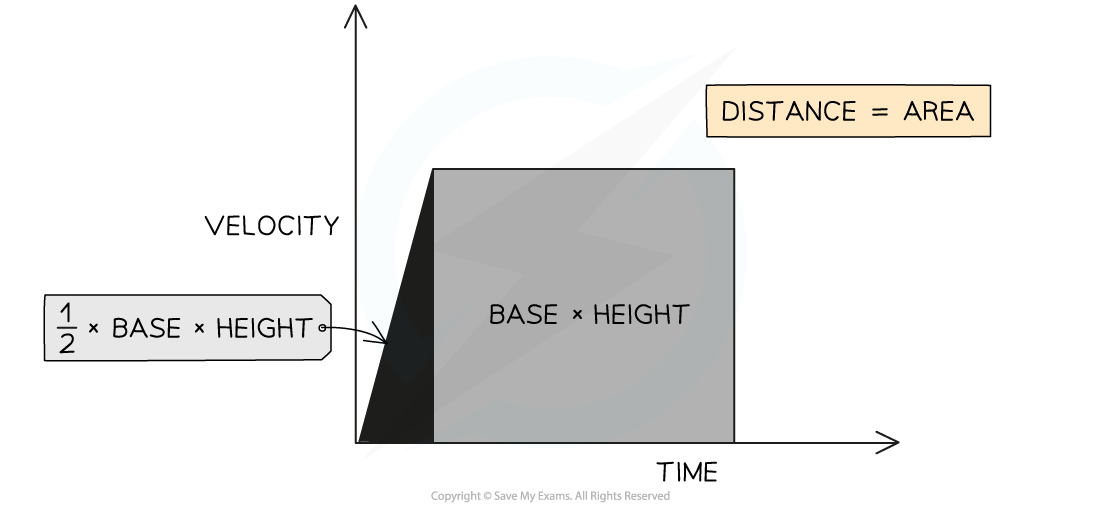
The displacement, or distance travelled, is represented by the area beneath the graph
Choose a confidence level to continue.
Prefer to read it all at once? Show the full lesson as a page
1.What the area under the line counts
Gradient reads one answer off this graph; area reads the other. Between the line and the time axis sits a region whose size is measured in metres, because it multiplies a velocity by a time. This lesson establishes the counting rule and the two area formulas that carry it.
The displacement, or distance travelled, is represented by the area beneath the graph
Key points
- The area between a velocity-time line and the time axis represents the displacement, that is the distance travelled.
- A triangular region appears when the object accelerates or decelerates, and its area is one half times the base times the height.
- A rectangular region appears when the object moves at constant velocity, and its area is base times height.
Guided content from the SME authoring corpus — note rn_GxNWbSMqkTN4zgZB, pinned at aa6485187429 · promoted SyllabAI/syllabai-resources b3caaaa90c5e