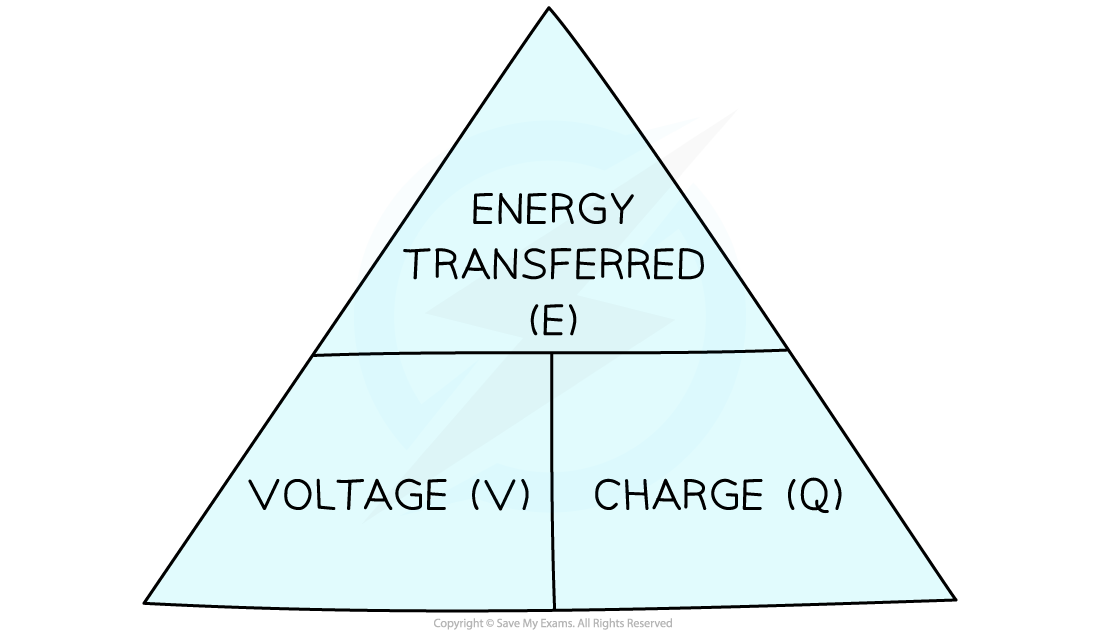
Voltage & Energy
2 guided lessons · 18 checks · 2. Electricity → Current, Potential Difference & Resistance
Guided lessons for this note
Which concept don't you understand yet?
We'll explain it simply and check your understanding. Pick any lesson — any order works.
0 of 18 checks correct so far
Lesson 1 of 2
Voltage
Every coulomb leaving a cell carries an energy parcel, and the size of that parcel is what we call voltage. A 12 V cell hands each coulomb 12 joules to spend. This lesson pins the definition, watches electrons gain and spend that energy, and meets the meter that reads it.
What you know already
Push a charge through a lamp and it hands over energy as it goes — the amount handed over by each coulomb is the voltage. This note defines the volt, follows the electrons as they gain energy inside the cell and spend it around the loop, and then builds the equation that turns charge and voltage into energy transferred.
Key points of understanding
- Voltage measures how much energy each coulomb of charge delivers between two points.
- Voltage is measured in volts (V); one volt means one joule transferred by one coulomb.
- Electrons gain energy as they pass through the cell and spend it around the circuit.
- A voltmeter reads voltage and must be connected in parallel with the component.
- Potential difference names the same quantity — a difference measured between two points.
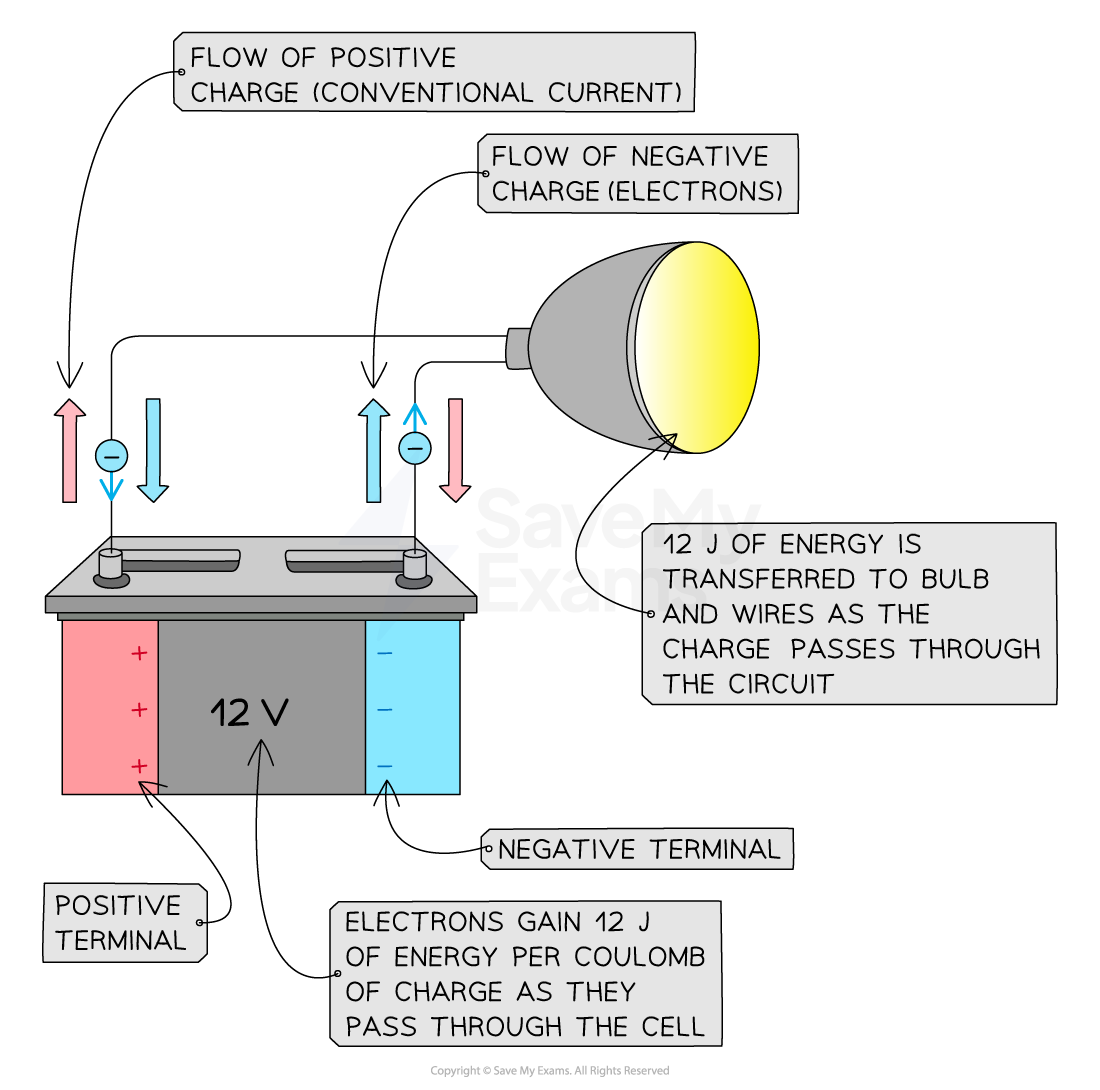
Electrons gain energy as they pass through a cell. As they flow through the light bulb, energy is transferred to the surroundings by heating and radiation
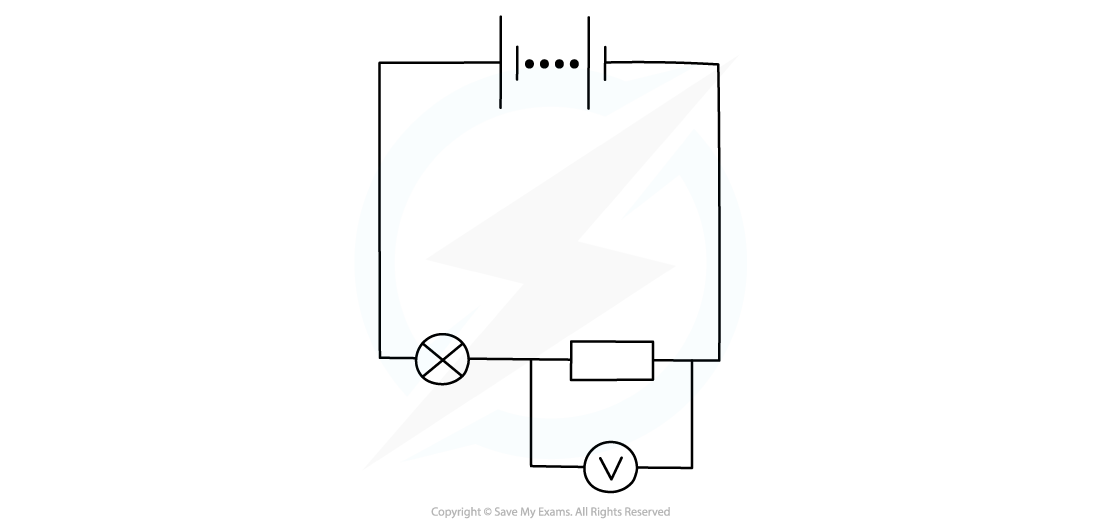
Voltage can be measured by connecting a voltmeter in parallel between two points in a circuit
Choose a confidence level to continue.
Prefer to read it all at once? Show the full lesson as a page
1.Voltage
Every coulomb leaving a cell carries an energy parcel, and the size of that parcel is what we call voltage. A 12 V cell hands each coulomb 12 joules to spend. This lesson pins the definition, watches electrons gain and spend that energy, and meets the meter that reads it.
Electrons gain energy as they pass through a cell. As they flow through the light bulb, energy is transferred to the surroundings by heating and radiation
Voltage can be measured by connecting a voltmeter in parallel between two points in a circuit
Key points
- Voltage measures how much energy each coulomb of charge delivers between two points.
Guided content from the SME authoring corpus — note rn_BcxDP3RzXk3k7rwf, pinned at 275f3b535d78 · promoted SyllabAI/syllabai-resources b3caaaa90c5e