Translations of Graphs (Edexcel IGCSE Maths)
Spec point —
3.3B
Translations of graphs
What are translations of graphs?
-
The equation of a graph can be changed in certain ways
-
This has an effect on the graph
- How a graph changes is called a graph transformation
-
-
A translation is a type of graph transformation that shifts (moves) a graph (up or down, left or right) in the xy plane
- The shape, size, and orientation of the graph remain unchanged
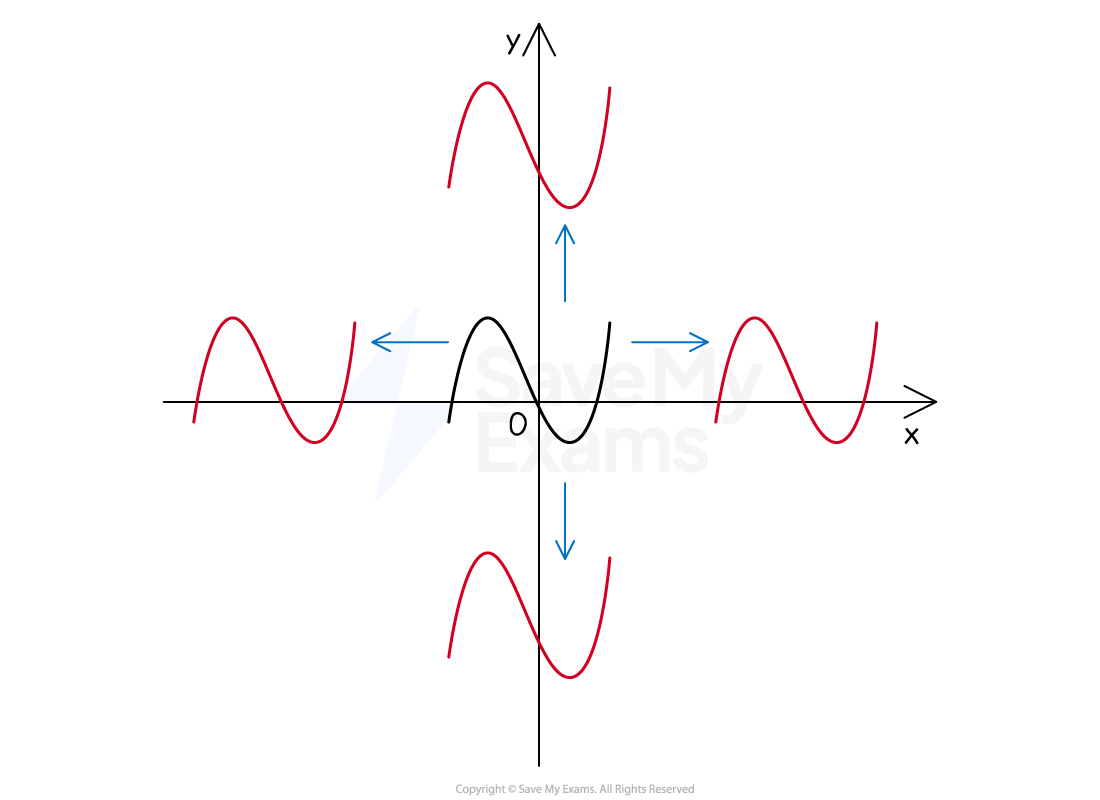
Examples of translations
- A particular translation is specified by a translation vector
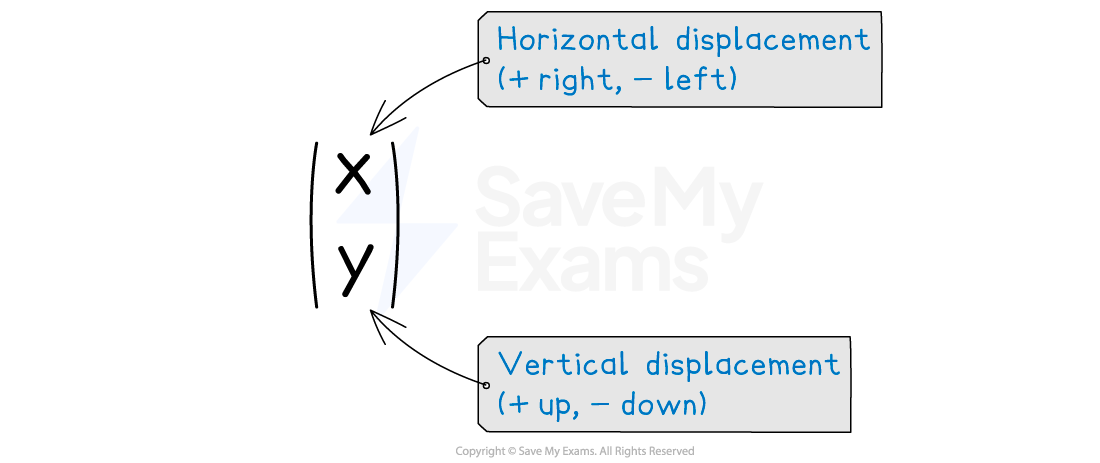
How do I translate graphs?
- Let be the equation of the original graph
Vertical translations: y=f(x) + a
-
is a vertical translation by the vector
- The graph moves up for positive values of * *
- The graph moves down for negative values of
- The x-coordinates stay the same
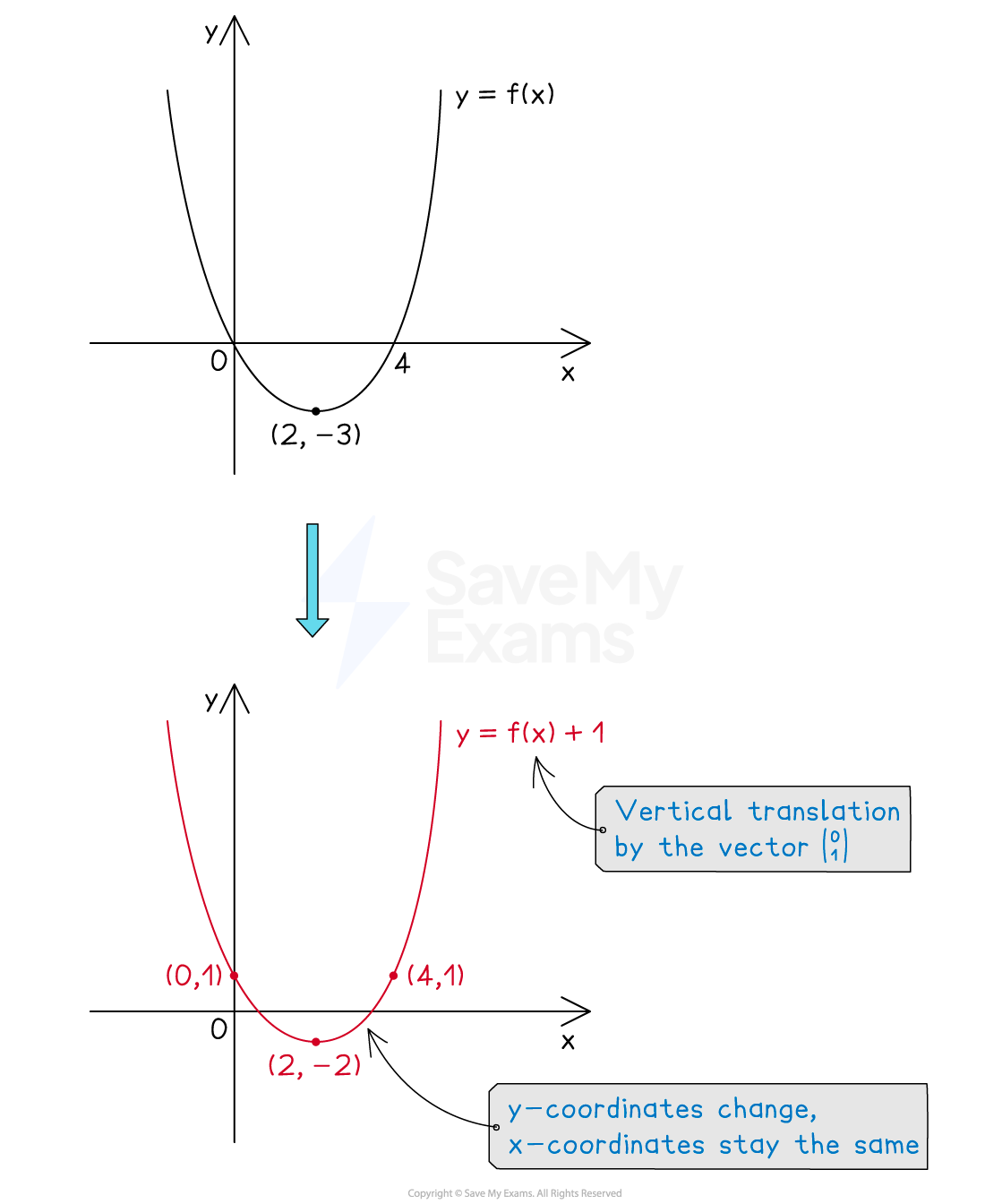
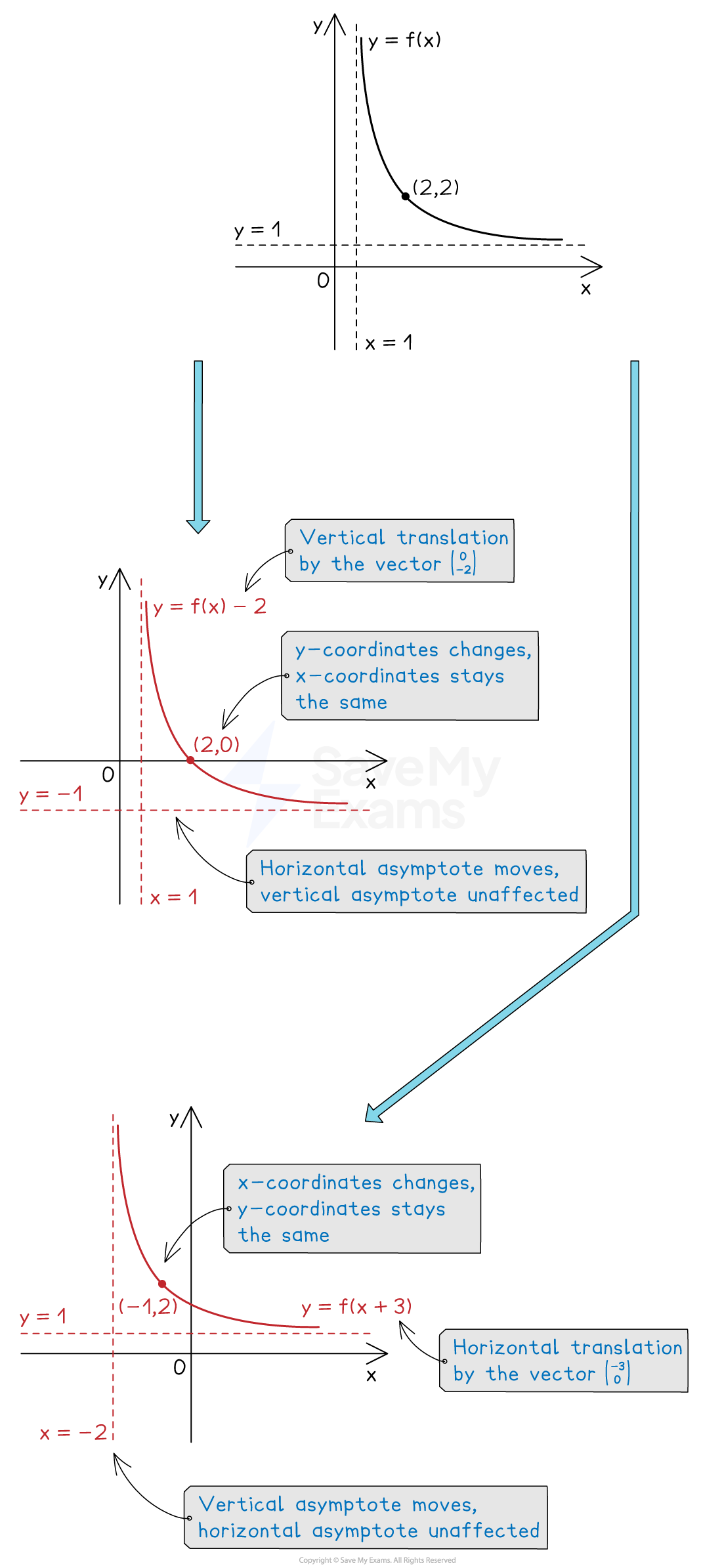
Example of a vertical translation
Horizontal translations: y=f(x + a)
-
is a horizontal translation by the vector
-
The graph moves left for positive values of
- This is often the opposite direction to which people expect
-
The graph moves* right for negative values of
-
The y-coordinates stay the same
-
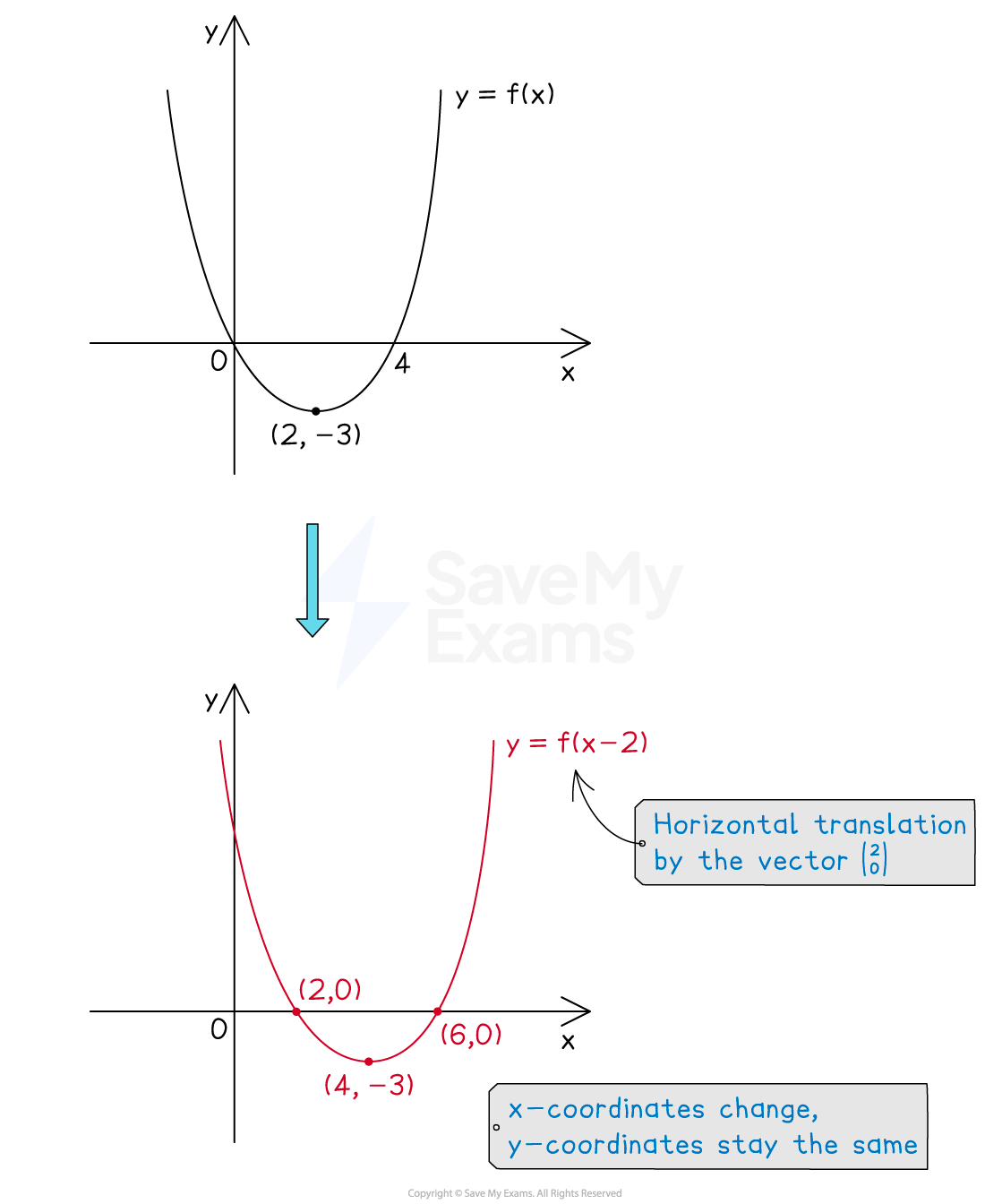
Example of a horizontal translation
What happens to asymptotes when a graph is translated?
-
Any asymptotes of f(x) are also translated
- An asymptote parallel to the direction of translation will not be affected
How does a translation affect the equation of the graph?
-
For a horizontal translation of the graph
- is subtracted from throughout the equation
- Every instance of in the equation is replaced with
-
E.g. the graph undergoes a translation of 6 units to the right
-
becomes
-
is replaced throughout the equation by
- is the new equation
-
The equation can be left in this form or expanded and simplified
-
-
For a vertical translation of the graph
- is added to the equation as a whole
-
E.g. the graph undergoes a translation of 5 units down
-
becomes
-
5 is subtracted from the equation as a whole
-
The equation can be left in this form or simplified
-
How do I apply a combined translation?
-
For a horizontal translation of units and vertical translation of units combined
- becomes
-
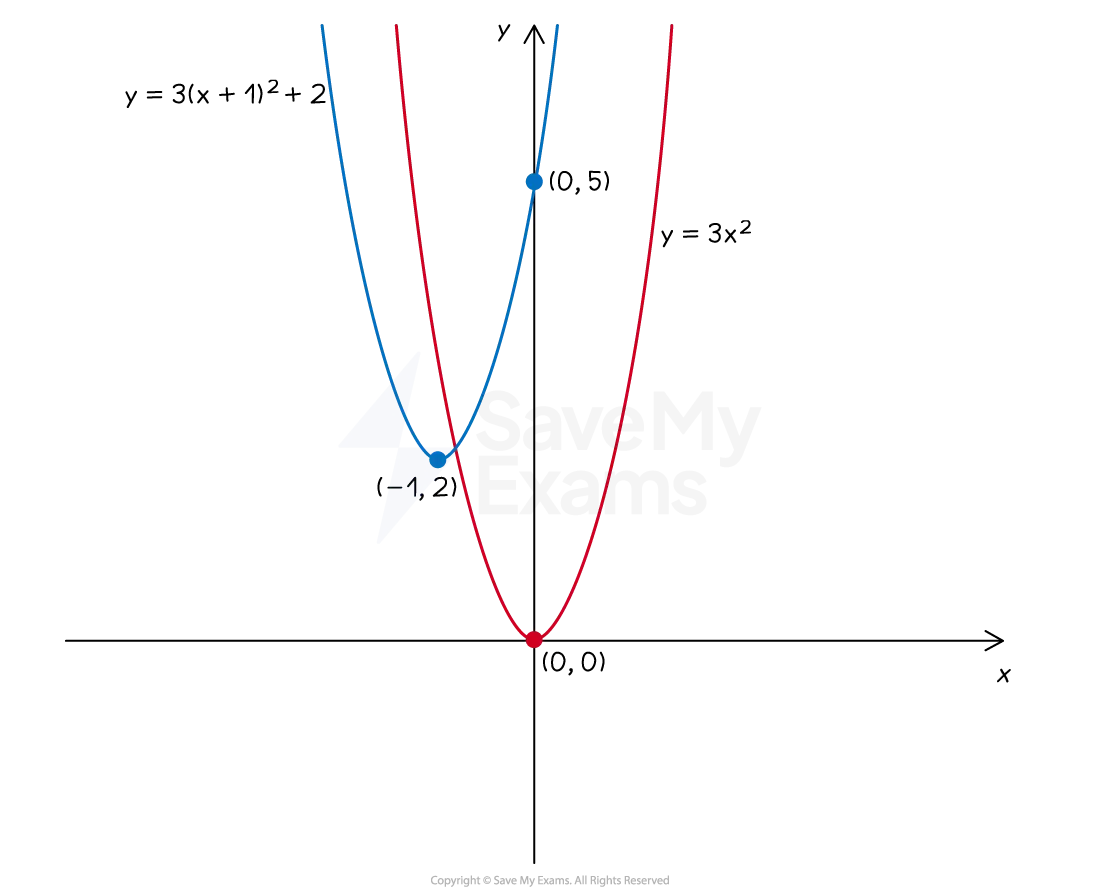
E.g. the graph undergoes a translation of 2 units up and 1 unit to the left
-
will become
-
is replaced throughout the equation by
-
2 is added to the equation as a whole
-
-
Note that when the equation is in the form
- the vertex is
- the value of does not affect the vertex coordinates
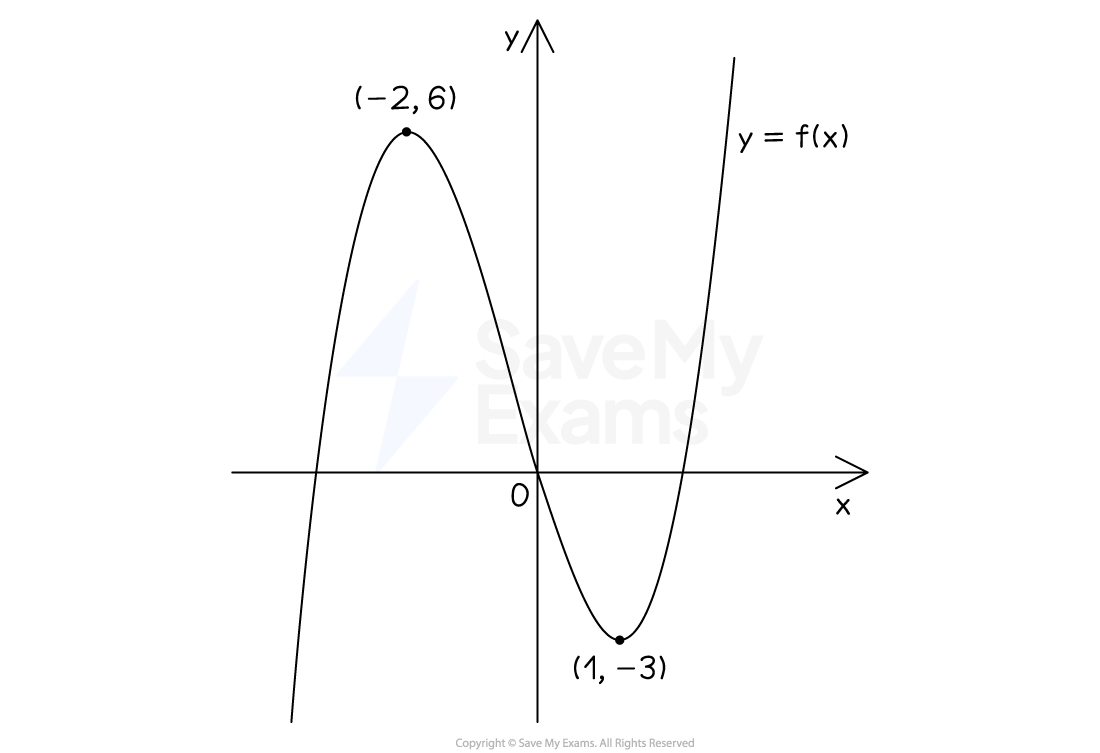
Worked Example The diagram below shows the graph of .
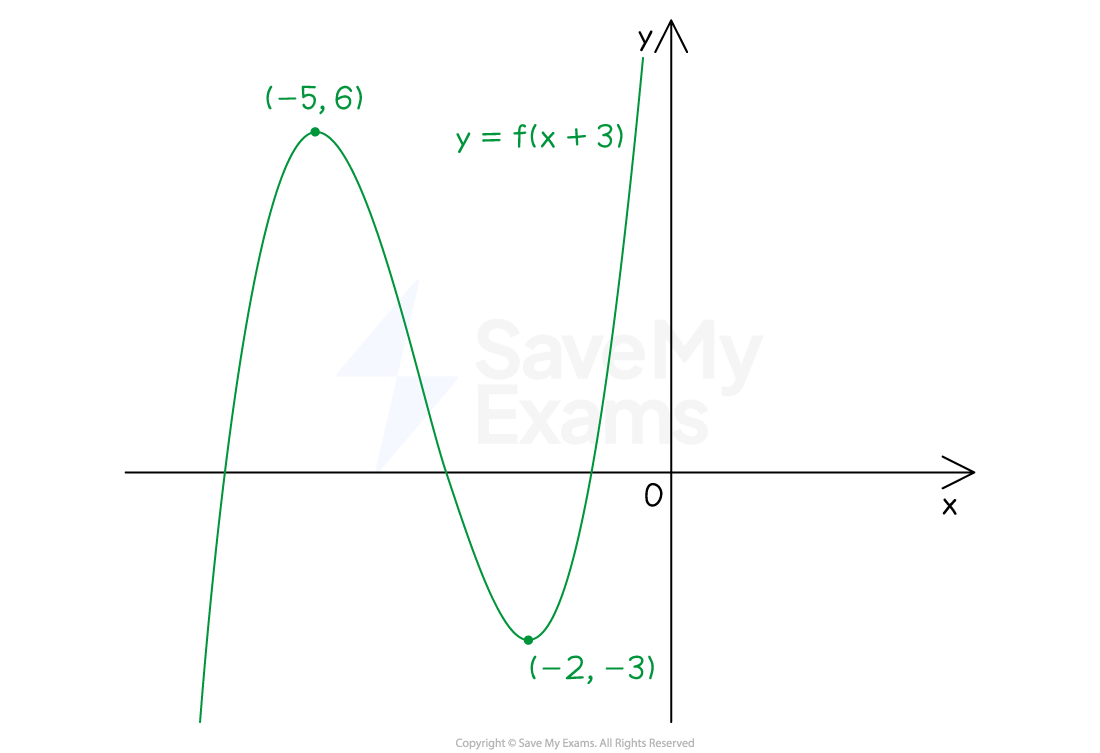
Sketch the graph of .
Answer:
The transformation of the graph is a horizontal translation with vector (3 units to the left)
The x-coordinates of the points change (subtract 3 from each) The y-coordinates of the points stay the same
Was this revision note helpful?