Planes of Symmetry (Edexcel IGCSE Maths)
Planes of symmetry
What is a plane of symmetry?
-
A plane is a flat surface that can be any 2D shape
-
A plane of symmetry is a plane that splits a 3D shape into two congruent (identical) halves
-
If a 3D shape has a plane of symmetry, it has reflection symmetry
- The two congruent halves are identical, mirror images of each other
-
All prisms have at least one plane of symmetry
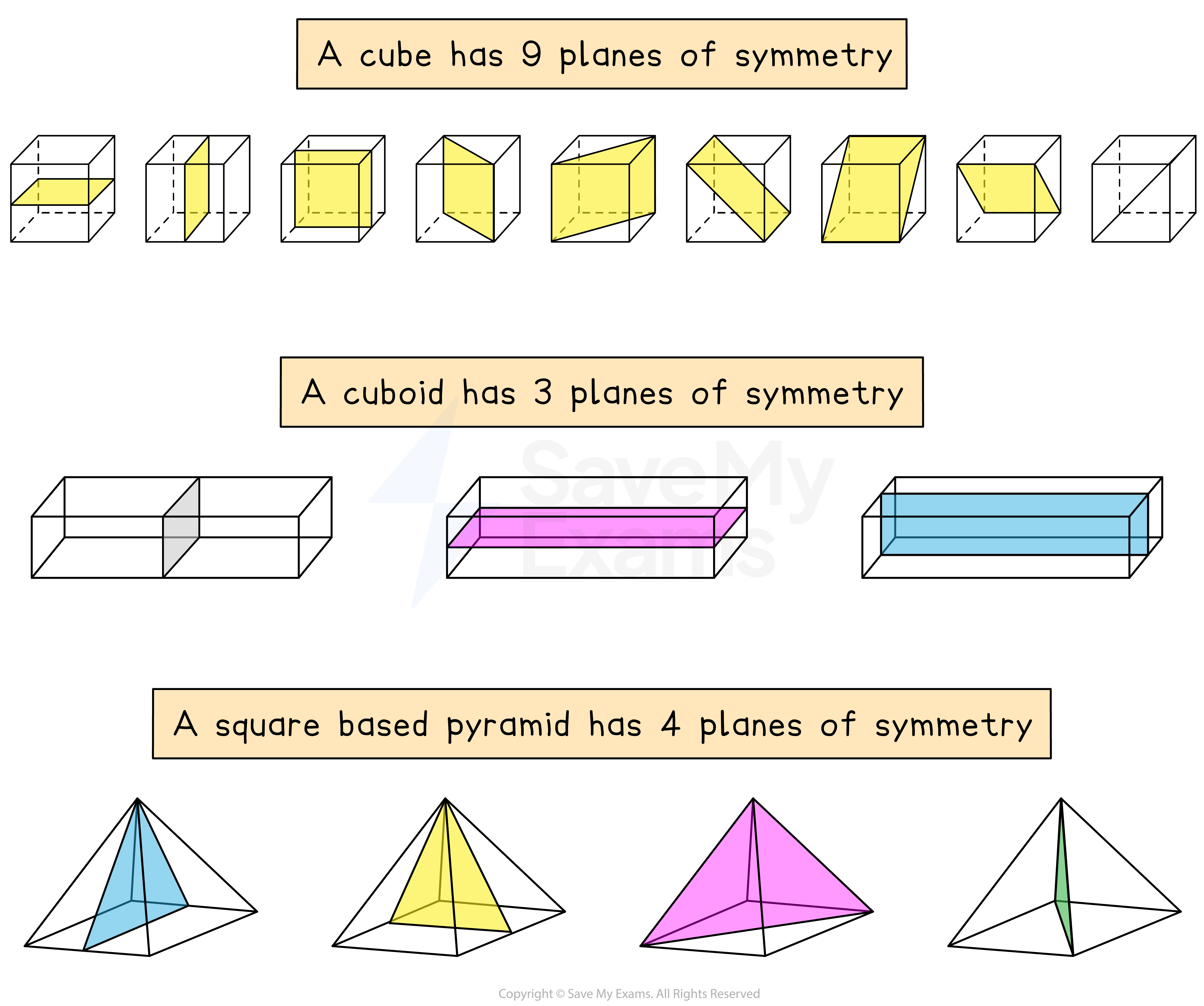
- Cubes have 9 planes of symmetry
- Cuboids have 3 planes of symmetry
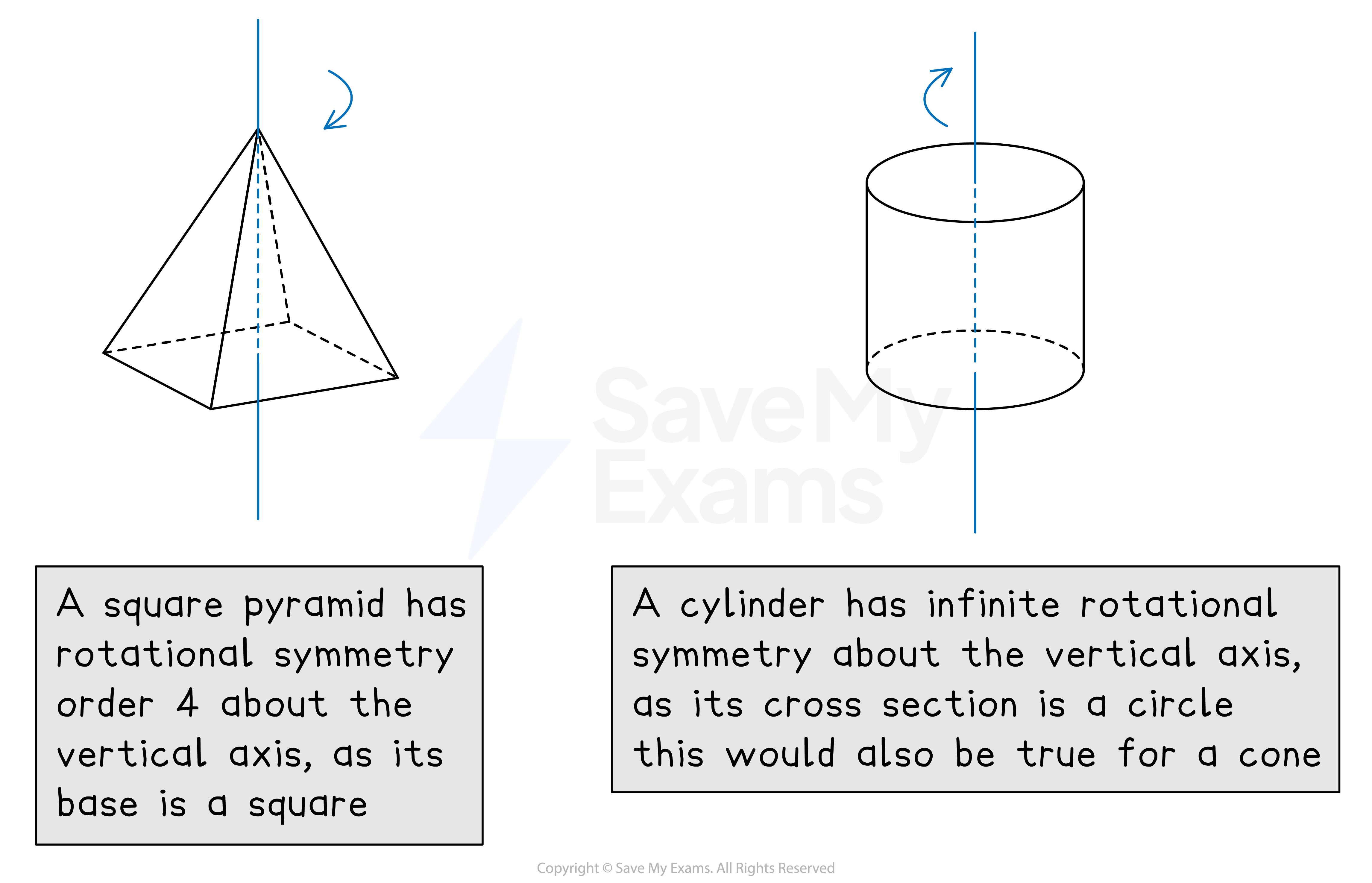
- Cylinders have an infinite number of planes of symmetry
- The number of planes of symmetry in other prisms will be equal to the number of lines of symmetry in its cross-section plus 1
-
Pyramids can have planes of symmetry too
- The number of planes of symmetry in pyramids will be equal to the number of lines of symmetry in its 2D base
- If the base of the pyramid is a regular polygon of n sides, it will have n planes of symmetry
Can a 3D shape have rotational symmetry?
-
3D shapes are able to be rotated around different axes
- Depending on which axis the shape is rotated around, 3D shapes can have rotational symmetry
-
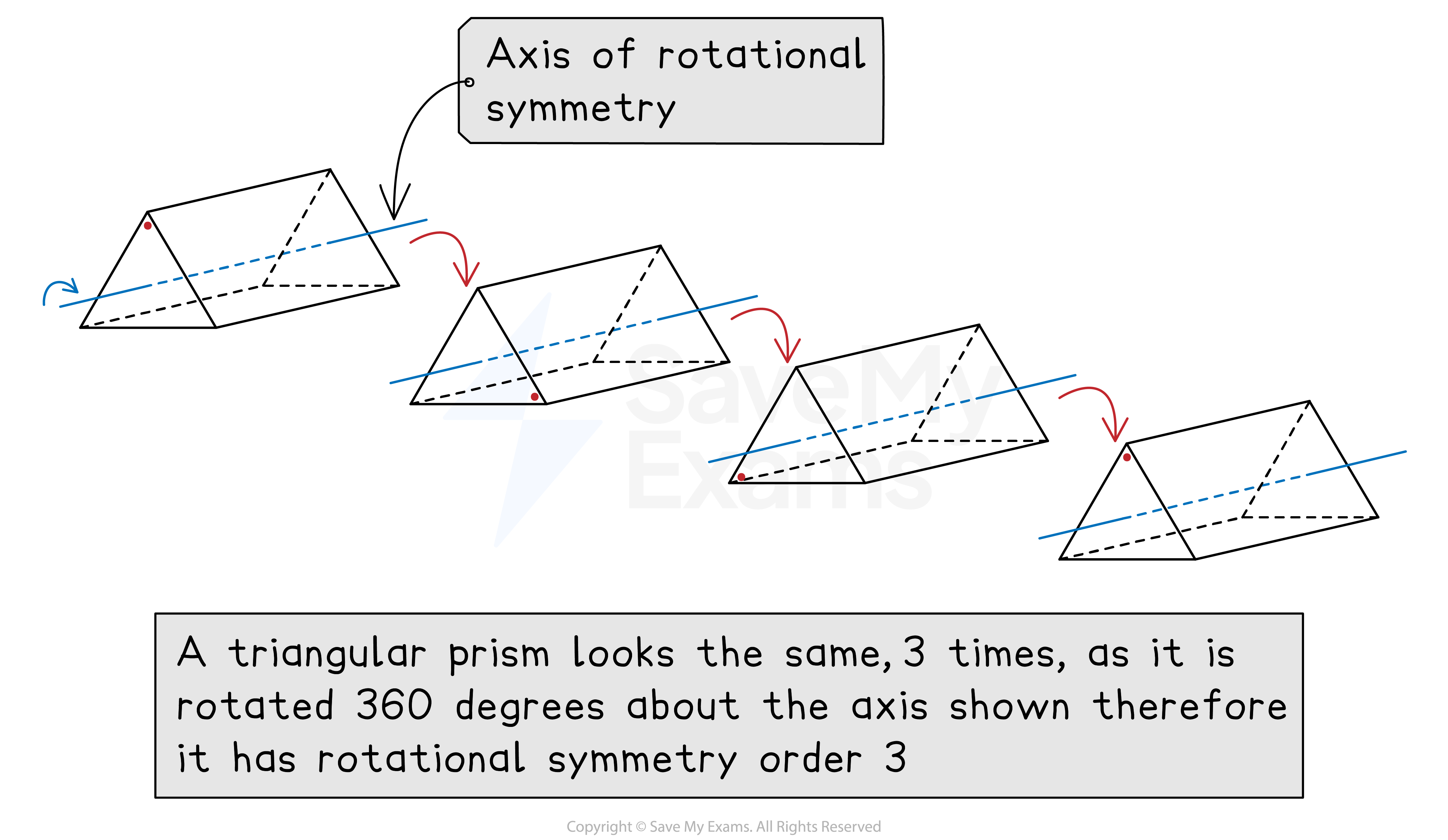
Recall that rotational symmetry is how many times the shape looks the same (congruent) when rotated through 360 degrees
- See the example of the triangular prism where the cross-section is an equilateral triangle
Exam Hint
If you’re unsure in the exam, consider the properties of the 3D shape.
- Is it a prism or a pyramid?
- How many lines of symmetry are there in the 2D faces or cross-section?
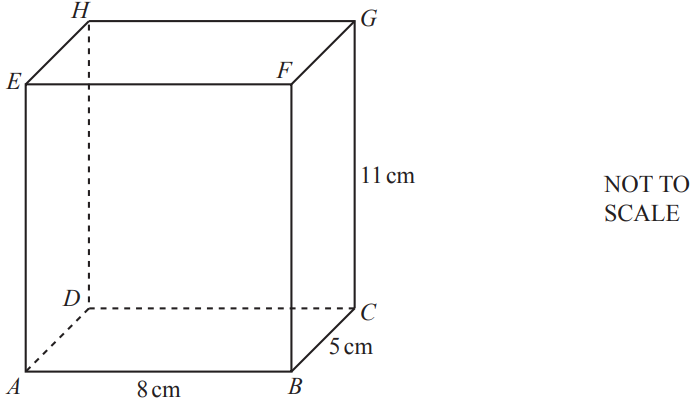
Worked Example The diagram below shows a cuboid of length 8 cm, width 5 cm and height 11 cm.
Write down the number of planes of symmetry of this cuboid.
Answer:
A plane of symmetry is where a shape can be "sliced" such that it is symmetrical
A cuboid with three different pairs of opposite rectangles has 3 planes of symmetry
Final answer: 3 planes of symmetry
Was this revision note helpful?
Build on this topic