Quadratic Graphs (Edexcel IGCSE Maths)
Spec point —
3.3I
Quadratic graphs
What are the key features of a quadratic graph?
-
The point where the graph turns is called the vertex
-
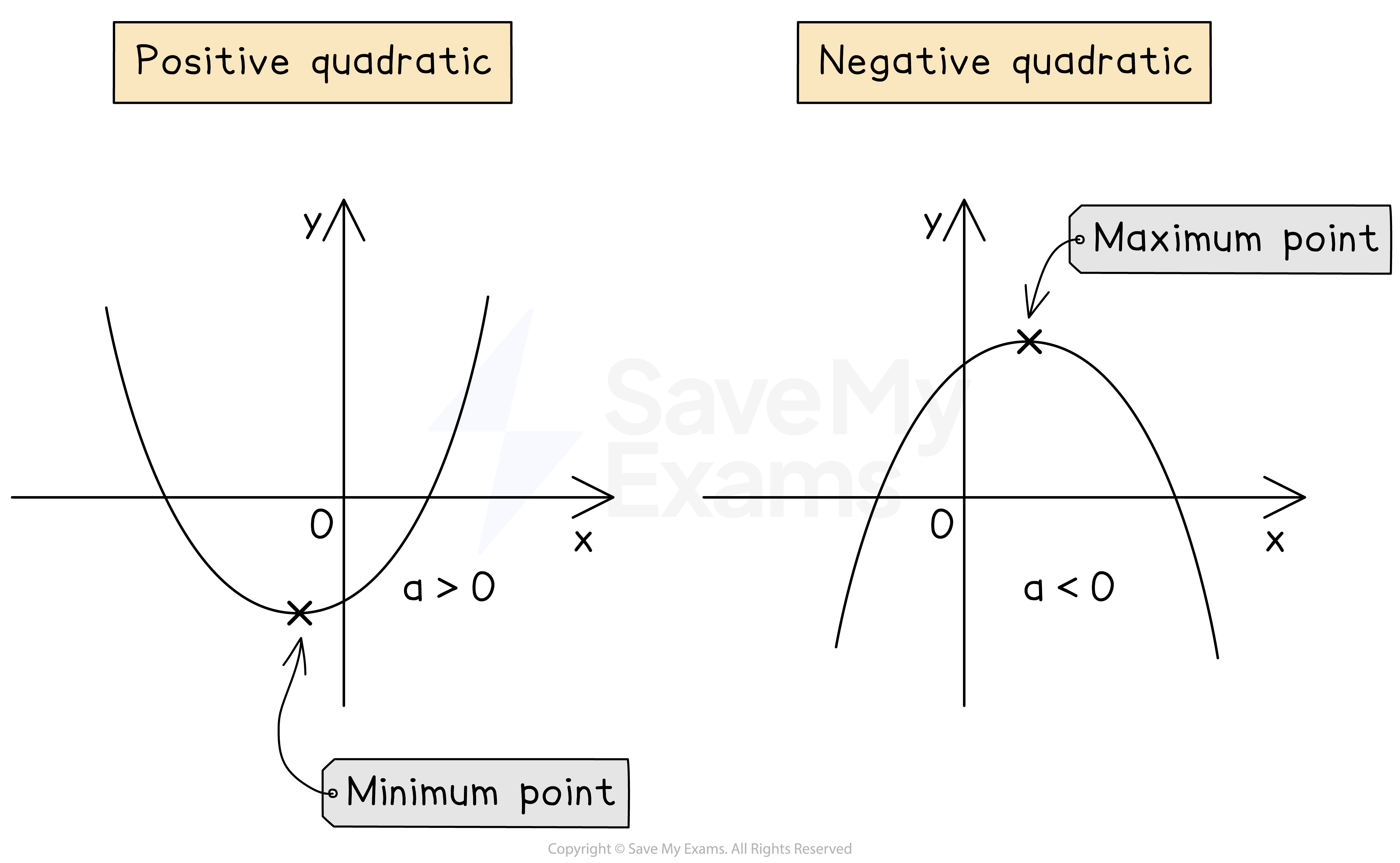
Positive quadratics have a minimum point
- The bottom of the u-shape
-
Negative quadratics have a maximum point
- The top of the n-shape
-
-
Quadratic graphs always have a vertical line of symmetry down the middle
-
The equation of the vertical line of symmetry is x = k
- k is the x-coordinate of the minimum or maximum point
-
-
Quadratic graphs do not have to cross the x-axis
-
If they do, two x-intercepts are created, called roots
- If the curve just touches the x-axis, only 1 root is created
-
Roots are symmetric about the vertical line of symmetry
-
-
Quadratic graphs always have one y-intercept
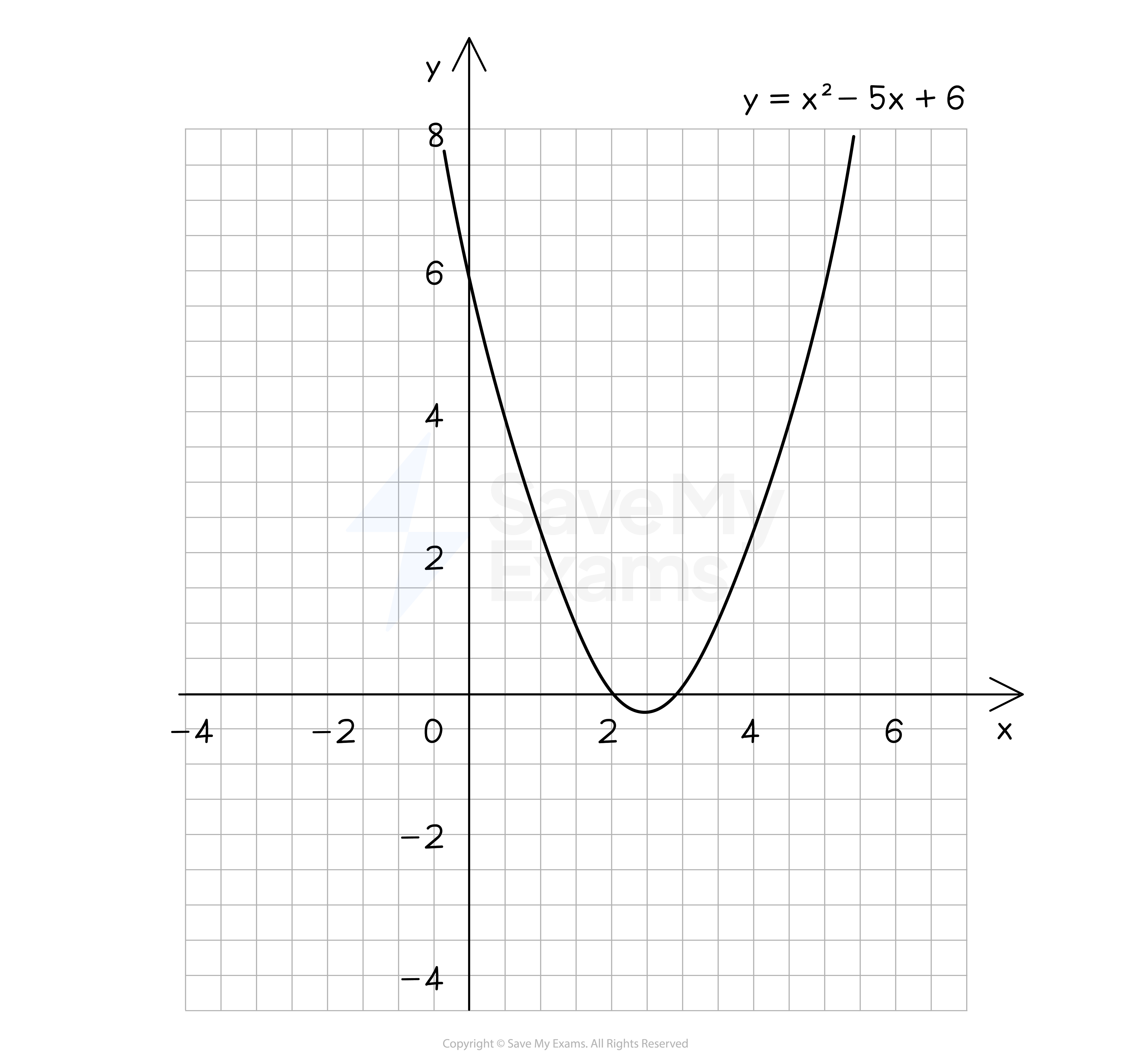
Worked Example The graph of the equation is shown below.
(a) Write down the coordinates of the roots of the equation.
Answer:
The roots of the equation are the x-intercepts of the graph
The graph crosses at x = 2 and x = 3
Final answer: The roots of the graph are at (2, 0) and (3, 0)
(b) Write down the equation of the line of symmetry.
Answer:
The line of symmetry is a vertical line that occurs halfway between the x-intercepts
Find the x-value that is halfway between the roots
The x-intercepts are x = 2 and x = 3 Halfway between is x = 2.5
Write down the equation of the line of symmetry
Final answer: x = 2.5
Was this revision note helpful?