Translations (Edexcel IGCSE Maths)
Spec point —
5.2H
Translations
What are transformations in maths?
-
There are four transformations to learn
- translations,rotations,reflections and enlargements
-
A transformation can change the position, orientation and/or size of a shape
- The original shape is called the object
- The transformed shape is called the image
-
Vertices are labelled to show corresponding points
- Vertices on the object are labelled A, B, C, etc.
- Vertices on the image are labelled A’, B’, C’ etc.
What is a translation?
-
A translation moves a shape
-
The size and orientation (which way up it is) of the shape stays the same
- The object and image are congruent
What is a translation vector?
-
The movement of a translation is described by a vector
-
You need to know how to write a translation using a vector (rather than words)
-
Vectors are written as column vectors in the form where:
-
is the distance moved horizontally
- Negative means move to the left
- Positive means move to the right
-
is the distance moved vertically
- Negative means move down
- Positive means move up
-
How do I translate a shape?
-
STEP 1 Interpret the translation vector
- means 3 to the right and 1 down
-
STEP 2 Move each vertex on the original object according to the vector
-
STEP 3 Connect the new vertices and label the translated image
- It should look identical to the original object just in a different position
-
In some cases the image can overlap the object
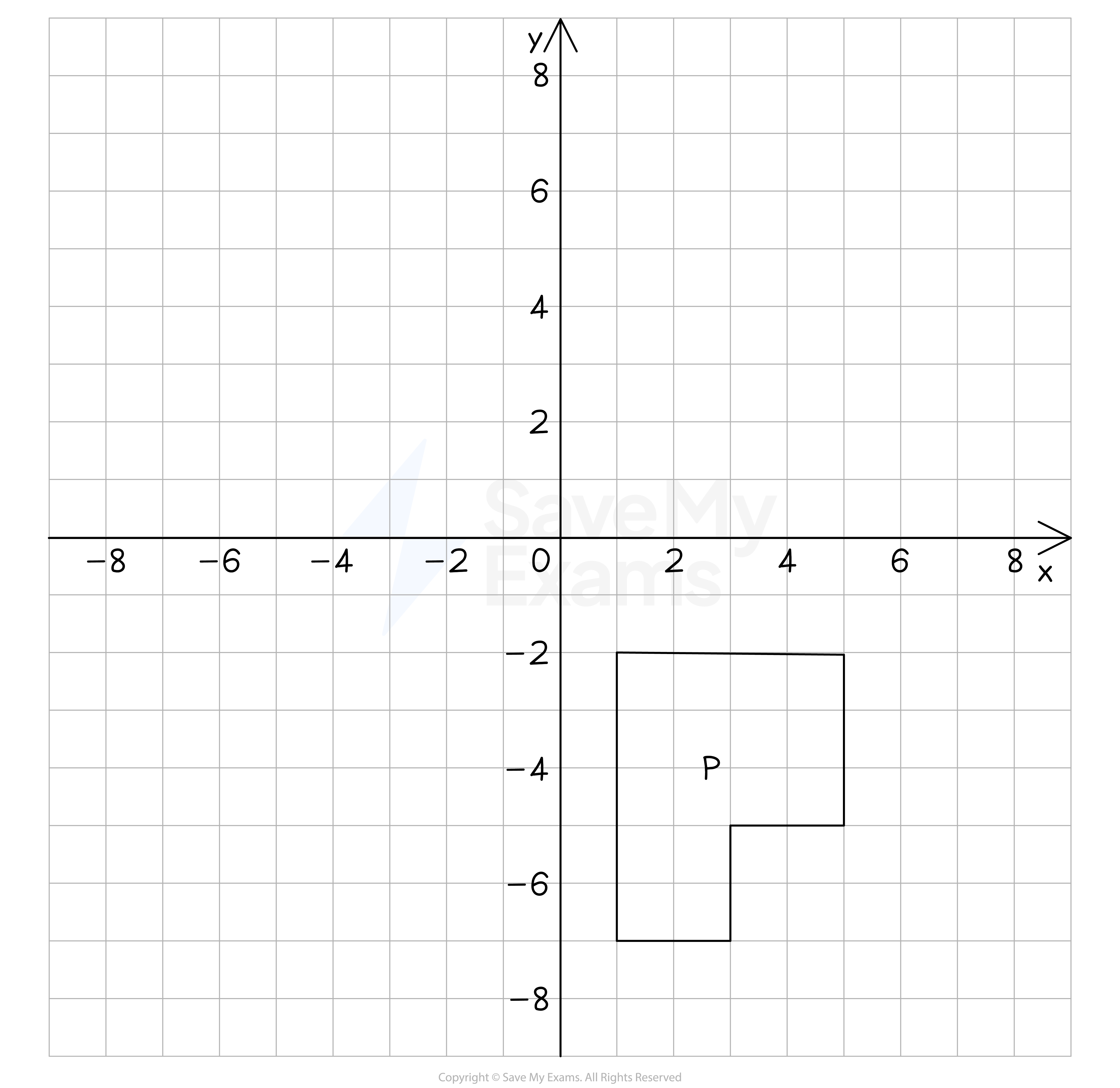
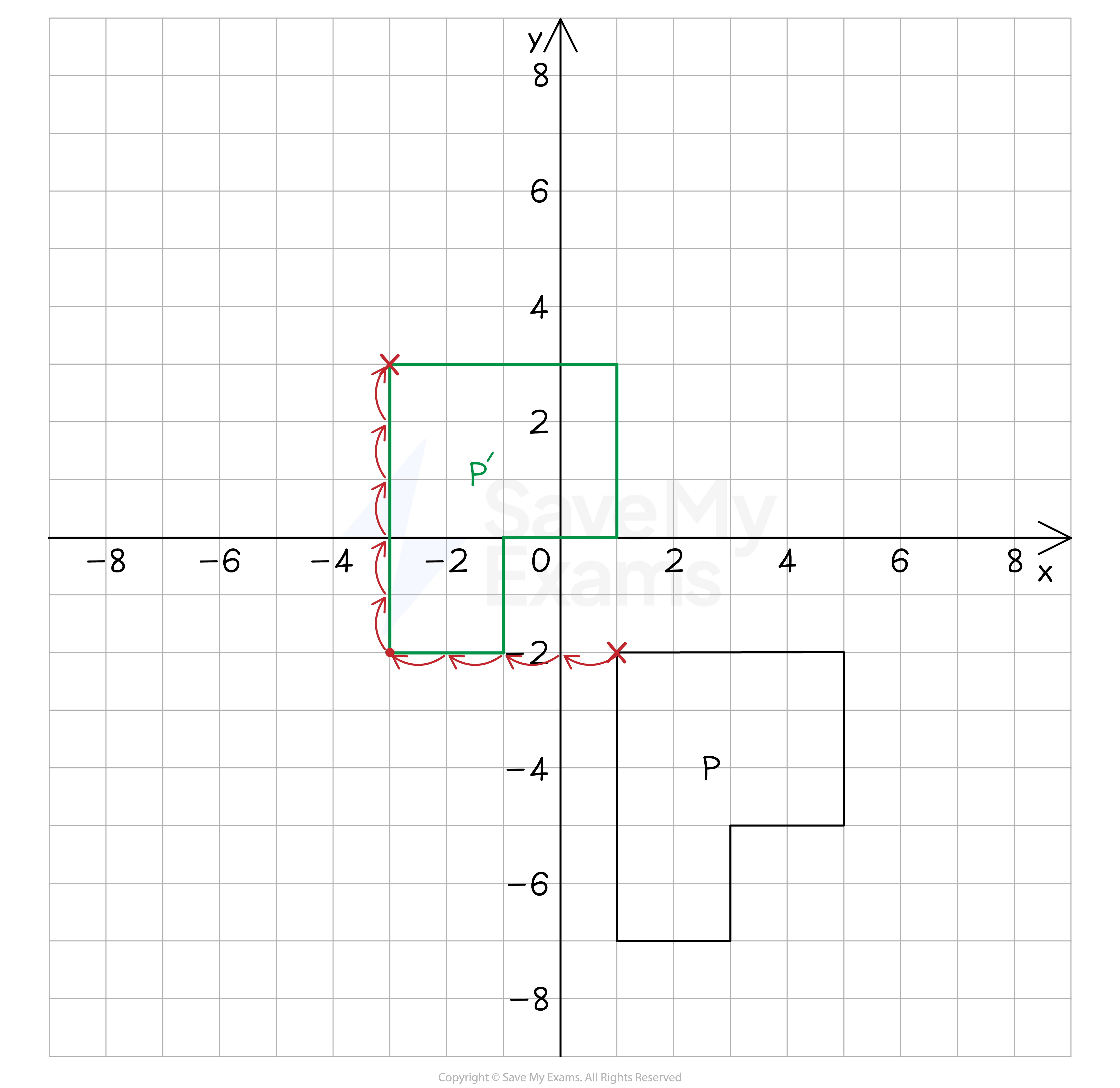
Worked Example On the grid below translate shape P using the vector .
Label your translated shape P'.
Answer:
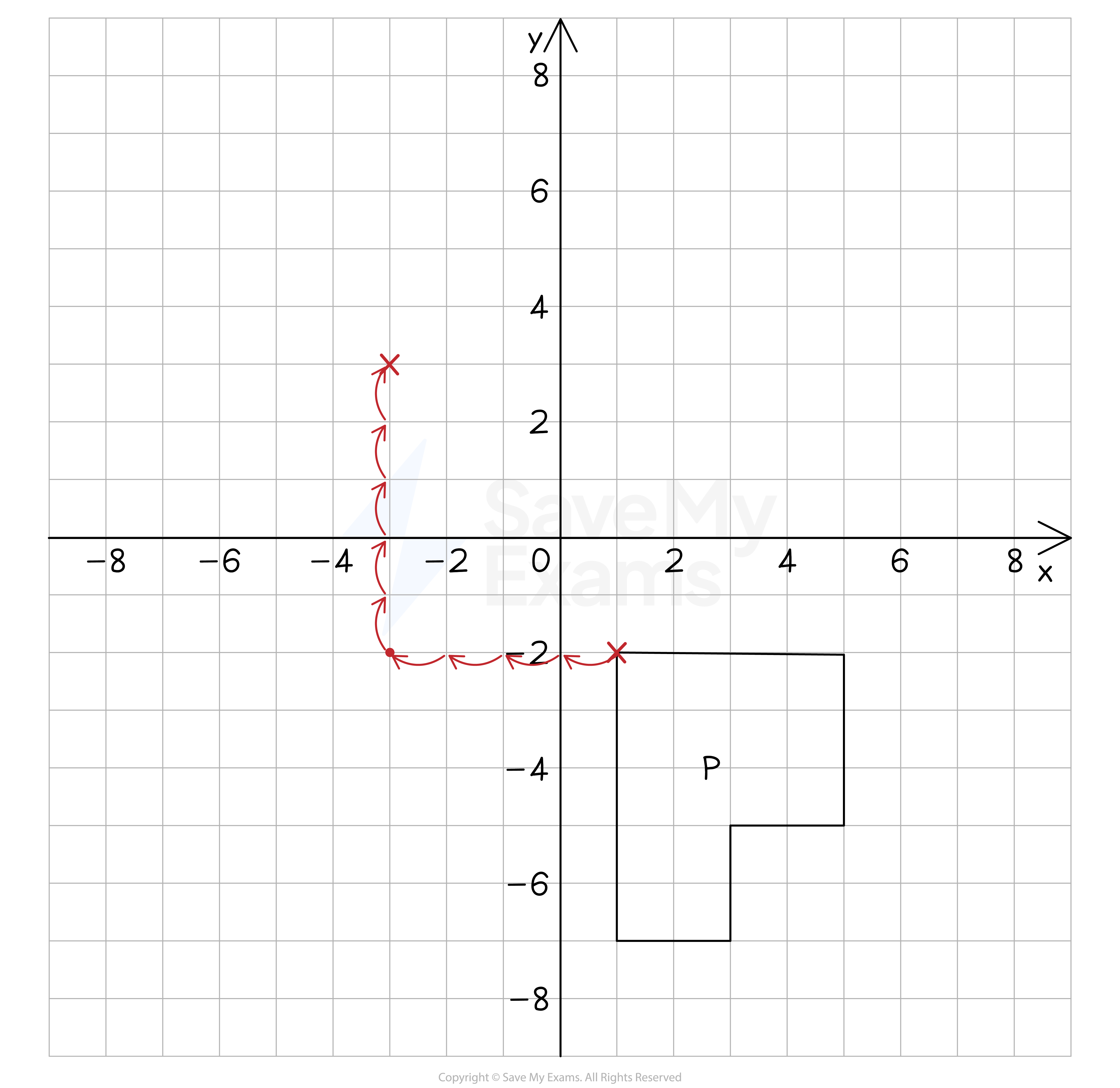
The vector means "4 to the left" and "5 up" You don't have to draw in any arrows but it is a good idea to mark your paper after counting across and up a couple of times to check that you are in the correct place
Translating one vertex and then following around the shape one vertex at a time makes it easier to get the shape in exactly the right position!
How do I describe a translation?
-
To describe a translation, you must:
- State that the transformation is a translation
- Give the column vector that describes the movement
-
To find the vector:
-
Pick a point on the original shape
-
Identify the corresponding point on the image
-
Count how far left or right () you need to go from the object to get to the image
- If you go to the left then will be a negative number
-
Count how far up or down () you need to go from the object to get to the image
- If you go down then will be a negative number
-
Write these numbers as a vector
-
Exam Hint The vector is how the shape moves, not the size of the gap between the object and the image. Watch out for this common error!
Use tracing paper to check your answer.
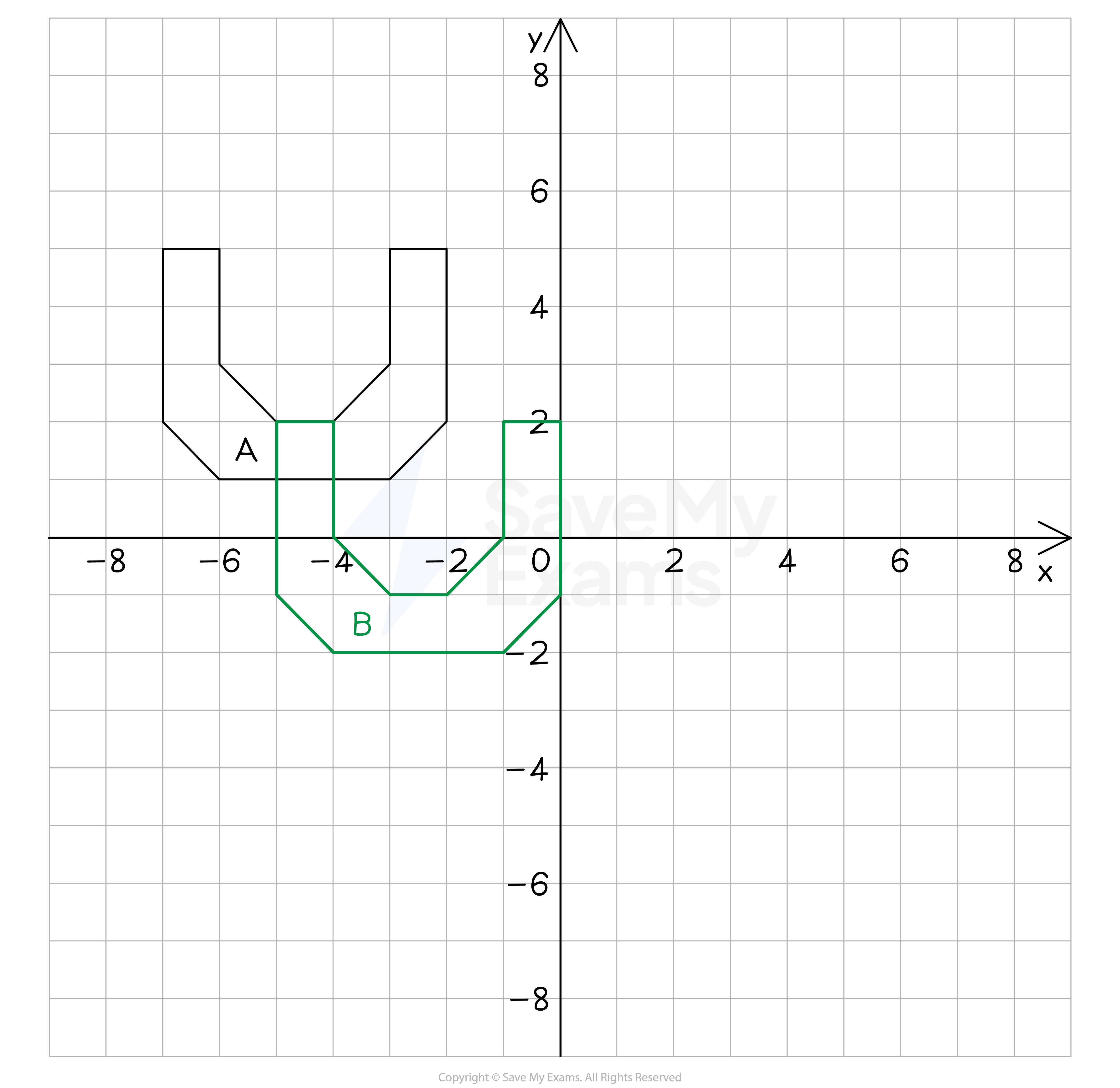
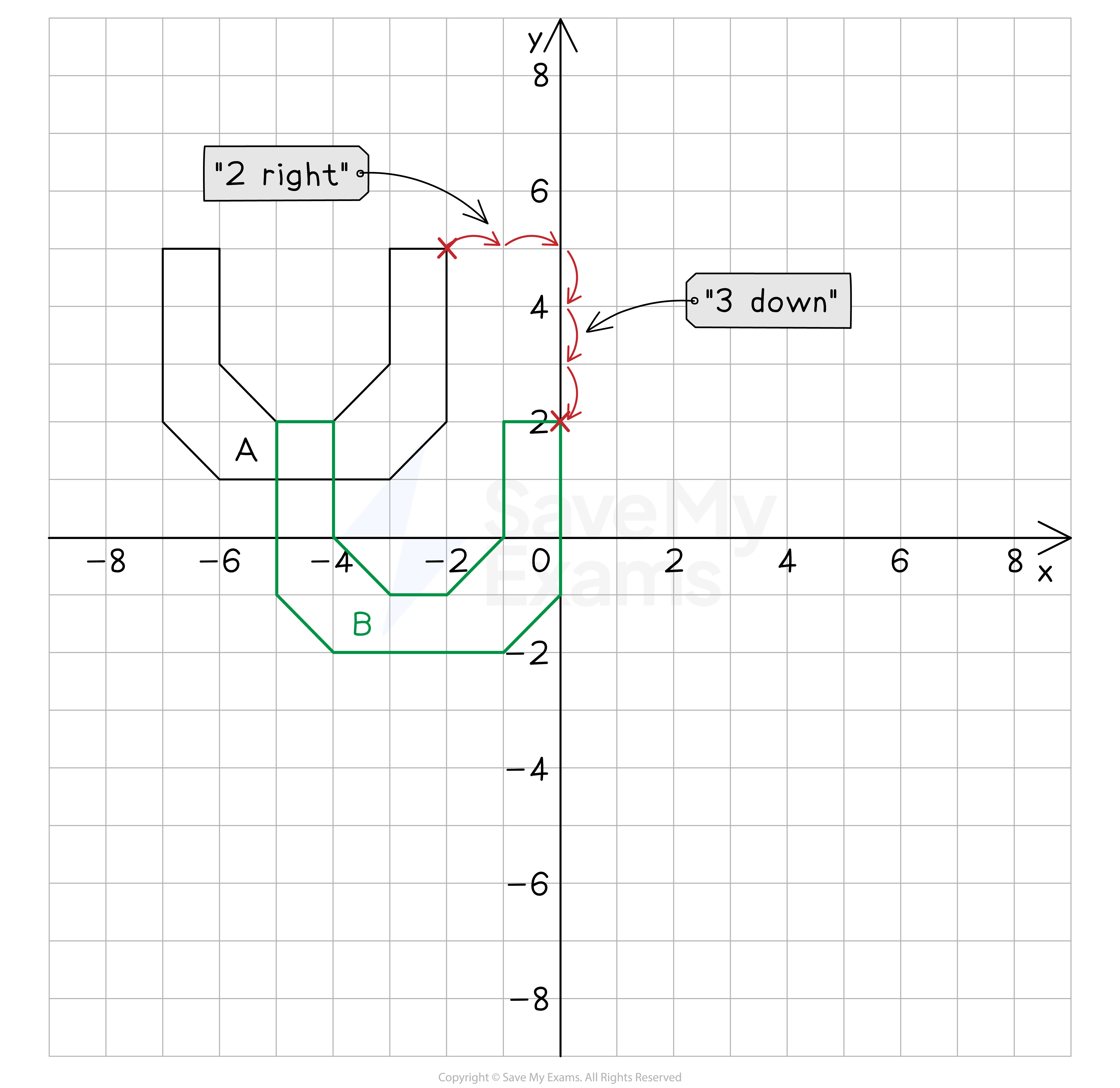
Worked Example Describe fully the single transformation that creates shape B from shape A.
Answer:
This is a case where the image overlaps the object *You should still see that the shape is the same size and the same way up so it is a *translation Start at a vertex on the original object that is well away from any overlap area to avoid confusion and count the number of position left/right and up/down that you need to move to reach the corresponding vertex on the translated image Take care when counting around the axes!
Final answer: Shape A has been translated using the vector**
Error converting from MathML to accessible text.
How do I reverse a translation?
-
To return a shape to its original position after a translation
- the horizontal and vertical translations must **both **be reversed
-
The** column vector** to reverse a translation is simply the same as the original vector, but with the sign of both values changed
- E.g. For a translation described by the column vector
- The column vector for the reverse translation is
Worked Example A shape has been translated from A to B using the translation vector .
Answer:
Write down the vector used to reverse the translation from B to A.
To reverse the translation the shape must be moved in the opposite direction by the same amount
Reverse the signs in the translation vector
Error converting from MathML to accessible text.
Was this revision note helpful?