Surface Area (Edexcel IGCSE Maths)
Spec point —
4.10D
Surface area
What is surface area?
-
The surface area of a 3D object is the sum of the areas of all the faces that make up the shape
- Area is a 2D idea being applied into a 3D situation
- A face is one of the flat or curved surfaces that make up a 3D object
How do I find the surface area of cubes, cuboids, pyramids, and prisms?
-
In cubes, cuboids, polygonal-based pyramids, and polygonal-based prisms (ie. pyramids and prisms whose bases have straight sides), all the faces are flat
-
The surface area is found by
- calculating the area of each individual flat face
- adding these areas together
-
When calculating surface area, it can be helpful to draw a 2D net for the 3D shape in question
-
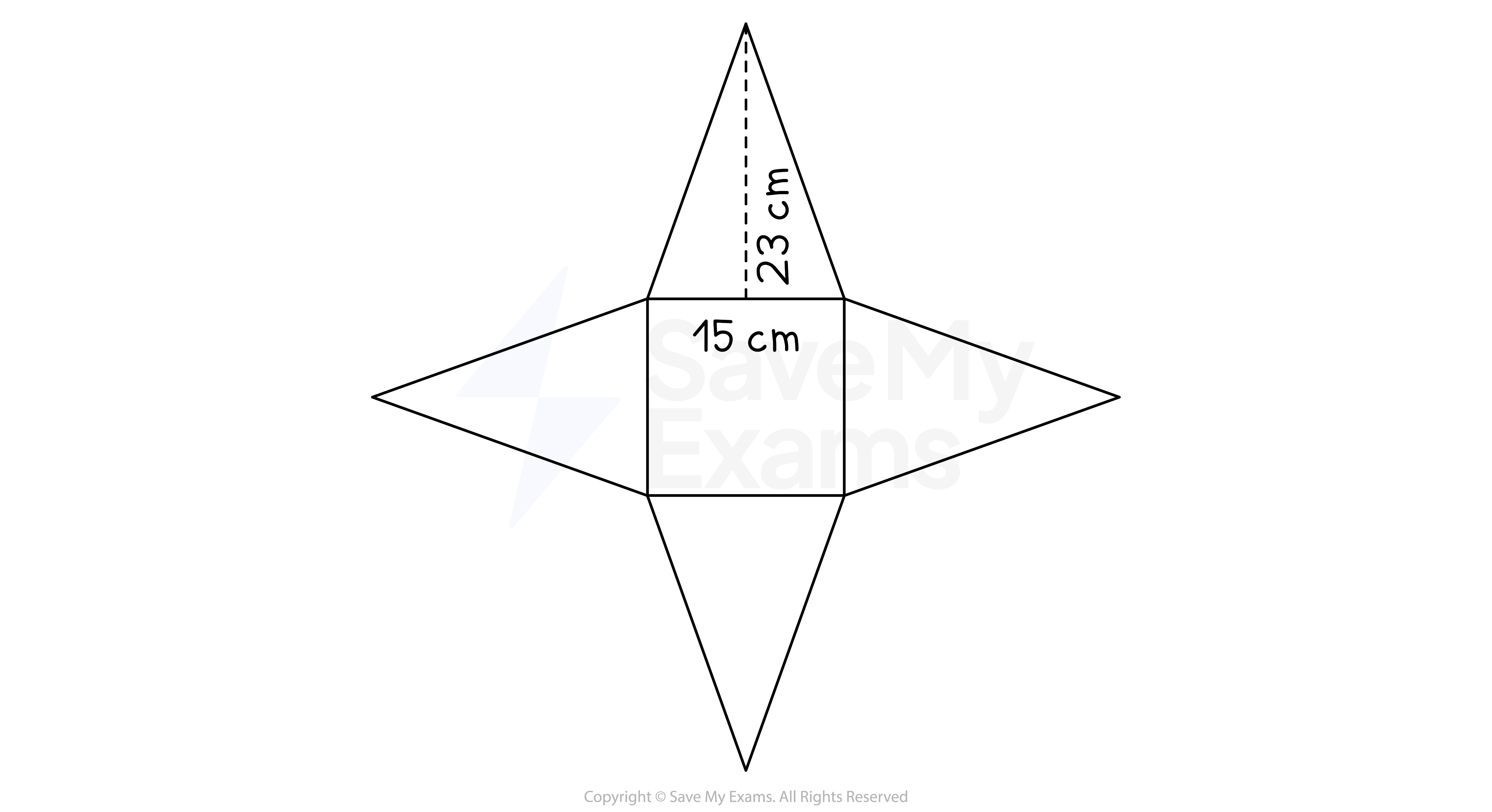
For example, consider a square-based pyramid where the top of the pyramid is directly above the centre of the base
- Its net will consist of a square base and four identical isosceles triangular faces
- Calculate the area of a square and the area of each triangle then add them together
-
How do I find the surface area of a cylinder?
-
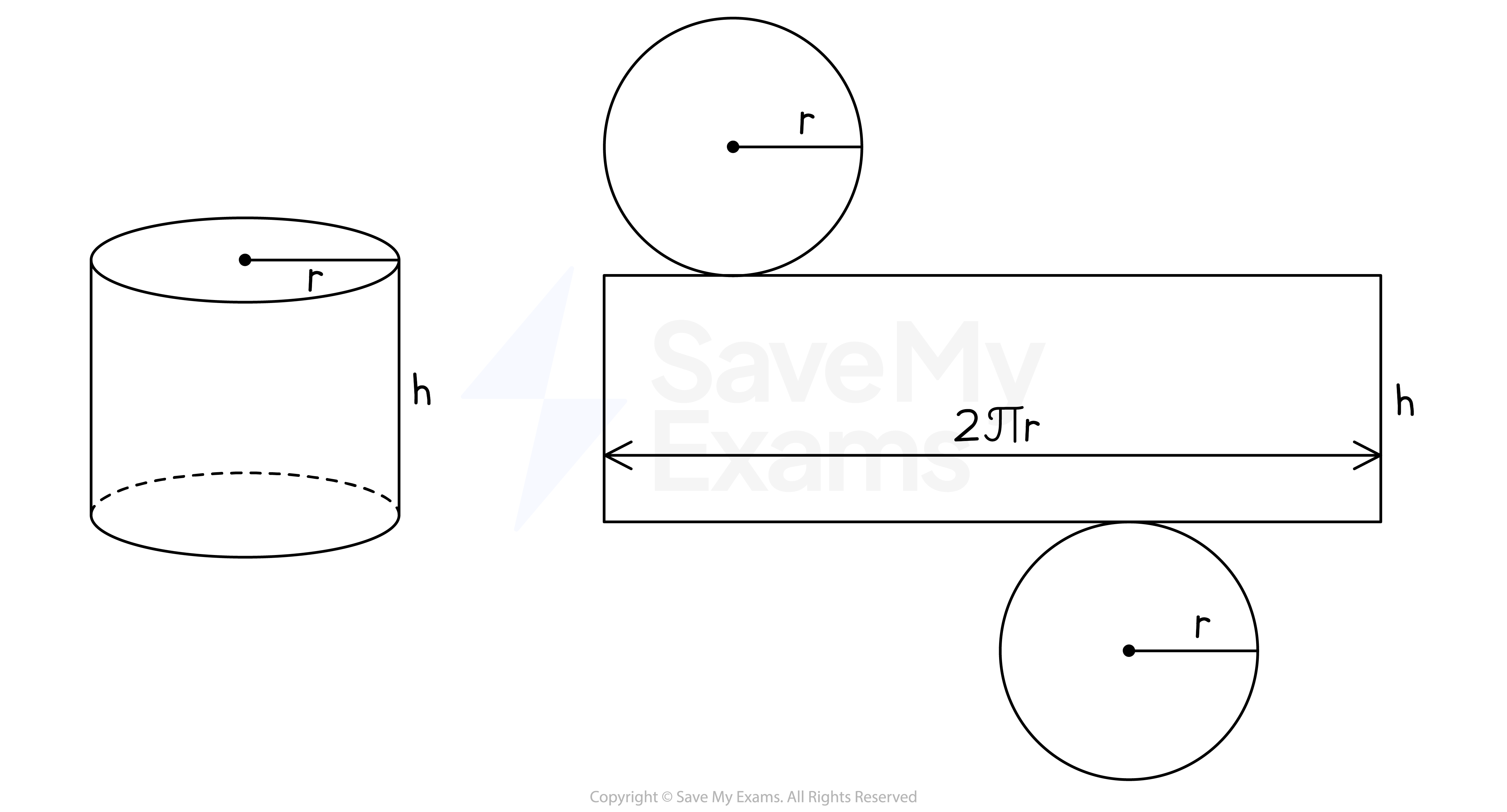
A cylinder has two flat surfaces (the top and the base) and one curved surface
-
The net of a cylinder consists of two circles and a rectangle
-
The curved surface area(which is a rectangle) of a cylinder, A, with base radius, r, and height, h, is therefore given by
- This is the circumference of the circle, multiplied by the height
- This formula is not given to you in the exam
-
The total surface area of a cylinder, ATotal, can be found using the formula
- This is the area of the curved surface (a rectangle), plus two circles of radius r
- This formula is not given to you in the exam
How do I find the surface area of a cone?
-
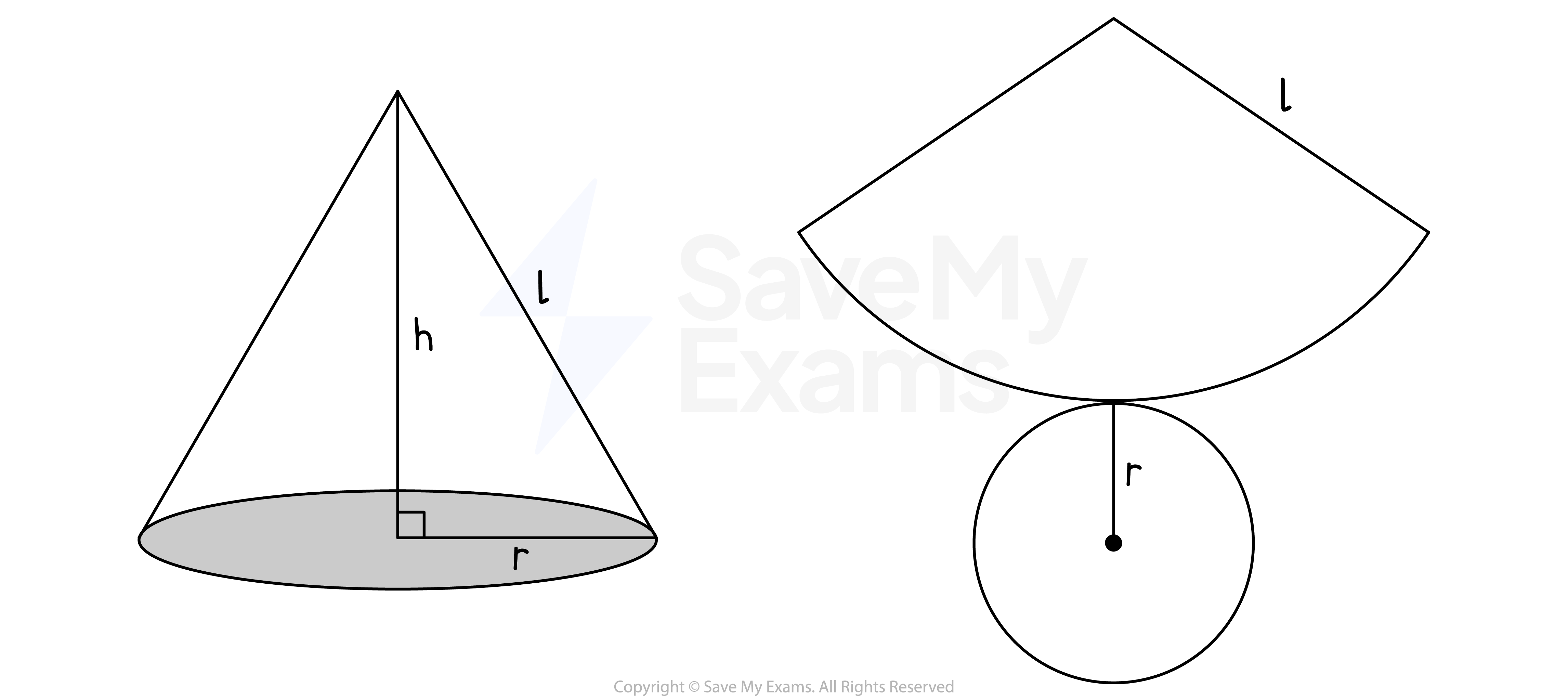
A cone has one flat surface (the base) and one curved surface
-
The net of a cone, with radius, r, perpendicular height, h, and sloping edge, (slant height), l, consists of
- A circular base
- A sector with radius, l, and an arc length equal to the circumference of the base
-
The curved surface area of a cone, A, with radius, r, perpendicular height, h, and sloping edge, l, can be found using the formula
- This formula is given to you in the exam if it is needed
-
The total surface area of a cone, ATotal, can be found using the formula
-
-
This formula is not given to you in the exam
- It is just the curved surface area formula above, plus the area of a circle
-
How do I find the surface area of a sphere?
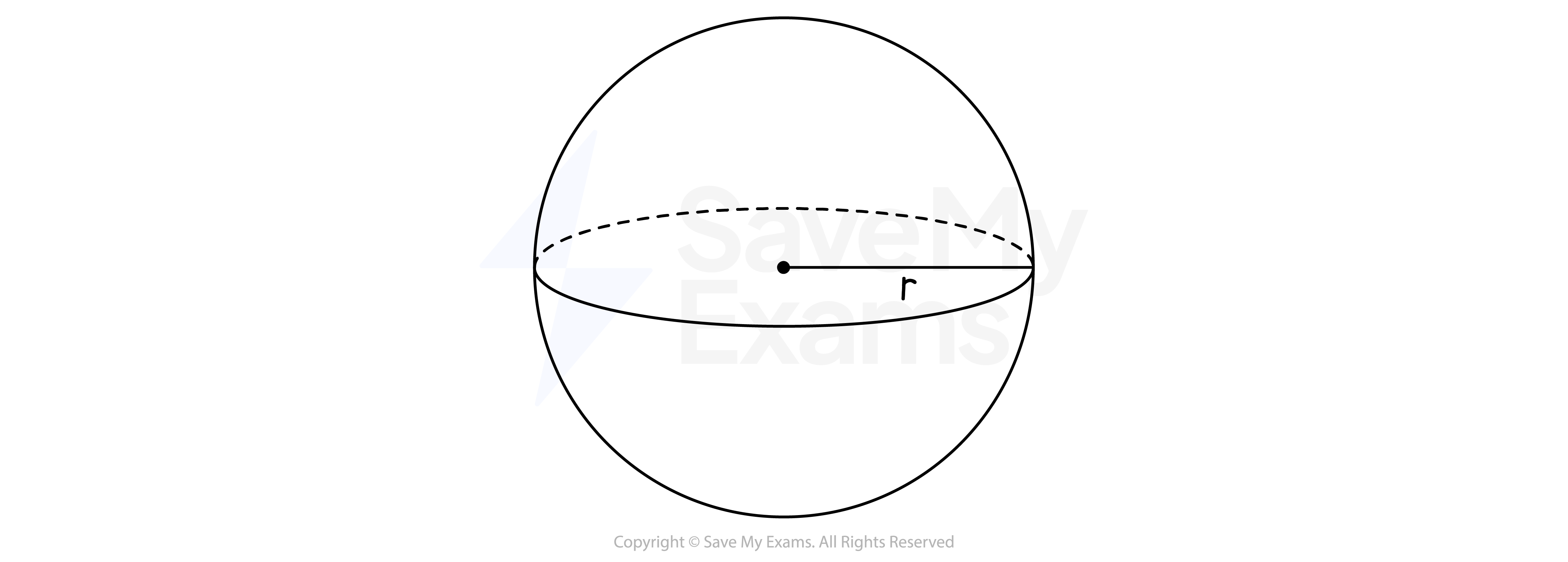
- A sphere has a single curved surface
-
The surface area of a sphere, A, with radius, r, can be found using the formula
- This formula is given to you in the exam if it is needed
Exam Hint
- Read the question carefully, you may need to add additional areas, e.g. a base
- Make you are confident in calculating the areas of rectangles, circles and triangles
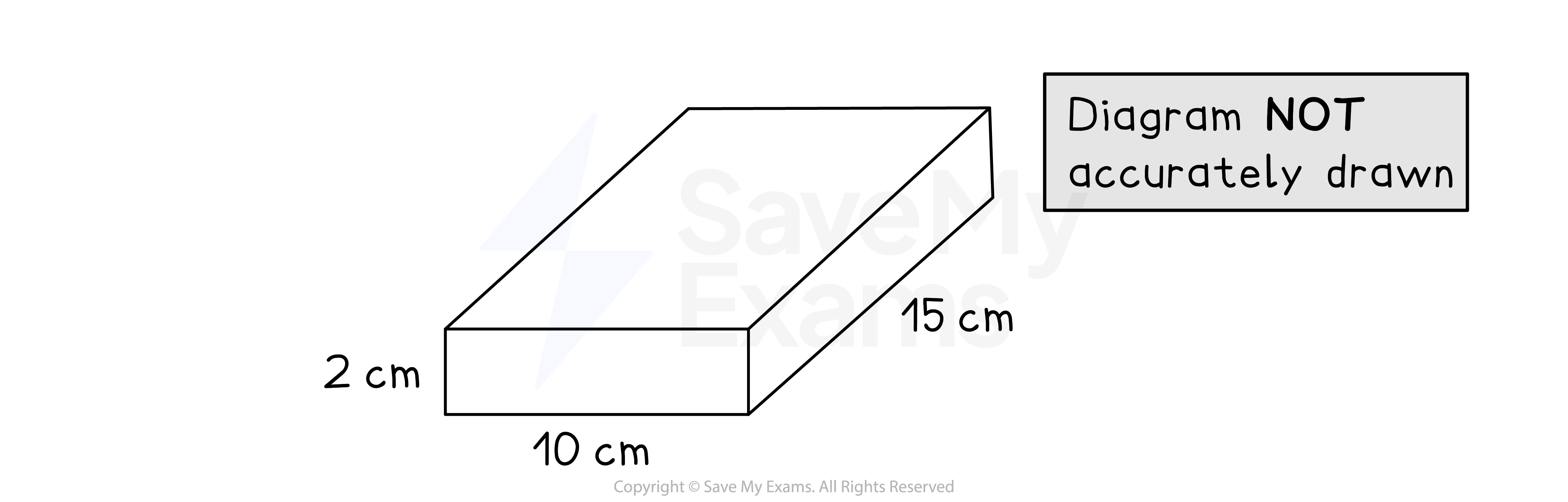
Worked Example Find the surface area of the cuboid shown below.
Answer:
Find the area of the face at the front
*2 cm × 10 cm = 20 cm 2 *
Find the area of the face at the side
*2 cm × 15 cm = 30 cm 2 *
Find the area of the face at the top
*10 cm × 15 cm = 150 cm 2 *
There are two of each face Add together the areas of all 6 faces
20 + 20 + 30 + 30 + 150 + 150 = 400
Final answer: 400 cm2
Was this revision note helpful?
Build on this topic