Lines of Symmetry (Edexcel IGCSE Maths)
Spec point —
4.3A
Lines of symmetry
What is line symmetry?
-
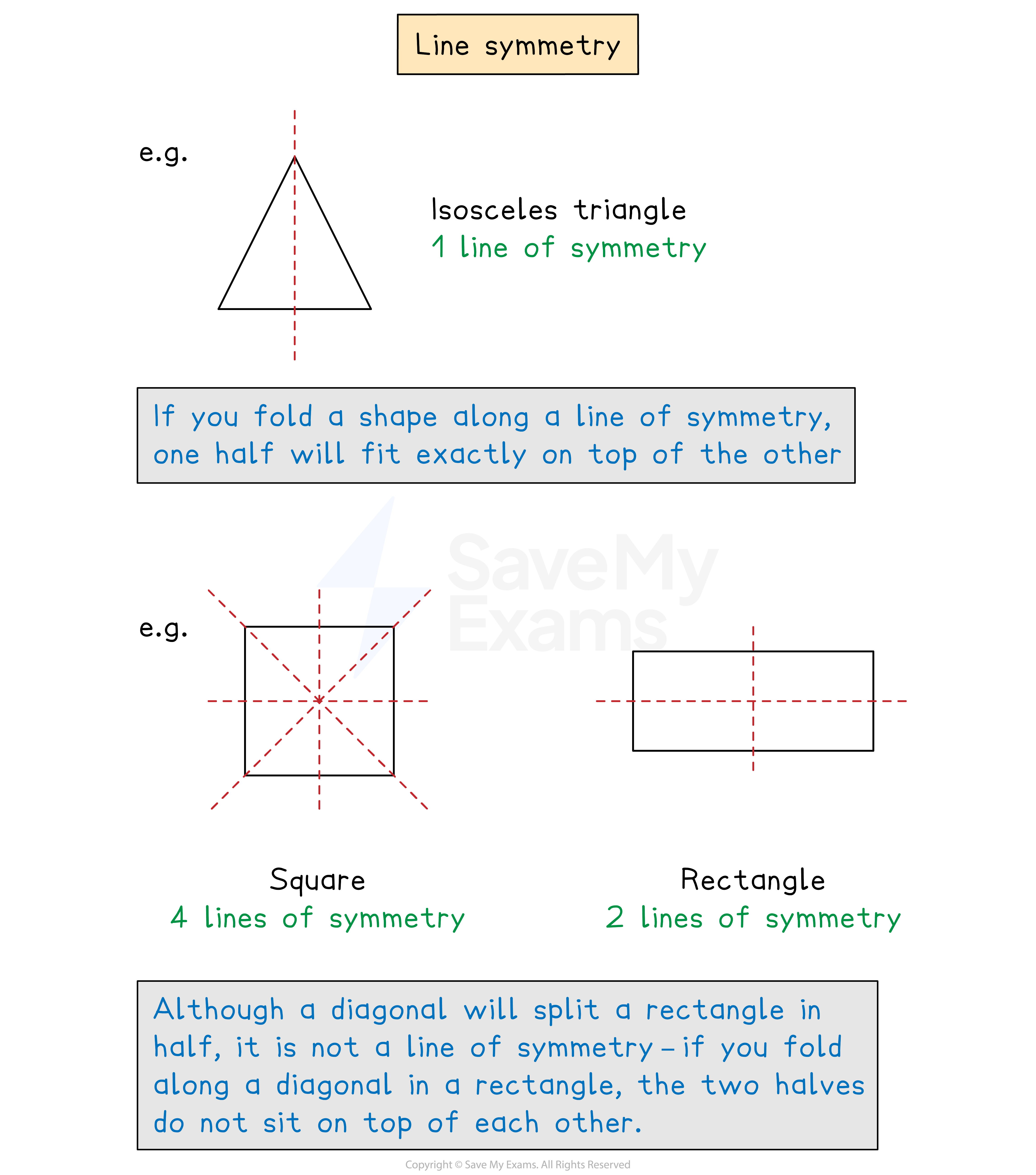
Line symmetry refers to shapes that can have mirror lines added to them
- Each side of the line of symmetry is a reflection of the other side
-
Lines of symmetry can be thought of as a folding line too
- Folding a shape along a line of symmetry results in the two parts sitting exactly on top of each other
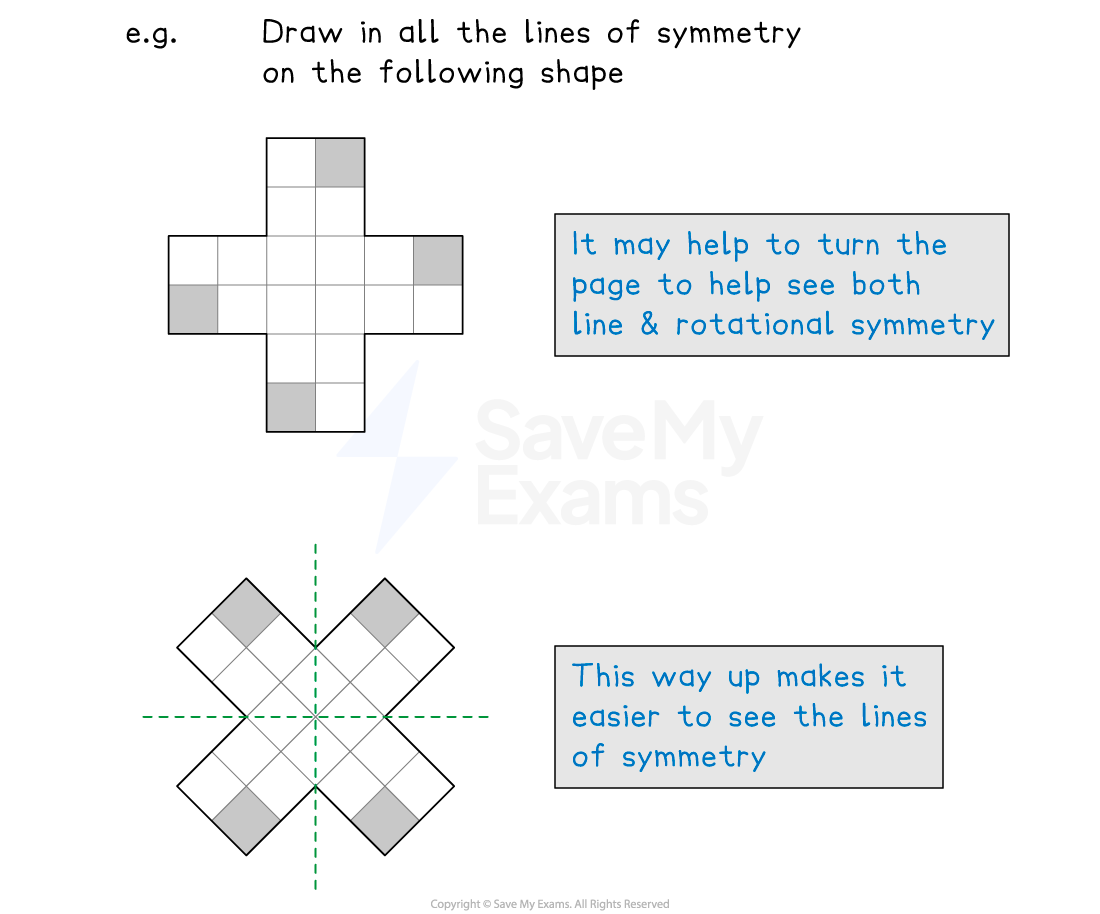
- It can help to look at shapes from different angles; turn the page to do this
-
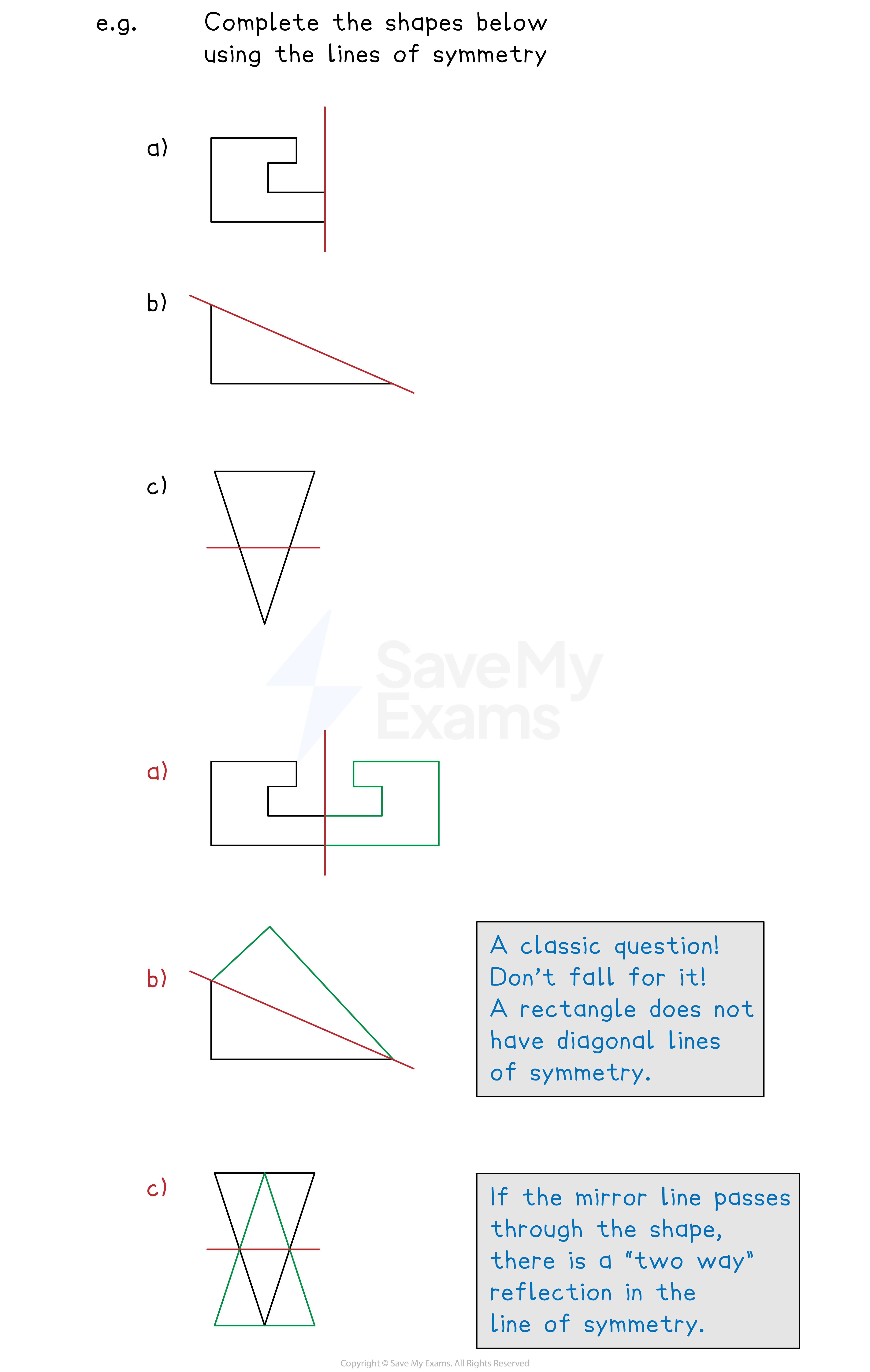
Some questions will provide a portion of a shape and a line of symmetry, and you need to fill in the remaining half of the shape
-
Be careful with diagonal lines of symmetry
- Use tracing paper to trace the shape and then flip along the line of symmetry
-
“Two-way” reflections (like part c below) occur if the line of symmetry passes through the shape
Exam Hint It can help to add the lines of symmetry to a diagram if one is given in a question.
You should be provided with tracing paper in the exam, use this to help you.
Worked Example Consider the shape below.
(a) Write down the number of lines of symmetry.
Answer:
The only line of symmetry is shown below
There is 1 line of symmetry.
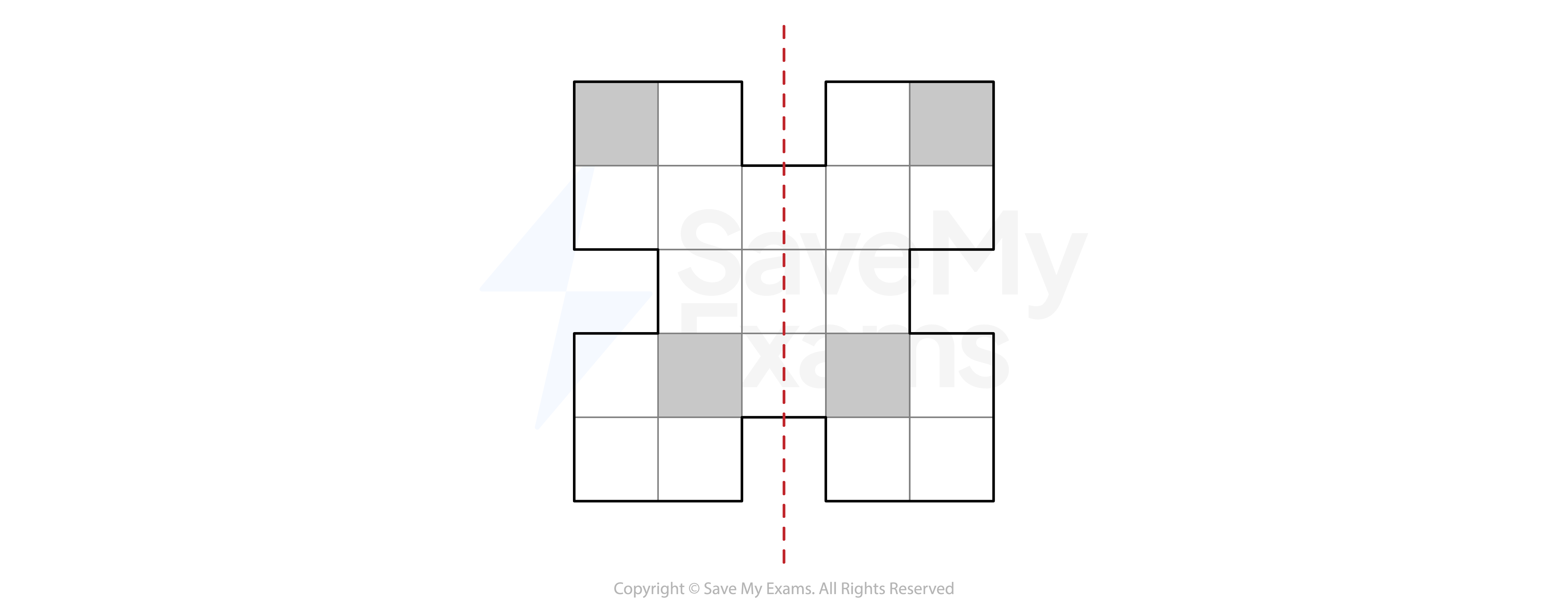
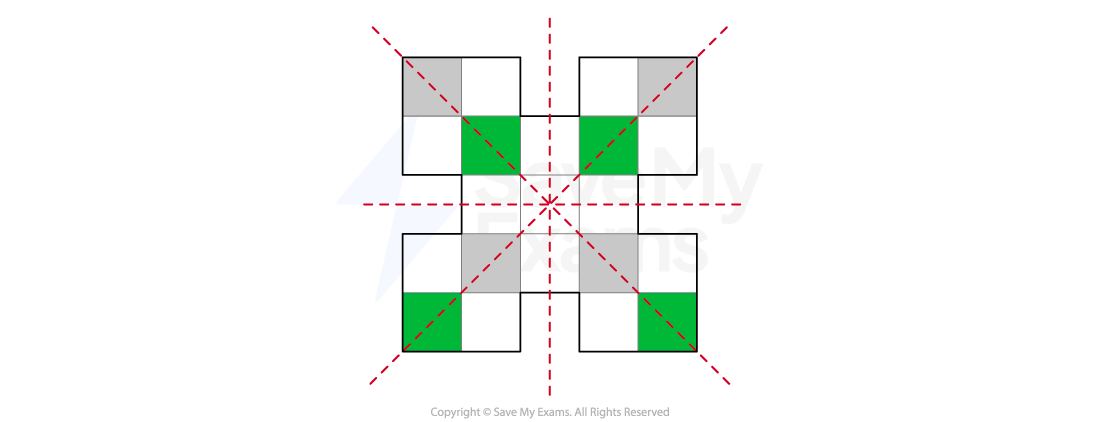
(b) Shade exactly 4 more squares so that the shape has 4 lines of symmetry.
Answer:
The shape below has a horizontal, a vertical, and 2 diagonal lines of symmetry

Was this revision note helpful?
Build on this topic