The Hydrological Cycle (Edexcel IGCSE Geography)
Characteristics of the Water Cycle
Spec point —
4GE1-S3.042
Characteristics of the hydrological cycle
- The **hydrological cycle **is a closed system
- Water is constantly recycled through the system
- The hydrological cycle includes stores and** transfers**
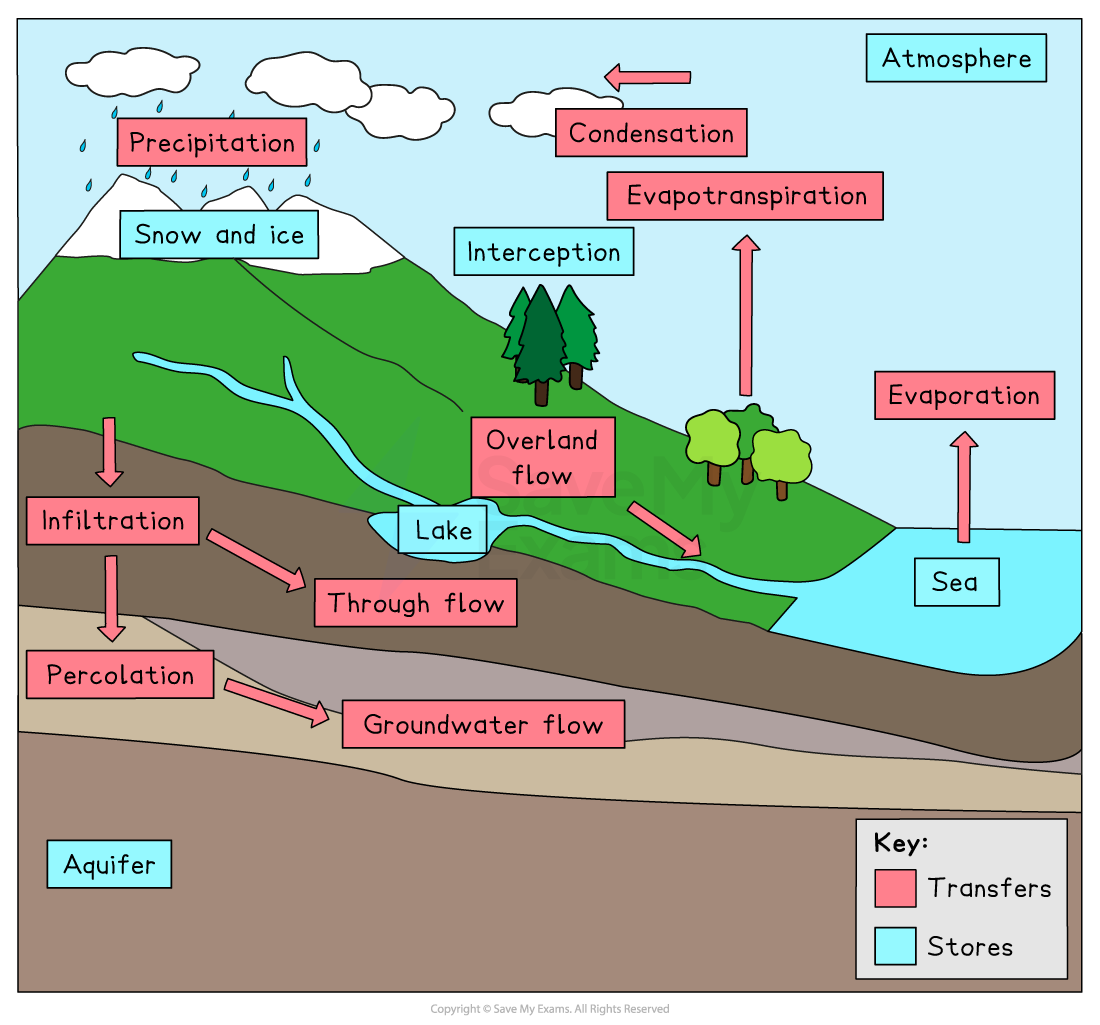
The stores and transfers of the hydrological cycle
Exam Hint Remember there are no inputs and outputs in the hydrological system. There are only transfers and stores because it is a closed system.
Stores of the Water Cycle
Spec point —
4GE1-S3.042
Stores of the hydrological cycle
-
Stores are those places where water is held for a period of time
-
Stores of the hydrological cycle include:
- the atmosphere where water is stored in the form of water vapour or as water droplets in clouds
- surface stores such as puddles, lakes, rivers and reservoirs
- aquifers which are permeable rocks such as limestone and sandstone which can hold water
- ice and snow
- seas and oceans
-
Interception is how precipitation is prevented from reaching the ground, usually by being caught on leaves or branches
- Some of the water will be stored on the leaves and evaporate into the atmosphere
- The remaining water will flow down the leaves, branches and trunk until it reaches the ground (stemflow)
Transfers of Water Within the Cycle
Spec point —
4GE1-S3.042
-
Transfers are how water is moved around the hydrological cycle
-
Transfers include:
-
evaporation is the change of water from a liquid to a gas (water vapour) due to heat from the sun
- This process transfers water from the surface up into the atmosphere
- Higher temperatures and strong winds lead to increased evaporation
-
condensation which occurs when water cools and changes from water vapour into a liquid (water droplets)
- Condensation leads to the formation of clouds
-
transpiration which occurs when plants release water vapour from their leaves
- This process transfers water from the plants into the atmosphere
-
evapotranspiration is the combined transfer of water vapour from the Earth's surface and plants
-
precipitation is the transfer of water from the atmosphere to the Earth's surface in the form of hail, sleet, rain or snow
-
overland flow is any water flowing across the Earth's surface
-
when water is transferred from the surface into the soil, this is known as infiltration
-
percolation is the transfer of water from the soil into the rocks and aquifers
-
throughflow occurs when water is transferred through the soil between the surface and the water table
-
groundwater flow is the transfer of water through rocks
-
Advection
-
Advection is the horizontal movement of air that carries water vapour and tiny water droplets from one place to another
-
Wind moves air from one place to another
-
If that air contains moisture (water vapour or droplets), the moisture moves with it.
-
For example:
- Warm, moist air from over the ocean can be blown over land
- This can bring clouds, humidity, or rain to new areas
-
Advection is important because it spreads heat and moisture around the Earth, helping to control weather patterns
Worked Example Identify the statement that best defines through flow (1)
A. Water moving through the soil
B. Water taken up by plants from the soil and released into the atmosphere
as water vapour
C. Movement of water over the ground
D. Movement of water through the rocks
Answer:
- A -Through flow is the water moving through the soil below the surface and above the water table
The alternative answers are incorrect because:
- B is transpiration
- C is overland flow
- D is groundwater flow
Exam Hint Try sketching the hydrological cycle from memory. Remember to add a key to show stores and transfers.
Was this revision note helpful?