Diversification of Farming (Edexcel IGCSE Geography)
Farm Diversification
Spec point —
4GE1-S6.068
-
Farming in developed countries has changed significantly over the last 200 years:
- Farms are larger: many small farms have been taken over and combined to create larger farms
- Mechanisation has increased meaning less labour is needed
- Fertilisers and pesticides have improved in effectiveness
- Animals are bred to produce more milk and meat
-
In the UK farming now only creates 1% of the GDP
-
Overall farming is becoming less profitable
- The cost of farming inputs such as machinery and animal feed is greater than the profits made from outputs
-
This has led to:
- **diversification **which refers to any additional activities used to raise income
- methods of raising productivity and profits
-
There are many different ways of diversifying
-
All diversification requires an investment of** capital**
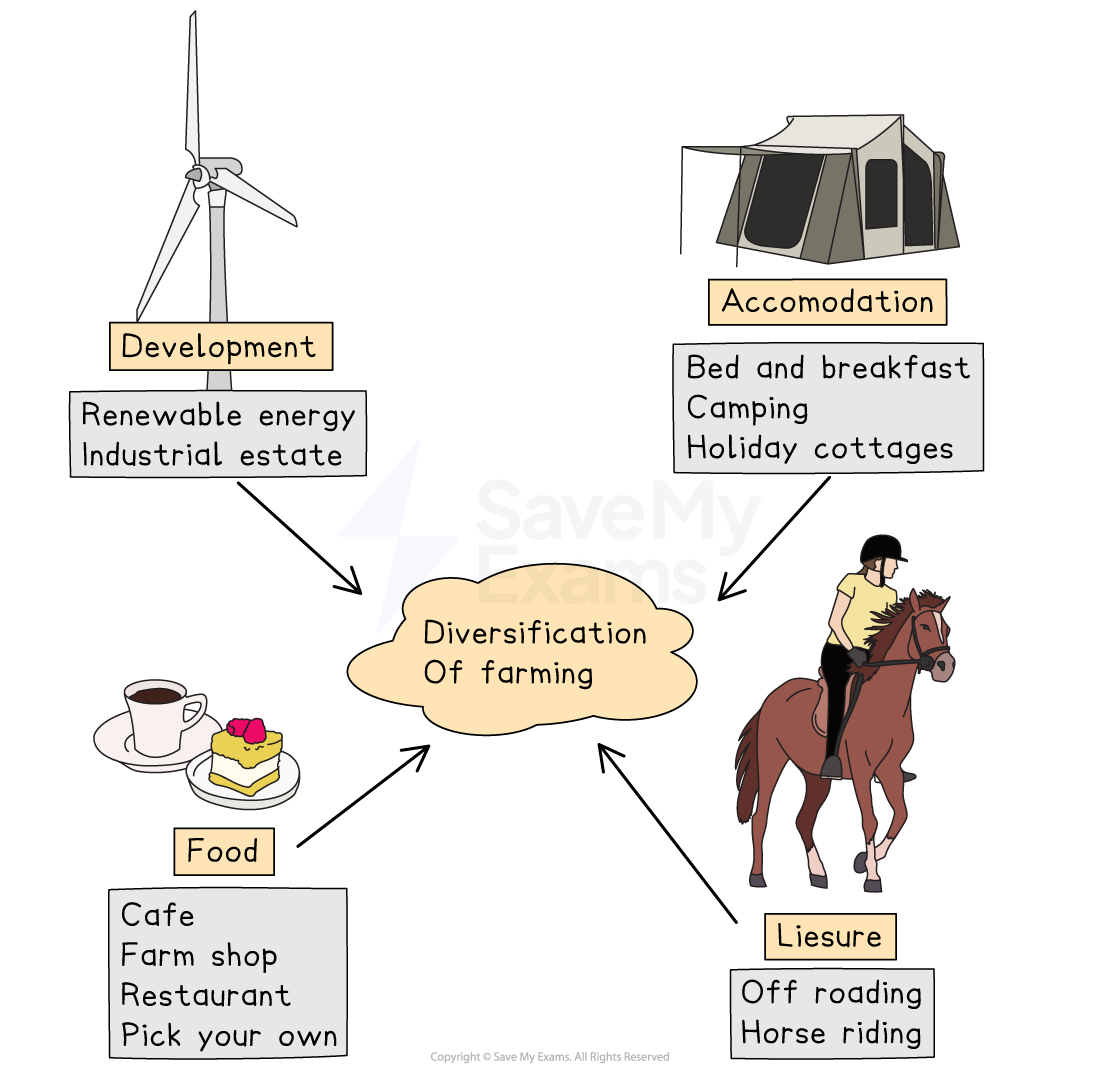
Examples of rural diversification
Recreation & leisure
-
Many of the ways of diversifying are linked to recreation and leisure
-
People in developed countries have more time and disposable income
-
Visiting rural areas in leisure time for activities is increasingly popular
-
Leisure activities linked to this on farms include:
- horse riding
- alpaca walking
- hunting and shooting
- off-roading
- mountain biking
-
Farms also often provide accommodation with barns and outbuildings converted to holiday cottages and fields used as camping/caravan sites
Increasing Productivity
Spec point —
4GE1-S6.068
Genetically Modified (GM) crops
-
Genetic modification involves using genes from one species to improve another species and increase yields:
- Crops can be made pesticide-resistant so that when pesticides are sprayed to remove the pests the crop is undamaged
- The vitamin which causes carrots to be orange (beta carotene) is added to rice to increase human uptake of the vitamin
-
Genetic modification is controversial
-
GM crops are grown in many countries, including the USA, Canada, Argentina and India
-
In 2022, the UK government is looking to remove the controls which stop the widespread growth of GM crops
| For | Against |
|---|---|
| - Increases crop yields - Improves food quality - taste and nutrition - Reduces the use of herbicides and pesticides in some cases - Reduces the cost of food - Produce lasts longer, reducing food waste | - Impacts on other species of plant - No long-term studies are available regarding the impacts on human health - allergic reactions and antibiotic resistance are two concerns - Seeds are expensive - No long-term studies on the effects on wildlife such as bees |
Specialist crops
-
Farms may choose to specialise in a specialist crop or livestock
-
Specialist livestock and crops increase profits as they sell for higher prices
-
Specialist livestock farmed in the UK include:
- buffalo
- ostriches
- llamas
- alpacas
- reindeer
-
Specialist crops may include:
- cut flowers
- grapes for wine
- the UK's first tea plantation is in Cornwall
- seaweed
Organic farming
-
Increasing numbers of farmers are converting to organic methods
-
Demand for organic food is growing due to health, animal welfare and environmental concerns
-
Organic certification means that:
- organic livestock are grazed on the land and antibiotics are only used when it is medically necessary
- organic crops are grown without the use of artificial pesticides, herbicides or fertilisers
-
Organic farming may be **less productive **
-
Products are only available** seasonally**
-
The price farmers receive for organic produce is higher which compensates for the lower yield
Was this revision note helpful?