Introduction to Derivatives (Edexcel IGCSE Further Maths)
Spec point —
9A
Introduction to Derivatives
What is differentiation?
-
Differentiation is part of the branch of mathematics called calculus
-
It is concerned with the rate at which changes takes place
-
So it has many real‑world applications:
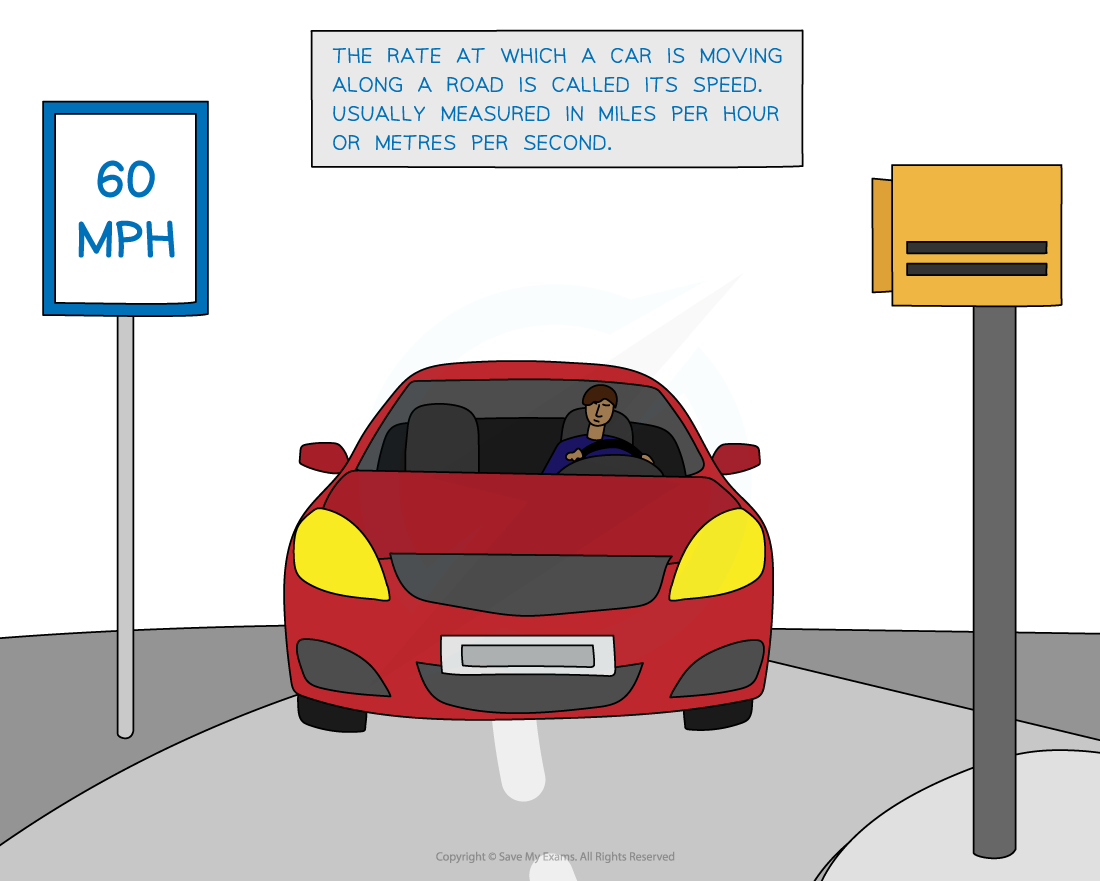
- The rate at which a car is moving (its speed)
- The rate at which a virus spreads amongst a population
-
- To begin to understand differentiation you’ll need to understand gradients
How are gradients related to rates of change?
-
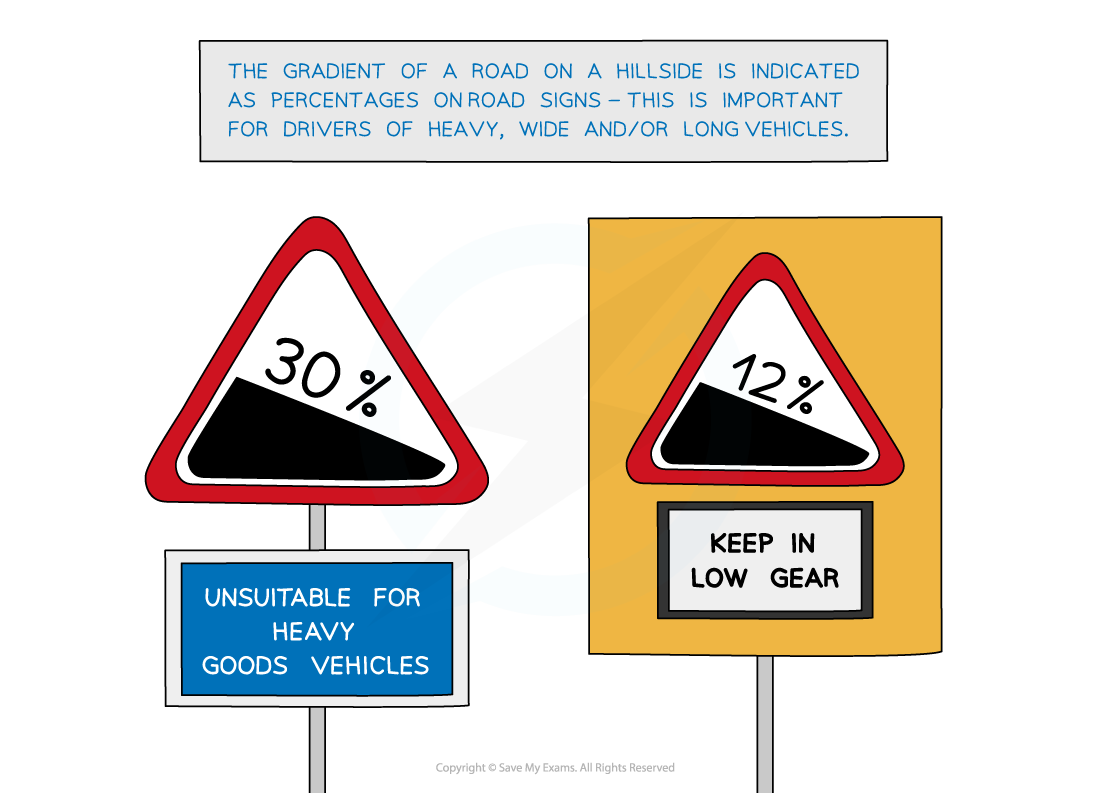
Gradient in everyday language refers to steepness.
- For example, the gradient of a road up the side of a hill is important to lorry drivers
-
On a graph the gradient refers to how 'steep' a line or a curve is
-
It is a way of measuring how fast* y changes as x changes
- This may be referred to as the 'rate of change of y with respect to x'*
-
So gradient describes the rate at which change happens
How do I find the gradient of a curve using its graph?
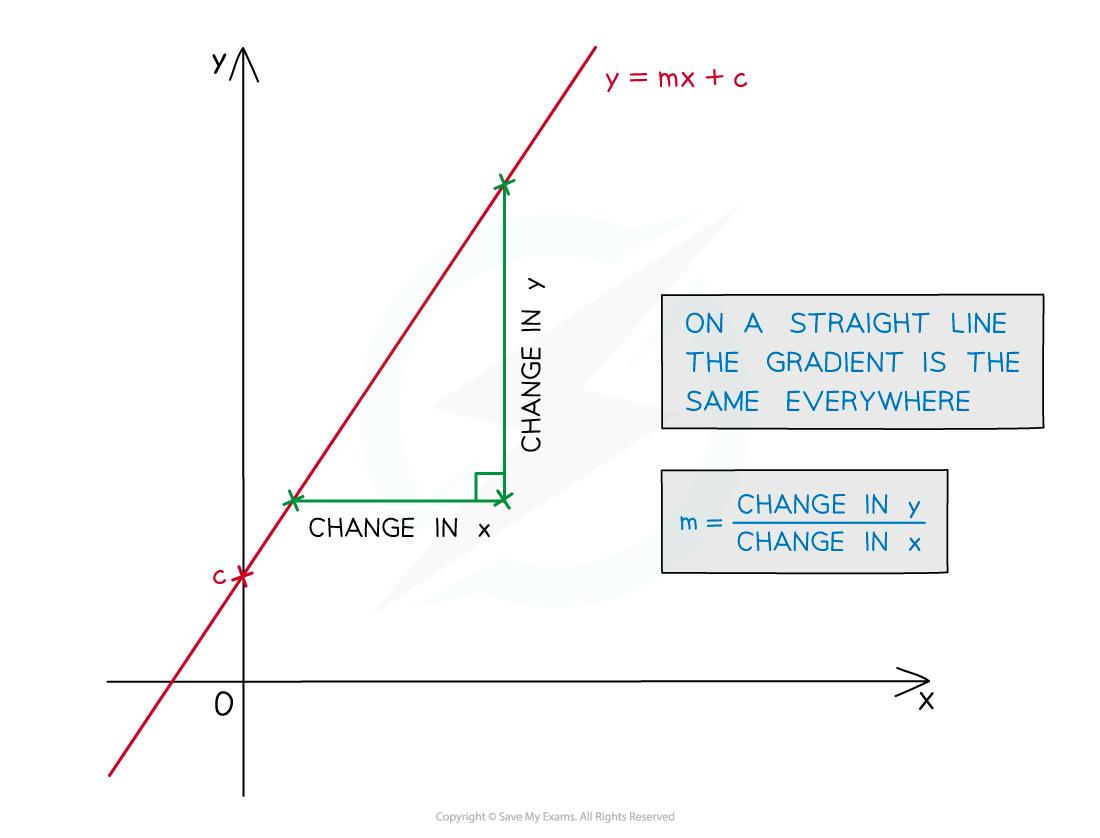
For a straight line the gradient is always the same (constant)
- Recall y = mx + c, where m is the gradient
-
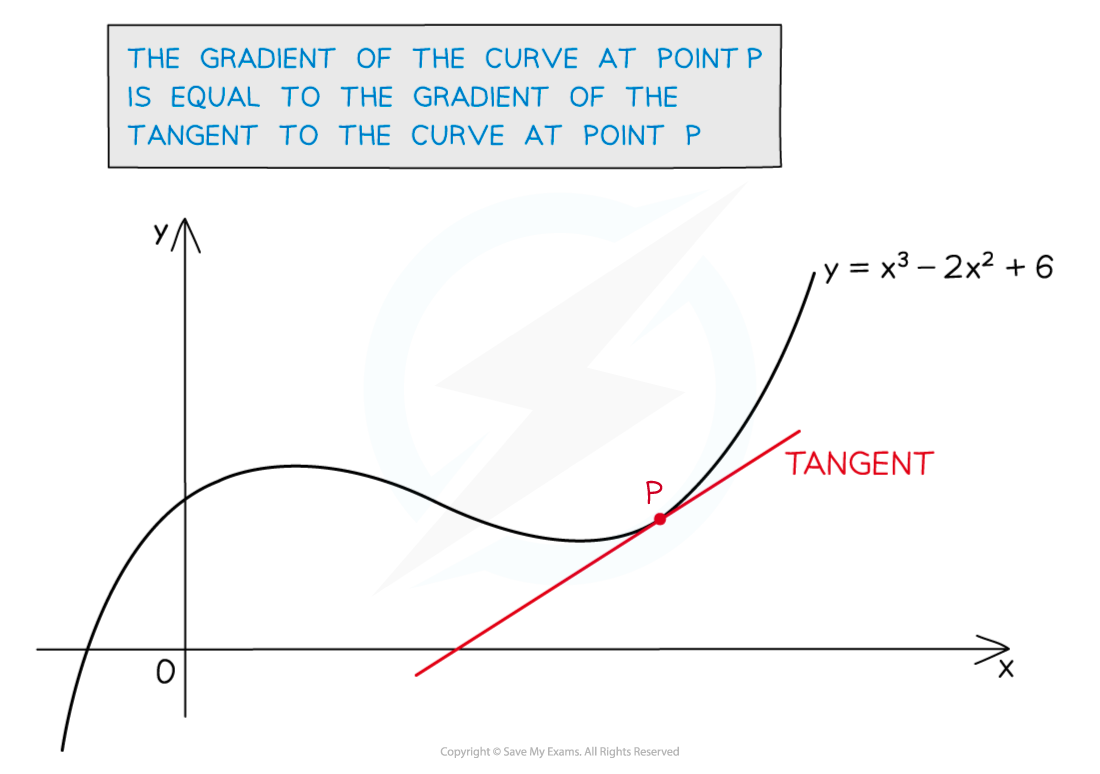
For a curve the gradient changes as the value of x changes
-
A tangent is a straight line that touches the curve at one point
- At any point on the curve, the gradient of the curve is equal to the gradient of the tangent at that point
-
How do I find the gradient of a curve using calculus?
-
The equation of a curve can be given in the form
- Substituting x-coordinate inputs gives y-coordinate outputs
-
It is possible to create an algebraic function that take inputs of x-coordinates
-
and gives outputs that are gradients
- No graph sketching required!
-
-
This type of function has a few commonly used names:
- The gradient function
- The derivative
- The derived function
-
The way to write this function is
-
This is pronounced "dy by dx" or "dy over dx"
-
In function notation, it can be written
- pronounced "f-dash-of-x" or "f-prime-of-x"
-
-
To get from to you need to do an operation called differentiation
-
Differentiation turns curve equations into gradient functions
-
There are standard formulae used to differentiate all the basic functions
- See the 'Differentiating Basic Functions' revision note
-
There are also various methods for differentiating more complicated functions
- See the 'Techniques of Differentiation' revision note
-
-
Once you know for a curve, you can find the gradient for any point on the curve
-
gives the value of the gradient when
- See the 'Finding Gradients' revision note for more details
-
Was this revision note helpful?
Build on this topic