Algebraic Division (Edexcel IGCSE Further Maths)
Spec point —
3A
Algebraic Division
What is algebraic division?
-
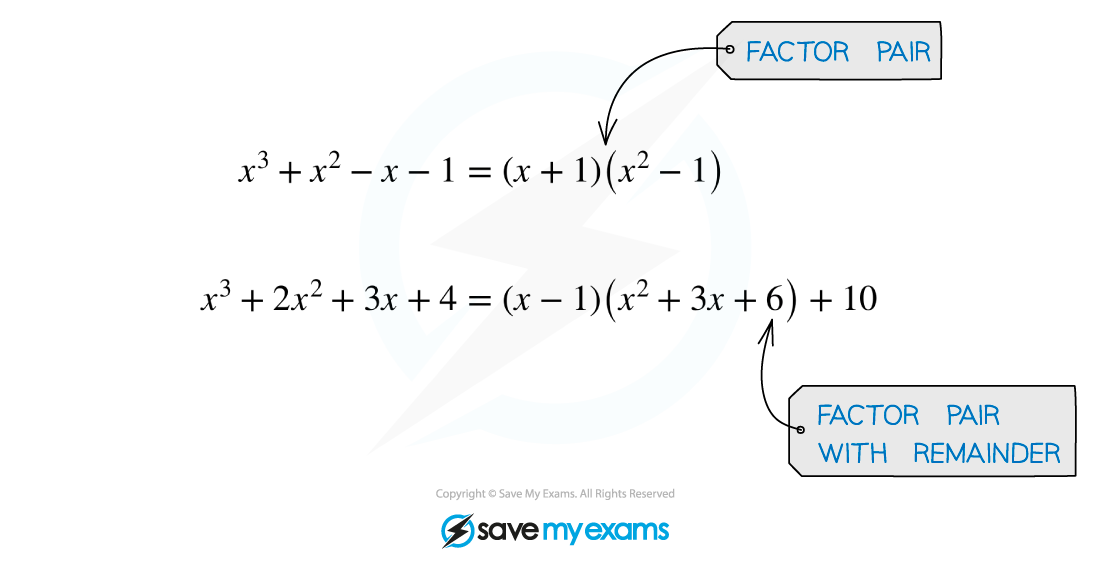
Algebraic division(or polynomial division) is a method for splitting polynomials into factor pairs (with or without an accompanying remainder term)
- On the exam you will use it to factorise polynomials, or to help simplify algebraic fractions
-
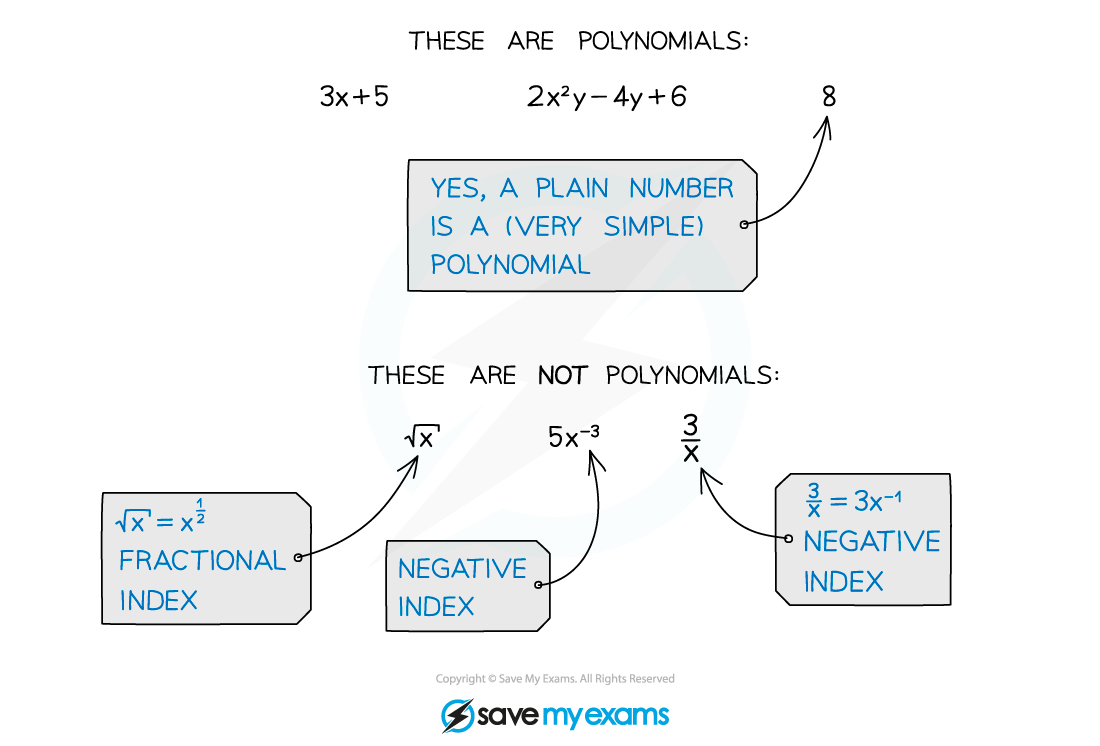
Remember that a polynomial is an algebraic expression consisting of
- a finite number of terms
- with non-negative integer indices only
How do I perform algebraic division?
-
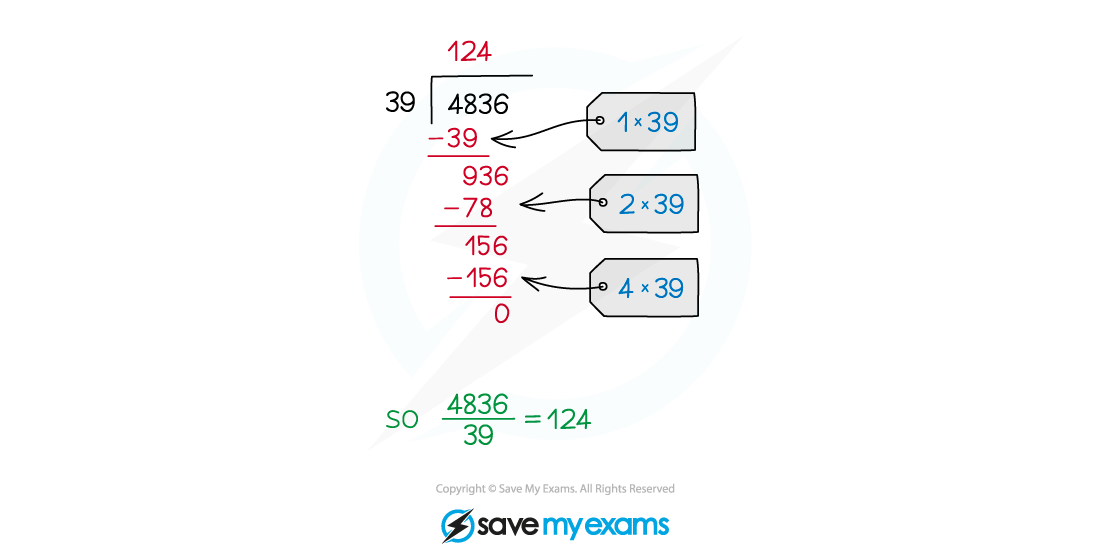
The method used for algebraic division is just like the method used to divide regular numbers
- i.e. the long division method (sometimes called 'bus stop division')
-
On your exam the polynomial you are dividing (known as the dividend) will normally be of degree 3 or 4
- That is, with powers of x up to x3* *or x4
-
The term you are dividing by (known as the divisor) will be a linear term
- Usually in the form (x ± a)
- But possibly in the form (ax ± b)
-
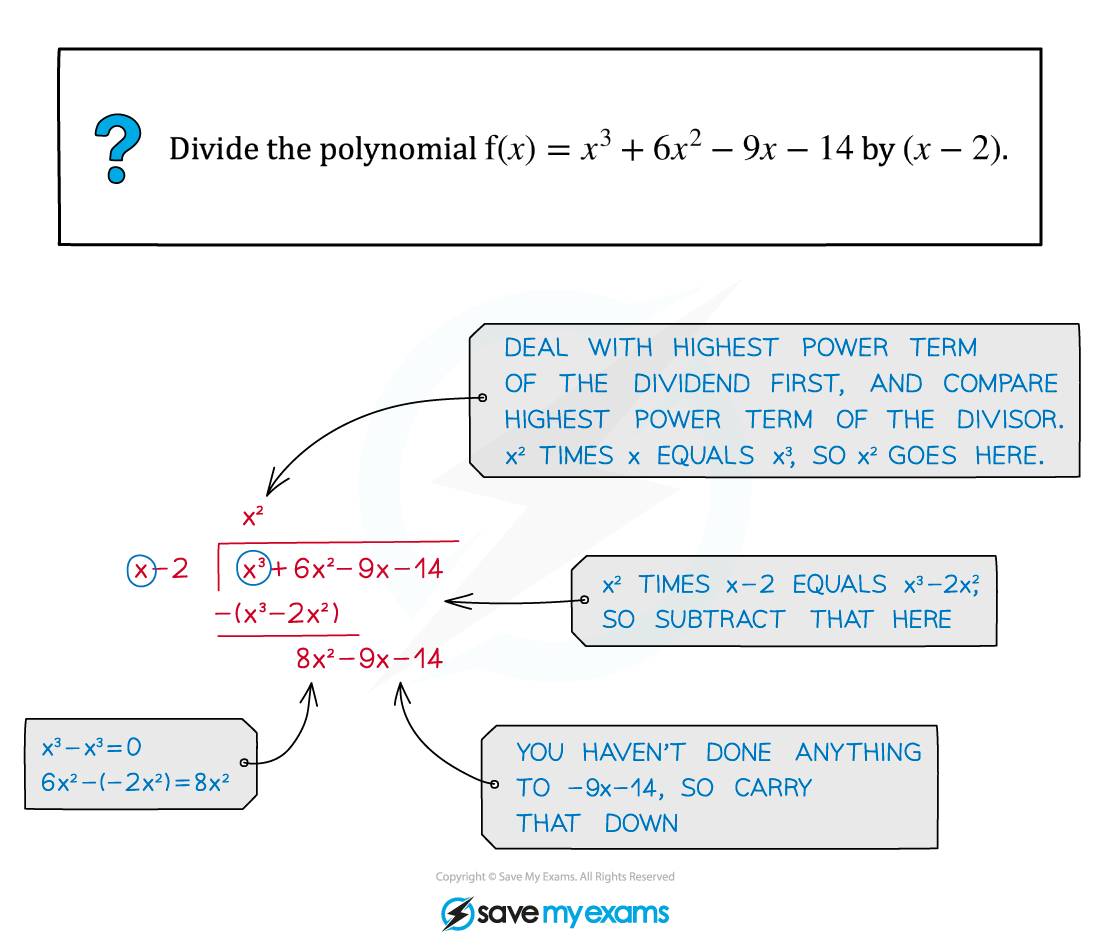
The answer to an algebraic division question is built up term by term
- Working downwards in powers of the variable (usually x)
-
Start with the highest power term of the answer
- Write out this multiplied by the divisor and subtract
-
Continue the process for each decreasing power term
- multiplying by the divisor and subtracting each time
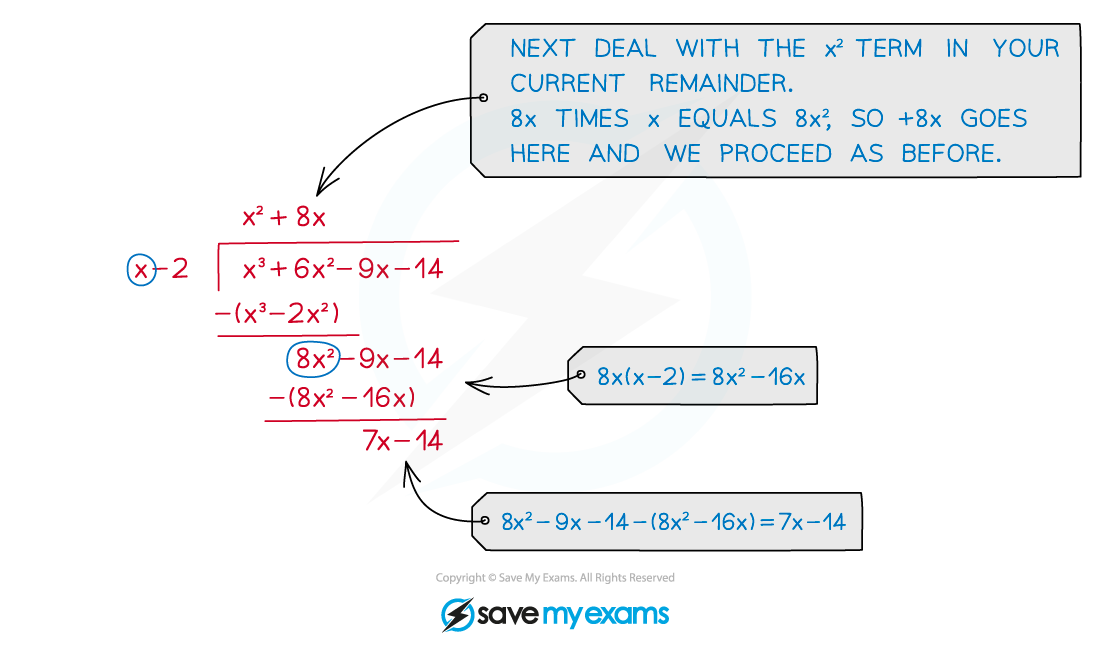
-
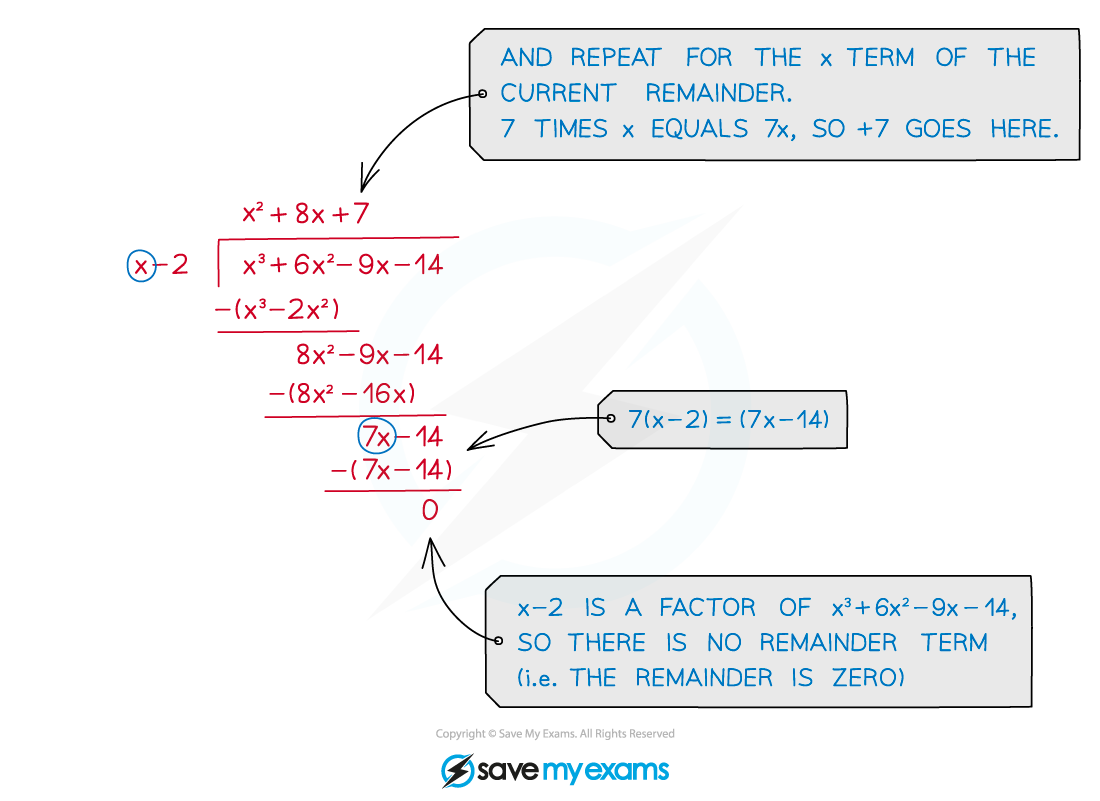
Continue until you are left only with a number (with no x's)
- That number is the remainder
- If the divisor is a factor of the polynomial, the remainder will be zero
Exam Hint
Don't rush when doing algebraic division
- Finding and fixing a mistake can take longer than taking the time to do it right the first time!
Before starting algebraic division make sure it is really necessary
- For example, if all you need is the remainder then using the remainder theorem would be quicker
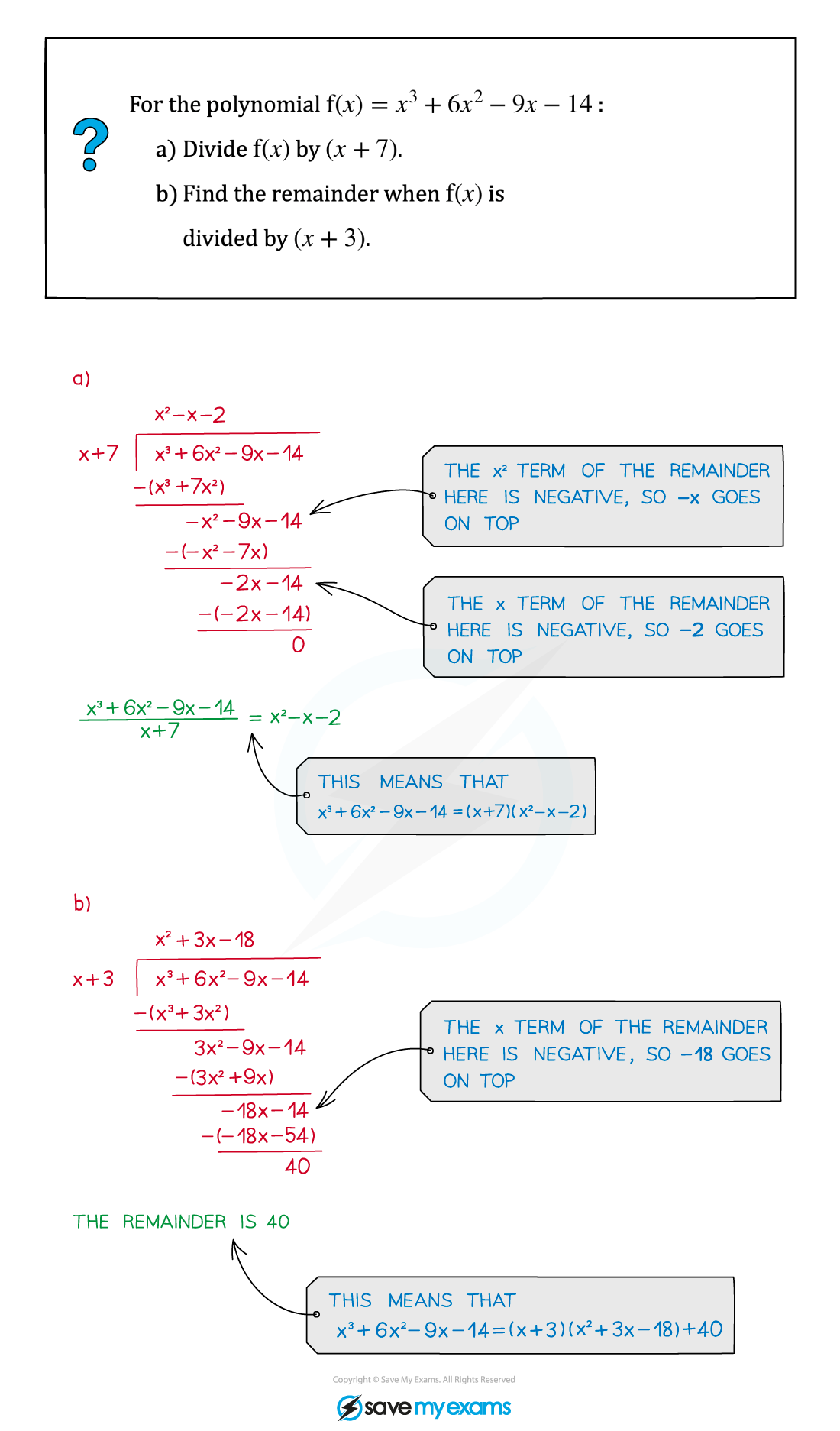
Worked Example
Was this revision note helpful?