Pure Substance vs Mixture (Edexcel IGCSE Chemistry)
Spec point —
1.9
Pure substance vs mixture
- In everyday language, we use the word pure to describe when something is natural or clean and to which nothing else has been added
- In chemistry, a pure substance may consist of a single element or compound which contains no other substances
- For example, pure water contains only H2O molecules and nothing else
- Drinking water would not be classed as a mixture and not a pure substance because it contains H2O molecules and additional substances like dissolved ions and chlorine
Pure substance v mixture
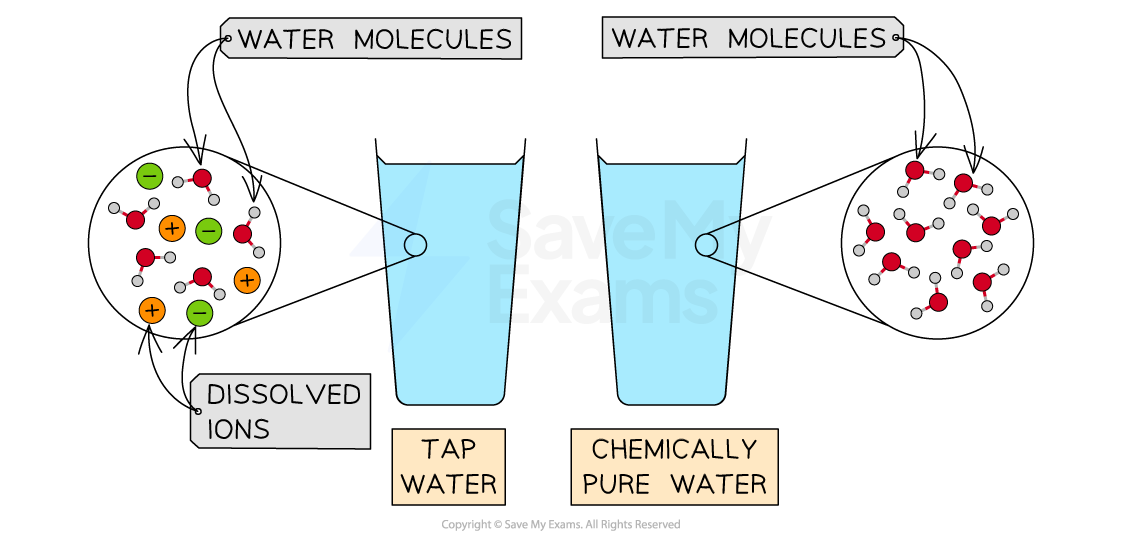
Pure water consists of only H2O molecules whereas tap water is a mixture
How can purity be distinguished?
-
Pure substances melt and boil at specific and sharp temperatures
- E.g. pure water has a boiling point of 100 °C and a melting point of 0 °C
-
Impure substances have a range of melting and boiling points as they consist of different substances
-
Generally, impure substances have lower melting points and higher boiling points than the pure substance
-
Melting and boiling point data can therefore be used to distinguish pure substances from mixtures
-
Melting point analysis is routinely used to assess the purity of drugs
-
This is done using a melting point apparatus which allows you to slowly heat a small amount of the sample, making it easier to observe the exact melting point
-
This is then compared to data tables
-
The closer the measured value is to the actual melting or boiling point then the purer the sample is
-
Measuring purity is also important in foodstuffs
Worked Example Sulfur has a melting point of 114 oC.
A student tests the melting point of a sample of sulfur. It begins to melt at 100 oC and finishes melting at 113 oC.
Explain whether the substance is pure or impure.
Final answer: Answer:
- The substance is impure because its melts over a range of temperatures.
Was this revision note helpful?