Partial Fractions with Linear Denominators (Edexcel IAL Maths)
Exam board Pearson Edexcel · IALUpdated 2026-07-02
Linear Denominators
Spec point —
2.1
What are partial fractions?
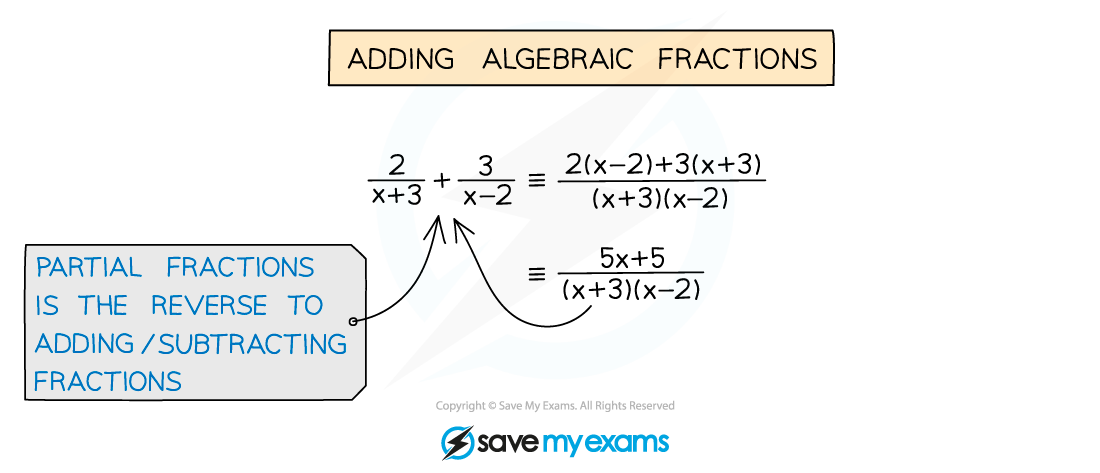
- This is the reverse process to adding (or subtracting) fractions
- When adding fractions a common denominator is required
- In partial fractions the common denominator is split into parts (factors)
- Partial fractions are used in binomial expansions (see Multiple GBEs) and integration(see Integration by Parts)
What are linear denominators?
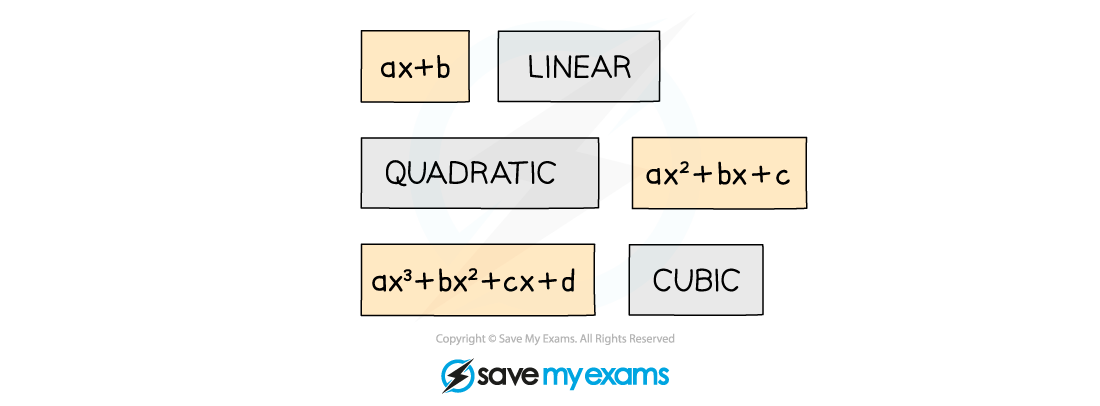
- A linear factor is of the form (ax + b)
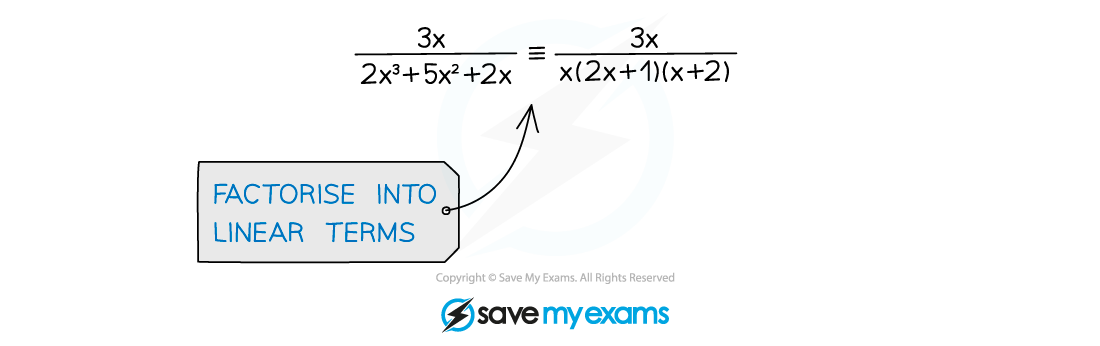
- A non-linear denominator may be written as the product of linear factors
- If the denominator can be factorised
How do I find partial fractions?
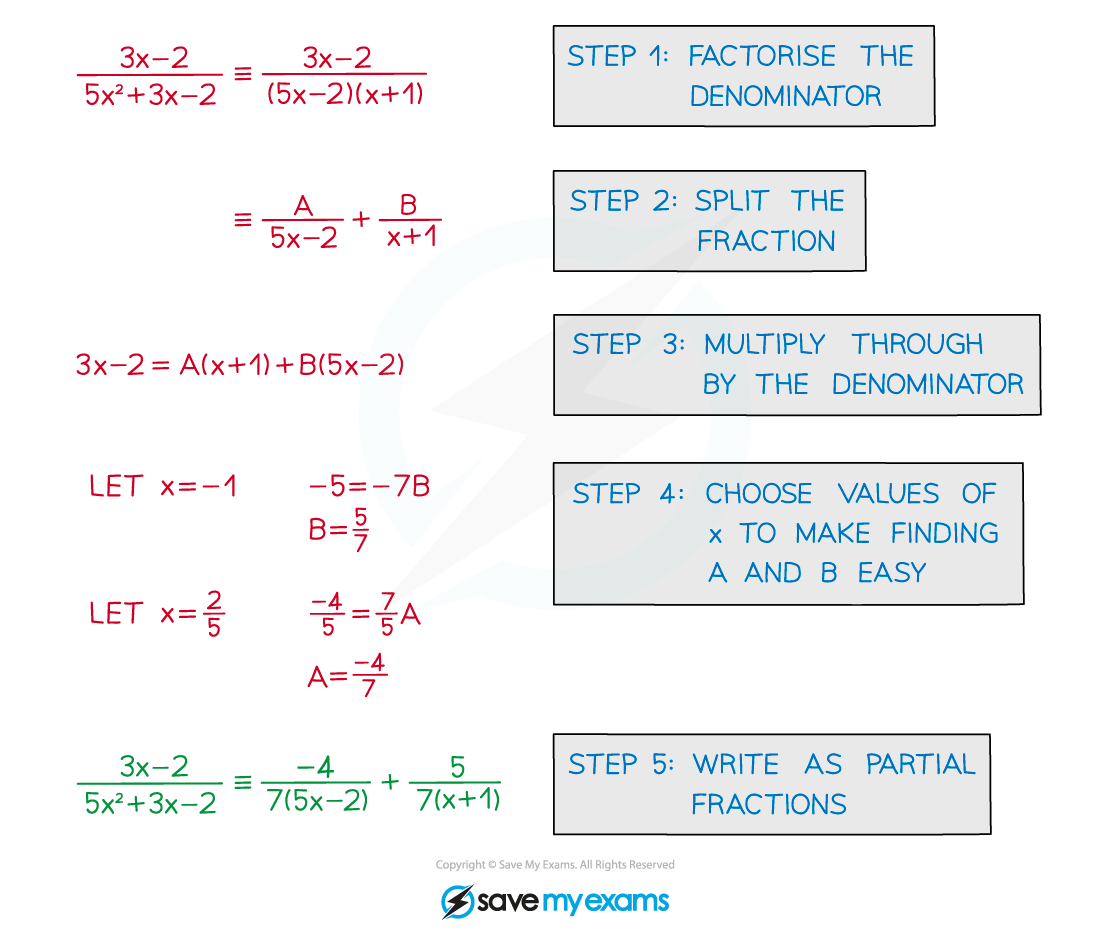
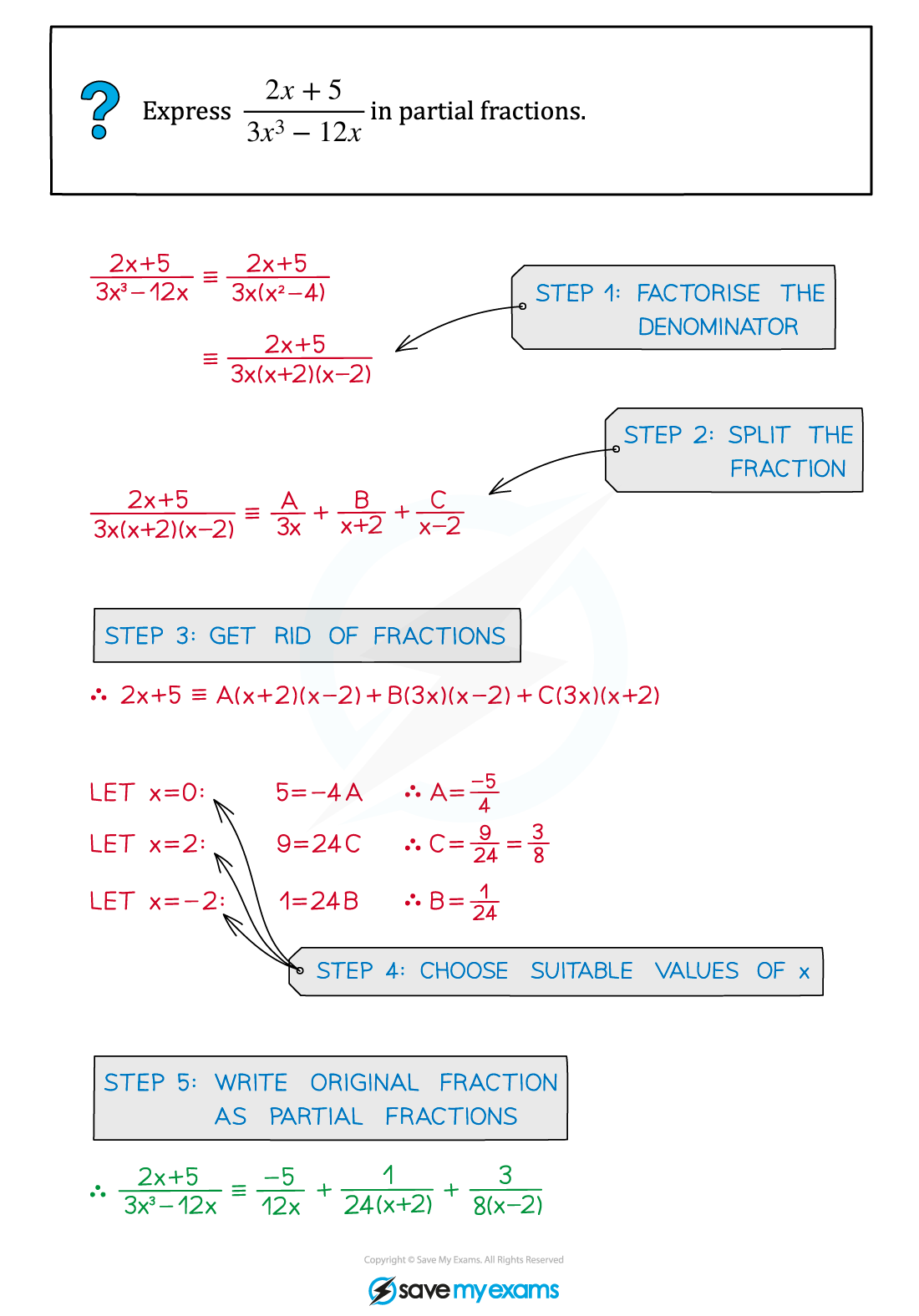
STEP 1 Factorise the polynomial in the denominator
(Sometimes the numerator can be factorised too)
STEP 2 Split the fraction into a sum with single linear denominators
STEP 3 Multiply by the denominator to get rid of fractions
STEP 4 Substitute values of x to find A, B, etc
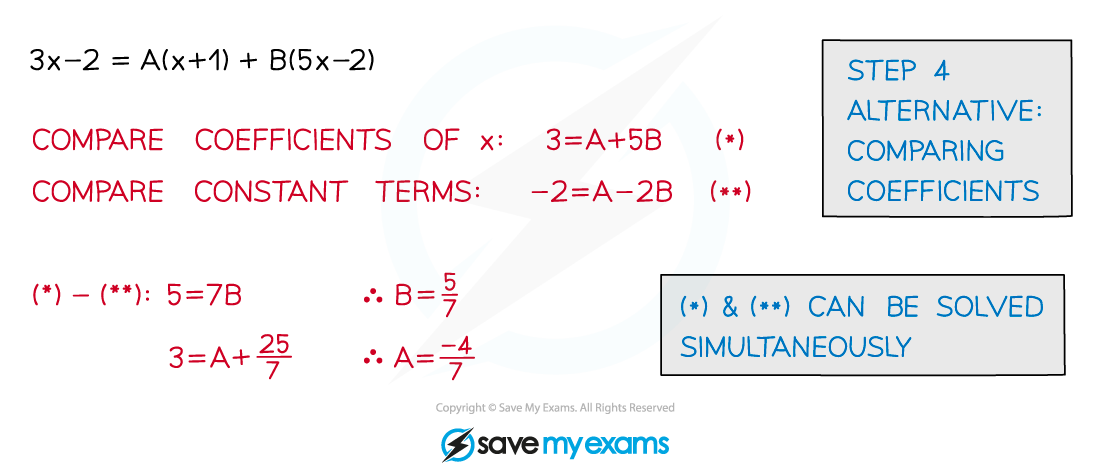
(An alternative method is comparing coefficients)
STEP 5 Write the original as partial fractions
Comparing coefficients
- The quantity of each term must be equal on both sides
- “The number of x2 on the LHS” = “The number of x2 on the RHS”
- “The number of …” is called the coefficient of x2
Worked Example
Was this revision note helpful?
Build on this topic