Magnitude & Direction (Edexcel IAL Maths)
Exam board Pearson Edexcel · IALUpdated 2026-07-02
Spec point —
7.2
Magnitude & direction
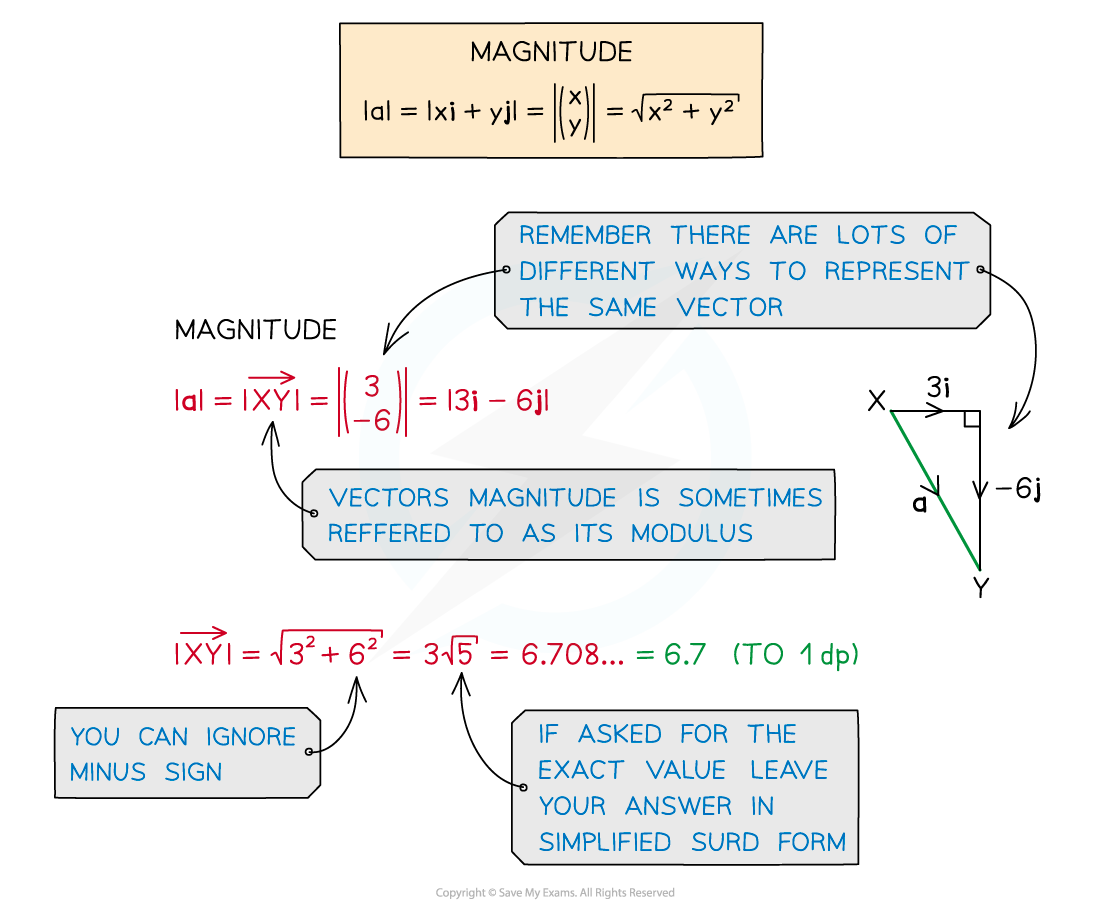
What is the magnitude of a vector?
- The magnitude of a vector is simply its size
- It also tells us the distance between two points
- You can find the magnitude of a vector using Pythagoras’ theorem
- The magnitude of a vector is written when typed (or
| bottom a |when handwritten)
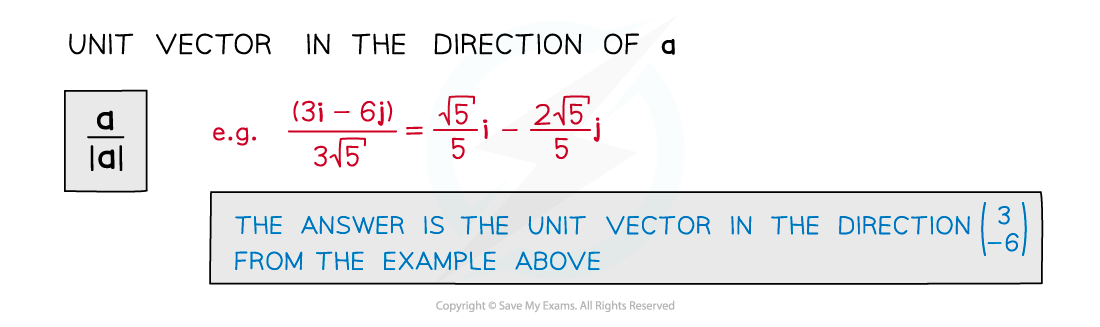
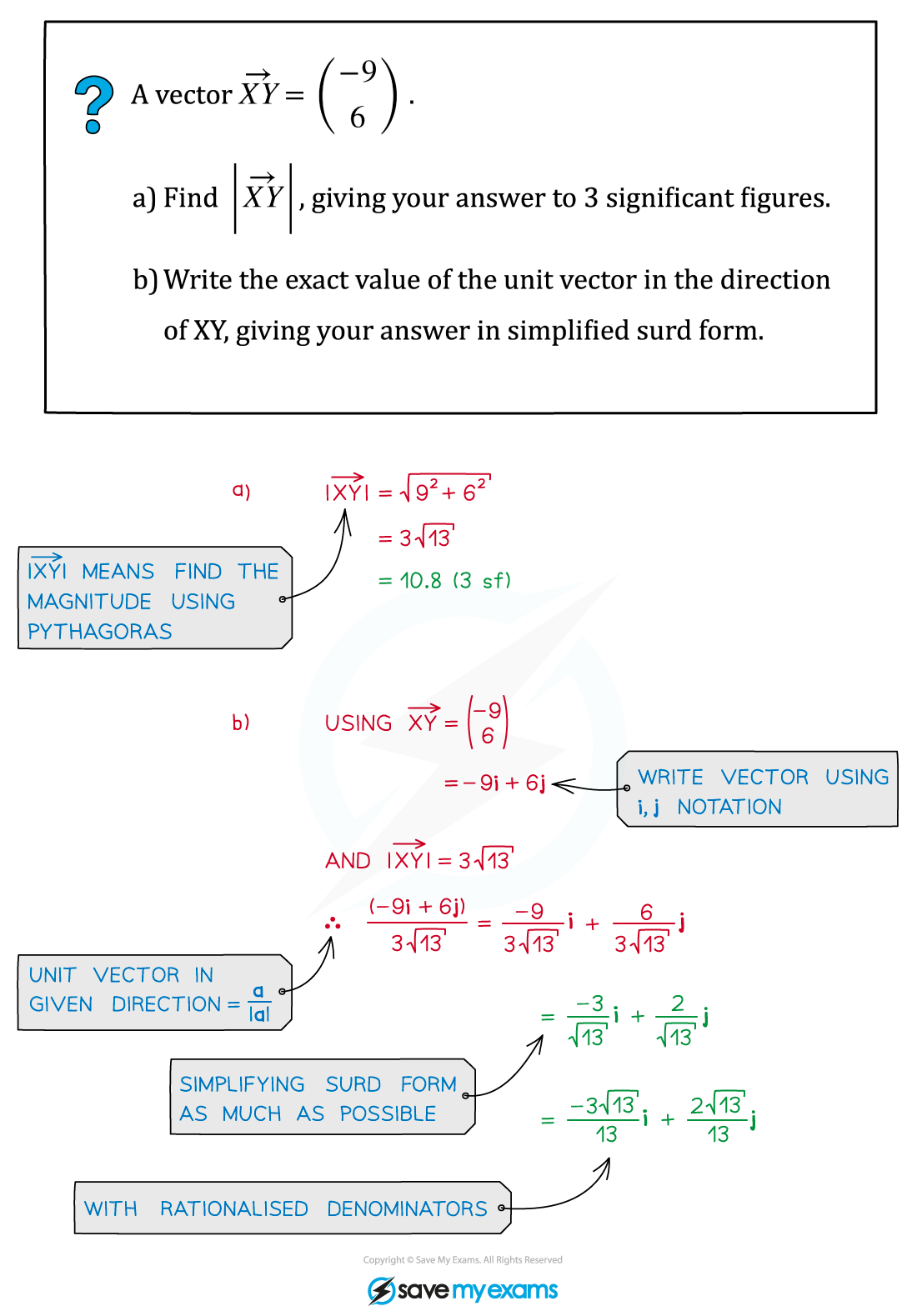
- To work out the unit vector in the direction of a given vector
- A unit vector has a magnitude of 1 So to find the unit vector of a given vector, divide by its magnitude
What is the direction of a vector?
-
Vectors have opposite direction if they are the same size but opposite signs
- e.g. if or then or
-
The direction of a vector is what makes it more than just a scalar
- Eg. two objects with velocities of 7 m/s and ‑7 m/s are travelling at the same speed but in opposite directions
-
Two vectors are parallel if and only if one is a scalar multiple of the other
-
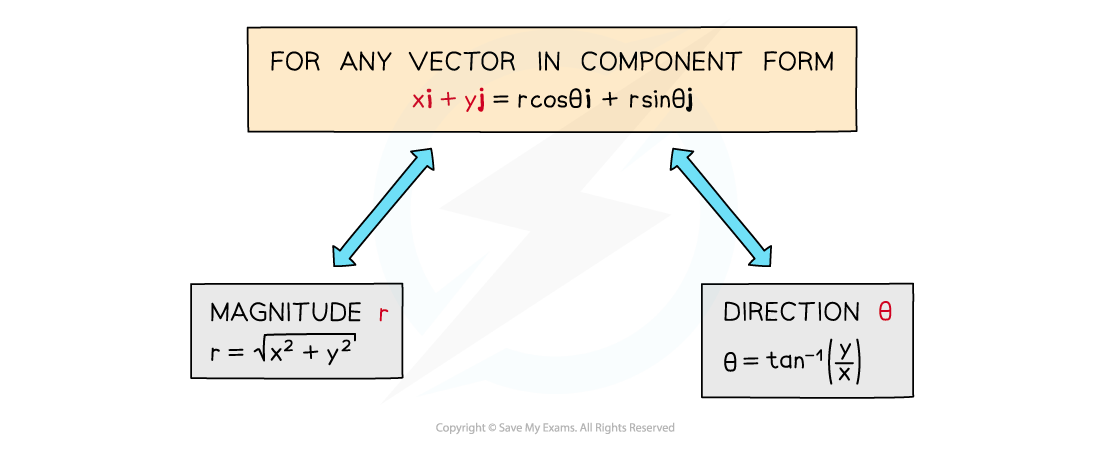
For real-life contexts such as mechanics, direction can be calculated from a given vector using trigonometry(see Right-Angled Triangles)
-
It is usually calculated anticlockwise from the positive x-axis (unless otherwise stated eg. a bearing)
How do I write a vector in component form?
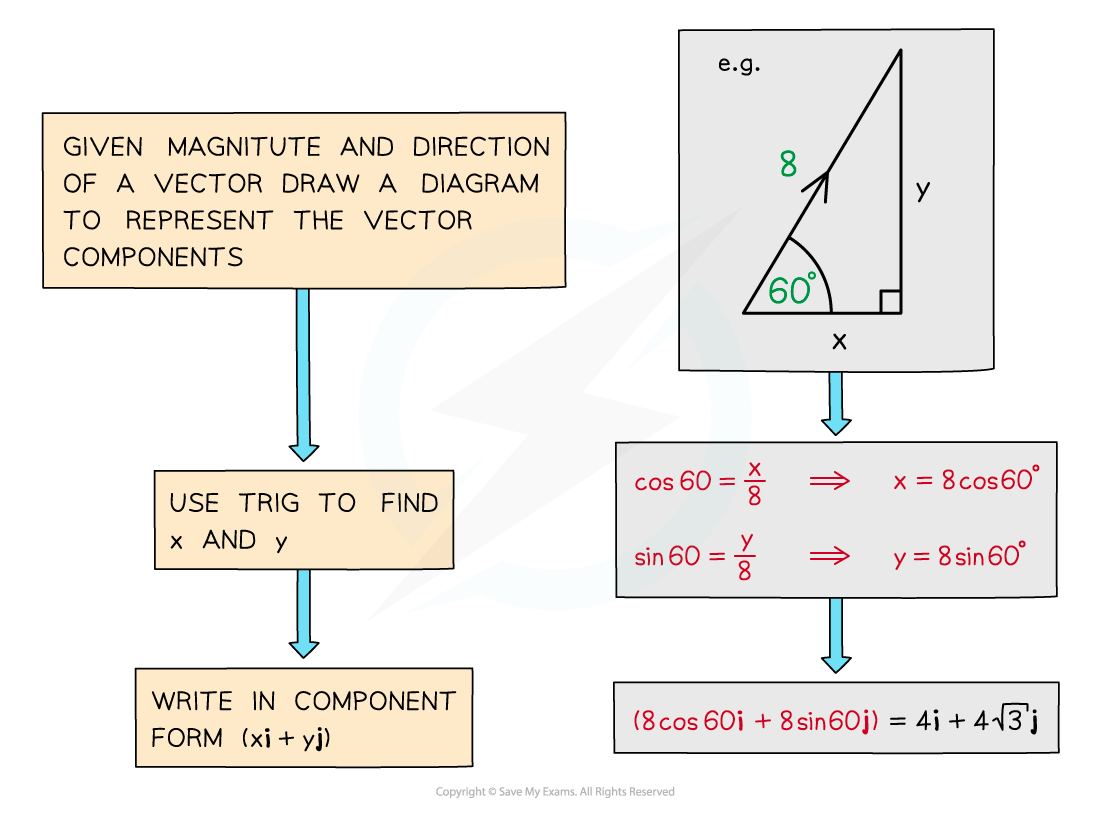
- We have already seen that vectors can be written in different forms
- Component form means writing a vector in terms of i and j components
- Given the magnitude and direction of a vector you can work out its components and vice versa
Exam Hint
- Diagrams can help, especially when working out direction – if there isn’t a diagram, draw one.
- Remember, resolving a vector just means writing it in component form.
Worked Example
Was this revision note helpful?
Build on this topic