Vectors in 3 Dimensions (Edexcel IAL Maths)
Exam board Pearson Edexcel · IALUpdated 2026-07-02
Spec point —
7.1
Vectors in 3 dimensions
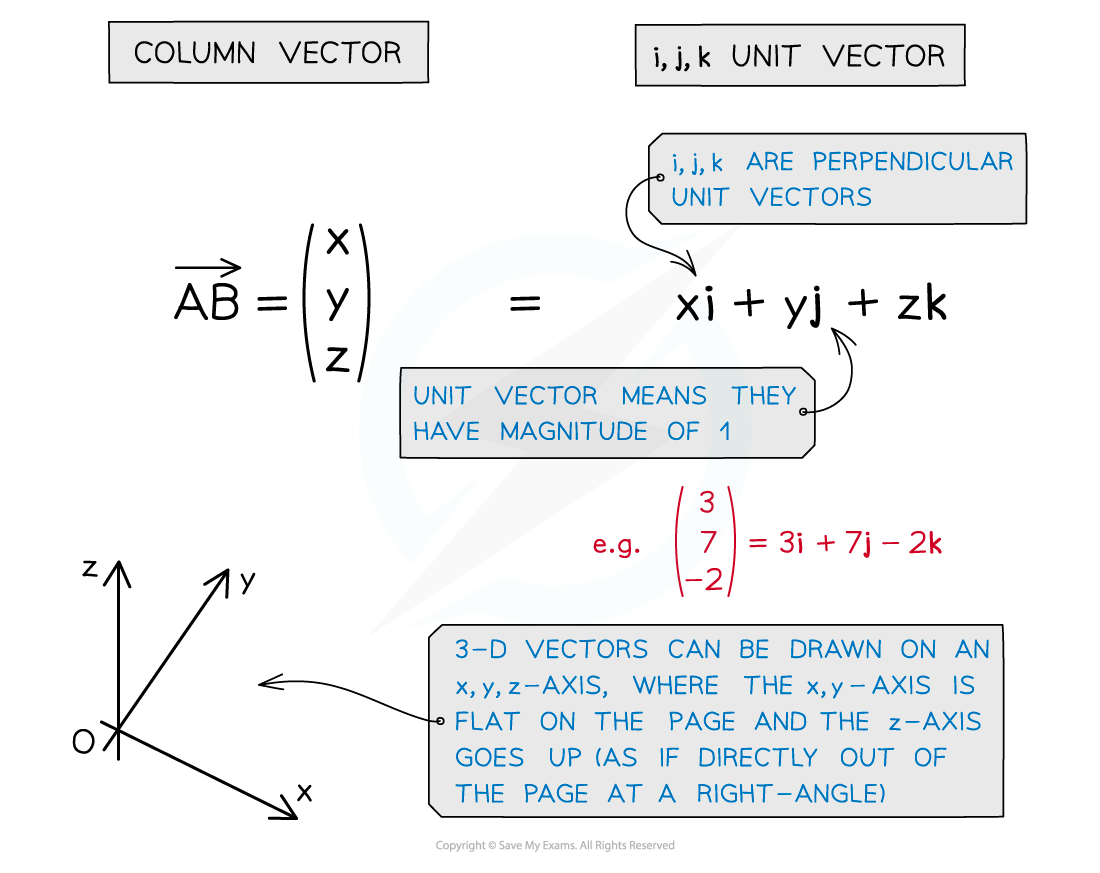
What is a 3D vector?
- Vectors represent a movement of a certain magnitude (size) in a given direction You should have already come across (2D) vectors at AS (see Basic Vectors)
- 3D vectors describe the position of a point in a 3D space in relation to the origin
- They can be represented in different ways such as a column vector or in i, j, k unit vector form
Magnitude of a 3D vector
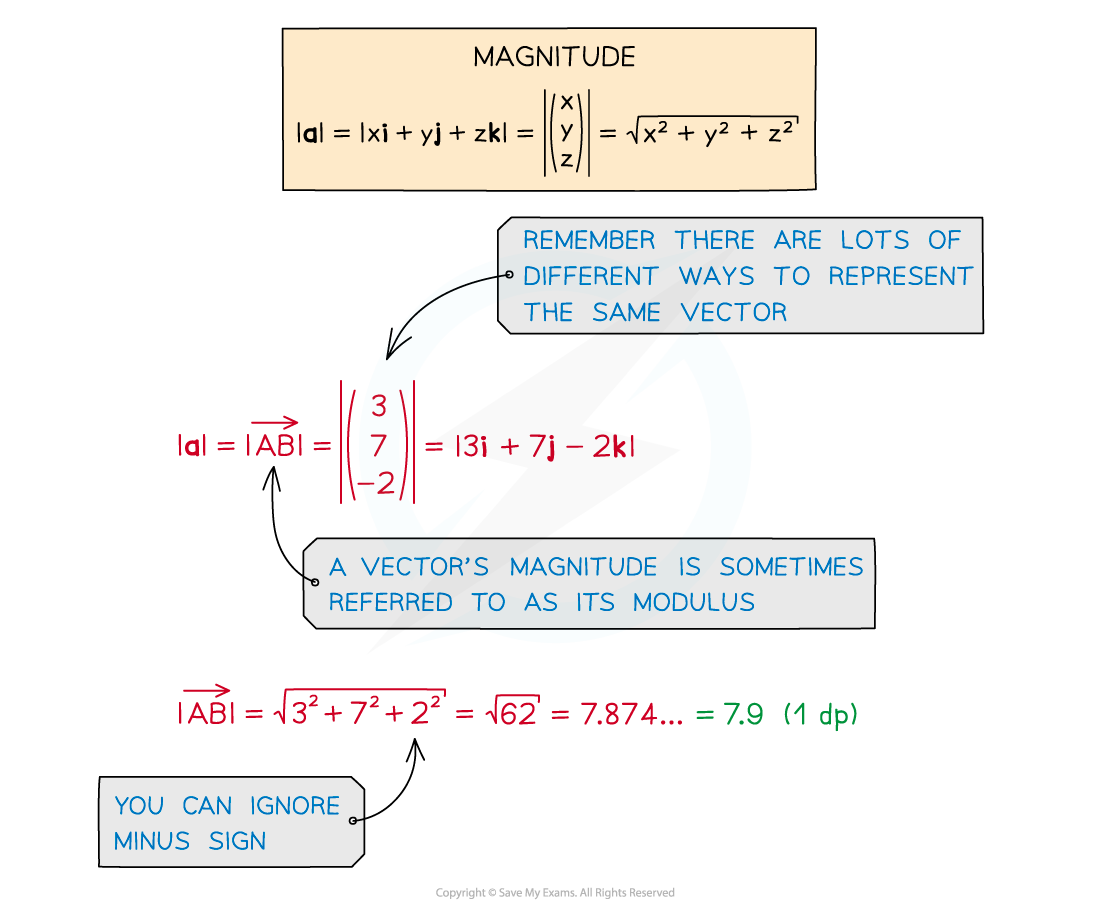
- The magnitude of a 3D vector is simply its size
- Like 2D vectors we can find the magnitude using Pythagoras’ theorem (see Magnitude Direction)
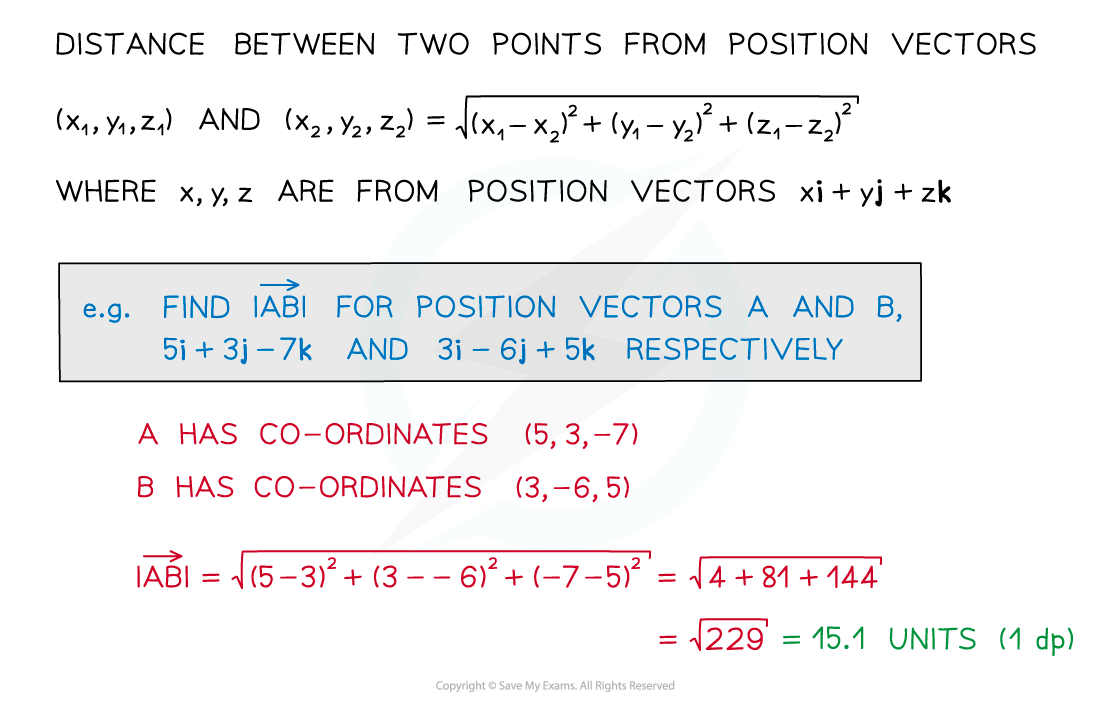
- For 3D position vectors we can find the distance between two points
- By using the respective co-ordinates we can calculate the magnitude of the vector between them:
3D vector addition, scalars, parallel vectors and unit vectors
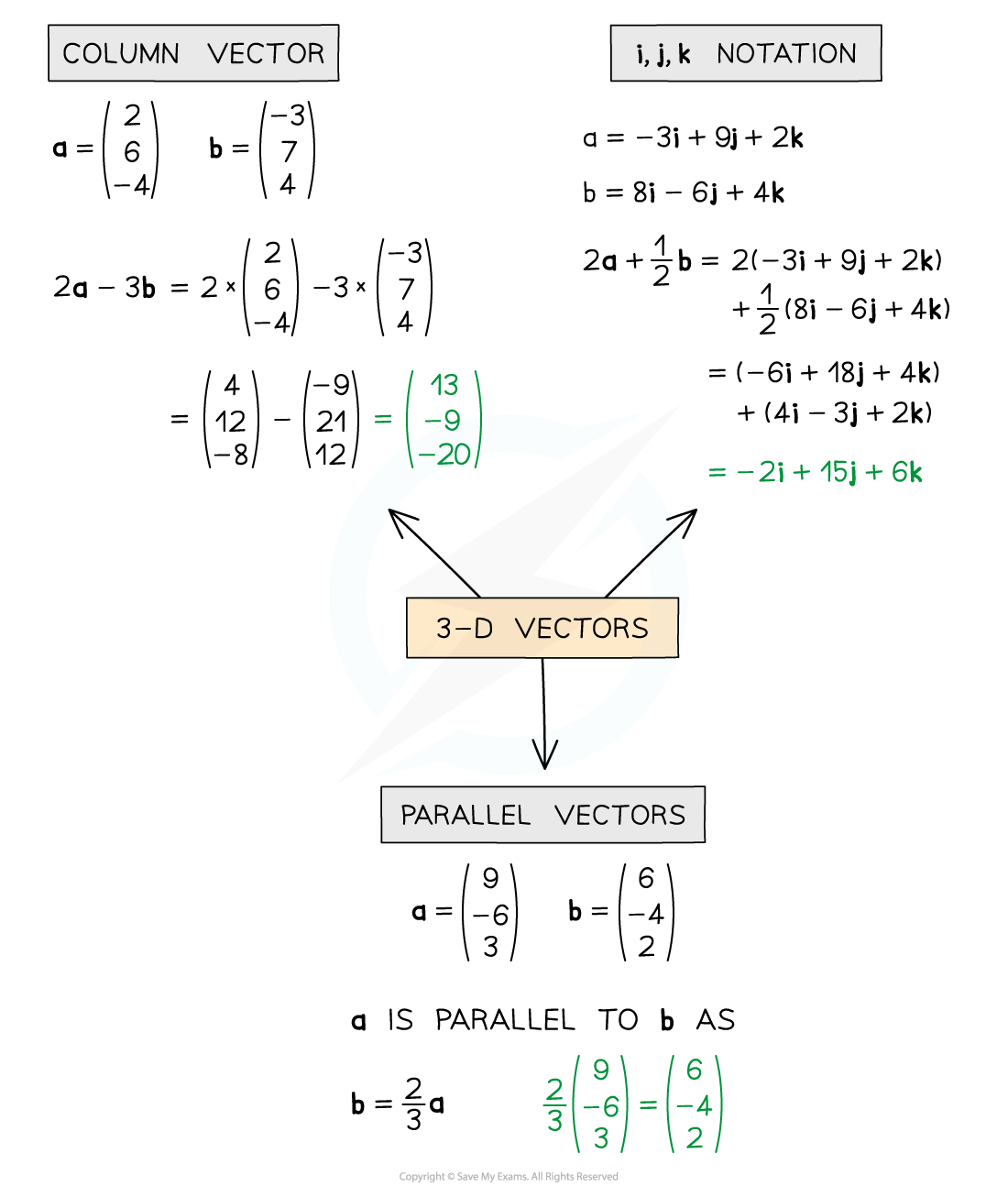
- 3D vectors work in the same way as 2D vectors, just in three dimensions rather than two
- Vector addition and subtraction and scalar multiplication can be carried out in exactly the same way, this time involving i, j and k or x, y and z
- 3D vectors are also parallel if one is a multiple of the other
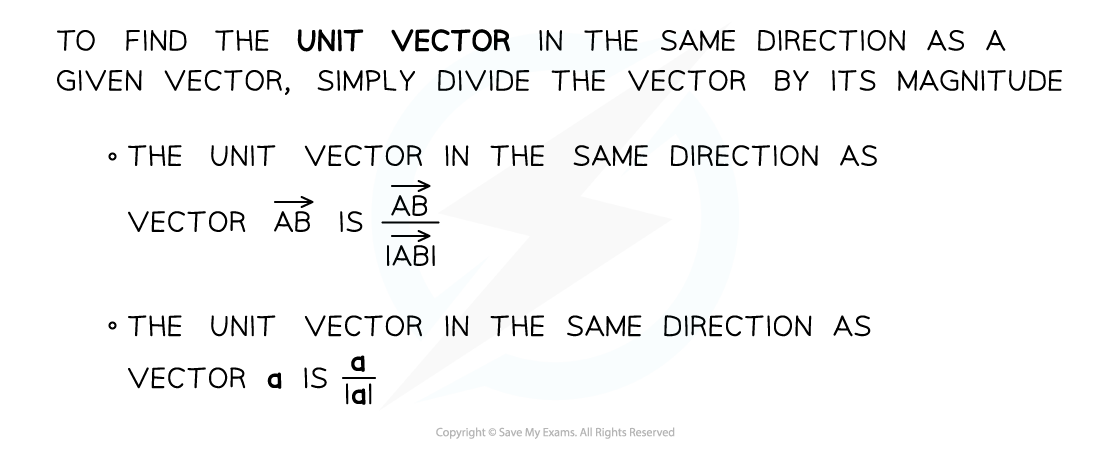
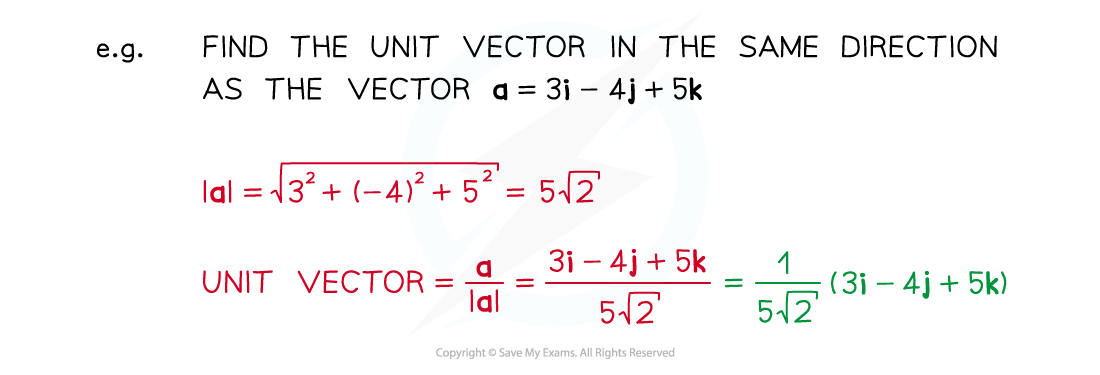
- Unit vectors in 3D are found in exactly the same way as in 2D
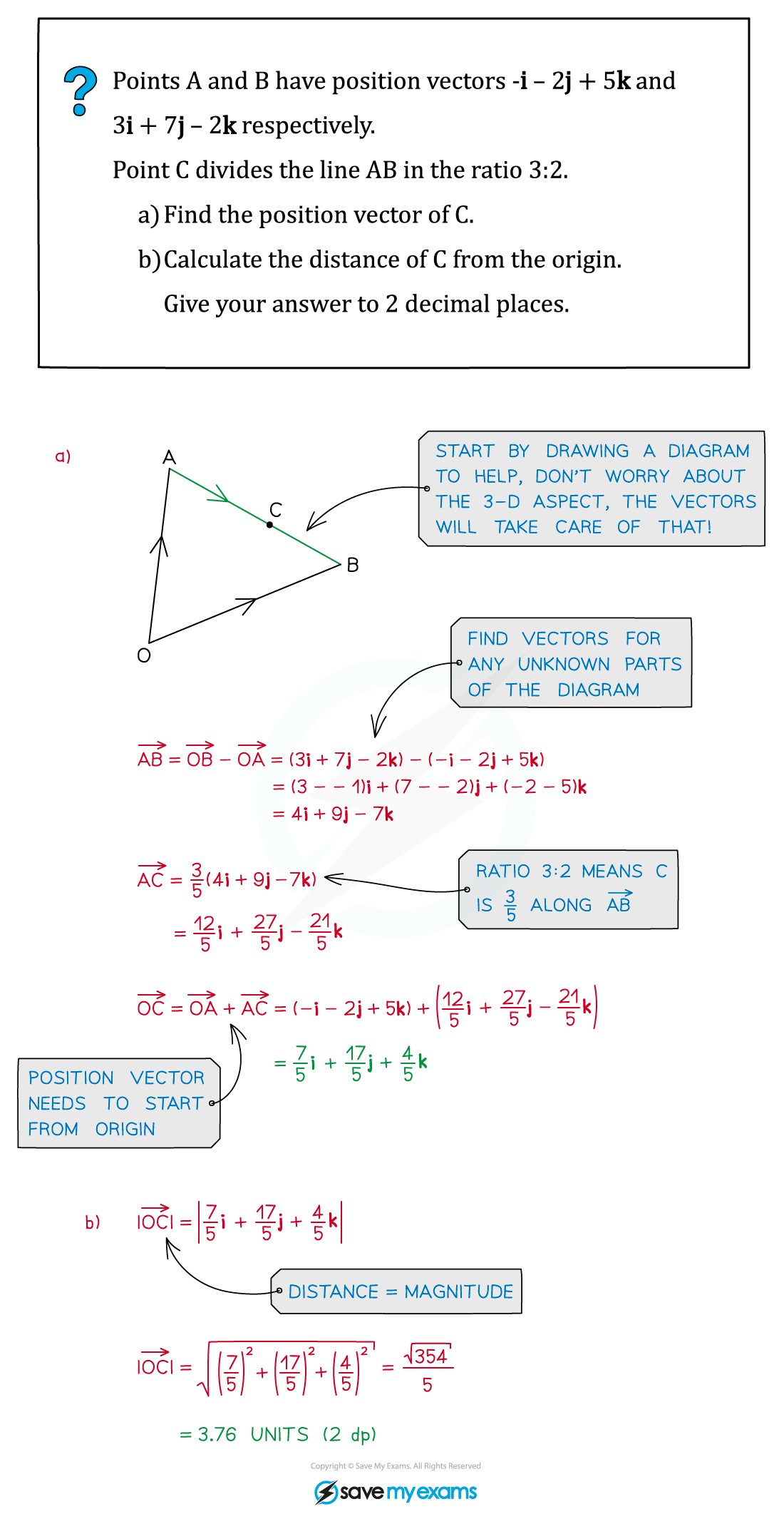
Worked Example
Was this revision note helpful?
Build on this topic