14 marksvery_hard
Show that the graph of where maps onto the graph of its inverse under the transformations described by .
13 questions · 61 marks · ≈ 61 min · spans 12 of 12 topics
Assembled from the topic question banks — not an official Edexcel paperShow that the graph of where maps onto the graph of its inverse under the transformations described by .
It is given
Write down the domain and range of the function f(x).
Sketch the graph of y = f(x), stating the coordinates of any intersections with the coordinate axes. (You do not need to give the coordinates of any turning points.)
One of the three algebraic fractions below is improper (‘top-heavy’).
Identify which fraction is improper and write it in the form , where and are integers to be found.
A curve has the equation
Show that the equation of the tangent to the curve at the point with x-coordinate 1 is
The following equations can be used for exponential models.
State whether each one would represent exponential growth or exponential decay.
(i)
(ii)
(iii) where
Rewrite the equation in the form
Sketch the graph of against .
Given that
use calculus to find the exact value of
integral _ pi / 4 end _ ^ pi / 2 end ^ cos ^2 theta d theta
A solution to the equation is , correct to two significant figures.
(i) Write down the lower bound, l, and the upper bound, u, of 3.1.
(ii) Assuming is continuous in the interval , what can you say about the values of and ?
Show that cosec cosec sec .
Solve the equation
sec4 tan2
giving your answers to three significant figures where appropriate.
Sketch, in the interval , the graph of y = 2 + 3 sec ( theta + pi / 2 ) , include asymptotes and label the coordinates of all maximum and minimum points.
Deduce the maximum and minimum values of (1)/(2 + 3 sec ( theta + pi / 2 )).
Show that
1 / ( (sqrt( 3)/(2) cos theta - 1 half sin theta ) ^2 + 1 / ( (sqrt( 3)/(2) sin theta + 1 half cos theta ) ^2 === 4 cosec ^2 ( 2 theta + pi / 3 )
The diagram below shows the graph of where
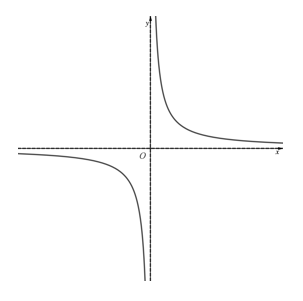
(i) Write down the equations of the two asymptotes.
(ii) Determine the equations of the two asymptotes on the graph of .