Linear Inequalities (Edexcel IAL Maths)
Spec point —
1.9
Linear inequalities
What are linear inequalities?
-
Linear inequalities are similar to equations but answers take a range of values
-
Linear means there will be no terms other than degree 1
- no squared terms or higher powers, no fractional or negative powers
-
Inequalities use the following symbols
- Greater than e.g.
- Less than e.g.
- Greater than or equal to
- Less than or equal to
-
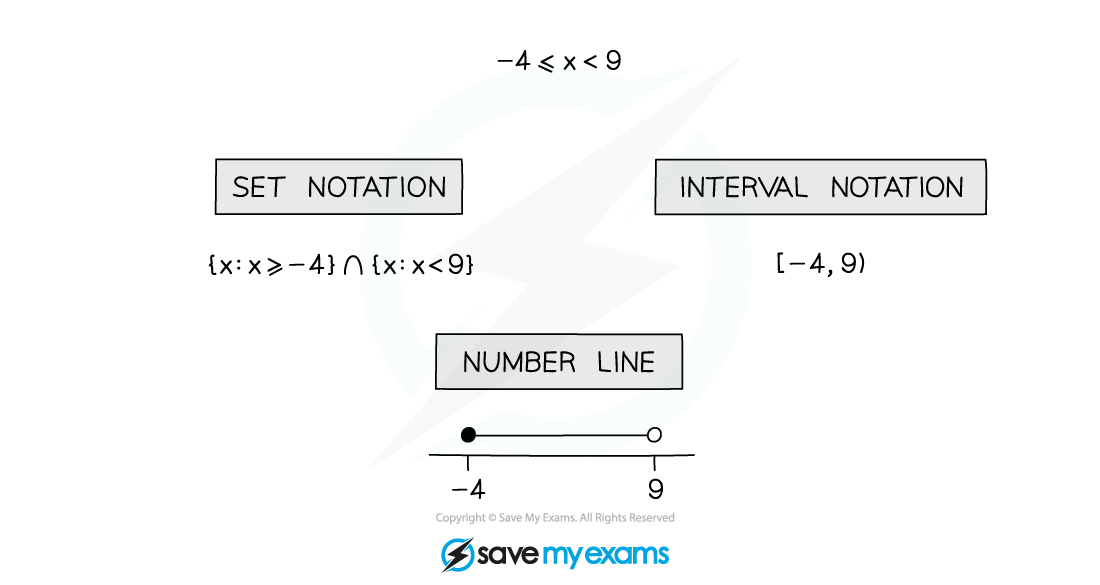
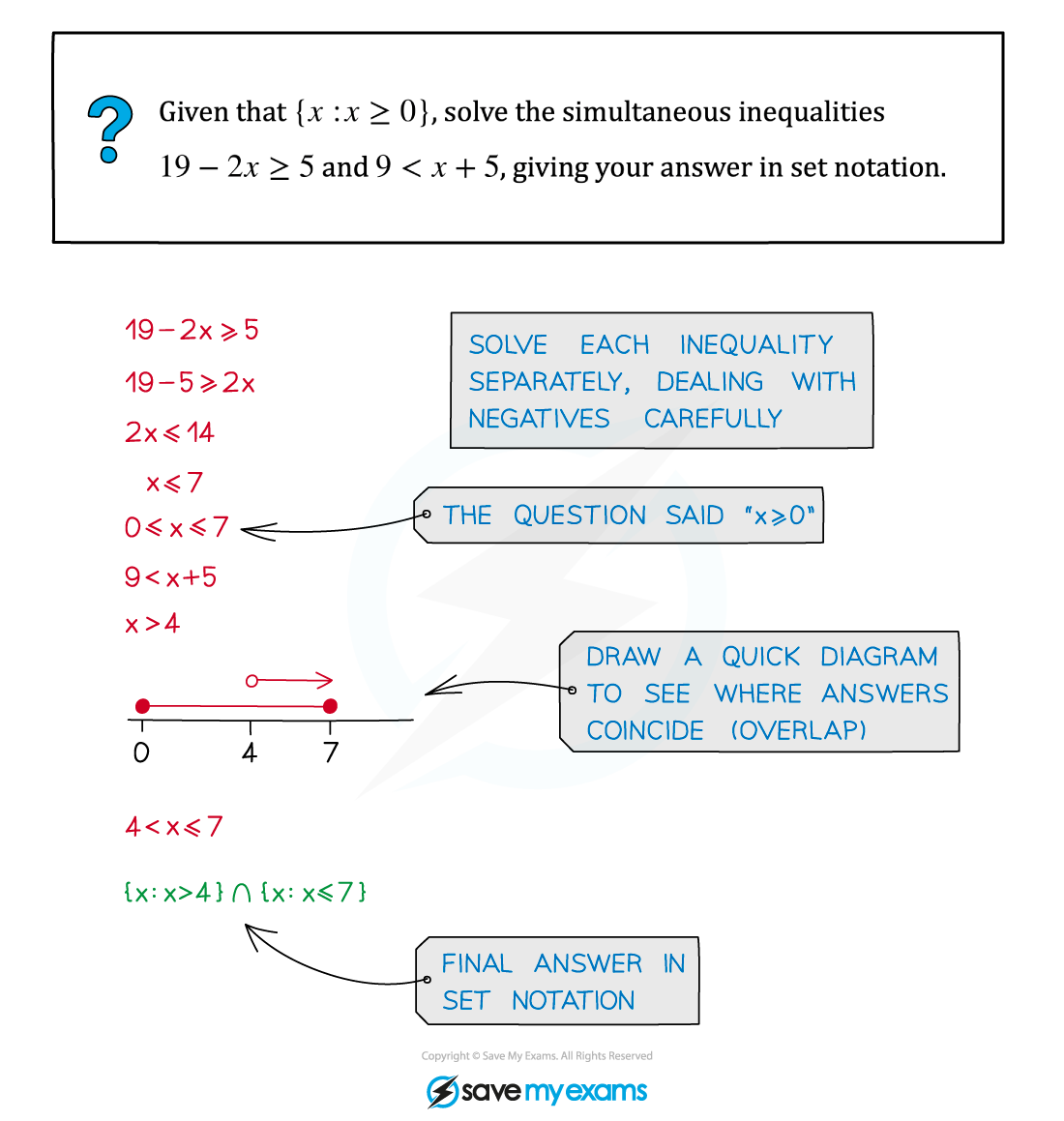
Inequalities can be represented in many ways using number lines, set notation and interval notation
How do I use number lines?
-
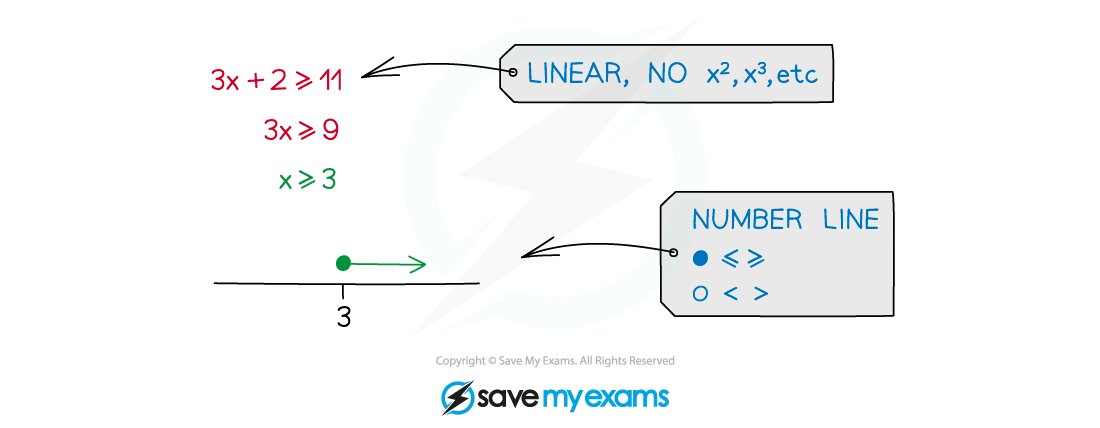
Number line diagrams are made up from circles and lines set above a number line
-
A filled-in circle or empty circle above a number denotes whether the number is included or not
- filled in for the greater/less than or equal to symbols
- empty for the greater/less than symbols
-
Arrows show the range of values that are allowed
-
How do I use set notation for inequalities?
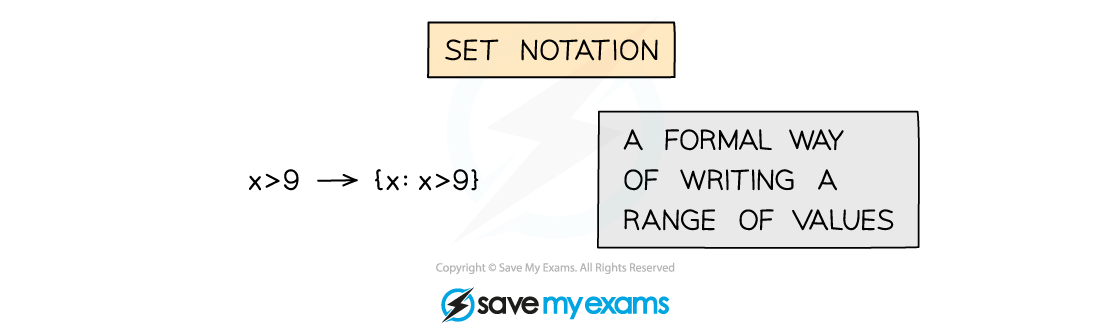
- Set notation is a formal way of writing a range of values
- Use of curly brackets { }
- Intersection ∩ and union ∪ may be used
- Not to be confused with interval notation
How do I use interval notation for inequalities?
-
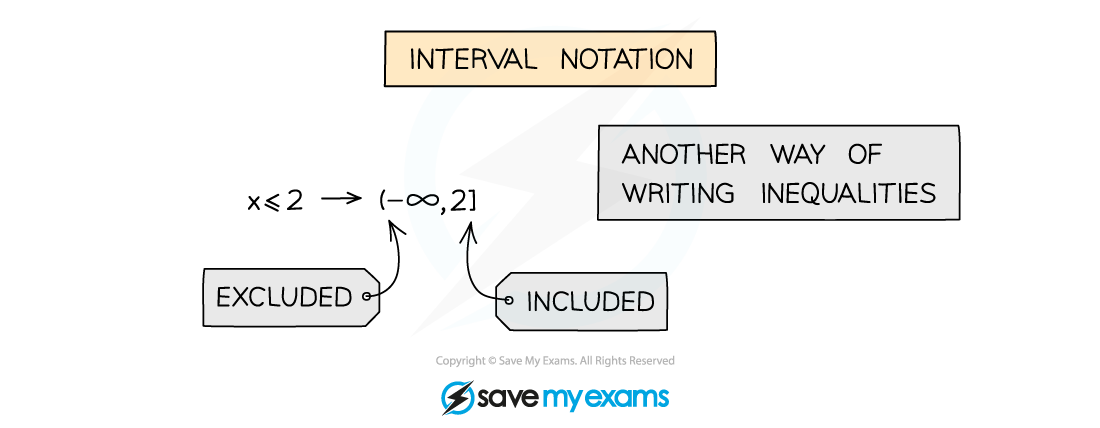
Interval notation uses different brackets to indicate whether a number is included or not
-
Use of square [] and round () brackets
-
[ or ] mean included
-
( or ) mean excluded
- (4,8] means 4 < x ≤ 8
-
Note ∞ always uses ( or )
-
Not to be confused with set notation
Skills for solving linear inequalities
-
representing and interpreting inequalities displayed on a number line
-
writing and interpreting set notation
- eg {x : x > 1} ∩ {x : x ≤ 7} is the same as 1 < x ≤ 7
-
writing and interpreting interval notation
- eg [-4, 6) is the same as -4 ≤ x < 6
How do I solve linear inequalities?
-
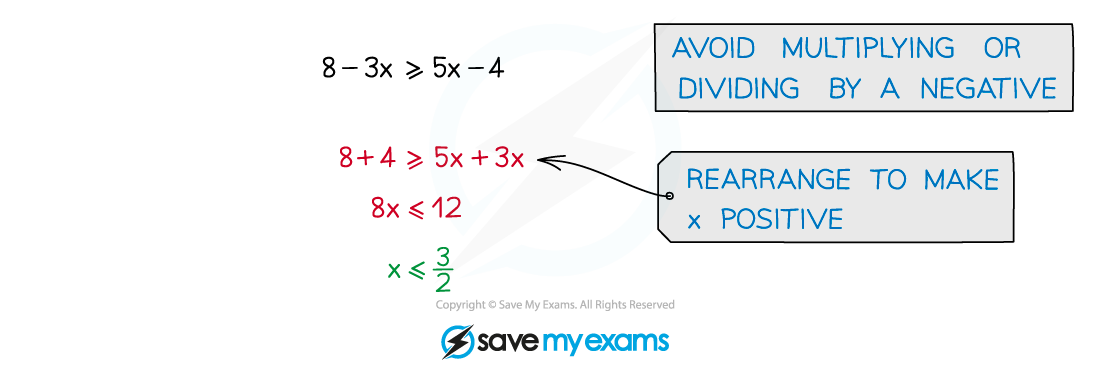
Treat the inequality as an equation and solve
- avoid multiplying or dividing by a negative
- if unavoidable, “flip” the inequality sign so < → >, ≥ → ≤, etc
- try to rearrange to make the x term positive
Worked Example
Was this revision note helpful?
Build on this topic