13 markseasy
Sketch the graph of , labelling any points where the graph intersects the coordinate axes.
30 questions · 129 marks · ≈ 2 hours
Sketch the graph of , labelling any points where the graph intersects the coordinate axes.
Sketch the graph of , labelling any points where the graph intersects the coordinate axes.
Sketch the graph of , labelling any points where the graph intersects the coordinate axes and stating the equations of any asymptotes.
(i) On the axes below, sketch the graphs of both and .
(ii) Using your graph, or otherwise, find the solution to the simultaneous equations and .
(i) Write down the value of when .
(ii) Factorise
Sketch the graph of , labelling any points where the graph intersects the coordinate axes.
Express in the form , where are integers to be found.
Hence sketch the graph of labelling any points where the graph intersects the coordinate axes.
is proportional to .
When .
(i) Find the constant of proportionality
(ii) Sketch the graph of against .
By sketching the graphs of and on the same diagram show that there are two real solutions to the equation .
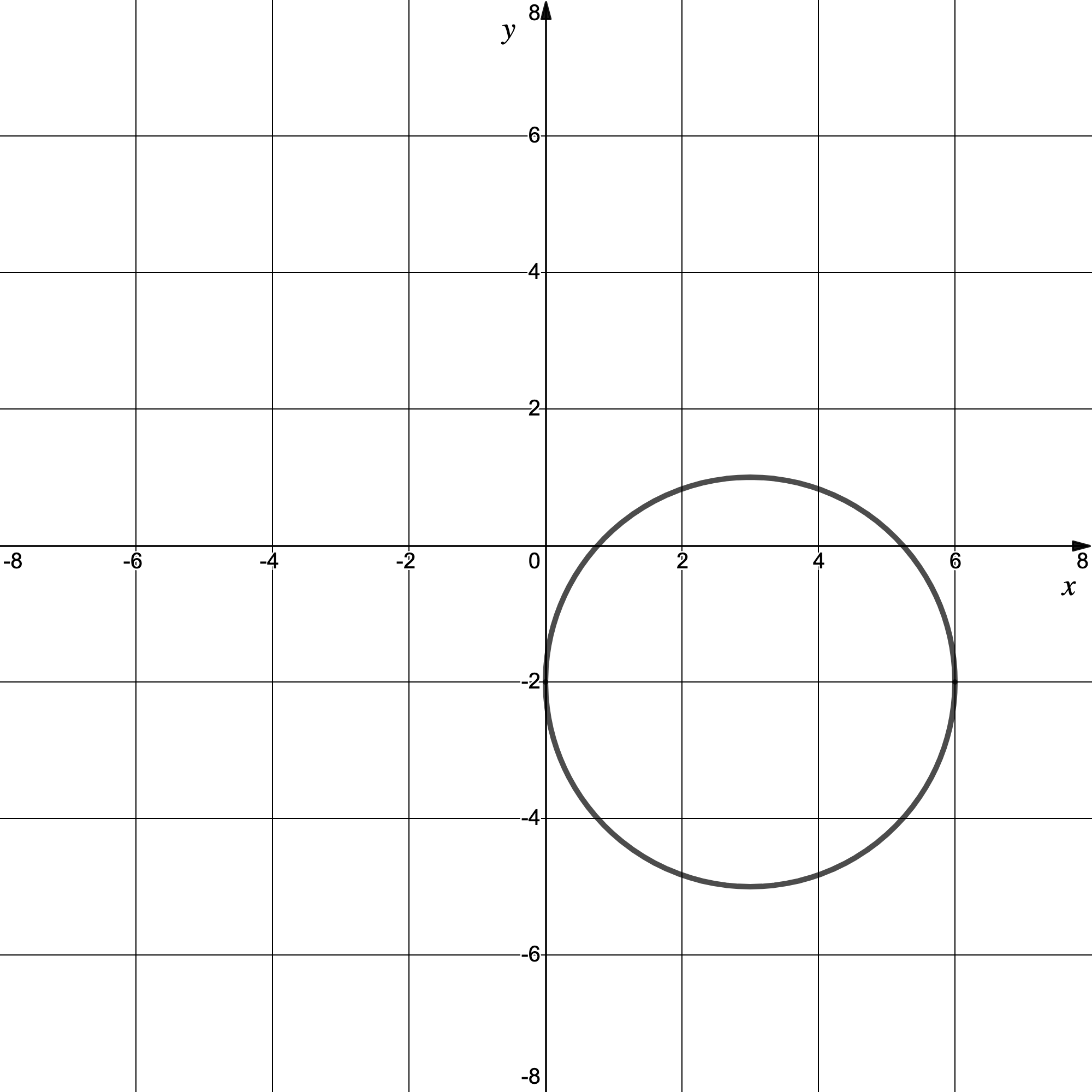
The diagram below shows the graph of a circle with equation .
Add straight lines passing through the point to the diagram to show how the circle can have either no, one or two intercepts. All lines must pass through the point .
Sketch the graph of labelling any points where the graph intersects the coordinate axes.
Sketch the graph of and write down the equations of any asymptotes.
On the axes below sketch the graphs of both and .
Using your graph, or otherwise, find the solution to the simultaneous equations
and
.
is inversely proportional to . When . Find the constant of proportionality and sketch the graph of against .
Sketch the graph of labelling any points where the graph intersects the coordinate axes.
On the same diagram, sketch the graphs of and .
Use your graph to determine the number of solutions to the equation
.
A machine computes a calculation in time, seconds, that is proportional to the number of processes, , involved. For a calculation involving 10 processes the machine takes 0.01 seconds.
Show that the constant of proportionality is 0.001.
Hence write down an equation linking the number of processes to the time taken .
Find the time it takes for the machine to compute a calculation involving 200 processes.
How many processes are involved for a calculation taking 2.3 seconds?
The diagram below shows the graph of , where .
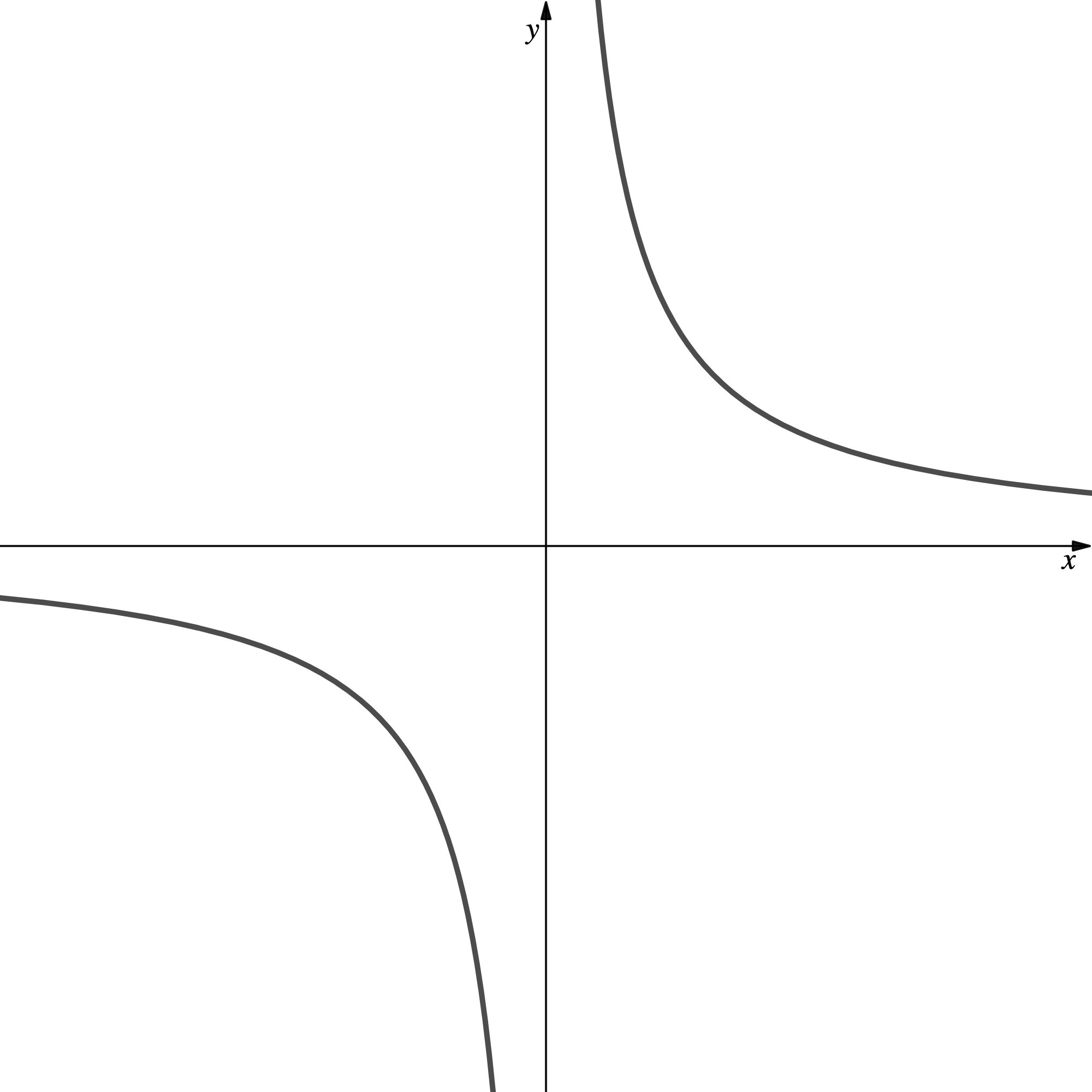
Sketch the graph of , where .
State which graph the following points must lie on and find the value of in each case.
(i)
(ii)
Solve the equation .
Write down the -coordinates of the points of intersection between the graphs of and .
Find the -coordinates of the points of intersection between the graphs of and .
On the same diagram, sketch the graphs of and .
Sketch the graph of and write down the equations of any asymptotes.
On the axes below sketch the graphs of both and .
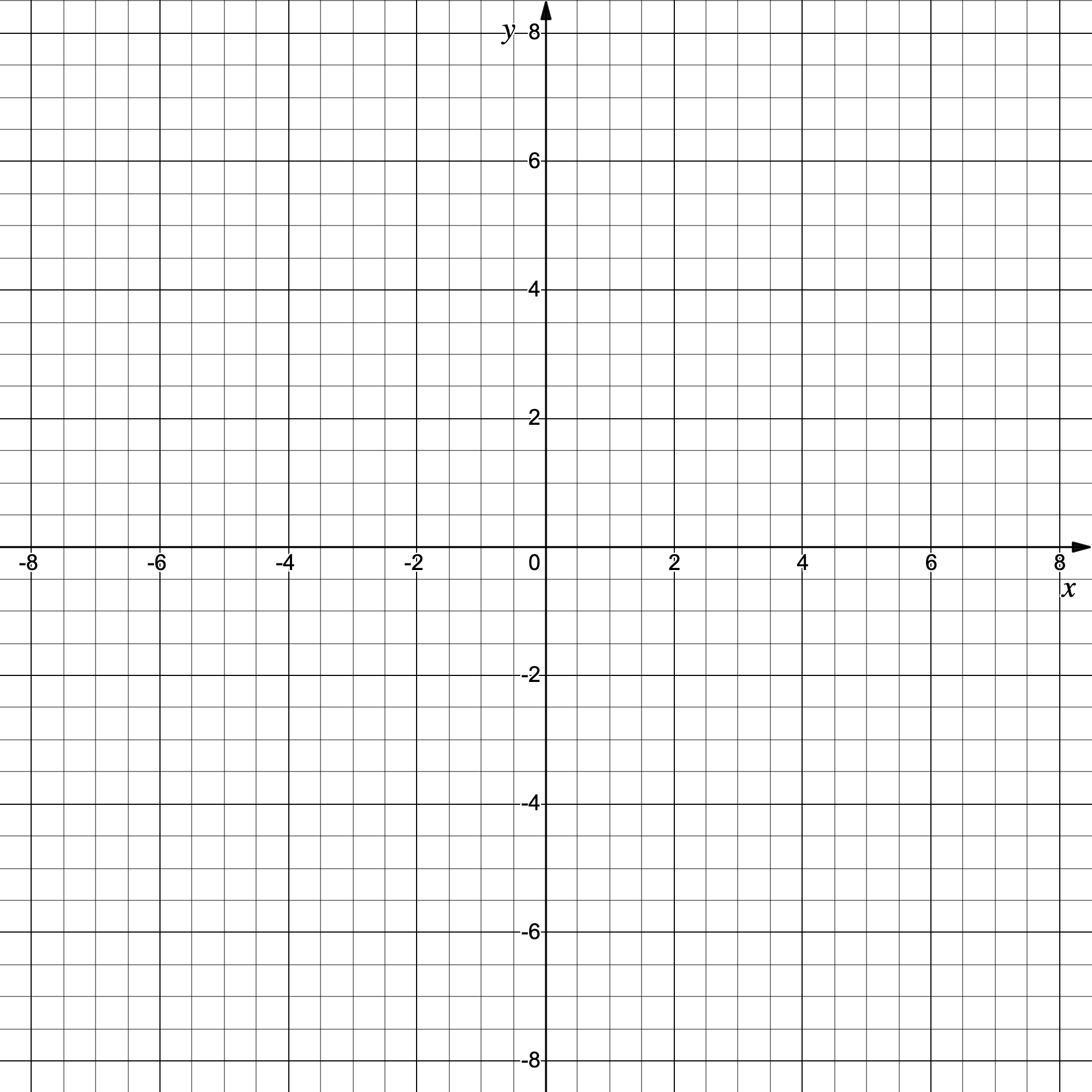
Using your graph, or otherwise, find the solutions to the simultaneous equations
is inversely proportional to . When . Find the constant of proportionality and sketch the graph of against .
Sketch the graph of labelling any points where the graph intersects the coordinate axes.
On the same diagram, sketch the graphs of and .
Use your graph to determine the number of solutions to the equation
.
A machine computes a calculation in time, seconds, that is proportional to the square of the number of processes, , involved. For a calculation involving 8 processes the machine takes 0.032 seconds.
Find an equation linking the number of processes, () to the time taken, () seconds.
How many processes are involved for a calculation taking 0.2 seconds?
Find the time it takes for the machine to compute a calculation involving 30 processes.
The diagram below shows the graph of the equation , where .
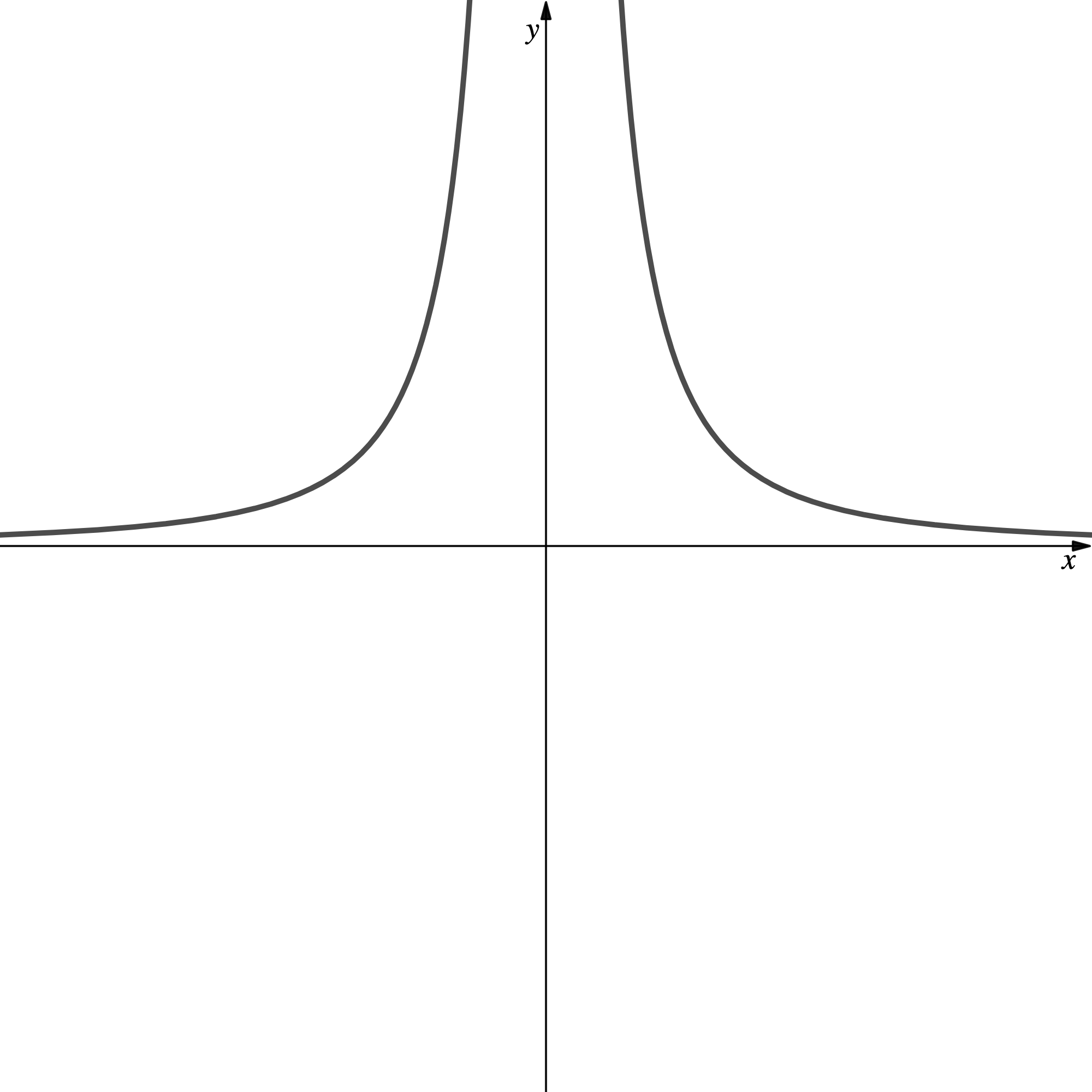
Sketch the graph of , where .
Given that is a negative real number, state with a reason, which graph passes through the point .
On the same diagram, sketch the graphs of and .
Write down the equation(s) of any lines of symmetry and asymptotes for the two graphs in part (a).
On the axes below sketch the graphs of both and .
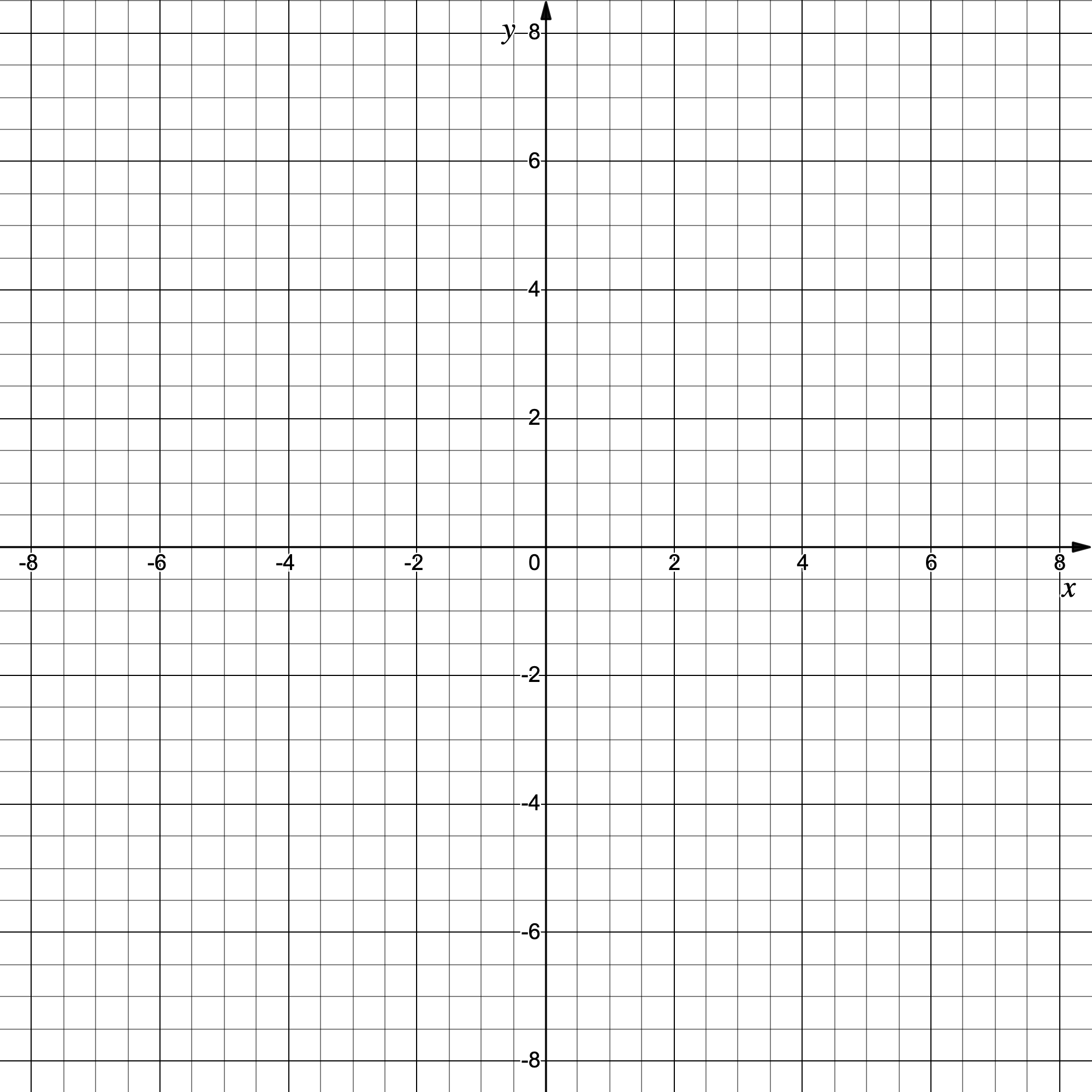
Using your graph, or otherwise, find the solutions to the equation
.
is inversely proportional to the square of . When . Find the constant of proportionality and sketch the graph of against .
A machine computes a calculation in time, seconds, that is proportional to the cube root of the number of processes, , involved. For a calculation involving 8 processes the computer takes seconds.
How many processes are involved for a calculation taking seconds?
Find the time it takes for the machine to compute a calculation involving 250 processes.
On separate diagrams, sketch the graphs of , where and , where .
One of the graphs passes through the point with coordinates .
Write in terms of and, justifying your answer, state which graph this point must lie on.