Osmosis in Plants (Cambridge International IGCSE Science)
Exam board Cambridge International · IGCSEUpdated 2026-01-13
Osmosis in Plants: Extended
Spec point — Explain the effects on plant cells of immersing them in solutions of different concentrations by using the terms: turgid, turgor pressure, plasmolysis, flaccid
Plant cells in solutions of different concentrations
- When plant cells are placed in a solution that has a higher water potential(dilute solution) than inside the cells (e.g. distilled water) then water moves into the plant cells via osmosis
- These water molecules push the cell membrane against the cell wall, increasing the turgor pressure in the cells which makes them turgid
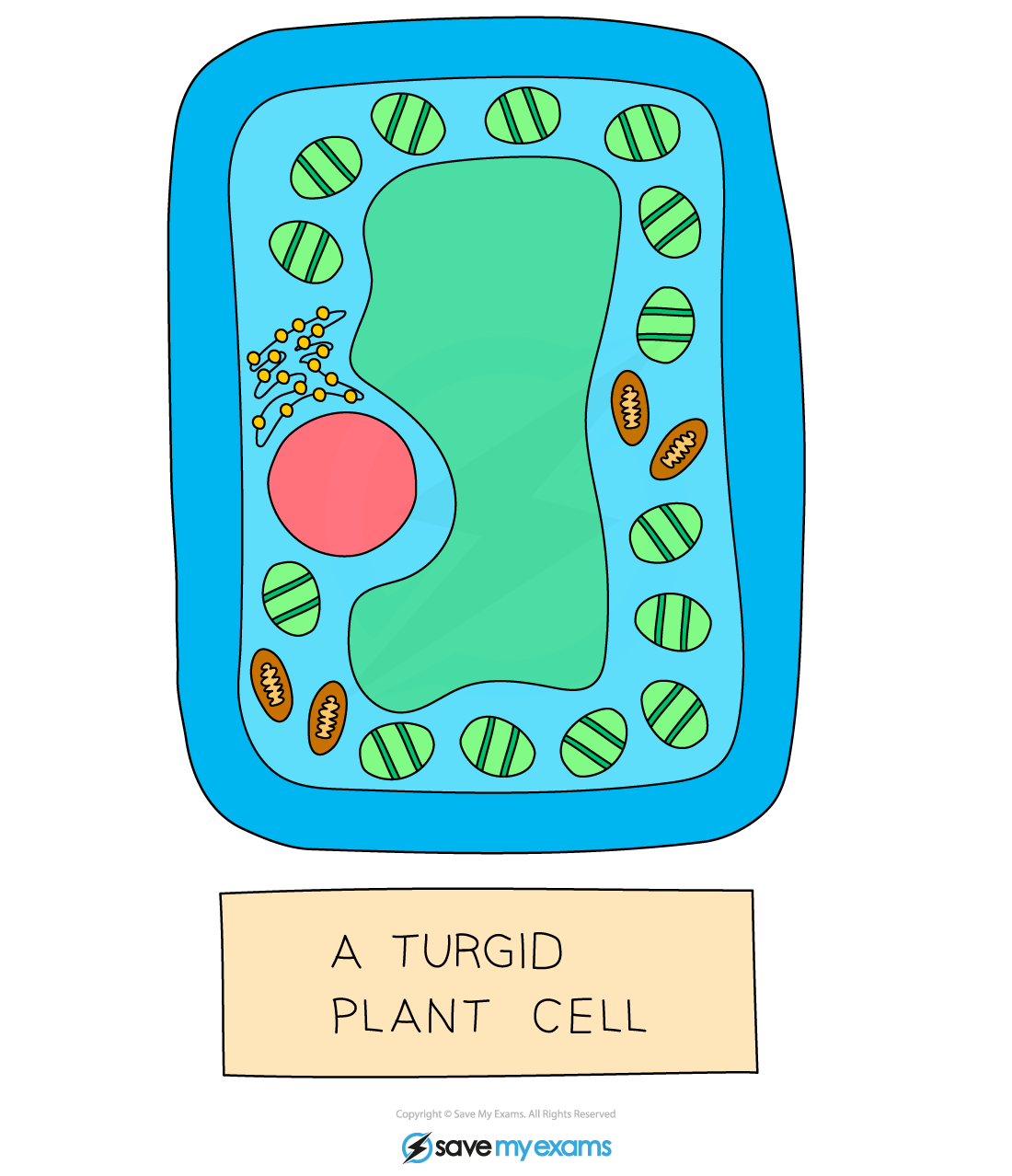
A turgid plant cell
-
When plant cells are placed in a concentrated solution (with a lower water potential than inside the cells) water molecules will move out of the plant cells by osmosis, making them flaccid
- If plant cells become flaccid it can negatively affect the plant's ability to support itself
-
If looked at underneath the microscope, the plant cells might be plasmolysed, meaning the cell membrane has pulled away from the cell wall
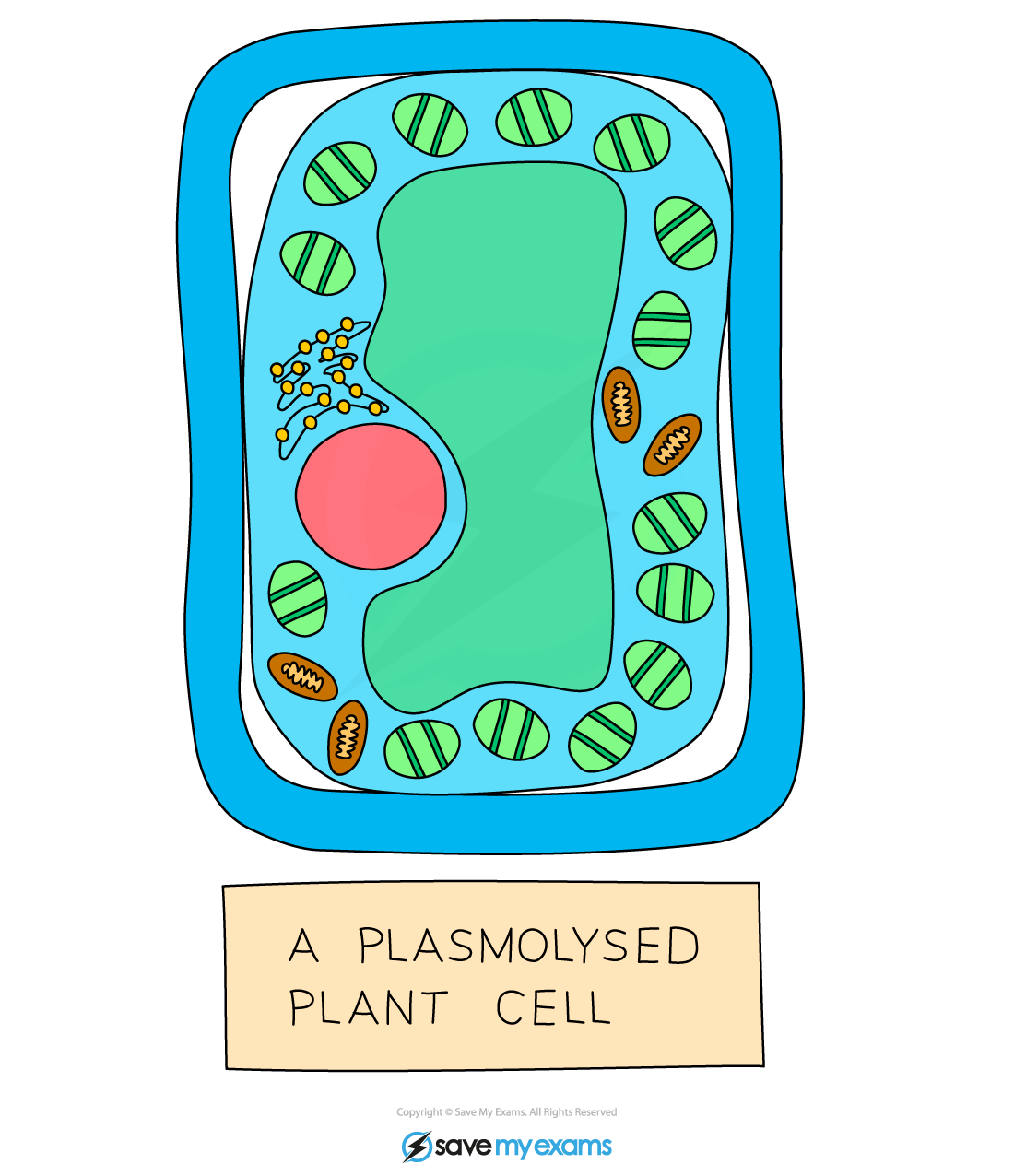
A plasmolysed plant cell
Was this revision note helpful?
Build on this topic