Electrical Energy (Cambridge International IGCSE Science)
Energy transfer in electrical circuits
-
As electricity passes around a circuit, energy is transferred from the power source to the various components
- As charge passes through the power supply, energy is transferred to the charge
- As the charge passes through each component, energy is transferred from the charge to the component
- The component will often dissipate some of that energy to the surroundings
Energy transfers in a circuit
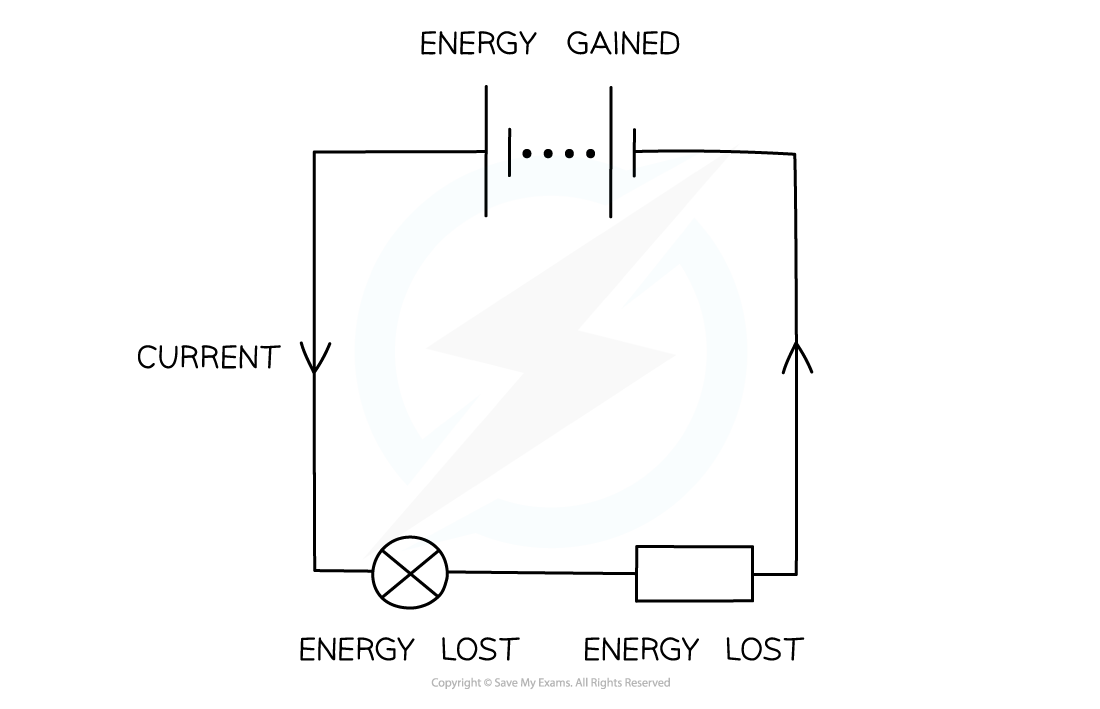
Charge gains energy from the power supply, and transfers the energy to the components
-
Some domestic appliances transfer energy from the chemical store of cells and batteries, such as mobile phones, laptops, and remote controls
-
Most larger household appliances transfer energy electrically from the mains supply
-
Lots of household appliances contain motors
- Vacuum cleaners: to create the suction to suck in dust and dirt off carpets
- Washing machines: to rotate the drum to wash (or dry) clothes
- Refrigerators: to compress the refrigerant chemical into a liquid to reduce the temperature
-
Energy is transferred electrically from the mains supply to the kinetic store of the motor in the appliance
-
Lots of household appliances contain heaters
- Toasters: to heat up food
- Kettles: to boil water
- Boiler in a central heating system: hot water is pumped from the boiler so the radiator can heat up a room
-
Energy is transferred electrically from the mains supply to the thermal store of the heater.
Energy transfers in common household appliances
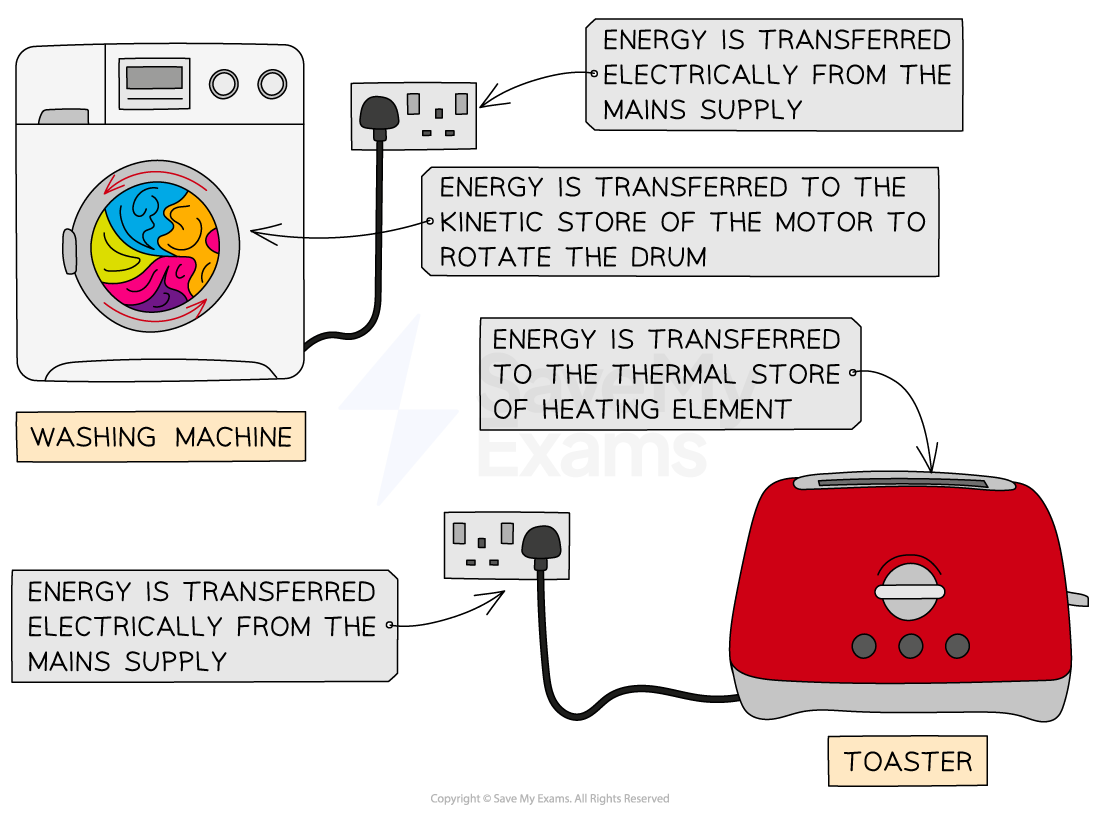
Energy is transferred electrically from the mains supply to the kinetic store of the motor in a washing machine, or to the thermal store of the heating element in a toaster
Electrical energy equation
-
The amount of energy transferred by an electrical appliance depends on:
- how long the appliance runs for
- the power rating of the appliance
-
Electrical energy can be calculated using the following equation:
-
Where:
- * *= energy, measured in joules (J)
- = potential difference, measured in volts (V)
- = current, measured in amps (A)
- = time, measured in seconds (s)
Worked Example A washing machine runs a cycle for 3 hours and 16 minutes. The potential difference of the mains supply is 230 V. A current of 10.0 A flows through the washing machine for the duration of the cycle.
Determine the amount of energy transferred from the mains supply during the cycle. Give your answer in MJ.
Answer:
Step 1: List the known quantities
- Potential difference,
- Current,
- Time,
Step 2: Convert the time to seconds
- 1 hour = 60 mins
- 1 min = 60 s
Step 3: Write out the equation for electrical energy
Step 4: Substitute in the known values to calculate
Step 5: Give your answer in MJ
- 1 MJ = 1 000 000 J
Was this revision note helpful?
Build on this topic