Brownian Motion (Cambridge International IGCSE Science)
Spec point —
P2.1.5
Brownian motion
-
The Kinetic Theory of Matter, which simply says that all matter is made up of tiny particles, was discovered almost by accident
- The Scottish scientist Robert Brown first described the random motion of pollen grains in water, which he saw under a microscope
- This observation could not be explained at the time, but later it was realised that it shows that substances are made of particles which are in constant motion (hence 'kinetic')
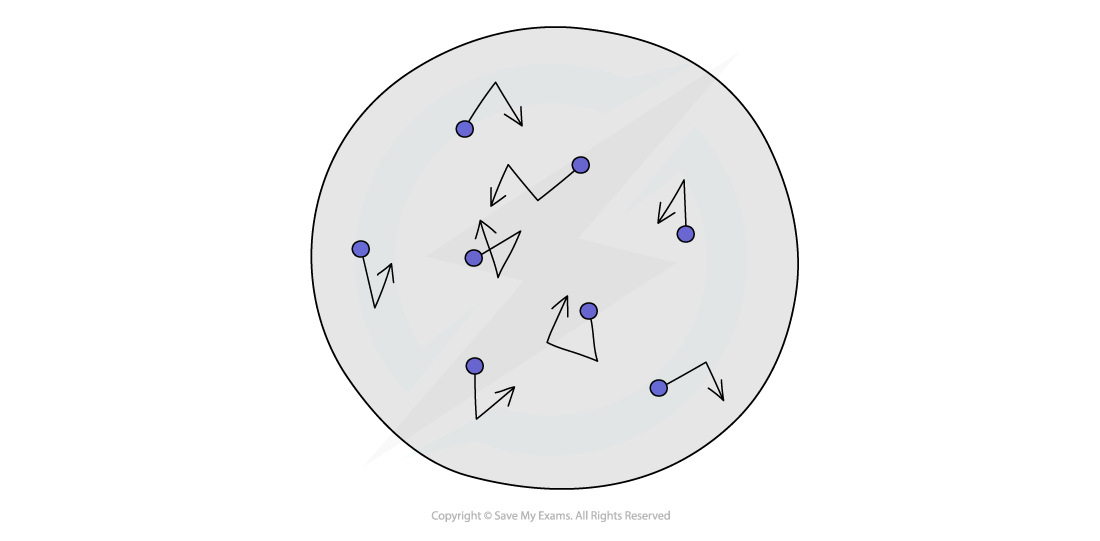
Brownian Motion: the random motion of particles (e.g. pollen) when observed through a microscope
-
Brownian motion is the random movement of particles in a liquid or a gas produced by large numbers of collisions with smaller particles which are often too small to see
-
When small particles (such as pollen or smoke) are suspended in a liquid or gas, they can be observed through a microscope moving around in a random, erratic fashion
Explaining Brownian motion
Extended tier only
What is Brownian motion caused by?
-
When observing Brownian Motion, even with a microscope, only the particles can be seen
- The pollen or smoke particles are seen to move
- Smaller atoms and molecules, of water or air, are still too small to be seen
-
These light, fast-moving atoms and molecules collide with the larger particles
- The collisions give the particles a little nudge, causing them to change their speed and directions randomly, each time they are struck by a molecule
-
The presence of the light, fast moving atoms and molecules is inferred from the motion of the particles
- Inferences such as this are an important part of scientific investigation
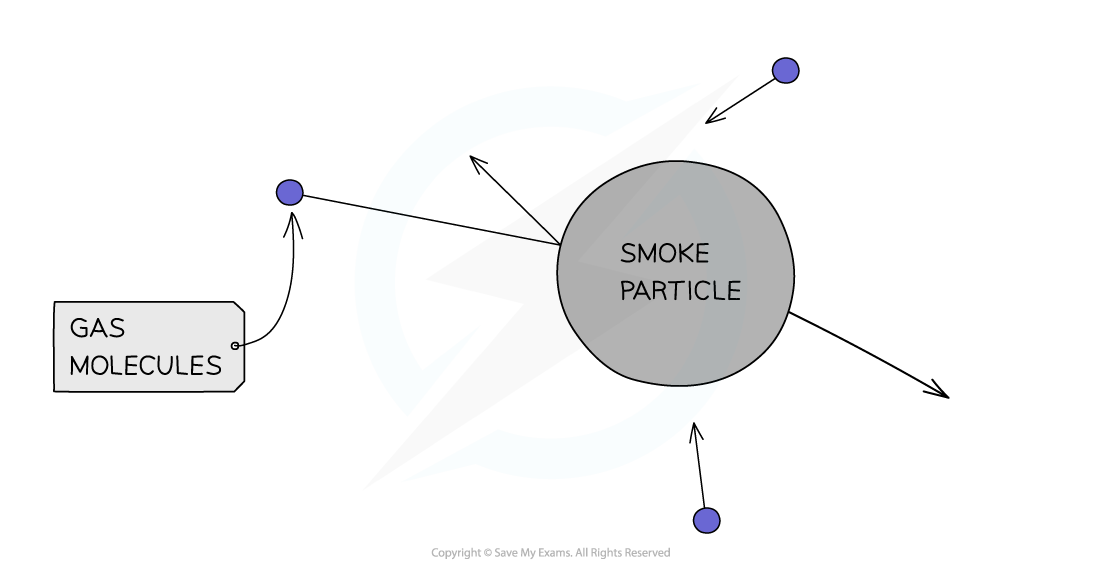
Light, fast-moving molecules collide with larger particles, giving them a little nudge
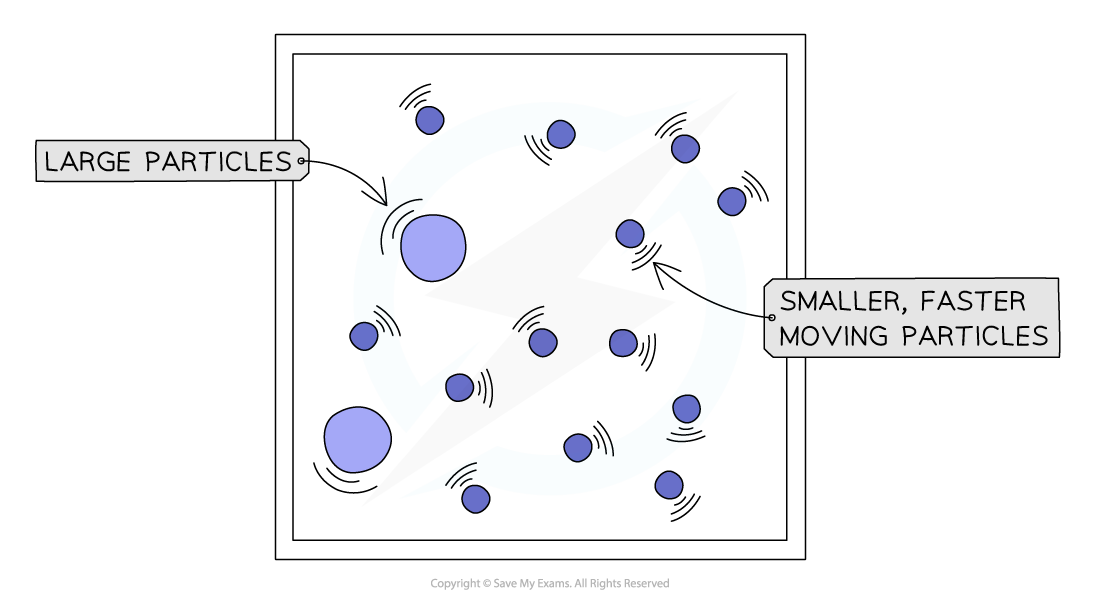
This not-to-scale diagram shows how the smaller, fast-moving particles (atoms and molecules) cause the larger, visible particles to move
Was this revision note helpful?