Acceleration (Cambridge International IGCSE Science)
Acceleration
-
An object can change its speed by:
- speeding up
- slowing down
-
When an object speeds up, it is accelerating
-
When an object slows down, it is decelerating
Calculating acceleration
Extended Tier Only
- Acceleration describes how the velocity of an object changes over time
- Acceleration is defined as: The rate of change of velocity
- In other words, acceleration is the change in velocity per unit time
- The acceleration of an object is often changing throughout an object's journey
- Therefore, is it often useful to know the average acceleration
-
Where:
- = acceleration in metres per second squared (m/s2)
- = change in velocity in metres per second (m/s)
- = time taken in seconds (s)
Formula triangle for acceleration, change in velocity and change in time
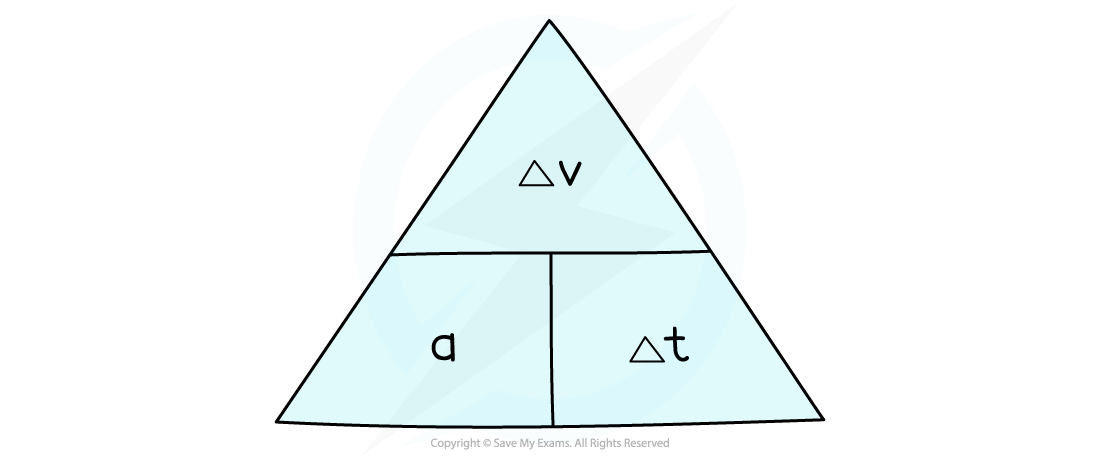
To use a formula triangle, simply cover up the quantity you wish calculate and the structure of the equation is revealed
- Information on how to use a formula triangle can be found in Speed & velocity
Change in velocity
- The change in velocity is the difference between the initial and final velocity:
-
Where:
- = change in velocity in metres per second (m/s)
- = final velocity in metres per second (m/s)
- = initial velocity in metres per second (m/s)
-
If an object speeds up, its acceleration is positive
-
If an object slows down, its acceleration is negative
-
Acceleration is positive if it is in the same direction as the motion of the object
Acceleration of different objects
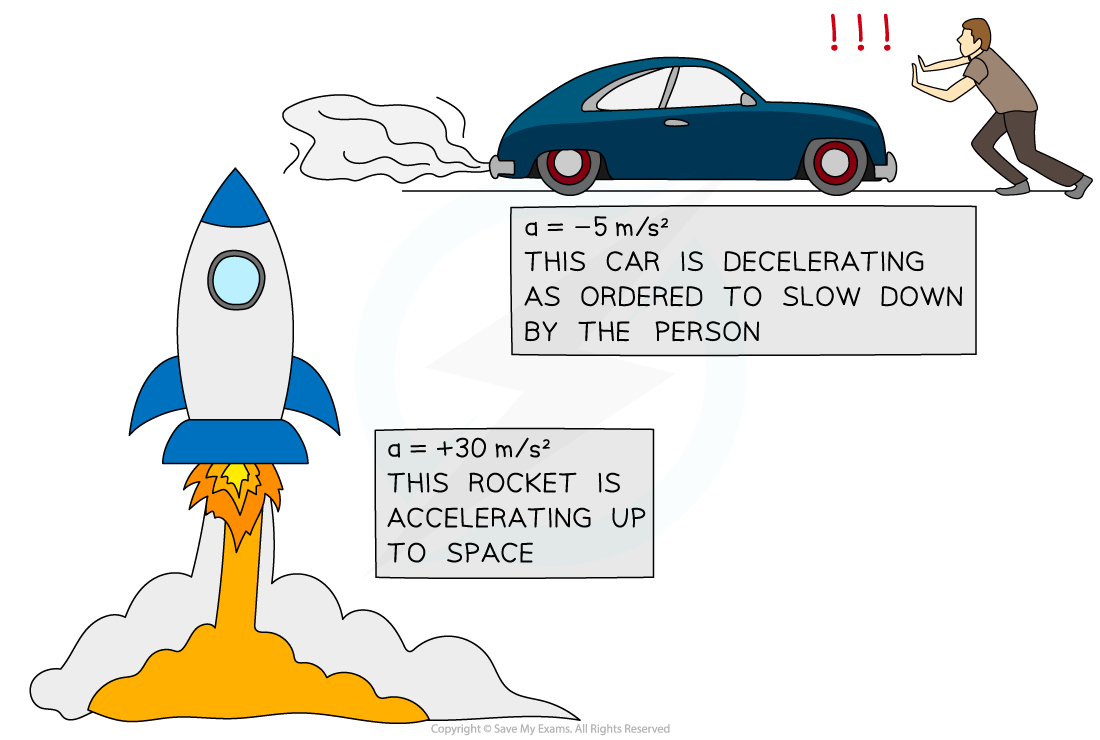
A rocket speeding up (accelerating) and a car slowing down (decelerating)
Worked Example A Japanese bullet train decelerates at a constant rate in a straight line. The velocity of the train decreases from 50 m/s to 42 m/s in 30 seconds.
(a) Calculate the change in velocity of the train.
(b) Calculate the deceleration of the train, and explain how your answer shows the train is slowing down.
Answer:
Part (a)
Step 1: List the known quantities
- Initial velocity,
- Final velocity,
Step 2: Write the equation for change in velocity
Step 3: Substitute values for final and initial velocity
Part (b)
Step 1: List the known quantities
- Change in velocity,
- Time taken,
Step 2: Write the equation for acceleration
Step 3: Substitute the values for change in velocity and time
Step 4: Interpret the value for deceleration
- The answer is negative, which indicates the train is slowing down
Exam Hint Remember, the units for acceleration are metres per second squared, m/s2. In other words, acceleration measures how much the velocity (m/s) changes every second, so the units are metres per second per second (m/s/s).
Was this revision note helpful?
Build on this topic