Thermal Conduction (Cambridge International IGCSE Science)
Exam board Cambridge International · IGCSEUpdated 2025-12-19
Thermal conduction in solids
Spec point —
P2.3.2
Extended Tier Only
-
Conduction is the transfer of heat from one region to another through particle vibrations and the movement of free electrons
-
Conduction is the main method of thermal energy transfer in solids
-
Metals are the best thermal conductors
- This is because they have a high number of free electrons
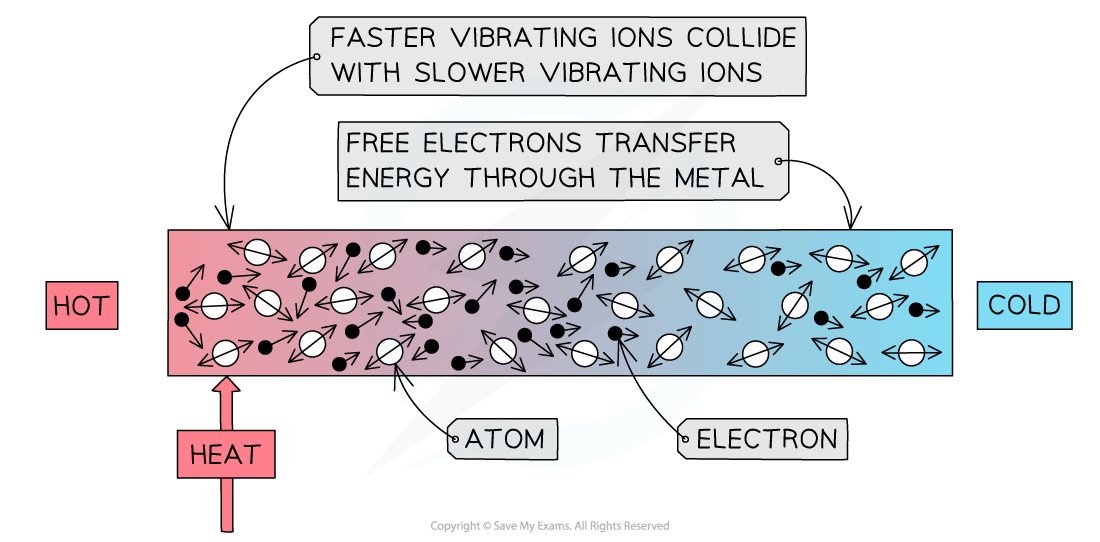
Conduction: the atoms in a solid vibrate and collide, transferring energy
-
Conduction can occur through two mechanisms:
- Atomic vibrations
- Free electron collisions
-
When a substance is heated, the atoms, or ions, start to move around (vibrate) more
- The atoms at the hotter end of the solid will vibrate more than the atoms at the cooler end
- As they do so they bump into each other, transferring energy from atom to atom
- These collisions transfer internal energy until thermal equilibrium is achieved throughout the substance
- This occurs in all solids, metals and non-metals alike
-
Additionally, if a solid contains free electrons, these can travel through the material freely and transfer thermal energy through collisions
Was this revision note helpful?
Build on this topic