Electrical Safety (Cambridge International IGCSE Science)
Mains circuits
-
All electrical appliances are connected to the mains supply
-
In order to protect the user or the device, there are several safety features built into domestic appliances, including:
- double insulation
- earthing
- fuses
- circuit breakers
Double insulation
-
The conducting part of a wire is usually made of copper or some other metal
- If this comes into contact with a person, this poses a risk of electrocution
-
For this reason, wires are covered with an insulating material, such as rubber
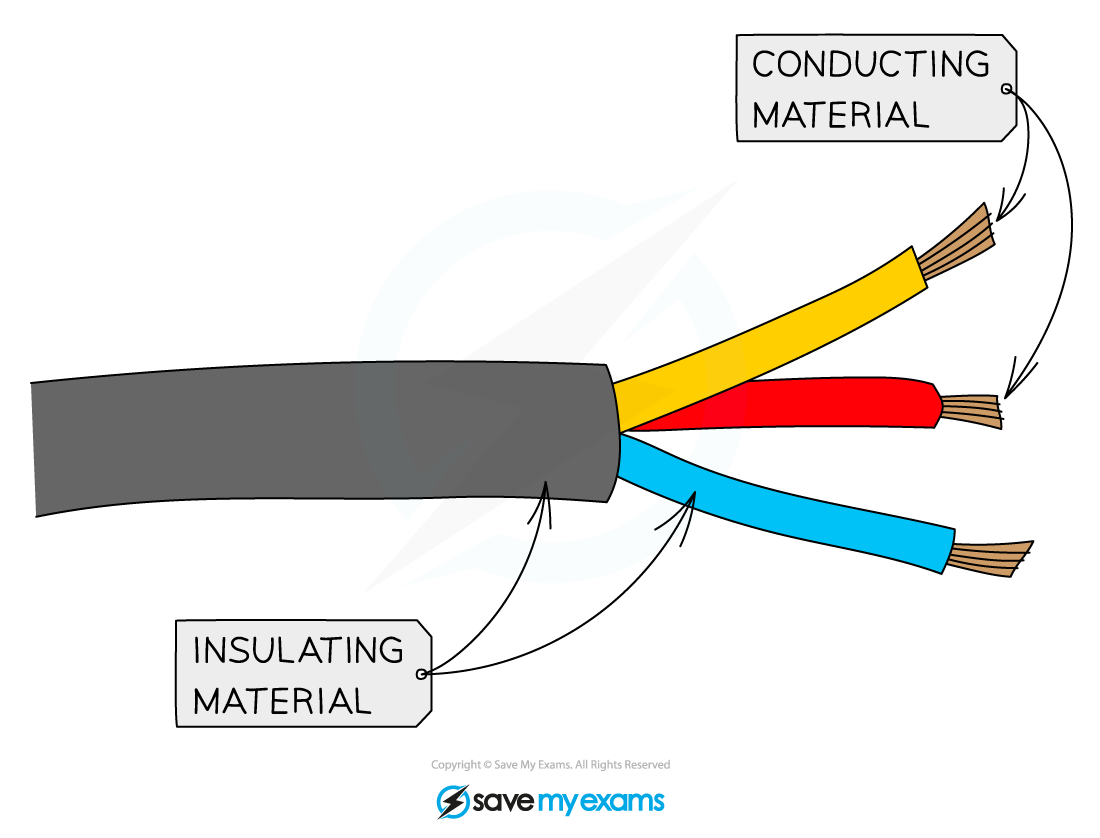
The conducting part of a wire is covered in an insulating material for safety
-
Some appliances do not have metal cases and so there is no risk of them becoming electrified
-
Such appliances are said to be double insulated, as they have two layers of insulation:
- Insulation around the wires themselves
- A non-metallic case that acts as a second layer of insulation
-
Double insulated appliances do not require an earth wire or have been designed so that the earth wire cannot touch the metal casing
Earthing
-
Many electrical appliances have metal cases
-
This poses a potential safety hazard:
- If a live wire (inside the appliance) came into contact with the case, the case would become electrified and anyone who touched it would risk being electrocuted
-
The earth wire is an additional safety wire that can reduce this risk
-
If this happens:
- The earth wire provides a low resistance path to the earth
- It causes a surge of current in the earth wire and hence also in the live wire
- The high current through the fuse causes it to melt and break
- This cuts off the supply of electricity to the appliance, making it safe
Fuses & trip switches
- Fuses and trip switches (circuit breakers) are safety devices designed to cut off the flow of electricity to an appliance if the current becomes too large (due to a fault or a surge)
Fuses
-
Fuses are used to protect individual appliances
-
Fuses are located in the plug
-
Fuses usually consist of a glass cylinder containing a thin metal wire
-
A fuse without an earth wire protects the circuit and the cabling for a double-insulated appliance
-
If the current in the wire becomes too large:
- The wire heats up and melts
- This causes the wire to break, breaking the circuit and stopping the current
Circuit symbol of a fuse

The circuit symbol for a fuse has a wire running through it (not to be confused with a resistor)
- Fuses have ratings, which signify the maximum current that can flow through the fuse wire without it melting
- If the current exceeds that value, the fuse wire melts and the individual appliance is disconnected from the mains supply
- Fuses come in values of 3 A, 5 A and 13 A
- The correct fuse to use is the value just above the current required for the appliance
Choosing the correct fuse
-
Suppose an appliance uses 3.1 amps
- A 3 amp fuse would be too small - the fuse would blow as soon as the appliance was switched on
- A 13 amp fuse would be too large - it would allow an extra 10 amps to pass through the appliance before it finally blew
- A 5 amp fuse would be the most appropriate choice, as it is the next size up
Trip switches
-
The current enters the house at the consumer unit(sometimes referred to as a 'fuse box')
-
The consumer unit consists of a series of trip switches (or circuit breakers) which control the amount of current supplied to each circuit within the house
- When the current is too high the switch 'trips' (automatically flicks to the off position)
- This stops the current flowing in that circuit
Example of a domestic circuit
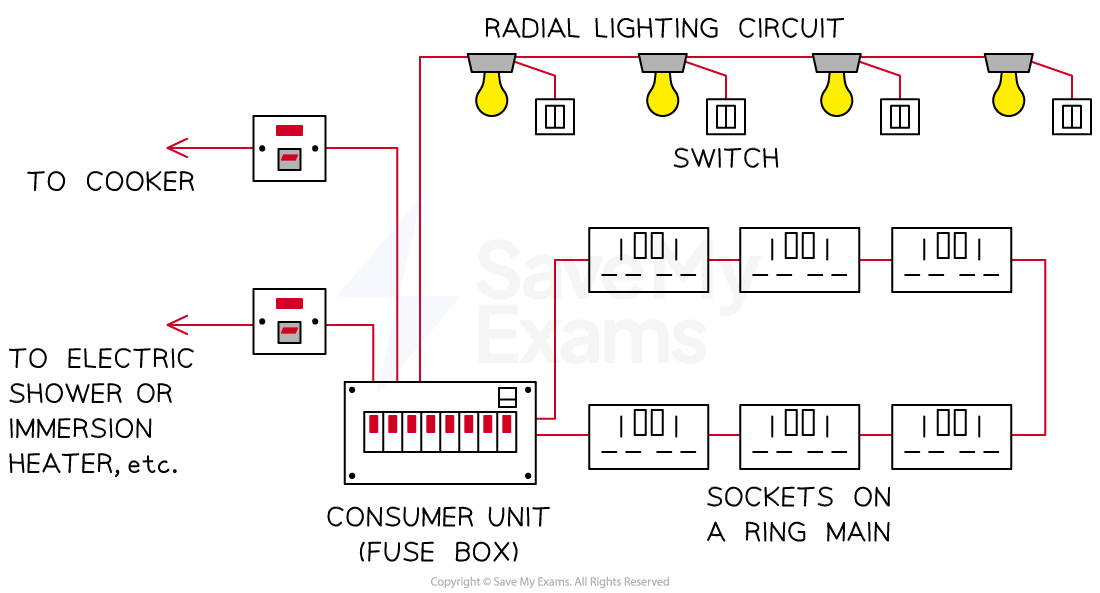
The consumer unit distributes current to all the circuits in the house
-
The main advantages of trip switches are:
- they provide protection from current surges or faults
- they can be reset when the problem is fixed
Video of Fuses
Was this revision note helpful?
Build on this topic