Kashrut & Treyfah (Cambridge International IGCSE Religious Studies)
The source of kashrut laws in the Torah
What are the kashrut laws?
-
Jewish laws regarding food are known as kashrut
-
The kashrut laws cover all of the rules relating to food, including:
-
The types of animals a Jewish person can eat
-
How the animals are prepared
-
The foods that are forbidden, including:
- Blood, certain forbidden fats and sinew
- Flies and insects
-
How the food must be prepared
-
-
These rules are contained within the mitzvot, mainly within the books of Deuteronomy and Leviticus
-
For example, the book of Leviticus says that only animals that have cloven hooves and that chew the cud are permitted
-
Pigs have cloven hooves but do not chew the cud
- This means that the meat of pigs is forbidden
-
blockquote “You may eat any animal that has a split hoof completely divided and that chews the cud” (Leviticus 11:3)
-
Following the rules regarding food shows obedience and self-control
-
Food that is allowed is called kosher (meaning fitting or correct), and food that is not allowed is called treif
-
Examples of treif food include shellfish, pork and pork products and food that has not been slaughtered in the correct way
- This method of slaughtering is known as shechita
-
Kashrut laws and food
What are the kashrut laws related to food?
-
There are strict rules that govern kosher laws, which are based on Scripture
-
Land animals must have cloven (split) hooves and must chew the cud, meaning that they must eat grass
-
Seafood must have fins and scales, so eating shellfish is not allowed
-
It is forbidden to eat birds of prey, as they are not considered clean birds
- The term “clean birds” refers to birds that do not eat other animals; however, poultry (chicken, etc.) may be eaten
-
Meat and dairy cannot be eaten together
- Jews who follow these dietary rules cannot, for example, eat cheeseburgers because they mix meat and cheese (which is made from milk)
- Often, this rule is extended further so that people must wait up to six hours after eating meat before they can eat dairy
- The Torah says:
-
blockquote “Do not boil a kid in its mother’s milk” (Exodus 23:19)
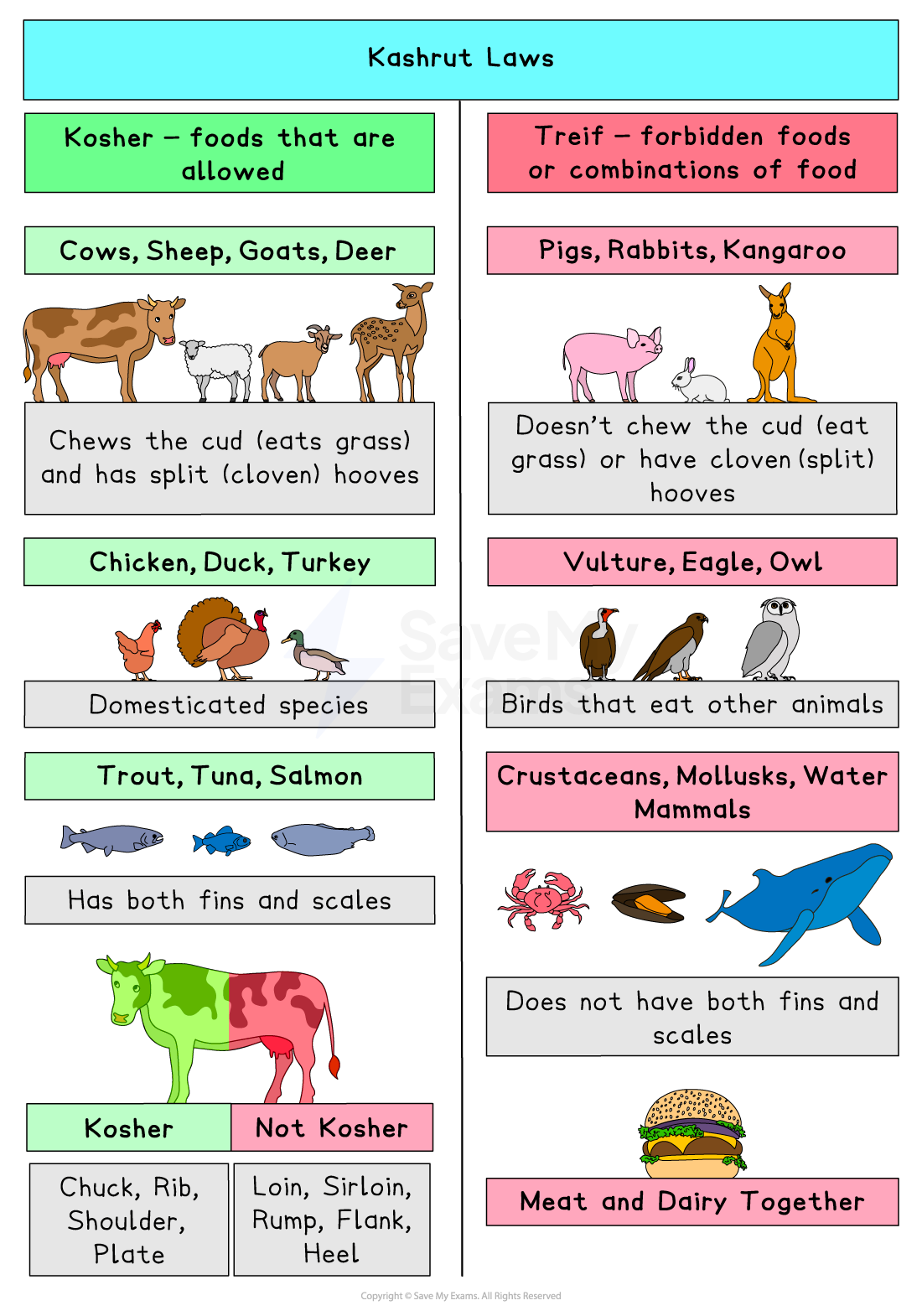
Kashrut Laws
Kashrut laws and clothing
What are the kashrut laws relating to clothing?
- While kashrut is mainly known for food laws, it also includes rules on clothing, especially regarding materials
- Wearing garments made from a mix of wool and linen is forbidden
- This is known as shatnez
- This belief comes from passages in the Torah that forbid certain mixtures of materials
blockquote “Do not wear clothing woven of two kinds of material” (Leviticus 19:19)
blockquote “Do not wear wool and linen woven together” (Deuteronomy 22:11)
-
The prohibition of shatnez is seen as a chok, which is a law with no clear, rational explanation
- It is followed because it is commanded by G-d
-
Some Jews get clothing (especially suits and coats) checked for shatnez by trained testers
-
If a garment contains both wool and linen, it must be altered or avoided
Different Jewish views on kashrut laws
What are the different Jewish views on kashrut laws?
- There can be differences between the way that kashrut is observed between Orthodox and Reform Jews
Orthodox Judaism and kashrut
-
Orthodox Jews keep all the rules of kashrut as commanded in the Torah and interpreted in the Talmud
- They believe that the laws are divinely given and unchanging
- Some people have separate utensils and perhaps fridges for the preparation and storage of meat and dairy products

-
Orthodox Jews only eat meat that has been slaughtered and prepared properly (shechita)
-
They are unlikely to eat in non-kosher restaurants, even vegetarian ones, unless certified
-
Although Reform Jews may choose to observe all of the kashrut, they believe it is down to personal choice
-
Some Reform Jews observe a selection of the laws
-
They are more likely to focus on the ethical principles behind the laws(for example, health, kindness to animals)
-
Others observe kashrut at home but not elsewhere
- Some may mix meat and dairy or eat in non-kosher restaurants
-
Worked Example Explain how the belief in dietary laws might affect the daily life of Jews
[6 marks]
Final answer: Answer:
There are certain foods that are forbidden within Judaism. For example, land animals that are eaten must have split hooves and chew the cud, so any meat from pigs is forbidden. Some Jews also do not eat any dairy products and meat together because the Torah says not to “boil a kid in its mother’s milk”. Many Jews avoid eating out anywhere that is not a kosher restaurant in case the food or the way it is prepared is prohibited. Some may insist on food that is prepared in a kosher kitchen to ensure that everything is as it should be according to the Torah
Exam Hint Make sure you are able to connect practices to beliefs
Practice: no pork or shellfish
Belief it reflects: obedience to G-d’s commands in the Torah
Practice: separate meat and dairy
Belief it reflects: Torah law (Exodus 23:19), promotes spiritual discipline Practice: shechita (ritual slaughter)
Belief it reflects: humane killing, respect for life
Was this revision note helpful?
Build on this topic