Key features of a Mosque (Cambridge International IGCSE Religious Studies)
The minaret and dome
-
Mosques contain certain similar features
-
The most visible features that mark them out as a place for Muslim prayer and worship are the dome and minaret
-
The dome on the top of a mosque symbolises:
- Allah’s universe and reminds Muslims that Allah created everything
- That Allah is eternal and represents the vault of heaven
-
The dome also has two practical purposes:
- It is placed over the prayer hall to naturally amplify voices
- It allows air to circulate, which is particularly helpful in countries with hot climates
-
The minaret is a tall tower from which the call to prayer is broadcast
-
The call to prayer (known as adhan) begins “Allahu Akbar”, meaning “Allah is the most great”, and is the sign for Muslims to undertake Salah, or prayer
-
The minaret symbolises the central importance of prayer in a Muslim’s life
- Traditionally, the muezzin (person who calls people to prayer) would have climbed the minaret to perform the call to prayer, but now, a recording may be broadcast
-
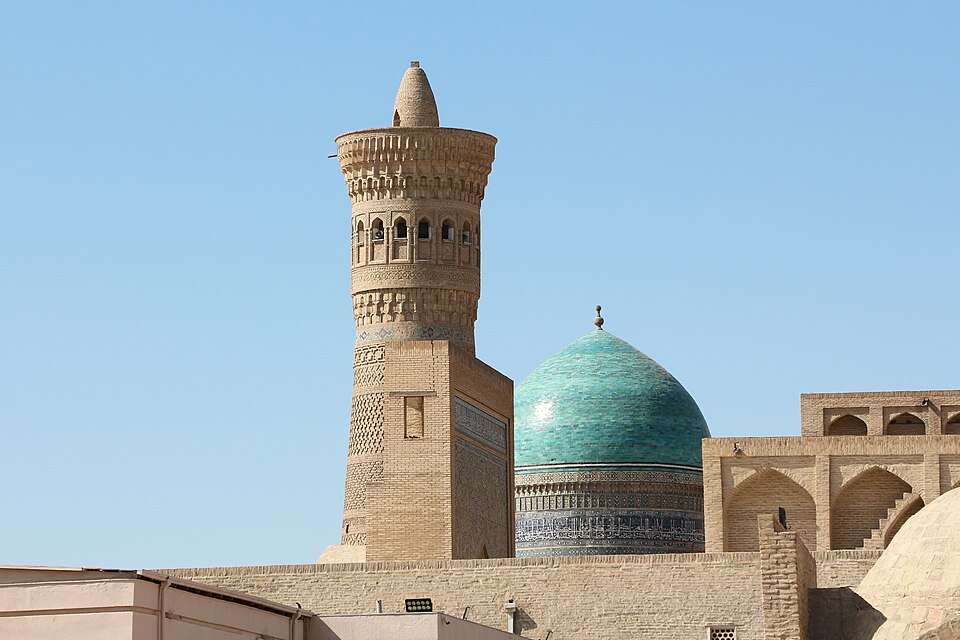
Dome and minaret on a mosque in Bukhara, Uzbekistan
Kalan Minaret and dome of Mir-i-Arab madrasa, Bukhara, Uzbekistan, is licensed under CC0 1.0
What is the qiblah?
-
Qiblah means “direction” or “facing”
- The qiblah for Muslims is the wall in the mosque that faces the Ka’aba in the holy city of Makkah
-
Muslims must face Makkah for prayer, and the qiblah in the mosque helps them to do so
- The qiblah is marked with a niche, which is known as the mihrab
-
If a Muslim is not in a mosque for their prayer, they may use a compass to help them find the direction of Makkah
- Some prayer mats have built-in compasses for this purpose
What are the mihrab, minbar and musalla?
-
The mihrab is the niche or alcove in the qiblah wall indicating the direction of Makkah, allowing Muslims to know which direction to face in their prayer
-
The minbar in the mosque is the platform from which the imam (priest) will preach a sermon during Friday worship
- The minbar usually contains three steps
- The imam does not go to the top step as a sign of respect and submission to Allah’s greatness
-
The musalla is the main prayer hall in the mosque
-
This is a large hall that is of central importance in the mosque
-
It does not have seats, as Muslims stand or pray on the floor as a sign of equality before Allah
-
Men use the musalla for prayer or worship
- Women often worship on a separate balcony at the back of the prayer hall
-
The reasons for separate prayer areas for men and women
-
In the mosque, there are separate prayer areas for men and women
-
Women either have their own prayer hall, are separated by a curtain or partition or more commonly, worship on a separate balcony at the back of the prayer hall
-
This is because nothing should distract a person from Allah during worship
- The Prophet Muhammad (pbuh) emphasised the importance of avoiding distractions during prayer, and Muslims follow this example
-
It also allows for dignity and modesty, because prayer involves physical movements such as prostration
- These movements might be uncomfortable for women if they have to perform them in the presence of men
Architecture and calligraphy in mosques
-
Muslims do not have images or statues of Allah in a mosque or anywhere else
- This is because they believe that they should worship only Allah and avoid idolatry
- Having no statues of Allah ensures that no one worships representations of Allah
-
The Qur’an forbids this, saying:
blockquote “When he said to his father and his people, ‘What are these statues to which you are devoted?’ They said, ‘We found our fathers worshippers of them.’ He said, ‘You were certainly, you and your fathers, in manifest error.’” (Qur’an 21:52–54)
-
There are no representations of human or animal figures in the mosque, either
-
Decorative patterns are used to decorate the mosque instead of statues and images
- These include geometrical designs, mosaic patterns, symbols and calligraphy **(beautiful handwriting)
-
The patterns are often beautifully ornate to represent the beauty of Allah’s design,** creation **and the promise of Paradise
-
This is known as** Islamic art and can also be found on items such as prayer mats and ornaments
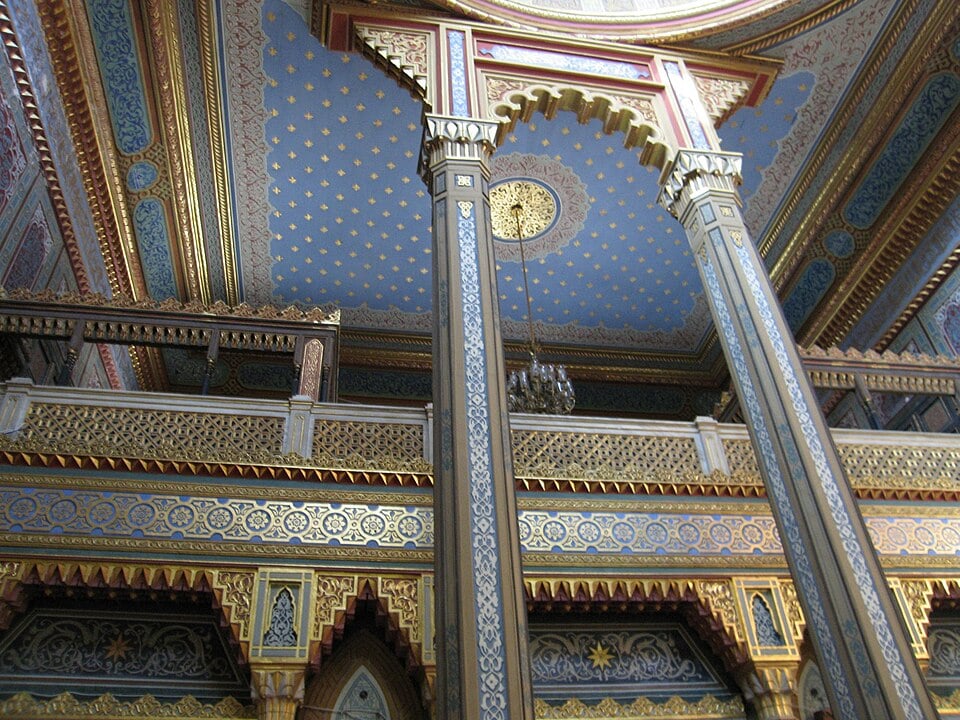
Decorative patterns and architecture within a mosque in Turkey
Internal decoration of the Yildiz Hamidiye Mosque in Istanbul, Turkey, public domain
Worked Example State two key features of a mosque
[2 marks]
Final answer: Answer:
One key feature of a mosque is a minaret [1 mark]
Another is a dome [1 mark]
Exam Hint You may find that some of the key vocabulary for Islam differs in spelling.
For example, Makkah is also spelt Mecca, and Qiblah is sometimes Qibla.
This is generally a result of translating these terms from Arabic. Don’t worry! The exam board allows the use of alternative spellings, and the examiners are used to seeing them. You won’t lose marks for spelling the words differently (as long as they are the correct terms, of course!).
Was this revision note helpful?