Peasch (Passover) (Cambridge International IGCSE Religious Studies)
Pesach as a celebration of G-d’s deliverance of the Israelites
What is the festival of Pesach?
-
Pesach celebrates the release of the Jewish people from slavery in Egypt and is also known as Passover
-
The story of Passover is found in the book of Exodus(chapter 12) in the Torah
- G-d commanded that Jews celebrate this festival every year as a mark of freedom:
blockquote “This day must be one that you will remember. You must keep it as a festival to G-d for all generations. It is a law for all time that you must celebrate it” (Exodus 12:14)
-
It is sometimes referred to as the Festival of Freedom, with prayers said each year for those who are not free
-
Jews remember how the Israelites left slavery when Moses led them out of Egypt more than 3,000 years ago
-
Moses went to ask the Pharaoh to release the Israelites many times, but each time, he refused
-
Moses warned the Pharaoh that G-d would send ten plagues to Egypt if he did not let them go
-
The ten plagues were:
- Water turning to blood
- Frogs
- Gnats
- Flies
- Ill livestock
- Unhealable boils
- Hail and fire
- Locusts
- Darkness
- Death of firstborn children
-
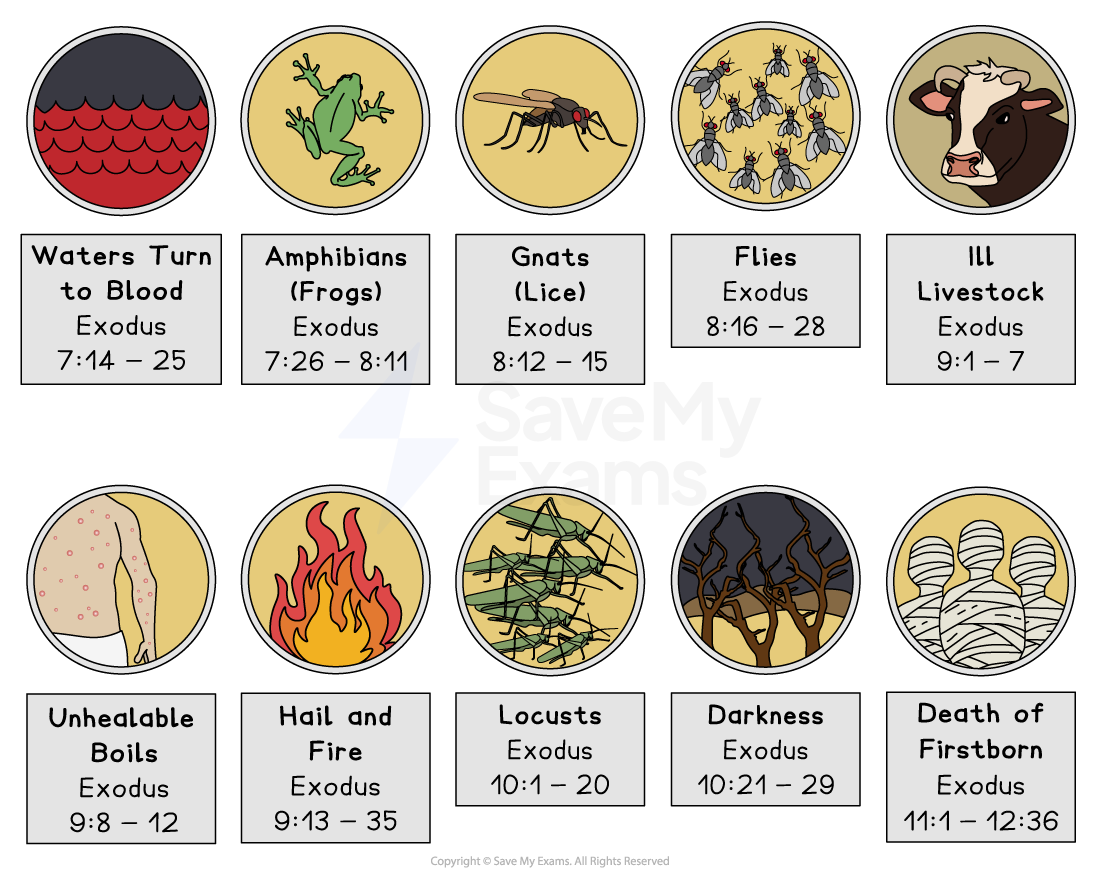
The Ten Plague
-
During the final plague, G-d is said to have told Moses to tell the Israelites to paint lambs’ blood on their doorposts
- This would ensure that the angel of death knew that Jewish people lived in those houses
- The angel of death would then pass over those houses and not kill the firstborn child
- This is where the name Passover comes from
- During the last plague, even the Pharaoh’s son was killed
-
The Pharaoh summoned Moses and told him to take the Israelites out of Egypt immediately
- After more than 200 years of enslavement, the Jewish people were free
What is the Seder?
What is the significance of the Seder?
-
During Pesach, rituals and practices are performed to celebrate the release of Jews from slavery and to remember the hardship they endured
-
In preparation for Pesach, Jews remove all grain products (called chametz) from their houses
-
Grain is not allowed to be eaten during the festival
-
Leavened goods (containing yeast), such as bread and beer, are also removed from the house
- Jews thoroughly clean their homes to remove any trace of these items
-
This is done to remember that the Israelites did not have time to allow their bread to rise before they left Egypt
-
-
Candles are lit to welcome Pesach
-
The family goes to the synagogue, where special prayers are recited and passages from the Torah are read
-
A special meal called the Seder meal is held
The Seder meal
-
There are many symbolic foods on the table for the Seder meal:
- A lamb bone, which symbolises the lamb that was sacrificed
- A boiled egg, which is a symbol of new life
- A green vegetable dipped in salt water to symbolise the tears of the Jews in slavery
- Bitter herbs, symbolising the bitterness of slavery
- Charoset, a paste of apples, walnuts and wine, which represents the mortar the slaves used when being forced to build
- Unleavened bread(matzah), as a reminder that the Israelites did not even have time to allow their bread to rise
-
Four glasses of wine are drunk to symbolise joy, and one glass of wine is left for the Prophet Elijah, who will return to announce the coming of the Messiah
- Wine is also a symbol of the lambs’ blood painted onto the doorposts to save Jewish children from the final plague
-
The foods on the Seder plate each symbolise a part of the Exodus story, which is retold during the meal using a ritual book called the Haggadah
The religious reasons for observing Pesach
-
There are many religious reasons why Jews observe Pesach
-
The festival remembers the Exodus of Jews
- Jews observe Pesach to remember how G-d delivered them from slavery
- The Torah commands Jews to teach each generation about this event
blockquote “You shall tell your son on that day, ‘It is because of what the Lord did for me when I came out of Egypt’” (Exodus 13:8)
-
Pesach is also a way of thanking G-d for saving the Israelites
- It reminds Jews of G-d’s power, mercy and faithfulness to his covenant
-
Pesach is an opportunity to follow G-d’s commandments
-
The Torah commands Jews to observe Pesach with specific rituals (for example, eating matzah and avoiding chametz)
- Observing the festival shows obedience to G-d’s law
-
blockquote “For seven days you are to eat bread made without yeast” (Exodus 12:15)
-
The Seder meal and storytelling allow Jews to connect to their history
- It reinforces a shared identity as G-d’s chosen people who are part of his covenant
-
The Pesach Seder helps teach the next generation about Jewish beliefs, history and values
- The Haggadah guides the Seder meal with stories, prayers and symbolic foods
The social reasons for observing Pesach
-
Pesach also has important social and community aspects
- These help strengthen family, community and Jewish identity
-
Some of the social reasons for observing Pesach include:
-
Participating in a family-centred ritual through the Seder meal, which often includes extended family and guests
-
Encouraging family bonding and the passing down of traditions and stories
-
Educating the next generation
- The Seder is designed to teach children about the Exodus
- This also includes asking the Four Questions (Mah Nishtanah) and child-friendly storytelling
-
blockquote “You shall tell your child…” (Exodus 13:8)
-
This creates a shared social and religious identity
-
Reinforcing community identity for Jewish people
- Celebrating Pesach helps Jews feel part of a global community, where everyone observes the same rituals
-
There are also communal traditions in the preparation of the event
- The clearing out of chametz (leavened products) is often a communal or family activity
-
Many communities host group Seders, especially for those who are alone or in need
- Jews are encouraged to welcome guests to their Seder, especially those who are poor or lonely
- The event promotes hospitality, generosity and inclusiveness
Different ways Pesach is observed within Judaism
Spec point —
J4.3e
- All Jewish traditions commemorate the Exodus, but the method of observance reflects different interpretations of Jewish law and modern values
Orthodox Judaism and Pesach
-
Within Orthodox Judaism, the Torah and Halakhah (Jewish law) are strictly followed
- During Pesach, all chametz(leavened food) are avoided completely
- Rituals also include cleaning the home thoroughly and changing kitchenware
- Matzah(leavened bread) is eaten for all eight days (seven in Israel)
- The Seder meal is traditional and detailed, including all of the symbolic foods and readings from the full Haggadah
- Men often wear a kippah and tallit, and services are conducted mostly in Hebrew
- Orthodox Jews have two Seder meals on the first two nights of the holiday
Reform Judaism and Pesach
-
Within Reform Judaism, there is more flexibility in observance, with the focus on meaning rather than strict ritual
- Reform Jews still avoid chametz, but some families may be less strict, allowing certain products if they are not obviously leavened
- They often have only one Seder instead of two, even outside Israel
- The Seder may include modern readings, gender-inclusive language and a focus on social justice
- A kippah and tallit may be worn by both genders, but this is usually optional
- Services are often in English with Hebrew included, and prayers may be shortened
Worked Example Give two reasons why Jews observe Pesach
[2 marks]
Final answer: Answer:
To remember how G-d delivered Jews from slavery [1]
It is an opportunity to follow G-d’s commandments [1]
Exam Hint For this section, try to link every element of the Seder meal to its symbolic meaning. For example:
Matzah: “bread of affliction” — a reminder of the haste to leave Egypt
Maror(bitter herbs): bitterness of slavery
Wine: joy and celebration of freedom
Four Questions: encourage children to learn about the Exodus
Learn the important terms and concepts for this section so you can skillfully include them within your responses
Use terms such as Exodus, freedom, slavery, Haggadah, chametz, matzah, symbolism, remembrance, covenant
Was this revision note helpful?
Build on this topic