Reciprocal Graphs (Cambridge International IGCSE Maths)
Reciprocal Graphs
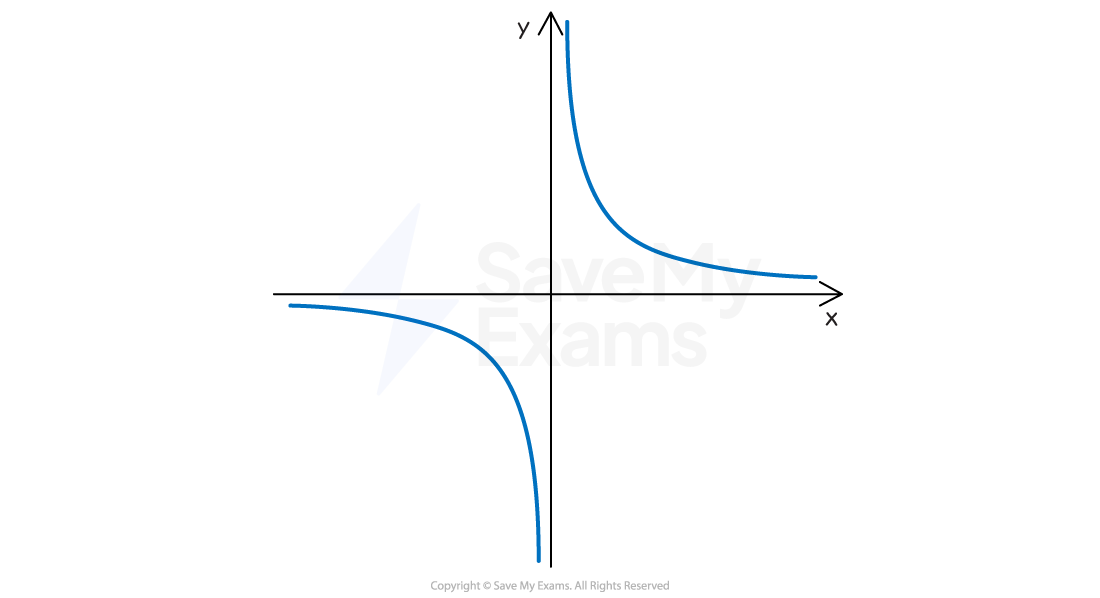
What is a reciprocal graph?
-
A reciprocal graph is of the form
- It does not have a y-intercept
- and does not have any roots
- This means that the curve does not cross either the x- or y-axes
What are the asymptotes on a reciprocal graph?
-
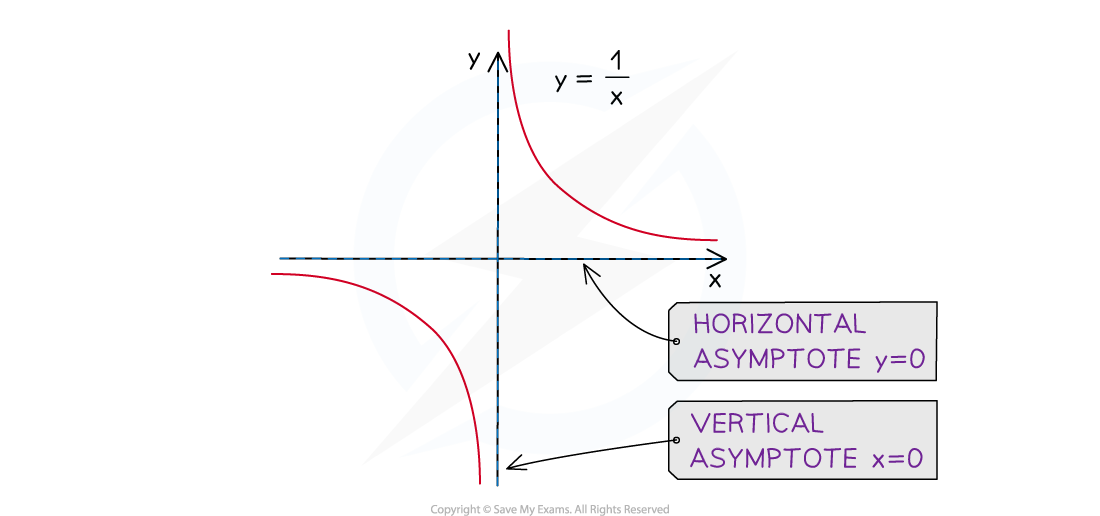
An asymptote is a line on a graph that a curve becomes closer and closer to but never touches
- These may be horizontal or vertical lines
-
A reciprocal graph has two asymptotes
-
A horizontal asymptote along the x-axis (with equation )
- This is the limiting value of y when the value of x gets very large (either positive or negative)
-
A vertical asymptote along the y-axis (with equation )
- This shows the problem of trying to divide by zero
-
What about graphs of the form y = a/x + b ?
-
The reciprocal graph, (where and are both constants)
-
is the same shape as
-
but is shifted upwards by units
- would be shifted up by 2 units
- would be shifted down by 3 units
-
This means the horizontal asymptote also shifts up by units,
- The equation of the horizontal asymptote is
- would have a horizontal asymptote of
- would have a horizontal asymptote of
-
The vertical asymptote remains along the y-axis
- The equation of the vertical asymptote is
- would have a vertical asymptote of
-
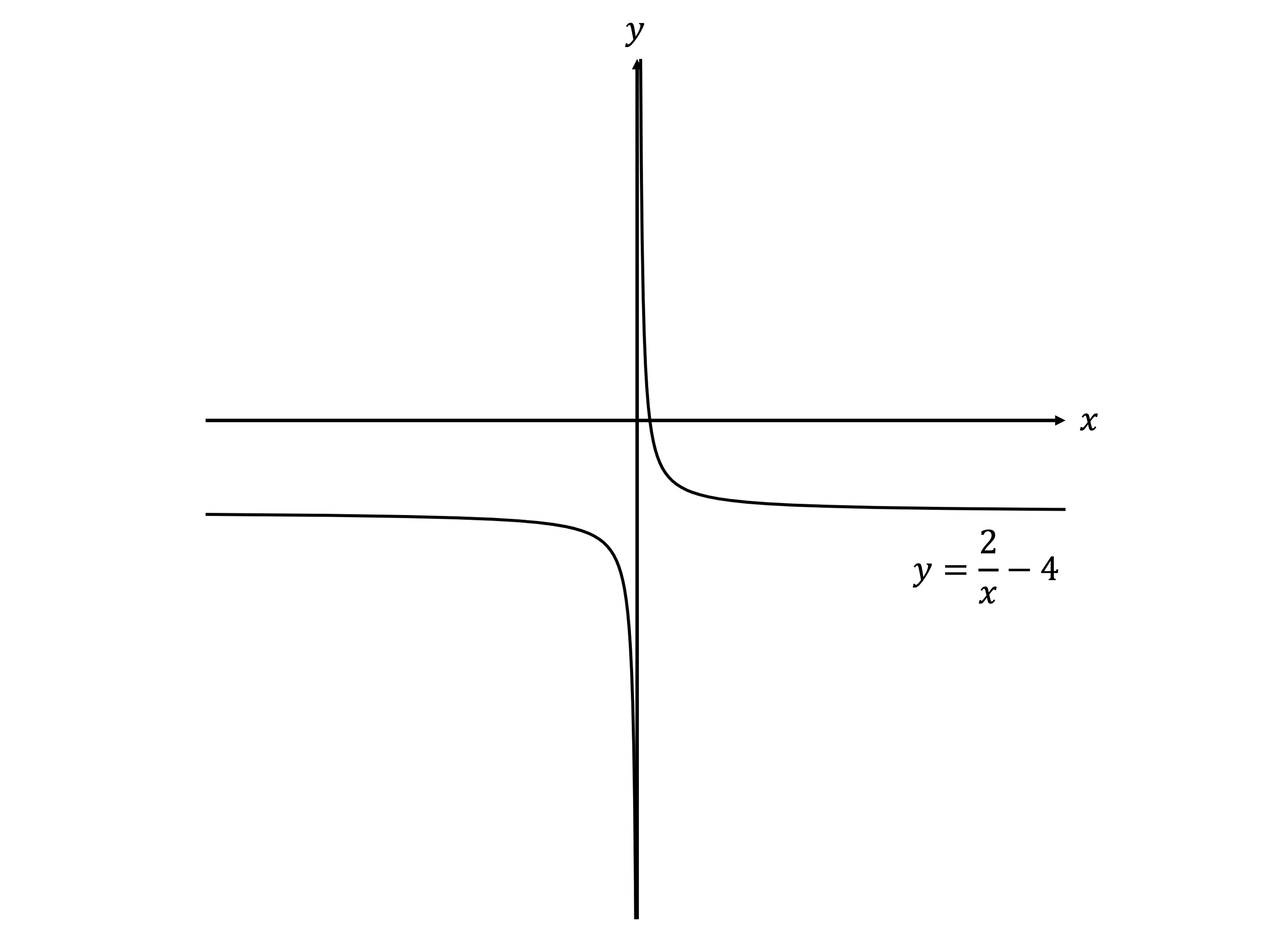
Worked Example The diagram below shows the graph of .
(a) Write down the equation of the horizontal asymptote.
A reciprocal graph of the form will have a horizontal asymptote at
(b) Write down the equation of the vertical asymptote.
A reciprocal graph of the form * will always have a vertical asymptote along the y-axis*
Was this revision note helpful?
Build on this topic