Coordinates (Cambridge International IGCSE Maths)
2D Coordinates
What is the Cartesian plane?
-
The Cartesian plane is a two-dimensional grid that has
- a horizontal scale, called the x-axis
- a vertical scale, called the y-axis
-
The two axes meet at the origin
- where x and y are both 0
What are coordinates?
-
Coordinates are a pair of numbers, x and y, that describe the location of a point on the grid
-
They are written in brackets as ( x , y )
-
The point is
- x units **on the horizontal scale
- y units** on the vertical scale
-
-
The origin is (0, 0)
-
Positive values of x *are to the right of the origin
- Negative values are to the left
-
Positive values of y are above the origin
- Negative values are below
-
-
For example, from the origin:
- (2, 5) is the point 2 units to the right and 5 units up
- (-1, -4) is the point 1 unit to the **left **and 4 units down
-
"Along the corridor, up the stairs" helps to remember** horizontal** then vertical,* ( x , y)
Exam Hint Check the scale on the coordinate grid! 1 square might not represent 1 unit.
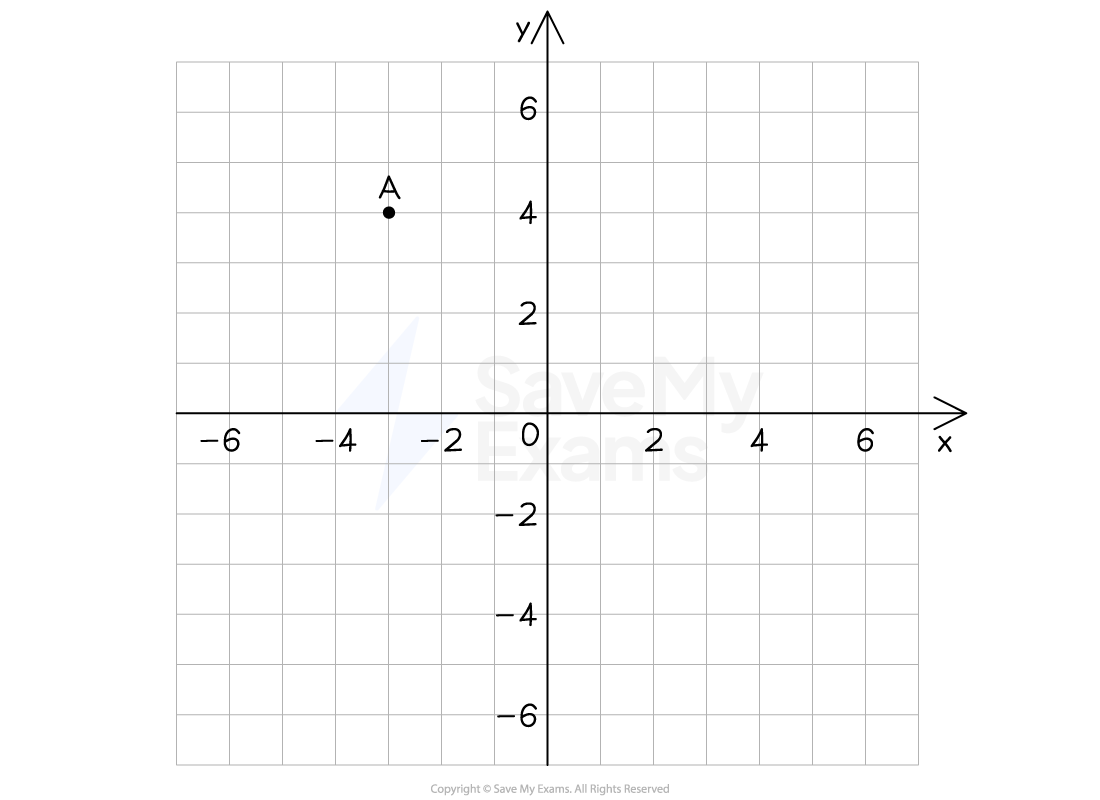
Worked Example (a) Write down the coordinates of the point A shown on the axes below.
Answer:
A is 3 units to left, so x is −3 A is 4 units up, so y is 4 Give your answer in brackets
Final answer: (−3, 4)
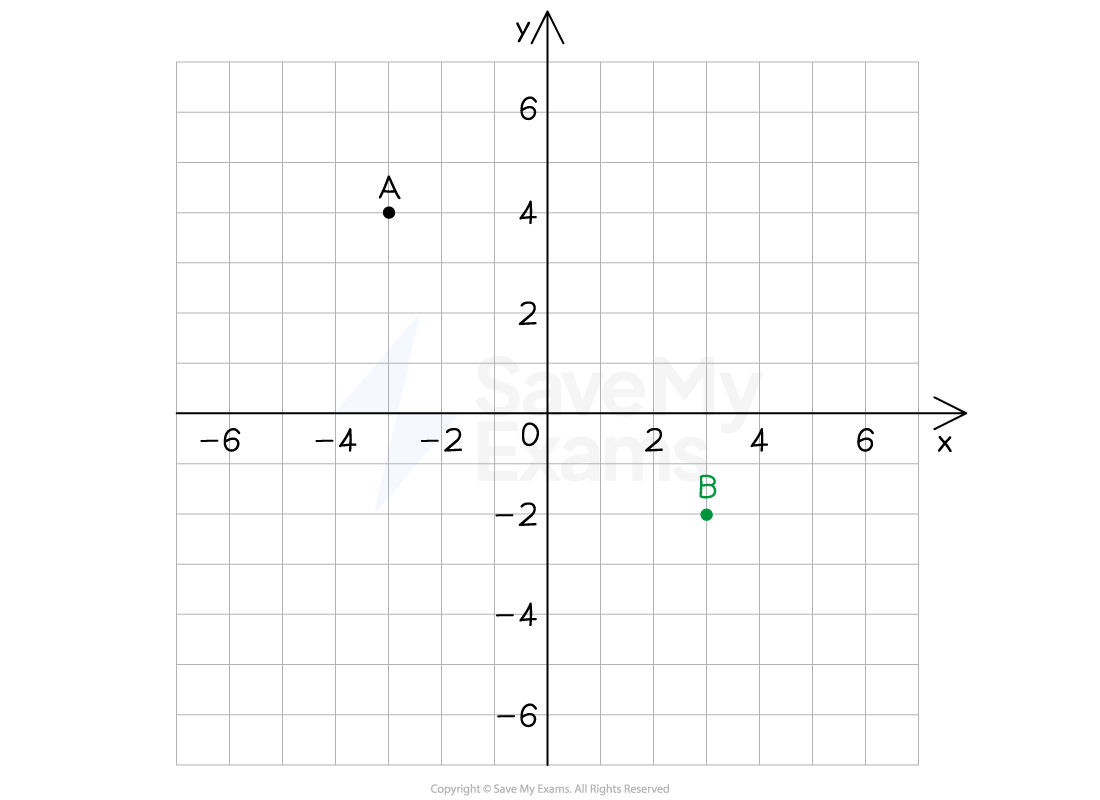
(b) Mark the point B with coordinates (3,- 2) on the same set of axes.
Answer:
Start at the origin Count 3 units right and two units down Mark the point with a solid circle or cross and label it B
Was this revision note helpful?