Factors affecting industry location (Cambridge International IGCSE Geography)
Specification link
This page covers section 9.1.3 of the CIE IGCSE specification .
- 9.1.3- Factors influencing the location and distribution of different types of industries: land, labour, raw materials, energy, transportation, markets, political policies, technology, communications, containerisation.
What are the factors affecting industry location?
Spec point — Factors influencing the location and distribution of different types of industries: land, labour, raw materials, energy, transportation, markets, political policies, technology, communications, containerisation.
-
Every day, companies make decisions about where to locate their industries
-
Different industries require different inputs
- They also require them to be readily and cheaply available
-
Most companies look for the least-cost but highest-profit location
-
Manufacturers need to find the optimum location that will produce maximum profit
-
This depends on a number of factors—physical, human and economic
Physical factors
-
Raw materials: industries that need heavy or bulky materials will locate as near as possible to these materials -pull factor
-
Site availability and cost of land are important
- Large factories need flat, well-drained land with or without the potential for expansion later on – pull factor
-
Industries such as aerospace and film benefit from sunnier climates, which serve as a pull factor for their location
- A good climate also reduces energy bills and improves the quality of life
-
Energy-demanding industries may relocate to countries/areas with readily available or cheaper energy – pull factor
-
Natural routeways—harbours, motorways, airports, and railways—provide good locations for ports and industrial complexes, which create access points for inputs but also outputs
- Poor infrastructure in LICs act as a push factor, as it increases the cost of transporting raw materials and finished goods
-
Water supplies: some industries (paper and cotton processing, etc.) require a lot of water in their manufacturing and so need to be near a reliable water supply such as lakes, rivers, etc
- Poor and unreliable water supplies can be a major push factor for relocation of manufacturing to some LICs
Human and economic factors
-
Capital: Some areas naturally attract inward investment, as the returns will be higher
-
Markets: The location and size of the potential market are major influences for some industries. However, cultural differences and consumer habits can be a push factor
-
Political policies – LICs can encourage inward investment through tax exemptions, free trade zones, and grants. This can make areas attractive for industries to invest in
-
Transport: the cost of transport is expensive and accessibility for easy access helps to reduce those costs
- Motorways, railways, ports and airports can influence where industry locates
-
Containerisation increases trade between countries because it is easier and less expensive to do business
- Standard container sizes enable faster trade and lower shipping costs
- However, some places can be difficult to get to because container ports have large footprints and storage areas
-
Communications: being able to communicate effectively and quickly with employees, customers and suppliers is vital to successful manufacturing
- This can be a push factor if TNCs do not consider the language barrier (such as instructions on machinery and translation services) along with time zone differences
-
Labour force: quality and cost of labour are central to effective manufacturing; having a reliable workforce is necessary, but also mobility, turnover and reputation are also factors
- In LICs, labour costs are usually lower and this is a pull factor
-
Quality of life: highly skilled workers will prefer areas where the work/life balance is good
Exam Hint Remember, no one factor decides the location of an industry but a combination of them and most companies look for the least-cost, highest-profit location.
Changes to manufacturing and location over time
-
Raw materials: sources of raw materials often run out
- Manufacturers will move in response
- Improved infrastructure means business not tied to energy centres—coalfields, etc.
-
Rising costs: wage levels, laws, etc., mean costs go up in MICs so work moves elsewhere (e.g. manufacturing)
-
Transport: commuting & migrating easier because there are now fewer barriers to travel
-
Competition: fewer people are needed to complete work now, e.g., banking uses ICT
-
Technology: advances in ICT mean more work from home, air travel, etc.
-
Outsourcing: saves money; work sent elsewhere to save costs (e.g., call centres)
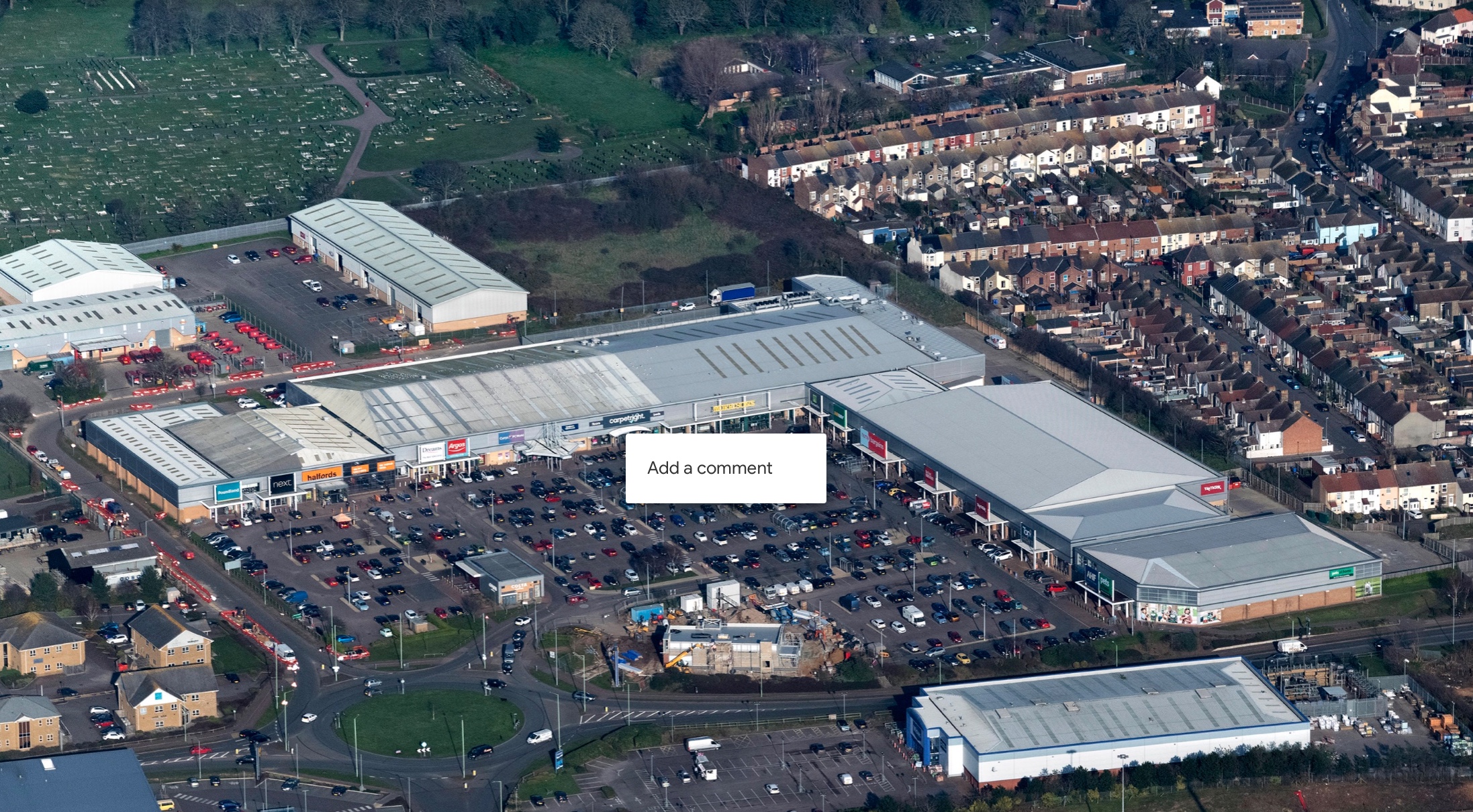
Worked Example **Study the photograph and suggest three reasons why the location was chosen for the retail park. **
[3 marks]
A Retail Park
Final answer: Answer
Any three of the following:
- Close to a main road for accessibility [1]
- Flat land** [1]**
- Houses nearby for workers/customers [1]
- Space for car parking [1]
- Room for expansion [1]
Was this revision note helpful?
Build on this topic