Effects of Earthquakes & Volcanoes (Cambridge International IGCSE Geography)
Effects of Earthquakes & Volcanic Eruptions
Spec point —
2.1.4· Describe their effects on people and the environment
The impacts of earthquakes and volcanic eruptions can be categorised into:
- Primary hazards: these are a direct result of the earthquake or eruption
- Secondary hazards: these occur as a result of the primary effects
| Primary | Secondary | |
|---|---|---|
| Earthquake | Ground Shaking Surface rupture | Liquefaction Landslides Tsunami Fires |
| Volcanic Eruption | Pyroclastic flow Lava flow Volcanic Bombs Lahars (mudflow) Earthquakes Direct ashfall | Landslides Tsunami Acid rain Ash fallout from the atmosphere |
Factors affecting the impacts of earthquakes and volcanic eruptions
- All earthquakes and volcanic eruptions are unique
- The impacts that they have depend on a range of factors both human and physical
Human factors affecting earthquake impacts
-
Building construction and design
- Poorly constructed buildings with poor-quality building materials are more likely to collapse
- Higher buildings amplify the shockwaves and are more likely to collapse
-
Building density
- Where buildings are close together, they are more likely to damage or destroy other buildings if they fall
-
Population density
- The higher the density population, the more people are likely to be injured or killed
-
Preparation
- Earthquake drills can reduce the impact
Physical factors affecting earthquake impacts
-
Magnitude
- The amount of energy released by the earthquake
- Usually, the higher the magnitude, the greater the impact
-
Geology
- Some rocks are more prone to liquefaction; others provide stronger foundations for buildings
-
Distance from the epicentre
- The closer somewhere is to the epicentre, the stronger the shock waves will be
-
Depth
- Shallower earthquakes mean less energy is absorbed by the crust before the shockwaves reach the surface
Human factors affecting volcano impacts
-
Proximity of population
- How close populations are to the volcano
- The closer people are to the volcano, the more likely they are to be affected by lava flow and ash
-
Planning and preparation
- Where authorities have planned exclusion zones and evacuation plans, the impact may be reduced
Physical factors affecting volcano impacts
-
Magnitude
- The size and strength of the eruption
- Usually, the higher the magnitude, the greater the impact
-
Type of volcano
- Composite (strato-volcanoes) tend to be more explosive and less predictable than shield volcanoes
-
Amount of ash ejected into the atmosphere
- Ash in the atmosphere can impact areas many hundred kilometres away and can affect the global climate
Effects of earthquakes and volcanic eruptions
-
Although the characteristics of earthquakes and volcanic eruptions are very different, many of the impacts are similar
-
Impacts include:
-
Loss of life and injury
- This may be immediate through falling buildings or ash fall
- Alternatively, it may be in the days and weeks after the event due to unclean water or disease
-
Collapse or destruction of buildings
- This leads to people being homeless for months and even years after the event
-
Transport network
- Roads, bridges and railways may be damaged or destroyed
- This can impact the speed at which aid can get to affected areas
-
Loss of jobs and businesses
- This impacts the economy when factories and offices are destroyed or damaged
-
Loss of crops
- Leads to food shortages and affects farmers income
-
Power and water supply damaged
- This affects the supply of clean water and electricity
-
Damage to the environment
- Loss of vegetation and habitat
- The effects on the climate of ash in the atmosphere
-
Closure of airports
- It is dangerous for jet planes to fly through ash clouds due to possible engine failure, so flights are cancelled
-
Exam Hint It is easy to confuse the primary and secondary effects/impacts of earthquakes and volcanic eruptions. Remember:
- Primary effects are those that occur directly from an earthquake or volcanic eruption. For example, buildings collapsing is a direct result of the earthquake ground shaking.
- Secondary effects are those things that result from the primary hazards. For example, fires caused by gas mains that have fractured
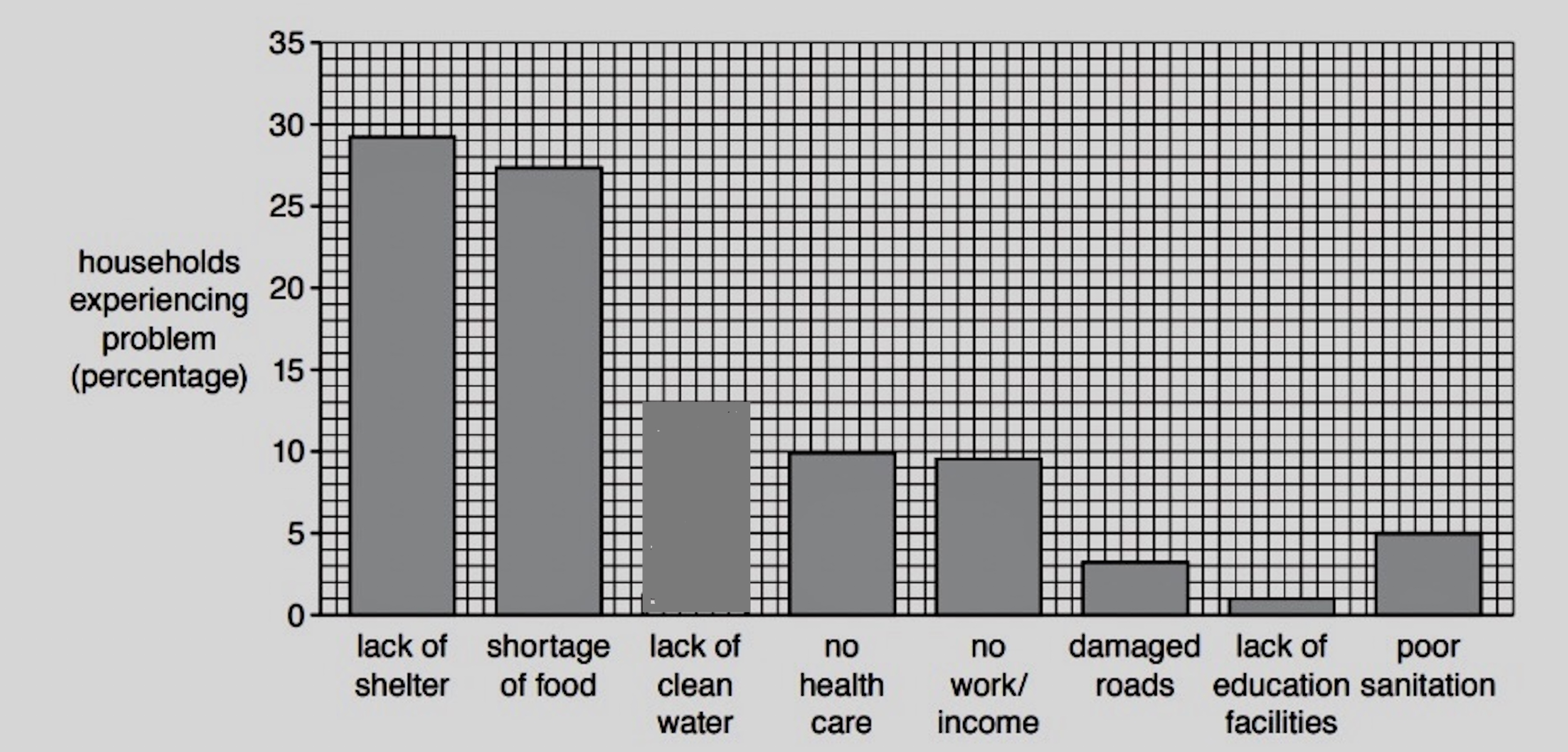
Worked Example Study Fig. 1, which shows information about the problems faced by households after an earthquake in Port-au-Prince, Haiti.
[5 Mark]
**Fig 1 **
(i) Identify the two main problems caused by the earthquake in Haiti
[2 Marks]
Final answer: Answer
- Lack of shelter [1]
- Shortage of food [1]
(ii)** Explain why it is necessary to provide clean water and sanitation after an earthquake.**
[3 Marks]
Answer
Any three of the following:
- People need clean water supply/water to drink/to live/survive/prevent dehydration [1]
- Water/sewage pipes/water treatment stations will be cut off/damaged/broken [1]
- No running water [1]
- People cannot wash/bath/shower [1]
- No flush toilets [1]
- Sewage will spill out/contaminate (water supplies/area) [1]
- Disease/germs from dirty/polluted water or people sick from dirty water/waterborne diseases/examples of such as cholera [1]
Was this revision note helpful?
Build on this topic